Infected Wisdom Tooth Symptoms: All the Signs to Know
Infected wisdom tooth symptoms range from a dull, throbbing ache at the back of the jaw to a life-threatening swelling that can close off the airway in hours, and the difference between those two presentations is not always obvious in the early stages. Recognizing exactly where your symptoms fall on that spectrum is what determines whether you need a dental appointment tomorrow or an emergency room tonight.
According to the National Institute of Dental and Craniofacial Research (NIDCR), a division of the National Institutes of Health, approximately 90 percent of adults have at least one wisdom tooth that either fails to fully erupt or is impacted, making the pericoronal region one of the most infection-prone sites in the entire oral cavity. The American Association of Oral and Maxillofacial Surgeons (AAOS) identifies third molar pericoronitis and dentoalveolar abscess as among the most common reasons adults seek urgent dental and emergency medical care between the ages of 17 and 35.
This article covers every recognized symptom of a wisdom tooth infection, the specific anatomical reasons each symptom occurs, how early-stage pericoronitis differs clinically from an established abscess or spreading fascial space infection, and the exact red flags that require you to stop waiting and get emergency care now.
Infected Wisdom Tooth Symptoms: What You Need to Know First
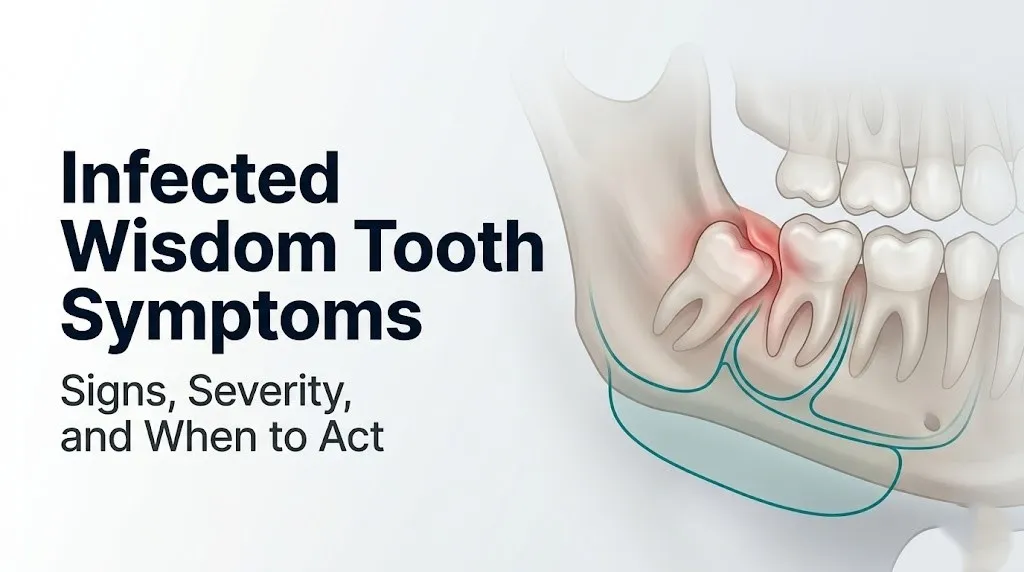
Infected wisdom tooth symptoms arise from bacterial colonization of the pericoronal space, a gap between the soft tissue flap (called the operculum) overlying a partially erupted third molar and the crown of the tooth itself.
This space is impossible to clean with a toothbrush, which makes it a permanent reservoir for bacterial biofilm. The primary bacteria involved are polymicrobial: aerobic streptococci from the Streptococcus viridans group combined with anaerobic species including Prevotella intermedia, Fusobacterium nucleatum, and Peptostreptococcus species. Research published in the Oral Surgery Oral Medicine Oral Pathology Oral Radiology journal has consistently identified this polymicrobial, predominantly anaerobic flora as the driving force behind both acute pericoronitis and its progression to deeper space infections.
The symptoms a person experiences depend on where the infection is anatomically confined. Early infection stays within the operculum and pericoronal soft tissues, producing localized pain and swelling. As the infection deepens into the periodontal ligament and alveolar bone, the pain character changes from pressure-aching to constant, throbbing, and often radiating. When bacteria breach the cortical plate of the alveolar bone and enter the adjacent fascial spaces of the head and neck, systemic symptoms appear and the situation becomes urgent.
Key symptoms to track from the moment you notice something wrong:
- Persistent or worsening pain at the back of the jaw, especially on the lower left or lower right
- Swelling of the gum tissue immediately around the wisdom tooth
- A bad taste in the mouth that does not resolve with brushing
- Difficulty opening the mouth fully
- Fever, even a low-grade one at 99 to 100°F (37.2 to 37.8°C)
- Ear pain on the same side as the affected tooth
- Swollen lymph nodes under the jaw on the affected side
People with type 2 diabetes mellitus should be aware from the outset that elevated blood glucose impairs neutrophil chemotaxis and phagocytic function, meaning their local immune response to a wisdom tooth infection may be measurably weaker than in non-diabetic adults. Their infection can progress faster while producing initially milder-appearing symptoms.
What Is a Wisdom Tooth Infection and How Does It Develop
A wisdom tooth infection develops when bacteria accumulate in the pericoronal space around a partially erupted or impacted mandibular third molar and trigger an inflammatory response that the body’s local defenses cannot fully contain.
The mandibular third molar is the most commonly affected tooth because the lower jaw provides less space for eruption than the upper jaw, and partial eruption creates a persistent soft tissue pocket that traps food, saliva, and bacteria. Think of this pericoronal space like a pocket in a coat that can never be turned inside out to empty it. No matter how well you clean the visible surface of the tooth, the pocket beneath the operculum refills continuously from the oral bacterial environment.
The infection development follows a predictable anatomical sequence:
- Bacteria colonize the pericoronal space and establish a biofilm on the crown surface and inner opercular tissue
- Bacterial endotoxins activate toll-like receptor 4 on local macrophages, triggering release of IL-1β, IL-6, and TNF-alpha
- These cytokines drive vasodilation and increased vascular permeability in the pericoronal tissue, causing the gum to appear red, swollen, and tender
- Prostaglandin E2, synthesized from arachidonic acid via the COX-2 pathway, sensitizes local nociceptors in the periodontal ligament and pericoroneum, producing the characteristic throbbing pain
- If bacterial load exceeds local neutrophil capacity, the infection extends through the alveolar bone into the adjacent fascial spaces, beginning with the submandibular space in lower molar infections
The American Dental Association (ADA) notes that impacted or partially erupted third molars that cannot be kept free of bacterial accumulation through normal oral hygiene are at perpetual risk for recurrent pericoronitis, and each recurrence carries the risk of extending more deeply than the last.
Maxillary (upper) wisdom tooth infections are less common than mandibular ones. When they do occur, they can spread toward the buccal space and, in rare cases, the infratemporal fossa, producing a different spread pattern than lower molar infections.
Pericoronitis vs. Wisdom Tooth Abscess Symptoms
Pericoronitis is an infection confined to the soft tissue operculum overlying a partially erupted tooth, while a wisdom tooth abscess is an infection that has extended into the periodontal ligament, alveolar bone, or deeper fascial tissues, and these two conditions produce overlapping but distinguishable symptom patterns.
The distinction matters clinically because pericoronitis can often be managed initially with irrigation and antibiotics, while an established abscess requires source control: drainage of the pus collection, antibiotic therapy, and ultimately tooth extraction or surgical management.
| Feature | Pericoronitis | Dentoalveolar Abscess |
|---|---|---|
| Pain location | Localized to pericoronal gum tissue | Deeper, radiates to jaw, ear, temple |
| Pain character | Aching, pressure, worsened by biting | Constant, throbbing, severe |
| Visible swelling | Erythematous, swollen operculum only | Facial or submandibular swelling possible |
| Pus discharge | May have purulent discharge from under operculum | Frank pus from periodontal pocket or sinus tract |
| Fever | Low-grade or absent in mild cases | More likely; higher in established abscess |
| Lymph node tenderness | Submandibular nodes may be mildly tender | Submandibular and cervical nodes tender and enlarged |
| Trismus | Usually mild or absent | More likely, can be severe |
| Response to irrigation | Often temporarily improves | Does not resolve with irrigation alone |
A clinical finding that helps distinguish the two is percussion sensitivity. Tapping the wisdom tooth (dental percussion test) produces minimal to no additional pain in pure pericoronitis because the tooth itself is not the infected structure. In a dentoalveolar abscess involving the periodontal ligament, percussion of the tooth produces a sharp, distinct worsening of pain because the inflamed ligament surrounding the root is the infection site.
Older adults who retain their wisdom teeth are at higher risk for periodontal abscess formation rather than pericoronitis, because long-standing partial impaction creates chronic periodontal pocketing with complex polymicrobial biofilm that differs from the acute biofilm-driven pericoronitis of younger adults.
Key Takeaway: If pressing or tapping your wisdom tooth makes the pain sharply worse and you also have facial swelling, the infection has likely gone beyond the soft tissue gum and reached the tooth’s supporting bone, which requires prompt evaluation by a general dentist or oral and maxillofacial surgeon within 24 hours.
Wisdom Tooth Infection Pain Symptoms
Pain is the earliest and most consistent symptom of an infected wisdom tooth, arising directly from nociceptor activation in the richly innervated periodontal ligament, pericoroneum, and adjacent gingival tissues.
The periodontal ligament is a specialized connective tissue that suspends the tooth root within the alveolar bone socket. It contains a dense network of nociceptive nerve fibers derived from the inferior alveolar nerve, itself a branch of the mandibular division of the trigeminal nerve (cranial nerve V3). When bacterial toxins and inflammatory mediators accumulate in the pericoronal space, prostaglandin E2 and bradykinin directly activate these nociceptors, producing pain that is initially pressure-like and dull, then evolves into a constant, throbbing character as inflammation intensifies and tissue edema increases the local pressure.
The pain pattern in wisdom tooth infection is distinct from normal post-eruption discomfort:
- Normal eruption discomfort: intermittent, mild, responds well to over-the-counter analgesics, no swelling or fever
- Infection pain: persistent, worsening over 24 to 48 hours, may not fully respond to over-the-counter doses of ibuprofen or acetaminophen, associated with swelling and possibly fever
- Abscess pain: constant, severe, throbbing, present even at rest and at night, disrupts sleep
Research published in the Journal of Oral and Maxillofacial Surgery has documented that untreated odontogenic pain from pericoronitis and abscess characteristically worsens in the supine position (lying down) because the increased blood pressure to the head in that position amplifies the intravascular pressure in inflamed tissues, intensifying the throbbing sensation. This is why many patients with tooth infections report that their pain is worst at night.
People taking nonsteroidal anti-inflammatory drugs (NSAIDs) chronically for other conditions should note that while these medications partially suppress the inflammatory cascade, they do not eliminate the underlying infection. Temporary pain reduction while taking NSAIDs does not indicate that the infection is resolving.
Wisdom Tooth Infection Swelling Symptoms
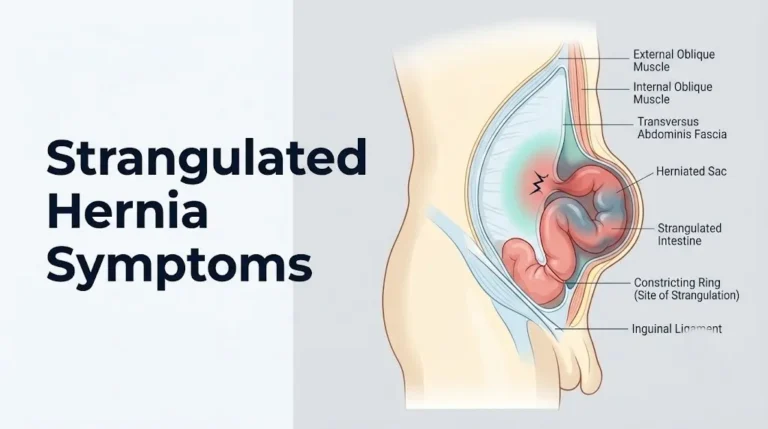
Swelling from a wisdom tooth infection begins at the gum tissue immediately surrounding the affected tooth and can expand progressively to involve the cheek, the angle of the jaw, the submandibular region below the jaw, and in severe cases the neck.
The first sign of swelling is erythema (redness) and puffiness of the operculum, the soft tissue flap covering the partially erupted crown. This reflects the early phase of the inflammatory response: vasodilation and increased vascular permeability driven by histamine from mast cell degranulation, followed by leukocyte migration into the pericoroneum. At this stage, the swelling is confined to the intraoral soft tissue and may not be visible externally.
As the infection deepens, swelling becomes visible externally. The anatomical sequence matters:
- Swelling visible at the angle of the jaw or cheek: infection has entered the buccal space or masticator space
- Swelling visible or palpable below the jawline: infection has entered the submandibular space
- Swelling extending toward the floor of the mouth or under the tongue: infection is approaching the sublingual space
- Swelling of the neck below the submandibular region: infection has crossed from the submandibular space into the lateral cervical or anterior cervical spaces
The Mayo Clinic describes submandibular swelling from a dental infection as a medical emergency when it is accompanied by pain on swallowing, elevation of the floor of the mouth, or any limitation of breathing. These features indicate involvement of the spaces immediately adjacent to the upper airway.
Pregnant women in the second and third trimester should have any external jaw or submandibular swelling from a dental infection evaluated by an oral and maxillofacial surgeon the same day it appears. Physiological increases in blood volume and cardiac output during pregnancy can accelerate the spread of infection through fascial spaces faster than in non-pregnant adults.
Wisdom Tooth Infection Fever and Systemic Symptoms
Fever associated with an infected wisdom tooth signals that the infection has triggered a systemic inflammatory response, which means bacteria or their toxins are affecting the body beyond the local dental tissue.
Fever occurs because IL-1β and IL-6, released by activated macrophages at the infection site, enter the bloodstream and reach the hypothalamus. There, they stimulate cyclooxygenase-2 (COX-2) enzyme activity, increasing local prostaglandin E2 synthesis. Prostaglandin E2 acts on the hypothalamic thermoregulatory center to raise the body temperature set point, producing fever. A fever of 99 to 100.4°F (37.2 to 38°C) in the setting of a known dental infection represents an activated systemic inflammatory response. A fever above 101.5°F (38.6°C) with rigors (shaking chills) suggests bacteremia and requires emergency evaluation.
Systemic symptoms that accompany fever in wisdom tooth infection:
- Malaise and fatigue: driven by IL-6 mediated systemic inflammatory response, including elevated cortisol from hypothalamic-pituitary-adrenal axis activation
- Decreased appetite: related to elevated IL-1β suppressing gastric motility and appetite signaling
- Headache: partially from prostaglandin E2 effects on cerebral vasculature, partially from referred pain via V3 trigeminal pathways
- Neck stiffness: a red flag symptom requiring immediate evaluation; in a dental infection context, neck stiffness suggests the infection has reached the lateral cervical or retropharyngeal spaces
According to a 2020 review published in the International Journal of Oral and Maxillofacial Surgery, fever above 38.5°C (101.3°F) combined with leukocytosis (WBC above 12,000 cells/microL) at presentation of a dental infection is associated with a substantially higher rate of deep fascial space involvement, supporting the use of CT imaging and hospital admission in this presentation.
People on systemic corticosteroids (prednisone, dexamethasone) for other medical conditions may not develop fever even with a severe spreading dental infection, because corticosteroids suppress the IL-1β and prostaglandin E2 cascade that drives the fever response. This makes the absence of fever unreliable as a reassurance in this population.
Key Takeaway: A fever above 101.5°F (38.6°C) with shaking chills in the setting of a wisdom tooth infection is not a sign that your immune system is handling the problem; it is a sign that bacteria or their products are circulating systemically and you need evaluation by an emergency medicine physician today.
Wisdom Tooth Infection Ear Pain and Jaw Symptoms
Ear pain on the same side as an infected wisdom tooth is one of the most clinically underrecognized symptoms of a third molar infection, and the anatomical reason for it is the auriculotemporal nerve.
The auriculotemporal nerve is a branch of the mandibular division of the trigeminal nerve (cranial nerve V3). It provides sensory innervation to the skin of the temporal region, the auricle (outer ear), and the external acoustic meatus (ear canal). The auriculotemporal nerve also carries sensory fibers from the temporomandibular joint region. Critically, it courses immediately posterior to the mandibular condyle, placing it in anatomical proximity to the third molar region. When the pericoronal tissues around a lower wisdom tooth become inflamed, nociceptive signals travel along shared V3 nerve pathways, and the brain interprets some of these signals as originating in the ear. This is referred pain via a shared trigeminal afferent pathway.
The practical consequence of this anatomy is that some patients with infected wisdom teeth present primarily complaining of ear pain and do not immediately connect it to their tooth. They may try eardrops, see a primary care physician for suspected ear infection, and receive a normal otoscopic examination before the dental source is identified.
Jaw symptoms associated with a wisdom tooth infection:
- Aching pain at the angle of the jaw, just below the earlobe, reflecting masseter muscle inflammation or submandibular space involvement
- Pain at the temporomandibular joint on the same side, reflecting referred pain and possible pterygoid muscle involvement
- Jaw pain that worsens when biting or chewing, reflecting periodontal ligament nociceptor activation
Adolescents aged 17 to 21 are at the peak age for both wisdom tooth eruption complications and temporomandibular joint disorder (TMD), making the distinction between wisdom tooth infection jaw pain and primary TMD clinically important. An oral and maxillofacial surgeon or an experienced general dentist can differentiate these with clinical examination and targeted radiography.
Trismus and Difficulty Opening the Mouth from Wisdom Tooth Infection
Trismus, defined clinically as a restriction of mouth opening to less than 35 millimeters between the upper and lower central incisors (approximately two finger-widths), is one of the most diagnostically significant symptoms of a wisdom tooth infection because it indicates the infection has spread to involve the muscles of mastication.
The mechanism of trismus in third molar infection involves the medial pterygoid muscle and, less commonly, the lateral pterygoid muscle, both of which are anatomically close to the lower wisdom tooth region. The medial pterygoid inserts on the inner surface of the mandibular angle and ramus, directly adjacent to the third molar. When the infection and associated inflammatory edema extend from the pericoroneum into the pterygomandibular space (the anatomical space between the medial pterygoid and the mandibular ramus), the muscle becomes irritated, inflamed, and goes into protective spasm. This spasm limits the range of motion of the jaw.
To assess trismus at home before a dental appointment:
- Stand in front of a mirror with your jaw relaxed
- Try to open your mouth as wide as comfortably possible
- Place your index, middle, and ring fingers stacked vertically between your upper and lower front teeth
- Normal opening accommodates at least three stacked finger-widths (approximately 40 to 50 mm)
- If you can fit only one or two fingers, or if the attempt produces sharp pain and resistance, this indicates trismus requiring same-day dental or emergency evaluation
The British Dental Journal has published case series documenting that trismus combined with ipsilateral submandibular swelling in the setting of a third molar infection represents fascial space involvement requiring urgent drainage and, in most cases, hospital admission rather than outpatient management.
People with rheumatoid arthritis affecting the temporomandibular joint should inform their dentist that pre-existing TMJ disease may affect baseline mouth-opening measurement, making the trismus assessment more complex and requiring comparison to their known baseline range.
Wisdom Tooth Infection Bad Taste and Discharge Symptoms
A persistent bad taste in the mouth, especially one that returns after brushing or rinsing, is a direct clinical indicator of purulent discharge from the infected wisdom tooth site.
The bad taste is produced by the metabolic byproducts of anaerobic bacteria in the pericoronal space. Fusobacterium nucleatum, Prevotella intermedia, and Peptostreptococcus species produce volatile sulfur compounds (hydrogen sulfide, methyl mercaptan, dimethyl sulfide) and short-chain fatty acids as metabolic waste products. These compounds have characteristic foul, sulfurous, or fetid odors and tastes detectable even in small concentrations. When pus accumulates under the operculum and drains spontaneously, the patient experiences a sudden intensification of the bad taste, sometimes described as a salty, metallic, or rotten flavor.
Quick Tip:
- A bad taste that you can reproduce by pressing gently on the gum around your wisdom tooth, causing a small amount of fluid to appear, is a strong indicator of an abscess draining spontaneously
- Spontaneous drainage of pus can temporarily reduce pain and swelling, but this does not mean the infection is resolved; it means the abscess has found a temporary escape route
- Do not attempt to squeeze or press on an infected wisdom tooth area to “drain” it further, as this can force bacteria deeper into adjacent fascial spaces
Halitosis (bad breath) that persists despite thorough oral hygiene is a related symptom. The American Dental Association (ADA) notes that halitosis originating from an odontogenic source has a distinct sulfurous character that differs from halitosis caused by poor general oral hygiene, gastroesophageal reflux, or postnasal drip. The halitosis of infection typically originates from a specific, identifiable site in the mouth rather than being generalized.
Patients taking antibiotic therapy prescribed by a dentist or physician should be aware that antibiotics suppress bacterial load and may temporarily reduce the discharge and bad taste within 24 to 48 hours. However, an established abscess cavity requires physical drainage; antibiotics alone do not reliably eliminate an abscess, and apparent improvement in taste and smell does not confirm resolution.
Key Takeaway: A bad taste that appears suddenly and is accompanied by temporary pain relief likely means a pus pocket has spontaneously drained, which is not the same as the infection resolving; you still need clinical evaluation and source control.
Broken Wisdom Tooth Infection Symptoms
A broken wisdom tooth carries a distinct and elevated infection risk compared to an intact partially erupted tooth, because fracture exposes the inner pulp chamber directly to the oral bacterial environment.
The dental pulp is the soft connective tissue at the center of the tooth, containing blood vessels, lymphatic vessels, and nerve fibers derived from the inferior alveolar nerve. In an intact tooth, the pulp is protected from bacteria by the hard enamel and dentin layers. When a wisdom tooth fractures (from decay, trauma, or biting on hard food), this protective barrier is breached. Oral bacteria gain direct access to the pulp through the dentinal tubules and, once established there, trigger pulpitis, which can progress to pulp necrosis and subsequent periapical abscess formation at the root tip.
Symptoms specific to an infected broken wisdom tooth:
- Severe, continuous pain that is often more intense than pericoronitis, because the pulp contains a dense concentration of nerve fibers
- Extreme sensitivity to temperature, particularly cold initially, then heat as the infection progresses and pulp viability decreases
- Visible fracture line or dark discoloration of the tooth, possibly with a visible cavity or hole where the tooth has broken
- Swelling around the tooth that may appear more rapidly than with pericoronitis, because the pulp provides less initial resistance to bacterial spread than the intact pericoronal tissue
- Periapical pain: pain specifically at the tip of the root, detectable as a pressure or aching sensation in the jaw bone rather than just the gum
A 2022 study published in the Journal of Dental Research noted that teeth with exposed pulp from decay or fracture had a higher rate of rapid abscess formation than teeth with intact crowns, underscoring the need for same-day dental evaluation when a broken wisdom tooth develops any pain, swelling, or temperature sensitivity beyond baseline dental discomfort.
Older adults over 60 with broken wisdom teeth should be especially prompt about seeking evaluation, as tooth fractures in this age group are more likely to involve the root structure, producing a more complex infection anatomy that may require oral and maxillofacial surgery rather than simple extraction.
Early vs. Advanced Infected Wisdom Tooth Symptoms
Recognizing whether an infected wisdom tooth is in its early stage or has progressed to an advanced presentation is the clinical decision that separates a scheduled dental appointment from an urgent care or emergency room visit.
| Feature | Early Stage (Pericoronitis) | Advanced Stage (Abscess/Fascial Spread) |
|---|---|---|
| Pain severity | Mild to moderate, aching, worsened by eating | Severe, constant, throbbing, present at rest |
| Swelling location | Intraoral, gum tissue around tooth only | External facial swelling, submandibular or neck |
| Fever | Absent or low-grade (less than 100.4°F/38°C) | Present, may exceed 101.5°F (38.6°C) with chills |
| Mouth opening | Normal or mildly reduced | Reduced (trismus), may be below 20 mm |
| Swallowing | Normal | Painful (odynophagia) or difficult (dysphagia) |
| Bad taste | Possible, intermittent | Persistent, may have frank pus |
| Lymph nodes | Minimally tender | Enlarged, firm, tender submandibular/cervical nodes |
| Systemic symptoms | None or mild fatigue | Malaise, fever, rigors, decreased appetite |
| Action required | Dental appointment within 24 to 48 hours | Emergency dental or emergency room evaluation |
According to the NIDCR, early-stage pericoronitis may recur multiple times in a person with a chronically partially erupted wisdom tooth, with each episode carrying the risk of progressing more rapidly than the previous one if the anatomical environment has been altered by prior inflammation and scarring.
Teenagers aged 17 to 20 experiencing their first episode of wisdom tooth pain should not assume it will resolve on its own after the first few days. Clinical observation consistently shows that acute pericoronitis either resolves with treatment and the tooth eventually fully erupts, remains as a chronic low-grade infection with periodic acute flares, or progresses to a deeper infection requiring more aggressive management. Watchful waiting without dental evaluation is not a reliable management approach.
Wisdom Tooth Infection Symptoms in Pregnancy and High-Risk Groups
Pregnant women and people with conditions that alter immune function experience wisdom tooth infections differently, both in how quickly the infection progresses and in how clearly the symptoms signal that progression.
During pregnancy, elevated levels of progesterone and estrogen increase gingival vascularity and vascular permeability in the gum tissue. The American College of Obstetricians and Gynecologists (ACOG) notes that these hormonal changes make pregnant women more susceptible to gingival inflammation and more prone to pronounced swelling responses to bacterial plaque. In the setting of a partially erupted wisdom tooth, this means that the swelling component of pericoronitis may appear more rapidly and look more severe than the actual bacterial load would produce in a non-pregnant person. The pain and swelling of a wisdom tooth infection during pregnancy are not a sign that the infection is inherently more dangerous, but they are a sign that dental evaluation should happen sooner rather than later.
For people with type 1 or type 2 diabetes mellitus, impaired neutrophil function (reduced chemotaxis, reduced phagocytic oxidative burst, reduced intracellular killing) means that the early cellular defense against bacterial invasion in the pericoronal space is weakened. Clinical observation consistently shows that diabetic patients, particularly those with hemoglobin A1c levels above 8 percent, develop more rapidly progressing odontogenic infections and are more likely to require hospitalization for management.
Immunocompromised individuals at elevated risk for rapid wisdom tooth infection progression:
- People undergoing active chemotherapy (neutropenia impairs all phases of antibacterial immune defense)
- Solid organ transplant recipients on calcineurin inhibitors (tacrolimus, cyclosporine)
- People with HIV with CD4 counts below 200 cells/microL
- People on high-dose systemic corticosteroids (equivalent to 20 mg prednisone daily or more)
- People receiving biologic agents that block TNF-alpha (infliximab, adalimumab, etanercept)
Any immunocompromised person with a wisdom tooth showing any signs of infection should contact their dental provider the same day, regardless of symptom severity, because their blunted inflammatory response means early-stage symptoms do not reliably reflect the true extent of bacterial spread.
Key Takeaway: In pregnant women and immunocompromised patients, the usual symptom severity of a wisdom tooth infection does not reliably indicate how far the infection has actually spread, making same-day dental evaluation appropriate for even seemingly mild presentations in these groups.
Signs a Wisdom Tooth Infection Is Spreading
A wisdom tooth infection that is spreading beyond its initial site of origin produces a specific sequence of new symptoms, each reflecting the infection’s progression through the named fascial spaces of the head and neck.
The anatomical spread pathway from a mandibular third molar infection follows the path of least resistance through fascial tissue planes. The infection first exits the alveolar bone into the submandibular space, the potential space below the mylohyoid muscle that contains the submandibular salivary gland and lymph nodes. From there, it can spread to the sublingual space (above the mylohyoid, producing floor-of-mouth swelling and tongue elevation), the lateral pharyngeal space (adjacent to the pharynx, producing difficulty swallowing), and in the worst cases, the retropharyngeal space and mediastinum via the danger space of the neck. This progression to the mediastinum is called descending necrotizing mediastinitis, which carries a mortality rate that multiple case series in the Journal of Oral and Maxillofacial Surgery have placed between 20 and 40 percent even with aggressive surgical treatment.
Signs that a wisdom tooth infection is actively spreading, requiring immediate emergency evaluation:
- Swelling that was around the tooth and now involves the cheek, jaw angle, or neck
- A new sensation of pressure or fullness under the tongue or in the floor of the mouth
- Increased difficulty swallowing that was not present 12 to 24 hours ago (odynophagia or dysphagia)
- A muffled or “hot potato” quality to the voice, indicating swelling near the pharynx
- Any difficulty breathing, even mild, that is associated with jaw or neck swelling
- Fever that is rising rather than stable
- Increasing trismus (mouth opening is getting worse, not better)
- Skin of the neck becoming red, warm, or tender to touch below the jawline
People who have already been prescribed antibiotics for a wisdom tooth infection and are still developing any of these spreading signs should go to the emergency room immediately, not wait for the antibiotic course to work. Antibiotics reduce bacterial load but cannot drain established pus collections or decompress fascial spaces mechanically.
Emergency Symptoms: When to Call 911 or Go to the ER
Certain symptoms associated with an infected wisdom tooth require immediate emergency evaluation. Do not wait to see if these resolve on their own.
Call 911 or go to the nearest emergency room immediately if you experience:
- Difficulty breathing or any sensation that your airway is narrowing, even mildly (indicates Ludwig’s angina or deep space infection approaching the airway)
- Swelling of the floor of the mouth, under the tongue, or elevation of the tongue (indicates sublingual space involvement, a precursor to airway compromise)
- Swelling extending below the jawline into the neck, especially if the neck feels hard or “wooden” to touch (indicates submandibular or cervical fascial space infection)
- Difficulty swallowing saliva or inability to swallow at all (indicates lateral pharyngeal or parapharyngeal space involvement)
- A muffled, thick, or “hot potato” voice quality (indicates oropharyngeal swelling)
- Fever above 101.5°F (38.6°C) with shaking chills (rigors) in the setting of jaw or neck swelling (indicates bacteremia or early sepsis)
- Mouth opening suddenly reduced to less than one finger-width after previously being able to open more (indicates rapid pterygomandibular or masticator space spread)
- Confusion, unusual drowsiness, or altered mental status with any dental swelling (indicates possible sepsis with systemic involvement)
- Skin of the neck or chest becoming red, warm, or crackling to touch below a dental infection site (indicates potential necrotizing fasciitis or descending mediastinitis)
These presentations can indicate Ludwig’s angina, descending necrotizing mediastinitis, sepsis from an odontogenic source, or imminent airway compromise, all of which require emergency surgical and medical intervention, not a dental office appointment.
Infected Wisdom Tooth After Extraction Symptoms
An infected wisdom tooth after extraction refers to two distinct post-surgical complications: dry socket (alveolar osteitis), which is not truly an infection but produces severe pain from exposed bone, and a genuine post-extraction infection, which involves bacterial colonization of the extraction socket and surrounding tissue.
Dry socket (alveolar osteitis) occurs when the blood clot that normally forms in the extraction socket is lost or fails to form, leaving the underlying alveolar bone exposed to the oral environment. The exposed bone contains nerve fibers from the inferior alveolar nerve, and their direct contact with oral bacteria, food, and air produces a severe, radiating pain that begins two to four days after extraction. Dry socket pain is characteristically severe, radiating to the ear and eye on the same side, and is not accompanied by fever or swelling. It is not a bacterial infection; it is a wound healing failure. The NIDCR estimates that dry socket occurs in approximately 2 to 5 percent of all dental extractions and up to 20 percent of mandibular third molar extractions.
True post-extraction infection, by contrast, presents with:
- Progressive swelling at the extraction site rather than improving swelling
- Fever developing or persisting beyond 48 hours post-extraction
- Purulent discharge from the socket
- Worsening pain beyond day four that does not respond to prescribed analgesics
- Trismus developing or worsening after the first 24 hours
People who smoke cigarettes are at three to four times the baseline risk of dry socket after wisdom tooth extraction, because smoking impairs clot formation and the carbon monoxide in cigarette smoke interferes with local tissue oxygenation. Oral and maxillofacial surgeons and the American Association of Oral and Maxillofacial Surgeons (AAOS) consistently advise patients to avoid smoking for a minimum of 72 hours after any dental extraction.
Anyone taking blood thinners (anticoagulant therapy including warfarin, apixaban, or rivaroxaban) who undergoes wisdom tooth extraction should inform their oral surgeon in advance, as these medications affect clot stability and may require a managed perioperative anticoagulation protocol.
How a Wisdom Tooth Infection Is Diagnosed
A wisdom tooth infection is diagnosed through a combination of clinical history, intraoral examination, percussion testing, and targeted dental imaging, with additional laboratory testing and cross-sectional imaging ordered when spreading infection is suspected.
The diagnostic process a dentist or oral and maxillofacial surgeon typically follows:
- Clinical history: duration of symptoms, rate of progression, fever, difficulty swallowing, prior episodes of pericoronitis, medications (especially immunosuppressants, anticoagulants, bisphosphonates), and medical history
- Intraoral examination: visual inspection of the pericoronal tissue for erythema, swelling, pus discharge, and operculum condition; palpation of the submandibular lymph nodes and floor of mouth; measurement of mouth opening in millimeters to quantify trismus
- Percussion test: tapping the wisdom tooth with a dental instrument to assess periodontal ligament involvement (sharp pain on percussion indicates the infection has reached the periodontal ligament)
- Panoramic radiograph (OPG/orthopantomogram): provides a broad view of all teeth, the mandible, and the maxilla, showing the degree of tooth impaction, root anatomy, bone destruction, and periapical changes
- Periapical radiograph: a detailed, targeted image of the individual tooth and its supporting bone, ordered when the OPG suggests periapical pathology requiring more detail
- Cone-beam computed tomography (CBCT): three-dimensional imaging ordered when the tooth’s relationship to the inferior alveolar nerve canal needs precise definition before surgical extraction
- CT scan with intravenous contrast: ordered by emergency medicine physicians or oral and maxillofacial surgeons when deep fascial space infection is suspected, because CT with contrast delineates the extent of space involvement and identifies gas formation within fascial spaces, which indicates necrotizing infection
- Laboratory testing: complete blood count (CBC) to assess leukocytosis; C-reactive protein (CRP) to quantify systemic inflammatory response; blood cultures if bacteremia or sepsis is suspected
The National Institute of Dental and Craniofacial Research (NIDCR) supports the use of clinical examination combined with panoramic radiography as the standard first-line diagnostic approach for odontogenic infections, with advanced imaging reserved for presentations suggesting spread beyond the immediate dental region.
People on bisphosphonate therapy for osteoporosis or cancer-related bone disease should specifically disclose this to their dental provider before any diagnostic procedure that might lead to extraction, as bisphosphonate-related osteonecrosis of the jaw (BRONJ) risk affects both the treatment planning and the post-extraction healing expectations.
Key Takeaway: A panoramic radiograph combined with a clinical examination by a dentist or oral and maxillofacial surgeon is the standard first step in diagnosing a wisdom tooth infection; if spreading infection is suspected, CT scan with contrast at an emergency room is the appropriate diagnostic tool, not a dental office X-ray.
Frequently Asked Questions About Infected Wisdom Tooth Symptoms
What does an infected wisdom tooth feel like?
An infected wisdom tooth typically feels like a persistent, throbbing, or pressure-type pain at the back of the jaw that worsens when biting, is accompanied by swelling of the surrounding gum tissue, and may produce a bad taste from pus draining under the gum flap.
Early infection produces a dull aching that can be confused with normal eruption discomfort, but infection pain progressively worsens over 24 to 48 hours rather than improving, and is accompanied by visible redness and swelling of the pericoronal tissue.
Any pain that disrupts sleep, does not respond to over-the-counter analgesics, or is associated with fever or mouth-opening restriction requires evaluation by a general dentist or oral and maxillofacial surgeon within 24 hours.
Can a wisdom tooth infection cause ear pain?
A wisdom tooth infection can cause ear pain on the same side as the affected tooth through a mechanism called referred pain via the auriculotemporal nerve, a branch of the mandibular division of the trigeminal nerve (cranial nerve V3).
Because the auriculotemporal nerve provides sensory innervation to both the third molar region and the external ear canal and auricle, inflammatory signals from the infected tooth travel along shared nerve pathways that the brain interprets as originating in the ear.
Ear pain with a normal otoscopic examination in a person with recent jaw discomfort should prompt evaluation of the wisdom teeth by a dentist, not continued ear-focused treatment.
How do I know if my wisdom tooth infection is spreading?
Signs that a wisdom tooth infection is spreading include swelling that moves from the gum around the tooth to the cheek, under the jawline, or into the neck; increasing difficulty opening the mouth; new difficulty or pain with swallowing; and fever that rises rather than stabilizes.
When the infection extends into the submandibular, sublingual, or lateral pharyngeal fascial spaces, the swelling below the jaw becomes firm or “wooden” rather than soft and puffy.
Any neck swelling, difficulty breathing, or swallowing difficulty associated with a dental infection requires immediate evaluation at the nearest emergency room, not a dental appointment.
What are the early symptoms of an infected wisdom tooth?
Early symptoms of an infected wisdom tooth include localized pain and redness of the gum tissue around the affected tooth, a mild bad taste or odor, and possibly a low-grade fever below 100.4°F (38°C).
The swelling at this stage is typically confined to the intraoral tissue and is not visible externally; mouth opening remains normal or only mildly reduced.
Early-stage pericoronitis requires dental evaluation within 24 to 48 hours; it does not resolve without clinical management of the bacterial accumulation in the pericoronal space.
When does a wisdom tooth infection become an emergency?
A wisdom tooth infection becomes a medical emergency when it produces swelling of the neck, floor of the mouth, or throat; any difficulty breathing; difficulty swallowing; a muffled voice; or a fever above 101.5°F (38.6°C) with rigors.
These features indicate the infection has spread from the dental tissue into the fascial spaces of the neck and potentially toward the airway or mediastinum.
Call 911 or go to the nearest emergency room immediately if any of these features are present, as this presentation can indicate Ludwig’s angina or impending airway compromise.
Can a broken wisdom tooth get infected even if it doesn’t hurt?
A broken wisdom tooth can develop a significant infection even in the absence of pain if the dental pulp has become necrotic, because dead pulp tissue no longer contains functional nerve fibers to generate pain signals.
Pulp necrosis from deep decay or tooth fracture allows bacteria to colonize the non-vital pulp chamber and spread to the periapical tissues without producing the acute pain that would normally prompt someone to seek dental care.
Any broken wisdom tooth, regardless of current pain level, should be evaluated by a general dentist, because asymptomatic pulp necrosis with periapical infection can progress to abscess and fascial space spread without warning.
What to Do With This Information Right Now
The single most actionable takeaway from everything above is this: an infected wisdom tooth never truly stays still. It either gets treated and resolves, or it progresses through a predictable anatomical sequence toward more serious fascial space involvement.
If your symptoms are currently in the early category (localized gum pain, mild swelling, possible bad taste, no fever or neck involvement), contact a general dentist to schedule an evaluation within 24 to 48 hours and bring a clear description of when the pain started, what makes it worse, and whether you have had previous episodes in the same area. If your dentist determines surgical extraction is needed, ask for a referral to a board-certified oral and maxillofacial surgeon.
If you have any of the emergency features described in this article, specifically neck swelling, difficulty swallowing, reduced mouth opening that is worsening, a fever with chills, or any breathing difficulty, call 911 or go to the nearest emergency room immediately. Those symptoms do not wait for a dental office to open.