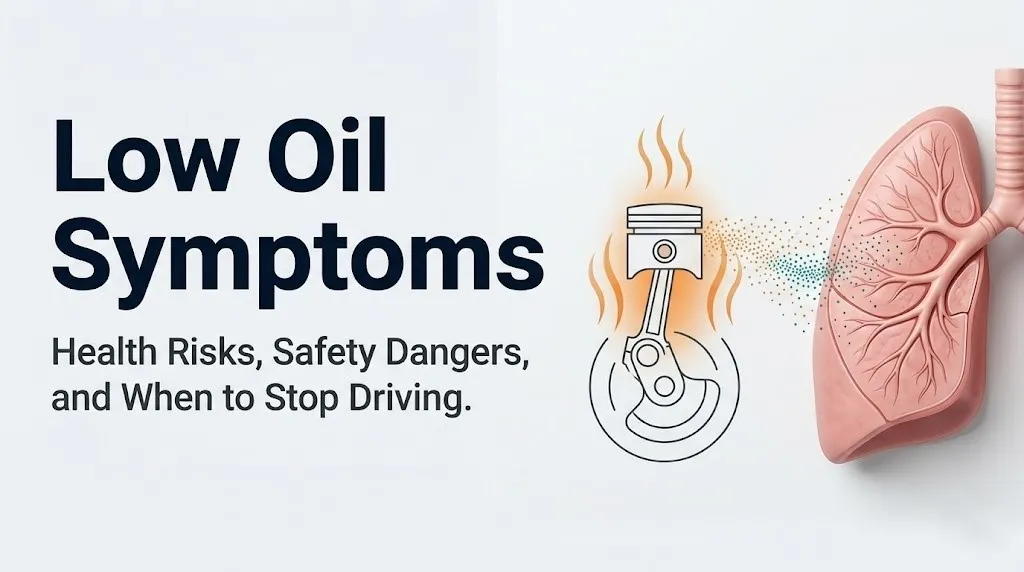
Low Oil Symptoms: Health Risks, Safety Dangers, and What to Do
Low oil symptoms are not just mechanical warning signs about your engine: they are direct indicators that your vehicle is producing elevated toxic combustion byproducts, creating physical fire and accident risks, and potentially exposing you and your passengers to chemicals with documented respiratory and carcinogenic health effects. Recognizing these symptoms and understanding their health and safety implications can be the difference between a repair bill and a medical emergency.
The National Highway Traffic Safety Administration (NHTSA) has documented that engine-related vehicle fires account for thousands of vehicle fires annually in the United States, with overheating and lubrication failure among the leading mechanical contributors. The International Agency for Research on Cancer (IARC) classifies benzo[a]pyrene, a primary combustion product of burning engine oil, as a Group 1 human carcinogen with no identified safe exposure level.
This article covers every observable symptom of low oil conditions with the physiological and mechanical reason each one occurs, the specific toxic compounds in burning oil smoke and what they do to your respiratory system and long-term health, the physical safety emergencies created by engine failure from oil starvation, who faces the greatest health risk, and exactly when you need to stop driving and call 911.
Low Oil Symptoms: What They Mean for Your Health and Safety
Low oil symptoms span two distinct categories: mechanical warning signs produced by insufficient lubrication of engine components, and health and safety risks produced by the toxic combustion byproducts of burning engine oil and the physical dangers of engine mechanical failure.
Most drivers recognize the mechanical warnings when they appear: an oil pressure warning light on the dashboard, a knocking or ticking sound from the engine, blue or gray smoke from the tailpipe, a burning smell in or around the vehicle, or reduced engine power and responsiveness. What most drivers do not know is that several of these mechanical symptoms simultaneously signal a health exposure event for everyone inside the vehicle.
When engine oil is so low that it enters the combustion chamber past worn piston rings or valve stem seals, it burns alongside the fuel-air mixture. Burning petroleum-derived oil produces an entirely different class of combustion products from burning gasoline alone: polycyclic aromatic hydrocarbons (PAHs), acrolein, formaldehyde, and elevated particulate matter. These compounds reach vehicle occupants through the HVAC system and represent documented health hazards.
| Low Oil Symptom | Mechanical Cause | Health or Safety Risk |
|---|---|---|
| Oil pressure warning light | Oil pressure drop below sensor threshold | Safety emergency: stop driving |
| Engine knocking/ticking | Metal-on-metal bearing contact | Imminent engine seizure risk |
| Burning oil smell | Oil contacting hot engine surfaces or burning in cylinder | Toxic combustion byproduct inhalation |
| Blue or gray exhaust smoke | Oil burning in combustion chamber | PAH, acrolein, and PM2.5 inhalation |
| Engine overheating | Friction heat without lubrication | Engine fire risk, loss of vehicle control |
| Engine seizure | Complete bearing lubrication failure | Highway safety emergency, crash risk |
Older adults driving high-mileage vehicles face the highest combined mechanical and health risk because engine wear in high-mileage engines creates the conditions most likely to produce burning oil: worn piston ring grooves, degraded valve stem seals, and increased oil consumption between service intervals.
What Happens Inside Your Engine When Oil Is Critically Low
When engine oil drops to a critically low level, the hydrodynamic oil film that normally separates moving metal engine components collapses, allowing direct metal-on-metal contact between surfaces moving at thousands of revolutions per minute, generating heat that accelerates component failure in a self-reinforcing cycle.
Hydrodynamic lubrication is the physical principle at the core of engine oil function. The oil pump draws oil from the oil pan (sump) and forces it under pressure through galleries drilled into the engine block and cylinder head, delivering oil to the crankshaft main bearings, connecting rod bearings, camshaft bearings, and valve train components. This pressurized oil creates a thin but physically strong film between moving surfaces, preventing direct metal contact even at engine speeds of 600 to 7,000 RPM.
When oil volume in the pan drops below the oil pickup tube inlet, the pump begins drawing air instead of oil. Oil pressure collapses. The protective film on every lubricated surface disappears simultaneously. Within seconds of oil pressure loss at operating temperature, the crankshaft main bearings (which support the entire rotating assembly) and connecting rod bearings (which link the pistons to the crankshaft) begin operating under direct metal-to-metal contact. The friction heat generated is enormous: bearing surfaces can reach temperatures sufficient to melt aluminum alloy within 30 to 60 seconds of oil pressure loss at operating temperature, according to engine lubrication engineering data.
Simultaneously, if oil has been low enough for long enough that oil is entering the combustion chamber past worn piston rings, combustion temperatures accelerate the breakdown of the petroleum base oil into the complex mixture of combustion products that become the health exposure concern for occupants.
People who drive vehicles equipped with oil consumption monitoring systems (now standard on many 2020 and newer vehicles) may receive electronic alerts before reaching critically low levels. People driving older vehicles without these systems must rely on dipstick checking and symptom recognition, making the warning signs covered in this article their primary safety tool.
Oil Pressure Warning Light: What It Means for Your Safety
The oil pressure warning light (typically a red icon resembling an oil can with a drop) activates when engine oil pressure drops below a threshold of approximately 5 to 10 psi, a level that indicates the oil film on critical bearing surfaces has already collapsed, and at this point the engine is sustaining active damage with every revolution.
The oil pressure warning light is not a “low oil level” indicator. It is an oil pressure indicator. Oil pressure can drop to dangerous levels for two reasons: extremely low oil volume (the pump cannot supply enough oil) or a failed oil pump (the oil is present but not being circulated). In either case, the mechanical consequence is the same: lubrication failure at every bearing and journal in the engine.
The moment this light illuminates at operating temperature while driving, the appropriate response is to reduce throttle, activate hazard lights, and safely pull off the road within the shortest practical distance, then shut off the engine. Do not continue driving to a repair shop. Do not drive another mile to reach an exit. The engine damage occurring in those additional minutes is catastrophic and the fire risk is real.
The National Highway Traffic Safety Administration notes in its vehicle safety data that engine compartment fires frequently originate from lubrication system failures that overheat engine components to the point of igniting adjacent flammable materials including engine oil, rubber hoses, and wiring insulation. An engine running with no oil pressure for more than 1 to 2 minutes at operating temperature is generating sufficient friction heat to potentially reach this threshold.
Drivers who take anticoagulant medications (such as warfarin) or antiplatelet agents should be aware that any traumatic injury resulting from a vehicle accident caused by engine failure carries higher bleeding risk. This population should be especially conservative about pulling over immediately at any warning sign, rather than attempting to drive to a service location.
Key Takeaway: The oil pressure warning light is not a maintenance reminder. It is a safety emergency signal indicating active engine damage and fire risk that requires safely stopping the vehicle immediately, not at the next exit.
Engine Knocking and Ticking Sounds from Low Oil
Engine knocking and ticking sounds from low oil are produced by two different mechanisms: knocking (a deep, rhythmic metallic sound) indicates that crankshaft or connecting rod bearings are operating without adequate oil film, while ticking (a higher-pitched rapid tick) indicates that the valve train components, including lifters, rocker arms, or camshaft lobes, are not receiving adequate oil pressure to maintain hydraulic preload.
The connecting rod knock is the more immediately dangerous of the two. Each connecting rod connects a piston to the crankshaft, and the connecting rod bearings are the most highly loaded bearings in the engine because they transmit the full force of each combustion event directly to the rotating crankshaft. Without an oil film, these bearings begin experiencing direct metal contact. The knocking sound is produced by the loose bearing clearance that develops as bearing material is abraded away, allowing the connecting rod to momentarily impact the crankshaft journal on each combustion stroke.
This sound represents a countdown to engine seizure. The rate of progression from first audible knock to complete bearing failure depends on engine load and speed, but at highway speed under load, it can be measured in minutes rather than hours.
Valve train ticking from low oil is less immediately catastrophic but indicates that oil pressure is insufficient to maintain hydraulic lifter preload, producing increased valve clearance and the characteristic rapid ticking sound. This symptom, if caught early before knocking develops, still indicates that oil pressure is critically compromised and the vehicle should not be driven.
The EPA notes that vehicles with internal engine wear producing burning oil also produce elevated hydrocarbon emissions, which means that a vehicle audibly knocking from low oil is simultaneously producing elevated toxic combustion byproducts from oil burning in the combustion chamber.
People with hyperacusis (heightened sound sensitivity) or chronic ear conditions may find auditory identification of engine knock more stressful but may also detect early ticking before it progresses, providing a useful early warning advantage if they act on it promptly.
Burning Oil Smell in a Car: What It Means and Why It Matters for Health
The burning oil smell inside or around a car with low oil is produced when engine oil contacts hot external engine surfaces (typically the exhaust manifold, whose surface temperature exceeds 400 to 800 degrees Celsius during operation) or when oil enters the combustion chamber and burns alongside the fuel-air mixture, releasing a distinct acrid chemical odor produced by the incomplete combustion of petroleum compounds.
This smell is clinically significant beyond its function as a mechanical warning. The compounds producing the characteristic burning oil odor include acrolein (an unsaturated aldehyde produced by the thermal degradation of glycerol and fatty acid components in lubricating oil), formaldehyde and other short-chain aldehydes, and a mixture of PAHs with low vapor pressure that produce both odor and fine particulate matter simultaneously.
The EPA has established acrolein as a hazardous air pollutant with direct mucous membrane irritation effects at air concentrations above 0.02 ppm, including burning and tearing of the eyes, throat irritation, coughing, and at higher concentrations, bronchospasm in people with sensitive airways. The concentrations achievable inside a poorly ventilated vehicle cabin when oil is burning on external surfaces can approach or exceed this threshold in some conditions.
Running the vehicle’s HVAC system in fresh air mode while a burning oil smell is present actively draws these combustion products through the cabin ventilation system, increasing occupant exposure. Switching to recirculation mode reduces fresh contamination but does not clear compounds already present in the cabin air.
People with occupational asthma triggered by chemical irritants, including those with prior sensitization to petroleum combustion products, are at elevated risk for rapid bronchospasm onset when exposed to burning oil odors in a vehicle cabin.
Blue or Gray Smoke from Exhaust as a Low Oil Symptom
Blue or gray smoke from a vehicle’s exhaust is the visual confirmation that engine oil is burning inside the combustion chamber, and this smoke is a direct delivery mechanism for polycyclic aromatic hydrocarbons, fine particulate matter, acrolein, and formaldehyde to everyone downwind of the vehicle, including drivers and passengers of following vehicles.
The color distinction is mechanically informative. Blue smoke indicates active combustion of engine oil, typically because oil is passing the piston ring seal into the combustion chamber above the piston, or because oil is being drawn past valve stem seals into the intake ports. Gray smoke can indicate oil burning at a lower rate, or a mixture of oil and water vapor from condensation that has not fully cleared. Both indicate that engine oil is entering the combustion chamber and producing combustion byproducts that exit through the tailpipe.
A vehicle producing blue smoke at the tailpipe is, by definition, a mobile emitter of PAH-containing particulate matter at concentrations substantially higher than a properly functioning vehicle. People in immediately following vehicles receive the highest exposure because the exhaust plume is concentrated and has not yet dispersed into ambient air. Cyclists, pedestrians at traffic lights, and drivers of low-riding vehicles who are closer to tailpipe level face higher exposure than drivers of trucks or SUVs at the same following distance.
The American Lung Association has consistently identified fine particulate matter from incomplete combustion as a documented trigger for asthma exacerbation and a contributor to long-term respiratory disease. Blue smoke from an oil-burning vehicle represents exactly this class of exposure.
Children seated in rear-facing or rear seats of vehicles following an oil-burning vehicle face higher proportional exposure than adults in the same vehicle because of their higher respiratory rate per kilogram of body weight and their lower position relative to the tailpipe exhaust plume.
Key Takeaway: Blue exhaust smoke is visual confirmation that the vehicle is producing a PAH-containing fine particulate plume at concentrations substantially higher than a properly functioning vehicle, creating a documented health exposure for everyone in the vehicle’s immediate vicinity.
Engine Overheating from Low Oil and Its Physical Danger
Engine overheating from low oil is a direct consequence of losing the lubricant’s dual function as both a friction reducer and a secondary coolant, and when an engine reaches extreme overheat temperatures from lubrication failure, the risk of engine compartment fire and the specific physical injury risks this creates become the primary concern.
Engine oil serves two thermal management functions simultaneously. It reduces friction between moving components (which generates heat) and it carries heat away from highly loaded surfaces (bearings, pistons, and cylinder walls) that the water-based cooling system cannot directly access. When oil level drops below the functional minimum, friction heat increases dramatically while the oil’s heat-carrying capacity also decreases. The result is a compounding thermal event where component temperatures rise faster than the cooling system can compensate.
Engine temperatures under low-oil starvation can reach 300 to 500 degrees Celsius at bearing surfaces within minutes, far exceeding the flash point of most petroleum-based engine oils (approximately 200 to 260 degrees Celsius). Once oil reaches its flash point on contact with hot external surfaces, it can ignite. The National Fire Protection Association (NFPA) reports that approximately 17% of vehicle fires originate in the engine compartment and involve electrical or mechanical failures, with thermal events from lubrication failure among the contributing mechanisms.
An engine compartment fire in a moving vehicle at highway speed creates a specific physical danger sequence: the driver may not immediately notice interior fire (flames visible at engine bay vents are often the first visual sign), the time from ignition to passenger compartment involvement can be as short as 2 to 4 minutes, and evacuation from a highway with traffic passing is itself a serious injury risk.
Older drivers over 70 who may have slower physical reaction times face elevated injury risk both from the fire evacuation scenario and from any accident caused by sudden engine failure at speed. This population should be particularly conservative about addressing any low oil warning sign immediately rather than deferring to a later date.
Is Burning Oil Smoke Dangerous to Breathe
Burning oil smoke is dangerous to breathe because it contains polycyclic aromatic hydrocarbons (PAHs) including benzo[a]pyrene, acrolein, formaldehyde, and fine particulate matter (PM2.5), all of which produce acute respiratory irritation and, with chronic or repeated exposure, carry documented carcinogenic and systemic health risks.
Acrolein acts on respiratory tissue through TRPA1 ion channel activation on nociceptive nerve endings in the nasal and bronchial mucosa, producing immediate burning, tearing, coughing, and throat irritation at concentrations as low as 0.02 ppm, according to NIOSH occupational exposure data. These effects occur within minutes of exposure to burning oil smoke in an enclosed vehicle cabin.
Formaldehyde, classified as a Group 1 human carcinogen by the IARC, is produced during the incomplete combustion of petroleum hydrocarbons at lower temperatures. Formaldehyde causes direct DNA damage in nasal epithelial cells and has been causally linked to nasopharyngeal cancer in occupationally exposed workers, according to IARC Monograph Vol. 100F. The concentrations achievable inside a vehicle cabin with active oil burning through the exhaust or on external engine surfaces are variable but may approach the NIOSH short-term exposure limit of 0.1 ppm in extreme cases.
Fine particulate matter (PM2.5) from burning oil reaches the alveolar epithelium directly, activating alveolar macrophages to release inflammatory cytokines including IL-6 and TNF-alpha, producing both local pulmonary inflammation and systemic vascular inflammatory effects. People with pre-existing coronary artery disease face measurable cardiovascular risk from PM2.5 exposure at levels achievable in vehicle cabin air during active oil burning events, as research has found an association between acute PM2.5 exposure and myocardial ischemia in individuals with existing atherosclerotic coronary disease.
Polycyclic Aromatic Hydrocarbons in Burning Engine Oil
Polycyclic aromatic hydrocarbons (PAHs) in burning engine oil are produced when the petroleum-derived base oil and its additive package undergo incomplete combustion at the temperatures present in the engine combustion chamber or on hot external engine surfaces, generating a complex mixture of fused-ring aromatic compounds with well-documented carcinogenic properties.
Benzo[a]pyrene (BaP) is the most toxicologically studied PAH from combustion sources. The IARC classifies it as a Group 1 human carcinogen based on sufficient evidence of carcinogenicity in humans from epidemiological studies of occupationally exposed populations, supported by extensive mechanistic laboratory evidence. Benzo[a]pyrene is metabolized in the body by CYP1A1 and CYP1B1 enzymes (both induced by the aryl hydrocarbon receptor, AhR) to the reactive metabolite benzo[a]pyrene diol epoxide (BPDE). BPDE forms covalent DNA adducts with guanine bases in critical genes including TP53 (the primary tumor suppressor gene in humans). These adducts cause guanine-to-thymine transversions that inactivate TP53, a foundational step in the development of lung cancer, bladder cancer, and other PAH-associated malignancies.
Engine oil contains PAHs both from its petroleum base stock and from PAHs absorbed from combustion chamber deposits during normal engine operation. As oil ages and degrades, its PAH content increases. Low oil conditions accelerate oil degradation by increasing thermal stress on the remaining oil, concentrating PAHs further.
The CDC notes that benzo[a]pyrene and related PAHs are among the compounds of concern in occupational settings where combustion products are generated, including engine repair facilities, transport vehicle operations, and any enclosed space where engines operate. The same compounds generated in these occupational settings are produced at elevated concentrations when a vehicle operates with burning oil.
Individuals with genetic polymorphisms in CYP1A1 or CYP1B1 that produce rapid induction of these enzymes generate higher concentrations of BPDE from equivalent PAH exposures, placing them at potentially elevated carcinogenic risk from equivalent burning oil exposure compared to individuals with lower-activity enzyme variants.
Key Takeaway: Benzo[a]pyrene in burning engine oil is metabolized to benzo[a]pyrene diol epoxide (BPDE), which forms DNA adducts in tumor suppressor genes including TP53, making burning oil smoke a documented carcinogen by the same mechanism as cigarette smoke PAH exposure.
Respiratory and Health Symptoms from Burning Oil Exposure
Respiratory and health symptoms from burning oil exposure occur along a spectrum from acute irritation (throat burning, eye tearing, coughing within minutes of exposure) to chronic inflammatory and carcinogenic effects with sustained repeated exposure, and the distinction between acute and chronic presentations guides different levels of medical response.
Acute exposure symptoms produced by burning oil compounds in an enclosed vehicle:
- Eye and nasal irritation: bilateral burning, tearing, and redness within 5 to 15 minutes of sustained cabin exposure to burning oil fumes, produced by acrolein and formaldehyde activating TRPA1 nociceptors in the conjunctival and nasal epithelium
- Throat burning and coughing: direct mucosal irritation from acrolein and aldehydes reaching the laryngeal and bronchial epithelium
- Headache: a combination of PM2.5-mediated cerebrovascular vasodilation and CO production from engine combustion inefficiency at low oil pressure
- Dizziness and nausea: VOC CNS depression at moderate cabin concentrations
- Shortness of breath or wheeze: bronchospasm triggered by acrolein and particulate matter in people with pre-existing airway disease
Chronic exposure symptoms, relevant primarily to mechanics, fleet vehicle operators, and individuals who regularly drive a vehicle with persistent oil burning over weeks to months:
- Persistent productive cough (PAH and PM2.5-mediated lower respiratory tract inflammation)
- Increased frequency of upper respiratory infections (particulate matter-mediated impairment of mucociliary clearance in the bronchial epithelium)
- Progressive dyspnea on exertion in people with pre-existing COPD (accelerated airway inflammation from chronic PAH and PM2.5 exposure)
Any person experiencing acute respiratory distress, chest tightness, inability to take a full breath, or loss of consciousness in a vehicle with visible burning oil smoke should exit the vehicle immediately and call 911 if symptoms do not rapidly resolve in fresh outdoor air.
Engine Seizure from No Oil: The Highway Safety Emergency
Engine seizure from running a vehicle with no oil is a sudden, complete mechanical failure in which the crankshaft main bearings fuse to the crankshaft journals from heat and metal-to-metal contact, locking the engine’s rotating assembly and, in vehicles without automatic transmission torque converter isolation at speed, potentially locking the driven wheels and causing immediate loss of vehicle control.
The sequence of events in an engine seizure is rapid. Oil pressure is lost. Within 30 to 90 seconds at operating temperature and load, main bearing surfaces reach temperatures sufficient to soften and then melt the bearing shell material (typically a lead-tin or bismuth-tin alloy over a steel backing). The molten bearing material extrudes, the clearance between the bearing and crankshaft journal collapses, and the crankshaft becomes mechanically bonded to the stationary bearing housing. The engine stops rotating.
In a vehicle traveling at 65 miles per hour (approximately 105 km/h), a sudden locking of the driven axle produces an instantaneous loss of that axle’s contribution to vehicle control. In rear-wheel drive vehicles, this manifests as sudden rear-end instability. In front-wheel drive vehicles, steering and primary braking traction are compromised simultaneously. In all-wheel drive vehicles, the dynamics depend on the specific torque distribution system and whether automatic disconnect mechanisms activate before the lock occurs.
The National Highway Traffic Safety Administration documents numerous vehicle accidents attributable to sudden mechanical failure, and loss of control from drivetrain failure at highway speed carries documented injury and fatality risk. A driver experiencing sudden severe engine knocking, a complete loss of engine power, or sudden vehicle instability at speed should not attempt to diagnose the cause. The appropriate response is to immediately activate hazard lights, avoid braking sharply, and guide the vehicle to the roadway shoulder using available momentum.
Drivers who have previously experienced a traumatic brain injury or vestibular disorder may have impaired emergency response capability during the sudden disorientation caused by unexpected vehicle deceleration at speed. This population should avoid driving any vehicle with known low oil symptoms until the mechanical condition has been professionally assessed.
Who Faces the Highest Health Risk from Burning Engine Oil Exposure
The populations facing the highest health risk from burning engine oil exposure are occupational mechanics and fleet operators (chronic dermal and inhalational PAH exposure), pregnant women (fetal PAH carcinogenesis risk via placental transfer), children in rear vehicle seats (higher respiratory rate, developing organ systems), people with COPD or asthma (acute bronchospasm from acrolein and PM2.5), and tobacco smokers (compounding benzo[a]pyrene exposure from two sources).
| Population | Primary Risk Mechanism | Specific Health Concern |
|---|---|---|
| Occupational mechanics | Chronic dermal and inhalational PAH exposure | Elevated bladder cancer, lung cancer, and leukemia risk via BPDE-DNA adducts |
| Pregnant women | Placental PAH transfer to fetal circulation | Fetal carcinogenesis, intrauterine growth restriction |
| Children in rear seats | Higher respiratory rate per body weight, developing organs | Greater PAH and PM2.5 absorption per kg, higher neurological PAH sensitivity |
| People with COPD | Reduced baseline FEV1, limited pulmonary reserve | Acute exacerbation from acrolein bronchospasm and PM2.5 inflammation |
| People with asthma | Bronchial hyperreactivity to chemical irritants | Acrolein-triggered bronchospasm at lower concentrations than in healthy adults |
| Tobacco smokers | Already carrying baseline benzo[a]pyrene exposure from cigarette smoke | Compounding BPDE-DNA adduct burden across two exposure sources |
| People with coronary artery disease | Existing endothelial vulnerability to PM2.5-mediated inflammation | Myocardial ischemia risk from acute PM2.5 exposure during burning oil event |
| Individuals with CYP1A1 rapid-induction polymorphisms | Faster conversion of benzo[a]pyrene to BPDE | Higher DNA adduct formation per equivalent PAH exposure |
NIOSH occupational health data has found elevated rates of certain cancer subtypes in vehicle mechanics and maintenance workers with chronic exposure to used motor oil and combustion products, establishing the occupational risk basis for this population. Any mechanic working in an enclosed shop environment where oil-burning engines are running should ensure adequate mechanical ventilation and discuss occupational PAH exposure monitoring with an occupational medicine physician.
Low Oil Symptoms in Specific Vehicle Types: High-Mileage and Older Cars
Low oil symptoms appear earlier, progress faster, and carry higher health exposure risk in high-mileage vehicles and older cars because engine wear in these vehicles creates the specific conditions that allow oil to enter the combustion chamber and produce burning oil symptoms even when overall oil level is within the normal range on the dipstick.
The key distinction is oil consumption versus acute oil loss. A vehicle that is losing oil rapidly through an external leak (visible oil spots on the pavement, dramatic drop in dipstick level) is losing oil without burning it, and the primary risk is acute oil starvation and engine failure. A high-mileage vehicle with worn piston ring grooves or degraded valve stem seals is burning oil inside the engine on every combustion cycle, and the primary additional risk is continuous low-level PAH and combustion byproduct exposure to occupants even when the oil level remains “acceptable” on the dipstick.
Vehicles over 10 years old or with more than 150,000 miles are statistically more likely to have engine wear patterns that produce oil burning. The EPA notes in its vehicle emissions testing framework that high-mileage vehicles produce disproportionately higher hydrocarbon emissions than newer vehicles, and a portion of this elevation in high-mileage vehicles is attributable to oil combustion producing the compound classes covered in this article.
Owners of high-mileage vehicles who notice blue smoke particularly at startup (before the engine has warmed the valve stem seals to their operating temperature) or under sustained high-rpm operation (when oil is more likely to pass worn piston rings) should have the vehicle inspected by a certified mechanic, check oil level every 500 to 1,000 miles rather than at standard service intervals, and recognize that persistent oil burning warrants medical attention if any respiratory or health symptoms have developed during regular vehicle use.
Older adults who own high-mileage older vehicles and drive them daily as their primary transportation face the combined risk of higher mechanical failure probability and higher cumulative health exposure, making regular oil level monitoring and annual vehicle inspection their most practical safety tool.
Key Takeaway: A high-mileage vehicle producing blue smoke at startup is burning oil through worn valve stem seals on every start, meaning occupants receive a PAH and particulate matter exposure dose on every drive even when the oil level reads normal on the dipstick.
When Low Oil Symptoms Require You to Stop Driving Immediately
Low oil symptoms require you to stop driving immediately when any of the following are present: the oil pressure warning light is illuminated, audible engine knocking has begun, visible blue or gray smoke is coming from the exhaust at operating temperature, the temperature gauge is climbing past the normal range, or any burning oil smell is entering the passenger cabin with intensity.
None of these symptoms are “drive slowly to a mechanic” situations. They are “pull over now, shut off the engine, call for help” situations. The progression from any of these warning signs to engine seizure, fire, or complete loss of vehicle control can be measured in minutes at highway speed and load.
To safely respond when these symptoms appear while driving:
- Reduce throttle immediately and avoid accelerating further. Every additional demand for power at this moment accelerates the rate of bearing failure.
- Activate hazard lights to signal distress to other drivers around you.
- Do not brake sharply unless collision avoidance requires it. In the event of engine lock, sharp braking can cause dangerous vehicle instability.
- Guide the vehicle to the roadway shoulder using the vehicle’s remaining momentum. In urban environments, a parking lot, gas station, or any off-road space is preferable to stopping in active traffic lanes.
- Shut off the engine once safely off the travel lanes. Do not attempt to restart a knocking engine.
- Exit the vehicle and move away from it if you smell burning or see any smoke. A vehicle with active engine burning can progress to engine fire without visible flame on the exterior.
- Call for towing rather than attempting further mechanical self-diagnosis roadside. A seized or seizing engine cannot be safely driven to a mechanic.
People driving with pre-existing disabilities affecting lower limb function should plan their emergency exit strategy before a crisis occurs. Identifying the door handle and ensuring the door opens fully from the stopped position takes seconds to verify in a non-emergency situation and is important to practice.
Emergency Situations Caused by Low Engine Oil: What to Do Right Now
Certain emergency situations caused by low engine oil require immediate response that goes beyond mechanical intervention and involves 911, fire safety, and medical evaluation.
Certain presentations associated with low engine oil require immediate emergency evaluation or response. Do not wait to assess whether these resolve on their own.
Call 911 or go to the nearest emergency room immediately if:
- Any vehicle occupant loses consciousness, becomes confused, or has extreme difficulty breathing during or after driving a vehicle with burning oil symptoms (indicates possible CO poisoning or acute toxic inhalation requiring emergency medical assessment)
- Visible flames or fire are present under the hood or in the engine bay: Call 911 immediately, exit the vehicle away from the fire side, move at least 100 feet away, and do not return to the vehicle for any personal belongings
- The vehicle loses control at speed from engine seizure or mechanical failure: activate hazard lights, use available steering and braking to reach the shoulder, exit the vehicle safely, and call 911 for traffic safety assistance and medical assessment
- Any occupant (particularly a child, pregnant woman, or person with pre-existing respiratory or cardiovascular disease) develops severe shortness of breath, chest pain, or loss of consciousness during or after driving a vehicle producing blue smoke or burning oil smell
Call Poison Control at 1-800-222-1222 if you are uncertain whether the respiratory or neurological symptoms you or a passenger are experiencing reflect toxic combustion product exposure and need guidance on whether emergency care is needed.
These situations can indicate acute CO poisoning, acute toxic inhalation injury, traumatic injury from vehicle accident, or vehicle fire, all of which require emergency medical assessment and response, not a delayed clinic appointment.
Frequently Asked Questions About Low Oil Symptoms
What are the first symptoms of a car running low on oil?
The earliest observable symptoms of a car running low on oil are a faint ticking or tapping sound from the engine when the oil level has dropped to the point where the valve train receives inadequate pressure, and an increase in engine operating temperature.
Many vehicles display a low oil pressure warning light before audible symptoms develop, and this light should be treated as an immediate stop-driving signal rather than a deferred maintenance reminder.
Checking the oil dipstick with the engine off and cooled for 5 minutes is the only reliable method for confirming whether oil level, rather than another mechanical issue, is the cause of these early warning signs.
Can burning oil smell from a car make you sick?
Yes, burning oil smell from a car can make you sick because the compounds producing the smell include acrolein and formaldehyde, both of which directly irritate the nasal, eye, and bronchial mucosa at concentrations achievable inside a vehicle cabin when oil is burning on hot engine surfaces.
NIOSH has established acrolein as a hazardous air pollutant producing respiratory irritation at concentrations above 0.02 ppm, and formaldehyde is classified as a Group 1 human carcinogen by the IARC with documented acute irritant and long-term carcinogenic effects.
Anyone experiencing throat burning, eye irritation, coughing, or headache correlated with a burning oil smell in their vehicle should exit the vehicle into fresh air, evaluate their symptoms, and seek medical evaluation from a primary care physician if symptoms persist.
What should I do immediately if the oil pressure warning light comes on?
Reduce throttle, activate hazard lights, and safely pull the vehicle off the road within the shortest practical distance when the oil pressure warning light illuminates during driving.
Shut off the engine once stopped and do not attempt to restart it until a mechanic has diagnosed the cause, because continued operation with low oil pressure accelerates bearing failure and increases engine fire risk.
Do not drive the vehicle to a mechanic: call for towing, because any additional driving with a confirmed oil pressure failure is both mechanically and physically dangerous.
Is blue smoke from a car exhaust dangerous to breathe?
Blue exhaust smoke from a vehicle is dangerous to breathe because it contains polycyclic aromatic hydrocarbons (PAHs) including benzo[a]pyrene (IARC Group 1 carcinogen), acrolein, formaldehyde, and PM2.5 particles, all of which have documented acute and chronic respiratory and carcinogenic health effects.
Drivers and passengers of the vehicle producing blue smoke receive direct cabin exposure, while drivers of immediately following vehicles receive the highest ambient exposure from the concentrated exhaust plume before it disperses.
People with asthma, COPD, or coronary artery disease should treat a vehicle producing blue smoke as a health exposure situation and avoid driving it or following immediately behind it until the oil consumption problem is repaired.
Can a car engine seize while driving and what happens when it does?
A car engine can seize while driving when bearing lubrication fails catastrophically from oil starvation, causing the crankshaft to fuse to the bearing journals and locking the engine’s rotating assembly suddenly.
In rear-wheel drive and all-wheel drive vehicles, this can produce sudden loss of driven-wheel traction at speed, causing vehicle instability that requires emergency steering response to maintain control.
The NHTSA documents that sudden mechanical failure at highway speed represents a documented injury risk, making any audible engine knocking or loss of engine power at speed a signal to immediately reduce throttle, activate hazards, and guide the vehicle to the shoulder.
How long can you drive on critically low oil before engine failure?
At operating temperature under load with oil pressure fully lost, catastrophic bearing failure can begin within 30 to 90 seconds based on engine lubrication engineering data, making critically low oil an immediate stop-driving situation rather than a drive-carefully-to-a-mechanic situation.
The time to failure is not a fixed interval: it depends on engine design, operating temperature, speed, and load. A cold engine starting from zero oil can take longer to reach critical failure temperatures, while a fully warmed engine at highway speed can seize in under two minutes of zero oil pressure.
Attempting to calculate a “safe” driving distance with a confirmed low oil pressure warning is not clinically or mechanically defensible: the appropriate response at any confirmed oil pressure warning is to stop driving immediately.
Closing
Low oil symptoms are a dual warning: they signal both an imminent mechanical emergency and an ongoing health exposure event. The burning smell, blue smoke, and knocking sounds are not just automotive inconveniences. They are your only warning that toxic combustion products are entering the air you breathe every minute the engine runs in this condition.
If you are experiencing any of these symptoms right now while driving, stop the vehicle safely, shut off the engine, and assess from outside the vehicle. If the oil pressure light is on or you hear knocking, do not restart the engine. Call for a tow.
If you have been regularly driving a vehicle with persistent blue smoke or burning oil smell, contact your primary care physician to discuss the exposure. Bring notes on how long the vehicle has been smoking, how frequently you drive it, and any respiratory or health symptoms you’ve noticed. You now know the specific chemical mechanism behind that exposure, and that is exactly the kind of information that makes a clinical conversation productive.