Buttock Pain Cancer Symptoms: Warning Signs to Know
Buttock pain cancer symptoms include persistent pain at rest, pain that worsens at night without any positional trigger, pain radiating from the posterior pelvis into the thigh with numbness or tingling, and pain accompanied by changes in bowel or bladder function. Cancer is not the most common cause of buttock pain, but specific symptom patterns make malignancy a possibility that requires professional evaluation rather than watchful waiting.
According to the National Cancer Institute, cancer-related pain affects approximately 30 to 40 percent of patients with early-stage cancer and up to 70 to 90 percent of those with advanced disease, with pelvic and sacral pain representing one of the more frequently reported regional pain syndromes in cancers of the rectum, prostate, cervix, and sacrum. That figure reflects the clinical reality that cancer pain is not rare, and buttock pain as a presenting symptom is reported across multiple cancer types.
This article covers each type of cancer that can produce buttock pain, the specific physiological mechanisms by which tumors create that pain, the symptom characteristics that distinguish cancer-related pain from benign musculoskeletal causes, the red flags that warrant urgent evaluation, and exactly what type of medical evaluation is appropriate at each clinical threshold.
Buttock Pain Cancer Symptoms: What You Need to Know First
Buttock pain cancer symptoms are defined by specific pain characteristics that differ from the mechanical or musculoskeletal buttock pain most people experience from sitting too long, overexerting a hip muscle, or irritating the sciatic nerve with a herniated lumbar disc.
The buttock region is not a single tissue. It includes the gluteus maximus, gluteus medius, and gluteus minimus muscles, the piriformis and other deep external rotator muscles, the sciatic nerve (running from the lower spine through the greater sciatic foramen and down the posterior thigh), the sacrum and coccyx, the sacroiliac joint, surrounding bursae, and a dense network of blood vessels and lymphatic channels. Cancer can affect each of these structures through different pathways.
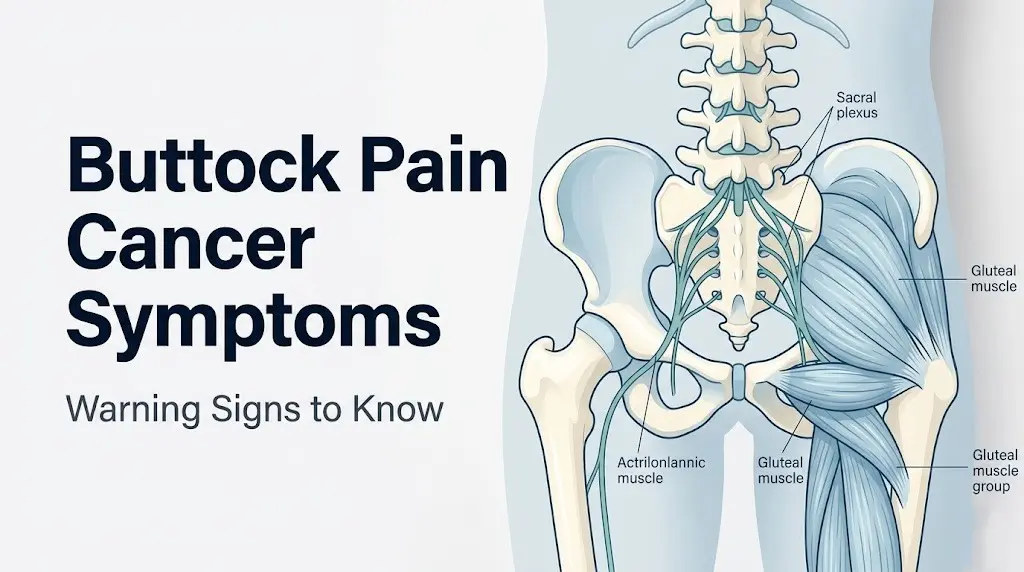
The most practically important thing to understand is this: cancer-related buttock pain tends to be progressive, persistent, present at rest, and often worse at night when inflammatory mediators are more active and the distracting stimuli of daily activity have quieted. Mechanical musculoskeletal pain tends to be position-dependent and relieved by rest.
Key distinguishing features of cancer-related buttock pain:
- Pain present at rest and not relieved by lying down or changing position
- Pain that progressively worsens over weeks rather than improving
- Pain accompanied by unexplained weight loss, fatigue, or night sweats
- Pain associated with new bowel habit changes, rectal bleeding, or urinary changes
- Pain with neurological features: numbness, tingling, or weakness in the leg
- Pain in adults over 50 with no prior injury or overuse history
Cancer-related buttock pain is not always severe at first. Some primary sacral tumors and early metastatic deposits produce a dull, aching discomfort for weeks or months before the pain intensifies, which is precisely why these presentations are frequently attributed to a muscle strain, piriformis irritation, or sciatica before the underlying cause is identified.
Can Cancer Actually Cause Buttock Pain?
Cancer can cause buttock pain through direct tumor involvement of structures within or adjacent to the gluteal region, through nerve compression affecting the sciatic nerve or sacral plexus, and through referred pain from pelvic organs that share spinal cord segments with the posterior gluteal area.
Yes, this is clinically well-established. The American Cancer Society documents that cancers arising in the rectum, colon, prostate, uterus, cervix, ovaries, and sacrum frequently produce pain in the posterior pelvic region, including the buttocks. These are not rare presentations in the oncology clinical literature.
Think of the pelvis like a crowded apartment building. The rectum, bladder, prostate or uterus, major blood vessels, lymph nodes, sacral nerve roots, and the sacrum itself all share a relatively confined anatomical space. When a tumor grows in any one of these structures, it has nowhere to expand without eventually pressing on or invading neighboring structures. The buttock, sitting directly posterior to this space, becomes a frequent location for pain referral and direct nerve compression.
| Cancer Type | Primary Mechanism of Buttock Pain | Typical Pain Character |
|---|---|---|
| Rectal / Colorectal | Direct posterior invasion, sacral plexus compression | Deep aching, pressure, worsens with sitting |
| Prostate | Sacral nerve root infiltration, bone metastasis to pelvis | Aching, night pain, bilateral posterior pelvic pain |
| Cervical / Uterine | Sciatic nerve or sacral plexus compression | Burning, shooting, radiates down leg |
| Sacral Chordoma | Direct sacral bone and nerve destruction | Aching, progressive, sacrococcygeal location |
| Soft Tissue Sarcoma | Local mass effect in gluteal compartment | Deep pressure, palpable mass, progressive |
| Bone Metastasis | Periosteal activation by osteolysis | Constant aching, severe night pain, tender to touch |
The clinical take: not all buttock pain points to cancer. Sciatica, piriformis syndrome, sacroiliac joint dysfunction, and gluteal tendinopathy are far more frequent causes. But specific clinical features shift that probability, and those features are what this article clarifies.
What Types of Cancer Cause Buttock Pain?
The types of cancer most commonly associated with buttock pain are colorectal cancer (including rectal cancer), prostate cancer, gynecological cancers (cervical, endometrial, ovarian), anal cancer, sacral chordoma, soft tissue sarcomas of the gluteal region, and bone metastases from cancers that spread hematogenously to the pelvis and sacrum.
Each of these produces buttock pain through a distinct anatomical and physiological pathway. A rectal tumor pressing posteriorly against the sacrum produces a different clinical pain signature than prostate cancer invading the S2-S3 nerve roots, which in turn differs from a liposarcoma growing as a mass within the gluteal compartment.
According to the American Cancer Society, colorectal cancer is the third most commonly diagnosed cancer in both men and women in the United States, with approximately 153,000 new cases expected in 2025. Because the rectum sits directly anterior to the sacrum, rectal adenocarcinoma is one of the most anatomically direct cancer causes of posterior pelvic and buttock pain.
Less commonly, primary bone tumors of the sacrum (particularly chordoma) and primary soft tissue tumors of the gluteal region produce buttock pain as their presenting symptom, sometimes without any obvious systemic illness. These cancers are rarer but more frequently present with buttock pain as the first and only symptom.
Notable cancer types causing buttock pain, in approximate order of clinical frequency:
- Rectal and colorectal adenocarcinoma
- Prostate adenocarcinoma with pelvic extension or bone metastasis
- Cervical squamous cell carcinoma with lateral pelvic wall involvement
- Ovarian carcinoma with pelvic floor involvement
- Anal squamous cell carcinoma
- Sacral chordoma (primary bone tumor)
- Soft tissue sarcoma (liposarcoma, leiomyosarcoma, rhabdomyosarcoma) of the gluteal region
- Skeletal metastases to the sacrum, ilium, or proximal femur from breast, lung, kidney, or thyroid primaries
For older adults over 60, skeletal metastasis to the pelvis from a known or unknown primary is statistically more likely than a primary sacral tumor as the cancer cause of new-onset buttock pain. For adults under 40 with sacrococcygeal buttock pain, chordoma must be considered even though it is rare.
Key Takeaway: The most clinically common cancer causes of buttock pain are rectal cancer, prostate cancer, and pelvic bone metastases. Sacral chordoma and soft tissue sarcomas are rarer but present with buttock pain as their primary symptom.
How Cancer Produces Pain in the Buttock Region
Cancer produces buttock pain through three distinct physiological mechanisms: somatic bone pain from periosteal activation, neuropathic pain from nerve compression or invasion, and visceral referred pain from pelvic organ tumors.
Understanding which mechanism is operating changes both the clinical picture and the diagnostic approach. Each type feels different to the patient and points toward a different cancer type.
Somatic bone pain occurs when tumor cells invade or metastasize to the sacrum, ilium, or proximal femur, activating the periosteum (the dense, pain-sensitive membrane covering bone). Tumor growth, osteolysis (bone destruction), and the release of prostaglandin E2, bradykinin, and substance P from the tumor microenvironment sensitize periosteal nociceptors. The result is a deep, aching, constant pain that is exquisitely tender to direct pressure and characteristically worsens at night. It does not improve with rest in the way that muscle pain does, because the periosteal nerve endings are activated by chemical mediators, not mechanical loading.
Neuropathic pain develops when a tumor mass compresses, infiltrates, or stretches the sciatic nerve, sacral plexus, or individual sacral nerve roots (S1-S3). This produces burning, shooting, electric-quality pain that follows a dermatomal distribution: down the posterior thigh, into the calf, or into the foot, depending on which nerve root is most affected. Unlike the aching of bone pain, neuropathic cancer pain often has a distinctive quality that patients describe as “like a hot wire” or “electric shocks.” Numbness, tingling, and progressive leg weakness accompany it.
Visceral referred pain operates through a different pathway. The pelvic organs (rectum, prostate, uterus, ovaries) are innervated by the autonomic nervous system through pelvic splanchnic nerves and hypogastric plexus fibers that converge at the same spinal cord levels (S2-S4) as somatic afferents from the posterior pelvis and buttock. When a tumor in a pelvic organ activates these visceral pain fibers, the brain cannot always distinguish the visceral source from the somatic location, and pain is experienced in the buttock, posterior thigh, or lower back.
Quick Tip:
- Bone pain at night that is unrelieved by any position change is a periosteal pain signal, not muscle fatigue
- Electric, burning, or shooting pain from the buttock down the posterior thigh is a neural compression pattern
- Diffuse, poorly localized deep ache in the buttock with pelvic pressure but no specific point tenderness is consistent with visceral referred pain
- Individuals with a prior diagnosis of lumbar disc herniation or sciatica should not assume worsening buttock pain is the same condition without reassessment
Rectal and Colorectal Cancer Buttock Pain
Rectal cancer produces buttock pain when the tumor extends posteriorly through the rectal wall toward the presacral fascia and sacrum, compressing or invading the sacral plexus or directly eroding sacral bone.
The rectum sits in the posterior pelvis, separated from the anterior surface of the sacrum by only the mesorectal fascia and a narrow presacral space. A rectal adenocarcinoma growing through the full thickness of the rectal wall (T3 or T4 staging) can press against this space within millimeters of the sacral plexus. As tumor volume increases, the posterior pressure on sacral nerve roots S2-S4 produces pain felt in the buttock, perineum, and posterior thigh.
According to the National Cancer Institute, posterior rectal tumors involving the mesorectal fascia at staging MRI are associated with higher rates of sacral plexus involvement and a distinct pain syndrome characterized by bilateral buttock pain, sacral pressure, and difficulty sitting comfortably. This is not the same as the left-sided abdominal cramping or rectal bleeding that most people associate with colorectal cancer.
The pain character in rectal cancer with posterior involvement is deep and pressure-like. It is often reported as a feeling of sitting on something even when no object is present. Tenesmus (a persistent sensation of incomplete bowel emptying) commonly accompanies it. Blood in the stool, change in stool caliber, and rectal urgency are the associated gastrointestinal symptoms that frequently appear before buttock pain intensifies.
| Symptom | Rectal Cancer Presentation | Clinical Significance |
|---|---|---|
| Posterior pelvic pressure | Constant, worsens with sitting | Suggests T3/T4 posterior wall involvement |
| Buttock pain radiating to thigh | Dermatomal, burning | Sacral plexus compression at S2-S4 |
| Rectal bleeding | Bright red or dark, with or without pain | Classic early warning sign |
| Change in stool caliber | Narrowed or ribbon-like | Luminal narrowing from tumor |
| Tenesmus | Persistent urge to defecate, incomplete relief | Rectal tumor at or near anal sphincter |
| Night pain in buttock | Present at rest, unrelieved | Posterior sacral or mesorectal extension |
For adults over 45, the USPSTF recommends regular colorectal cancer screening, which can detect precancerous polyps before they develop into cancer capable of producing this pain syndrome. Individuals with a family history of colorectal cancer or prior polyps may need screening before age 45, per American Cancer Society guidance. Black adults face higher rates of colorectal cancer incidence and mortality and should discuss early screening with their primary care physician.
Prostate Cancer and Buttock Pain in Men
Prostate cancer causes buttock pain in men primarily through two pathways: direct extension of tumor from the prostate into the posterior pelvic structures, and bone metastasis to the sacrum, ilium, or lumbar vertebrae that produces periosteal pain referred to the buttock and lower back.
Prostate adenocarcinoma is the second most common cancer in American men, according to the American Cancer Society. Advanced prostate cancer has a strong predilection for skeletal metastasis, and the axial skeleton (spine, pelvis, sacrum, ribs) is the most common metastatic site. The sacrum and iliac bones are particularly frequent targets because blood draining from the prostate travels through Batson’s venous plexus, a low-pressure valveless venous network that communicates directly with the vertebral and pelvic venous systems, providing a hematogenous highway for prostate cancer cells to reach the pelvis and sacrum.
When prostate cancer cells colonize the sacral bone, they stimulate an osteoblastic reaction (bone-building) alongside areas of osteolysis. This mixed pattern still activates periosteal nociceptors and produces the characteristic deep, aching, night-dominant pain in the lower back and buttocks that men with metastatic prostate cancer describe.
The clinical picture in prostate cancer-related buttock pain:
- Deep aching pain in the lower back, sacrum, and bilateral buttocks
- Pain at rest and at night, not relieved by lying flat
- May precede urinary symptoms (weak stream, frequency, nocturia) or follow a prior prostate cancer diagnosis
- Elevated PSA (prostate-specific antigen) is typically present but not exclusively diagnostic
- Bone scan or PET scan confirms skeletal metastasis
Locally advanced prostate cancer that has not yet metastasized can also compress the sacral nerve roots directly, producing unilateral buttock and posterior thigh pain with a neuropathic character (burning, shooting). Men over 50 presenting with new onset bilateral posterior pelvic and buttock pain without a recent injury should ask their primary care physician about PSA testing and imaging as part of the evaluation.
Gynecological Cancers and Buttock Pain in Women
Gynecological cancers, particularly cervical carcinoma, endometrial carcinoma, and ovarian carcinoma, cause buttock pain in women through lateral pelvic wall involvement, sciatic nerve or sacral plexus compression, and visceral referred pain through the pelvic autonomic pain pathway.
Cervical cancer is the most clinically direct cause of cancer-related buttock and sciatic pain in women. As cervical squamous cell carcinoma extends laterally toward the pelvic sidewall (parametrial extension, FIGO Stage IIB or higher), the growing tumor mass compresses the lumbosacral trunk and upper sacral plexus within the lateral pelvic wall. This produces a characteristic sciatic pain syndrome: unilateral buttock pain radiating down the posterior thigh and into the calf, with burning and electric qualities, often accompanied by weakness of the ipsilateral leg.
A 2020 review published in the Journal of Clinical Oncology identified sciatic pain as an underrecognized presenting symptom of locally advanced cervical cancer, noting that it is frequently misdiagnosed as lumbar disc herniation or piriformis syndrome for an average of several months before the pelvic tumor is identified. Women in their reproductive and perimenopausal years presenting with persistent unilateral sciatic-type pain, abnormal vaginal bleeding, and pelvic pressure should have pelvic examination and cervical cancer evaluation included in the workup.
Endometrial cancer with posterior uterine extension and ovarian cancer with pelvic floor involvement can produce diffuse, poorly localized bilateral buttock pain through visceral referred pain mechanisms. The pain is often described as deep pelvic pressure extending posteriorly into the buttocks and sacrum, distinct from the sharp unilateral sciatic quality of cervical cancer involvement.
Key symptoms in women with gynecological cancer-related buttock pain:
- Unilateral buttock and posterior leg pain with burning or electric quality (cervical cancer sciatic syndrome)
- Abnormal vaginal bleeding of any type alongside pelvic or buttock pain
- Pelvic pressure extending into the posterior pelvis and buttocks
- Urinary frequency or urgency alongside buttock pain
- Postmenopausal women: any new onset pelvic or buttock pain without mechanical explanation warrants evaluation
Key Takeaway: In women with unexplained unilateral sciatic-pattern buttock pain, gynecological cancer evaluation, including pelvic examination and Pap smear, should be part of the initial workup, especially if abnormal bleeding is present.
Sacral Chordoma Symptoms and Buttock Pain
Sacral chordoma is a rare primary bone tumor arising from remnants of the embryonic notochord within the sacral vertebrae, and buttock and sacrococcygeal pain is its most frequent presenting symptom.
Chordomas account for approximately 1 to 4 percent of primary bone tumors, according to data published in The Lancet Oncology. The sacrum is the most common site, followed by the base of the skull and mobile spine. Because sacral chordoma grows slowly and insidiously, symptoms are often present for 12 to 24 months or longer before the correct diagnosis is made. This delay matters clinically, because chordoma is locally destructive and early surgical resection offers the best chance of long-term disease control.
The pain of sacral chordoma is centered at the sacrum and coccyx, felt as a deep aching pain in the lower back, buttock, and the area between the buttocks. It is present at rest and during sleep. As the tumor enlarges, it can compress the S2, S3, and S4 nerve roots, producing numbness in the perineum and inner thighs (saddle distribution), difficulty with urination or defecation, and progressive leg weakness.
Think of a sacral chordoma like a slow-expanding balloon inside a rigid bone box. For months, there is enough room that only the earliest pain signals are produced. By the time the balloon presses hard enough against the nerves to cause weakness or numbness, the tumor has already grown to a size that makes resection more complex.
Clinical features that raise the suspicion for sacral chordoma:
- Chronic, progressive sacrococcygeal and buttock pain in adults, most commonly between ages 40 and 70
- Palpable presacral or posterior gluteal mass in approximately 50 to 60 percent of cases at diagnosis
- Sacral nerve root symptoms: perineal numbness, bowel or bladder dysfunction, leg weakness
- No preceding injury to explain the pain onset
- Pain not relieved by standard analgesics or physiotherapy
Sacral chordoma also has a less common but notable peak in children and adolescents, where it may present at the skull base rather than the sacrum. Any adolescent with persistent unexplained sacral pain should have imaging evaluated by a primary care physician or pediatric orthopedic specialist.
Soft Tissue Sarcoma Buttock Symptoms
Soft tissue sarcomas arising within the gluteal region produce buttock symptoms primarily through local mass effect: the growing tumor displaces and compresses adjacent muscles, nerves, and blood vessels within the gluteal compartment.
Soft tissue sarcomas are rare, representing approximately 1 percent of adult malignancies, according to the National Cancer Institute. However, the thigh and buttock together represent one of the more common anatomical sites for soft tissue sarcoma, particularly liposarcoma (arising from fat cells), leiomyosarcoma (from smooth muscle), and rhabdomyosarcoma (from skeletal muscle precursors, more common in younger patients). These tumors can reach a substantial size before producing noticeable symptoms because the gluteal compartment has room for slow expansion.
The characteristic presentation is a deep, non-tender or mildly tender mass in the buttock that has been growing over weeks to months, accompanied by a dull aching pain in the region. Unlike superficial lipomas (benign fat collections that are soft, mobile, and usually unchanged for years), soft tissue sarcomas are deep to the deep fascia, firm or rubbery, often larger than 5 centimeters at presentation, and associated with progressive discomfort.
Red flags for soft tissue sarcoma in the buttock region:
- A deep mass greater than 5 centimeters in the buttock or thigh
- A mass that has grown noticeably over weeks to months
- A mass that is fixed and not freely mobile under the skin
- Pain that is progressive and not explained by the mass size alone
- Any mass below the deep fascia of the gluteal region
Any adult with a new, growing mass in the buttock that is deep (not felt just under the skin surface) should be evaluated by a primary care physician promptly. The standard clinical guideline is that any soft tissue mass deeper than the fascia and larger than 5 centimeters warrants imaging and biopsy, as stated in American Academy of Orthopaedic Surgeons clinical guidance. Delay in sarcoma diagnosis is directly associated with worse surgical outcomes.
Key Takeaway: A deep buttock mass that has grown over weeks, feels firm, and is not easily moved under the skin is a soft tissue sarcoma red flag that requires imaging and evaluation by an orthopedic oncologist, not watchful waiting.
Bone Metastasis and Buttock Pain
Bone metastasis to the sacrum, ilium, and proximal femur from cancers that spread hematogenously produces some of the most severe and functionally limiting buttock pain in oncology, driven by periosteal activation and pathological bone destruction.
The pelvis and sacrum are among the most common skeletal sites for metastatic disease from breast cancer, prostate cancer, lung cancer, kidney cancer, and thyroid cancer. According to the National Cancer Institute, approximately 70 percent of patients with advanced breast or prostate cancer will develop bone metastases during the course of their disease. The axial skeleton, including the pelvis, receives a high proportion of red bone marrow with rich blood supply, making it a frequent destination for circulating tumor cells.
When tumor cells colonize the sacrum or iliac bones, they disrupt the normal balance between osteoblast (bone-forming) and osteoclast (bone-resorbing) activity. Osteolytic metastases (more common in breast and kidney cancer) cause bone destruction that activates periosteal nociceptors. Osteoblastic metastases (more common in prostate cancer) create dense, disorganized new bone that also stresses the periosteum. Both types produce pain.
The pain of pelvic bone metastasis has a distinctive clinical signature:
- Constant, deep, aching pain in the lower back, sacrum, and buttocks
- Severe and prominent at night, often waking the patient from sleep
- Exquisitely tender to direct pressure over the sacral or iliac bones
- May radiate into the hip, groin, or posterior thigh depending on the metastatic location
- Can produce pathological fracture with sudden severe pain and loss of ability to bear weight
For any patient with a known primary cancer diagnosis who develops new onset buttock and sacral pain, bone metastasis must be excluded promptly. A bone scan, CT scan, or whole-body MRI is the appropriate initial imaging choice, guided by the oncology team. Waiting weeks before reporting this new pain to an oncologist risks pathological fracture and worsening neurological compromise.
Cancer-Related Buttock Pain Versus Musculoskeletal Causes
Cancer-related buttock pain and musculoskeletal buttock pain differ in four key clinical dimensions: pain behavior, onset pattern, response to mechanical factors, and the presence or absence of associated systemic symptoms.
The vast majority of buttock pain seen in clinical practice is musculoskeletal: piriformis syndrome, sacroiliac joint dysfunction, gluteal tendinopathy, lumbar disc herniation with sciatic nerve involvement (L4-S1), or simple gluteal muscle strain. These conditions are common, often self-limiting, and related to activity, posture, or overuse. Cancer-related buttock pain is uncommon by comparison. But the clinical stakes of missing it are high enough to understand the distinction precisely.
| Clinical Feature | Cancer-Related Pain | Musculoskeletal Pain |
|---|---|---|
| Pain at rest | Present, often dominant | Usually absent or minimal |
| Night pain | Severe, wakes patient from sleep | Uncommon; if present, is positional |
| Response to position change | Minimal improvement | Position-dependent; lying down typically helps |
| Onset pattern | Gradual, progressive over weeks | Often linked to injury, activity, or overuse |
| Tenderness location | Over bone (sacrum, ilium) or diffuse | Over muscle or soft tissue insertion |
| Neurological symptoms | May have new weakness or saddle anesthesia | Sensory tingling, positive straight-leg raise |
| Associated symptoms | Weight loss, fatigue, bowel or bladder change | None systemic |
| Response to NSAIDs | Partial or absent | Usually good initial response |
| Duration without clear cause | Weeks to months without trigger | Usually linked to identifiable event |
The American Academy of Family Physicians identifies the following as red flag criteria for low back and posterior pelvic pain that require investigation beyond musculoskeletal diagnosis: age over 50, history of cancer, unexplained weight loss, failure to improve after one month of standard therapy, pain at rest, and night pain. These same criteria apply to persistent buttock pain.
One clinical reality worth stating directly: a previous history of sciatica, a prior herniated disc, or a known piriformis syndrome diagnosis does not rule out concurrent cancer involvement. The two can coexist, and cancer-related nerve compression can mimic sciatica closely enough that patients with a prior diagnosis may have their cancer-related pain attributed to the prior condition for months.
Red Flag Symptoms That Distinguish Cancer-Related Buttock Pain
Red flag symptoms that suggest cancer as the cause of buttock pain are a specific cluster of clinical features that, when present, shift the probability from benign musculoskeletal cause toward a serious underlying pathology requiring imaging and specialist evaluation.
The American Academy of Family Physicians and the NCCN Clinical Practice Guidelines in Oncology both identify night pain, rest pain, progressive pain without injury explanation, and constitutional symptoms as red flags that require evaluation. These are not vague concepts. Each flag maps to a specific physiological process.
Red flag symptoms for cancer-related buttock pain:
- Pain at rest that does not improve with lying down or changing position: reflects chemical nociceptor activation by periosteal tumor mediators or nerve root compression, not mechanical loading
- Night pain that wakes the patient from sleep: characteristic of bone metastasis periosteal pain and sacral chordoma; the absence of daytime activity reduces distracting input and inflammatory mediators peak in the early morning hours
- Progressive pain over weeks to months without an identified injury or mechanical trigger: cancer-related pain follows a trajectory of gradual worsening; musculoskeletal pain typically plateaus or improves over the same timeframe
- Unilateral leg weakness associated with buttock pain: indicates nerve root or sacral plexus compression requiring urgent evaluation for surgical decompression or radiation
- Saddle anesthesia (numbness in the perineum, inner thighs, and perianal area): indicates sacral nerve root compression at S2-S4 from tumor mass in the sacral canal or presacral space; this is a surgical emergency regardless of suspected cause
- New onset bowel or bladder dysfunction with buttock pain: loss of full control of urination or defecation alongside progressive buttock pain is a clinical emergency
- Unexplained weight loss of 10 pounds or more over less than 6 months alongside any pain pattern: strongly associated with malignancy across multiple cancer types
- Palpable deep gluteal or presacral mass: a firm, non-mobile mass deep in the buttock is not a benign finding
- History of prior cancer: any patient with a prior cancer diagnosis who develops new, progressive buttock pain requires metastasis evaluation
Key Takeaway: If buttock pain wakes you from sleep, has been worsening over weeks without an injury explanation, and is accompanied by any change in bowel, bladder, or leg function, this symptom cluster warrants same-day or next-day contact with a primary care physician, not another week of self-management.
Constitutional Symptoms Accompanying Cancer-Related Buttock Pain
Constitutional symptoms are systemic, whole-body signs of illness that accompany cancer-related pain and reflect the metabolic and inflammatory impact of malignancy on the body as a whole.
These symptoms include unexplained weight loss, persistent fatigue, fever without identified infection, night sweats, and generalized malaise. Their presence alongside buttock pain substantially changes the clinical picture from a regional musculoskeletal complaint to a systemic illness requiring comprehensive evaluation.
The physiology behind constitutional cancer symptoms involves the tumor’s ability to alter the body’s metabolic and inflammatory environment. Tumor cells and the immune cells responding to them release pro-inflammatory cytokines including TNF-alpha and IL-6. These molecules suppress appetite (through hypothalamic signaling), induce skeletal muscle catabolism, alter thermoregulation (producing fever and night sweats), and reduce erythropoiesis (contributing to cancer-related anemia and fatigue). This systemic inflammatory state is not an isolated side effect of treatment; it is produced by the tumor itself and can precede a formal cancer diagnosis.
The National Cancer Institute notes that unintentional weight loss of more than 5 percent of body weight over 6 to 12 months is a clinically significant finding warranting investigation, particularly when accompanied by a regional pain syndrome such as buttock or pelvic pain. In practice, a person who has lost 15 pounds over four months, feels persistently exhausted, and has developed new buttock pain that wakes them at night has a constellation of findings that requires urgent medical evaluation, not reassurance.
Constitutional symptoms to report alongside buttock pain:
- Weight loss of 10 or more pounds without dietary change or increased exercise
- Fatigue that is unrelated to exertion and not relieved by rest
- Fever above 100.4°F (38°C) occurring repeatedly without identified infection
- Night sweats that soak clothing or bedding on multiple nights per week
- Pallor or breathlessness suggesting anemia
- Lymph node swelling in the groin, abdomen, or neck
For older adults over 65, constitutional symptoms may be attributed to aging, deconditioning, or chronic illness before a cancer evaluation is initiated. Clinicians at the Mayo Clinic note that older adults with new-onset fatigue and regional pain lasting more than four to six weeks should have a targeted cancer screening workup including CBC, ESR, CRP, and imaging of the symptomatic region as part of the evaluation, not as a last resort.
Sciatic Nerve and Sacral Plexus Involvement in Cancer Pain
Cancer-related compression or invasion of the sciatic nerve and sacral plexus produces a neuropathic pain syndrome that travels from the posterior pelvis through the buttock and down the posterior thigh, closely mimicking lumbar disc herniation with sciatica but differing in specific clinical features.
The sacral plexus is formed from the anterior rami of L4 through S4 nerve roots, converging on the anterior surface of the piriformis muscle in the posterior pelvis. It gives rise to the sciatic nerve (L4-S3), the pudendal nerve (S2-S4), and the posterior femoral cutaneous nerve (S1-S3), among other branches. A tumor mass in the posterior pelvis, presacral space, or within the sacrum itself has direct anatomical access to this entire nerve network.
When cancer compresses the sacral plexus, the pain character is typically described as burning, electric, or shooting, following a dermatomal distribution (the specific skin territory of the compressed nerve root). S1 involvement produces pain along the posterior thigh and sole of the foot. S2 involvement produces pain in the posterior thigh and perineum. L5 involvement produces pain along the lateral lower leg and dorsum of the foot.
The distinction between cancer-related sacral plexopathy and lumbar disc sciatica matters clinically because they require fundamentally different management pathways:
| Feature | Cancer Sacral Plexopathy | Lumbar Disc Herniation Sciatica |
|---|---|---|
| Pain distribution | Often bilateral, or does not follow a single dermatomal pattern cleanly | Typically unilateral, single dermatomal distribution |
| Motor weakness | May involve multiple nerve roots simultaneously | Usually single nerve root |
| Bowel and bladder function | Can be affected early if S2-S4 involved | Usually preserved unless disc compression is central |
| Response to conservative therapy | Absent or minimal | Frequently improves with physical therapy and time |
| MRI findings | Mass in posterior pelvis or sacrum | Herniated nucleus pulposus at specific disc level |
| Onset | Gradual, without mechanical trigger | Often after lifting, bending, or prolonged sitting |
A 2022 cohort study published in Pain Medicine identified that patients with cancer-related lumbosacral plexopathy experienced a median symptom-to-diagnosis interval of 4.2 months, during which the majority had been treated for presumed mechanical sciatica. The key distinguishing clinical signal was the absence of a mechanical trigger, the bilateral or non-dermatomal pain distribution, and the progressive rather than episodic course.
Emergency Symptoms: When to Call 911 or Go to the ER
Certain symptoms associated with buttock pain cancer symptoms require immediate emergency evaluation. Do not wait to see if these resolve on their own.
Call 911 or go to the nearest emergency room immediately if you experience:
- Sudden loss of bowel or bladder control alongside buttock pain: this indicates compression of the S2-S4 sacral nerve roots or cauda equina by a tumor mass, which can produce permanent neurological damage if not decompressed urgently
- Sudden bilateral leg weakness with buttock or back pain: indicates spinal cord or extensive cauda equina compression requiring emergency imaging and neurosurgical or radiation oncology consultation
- Saddle anesthesia (complete numbness of the inner thighs, perineum, and perianal region): a classic sign of cauda equina syndrome from central compression; loss of sensation in these areas means sacral nerve roots S2-S4 are critically compressed
- Severe, sudden-onset buttock and pelvic pain with high fever and chills in a patient with known pelvic cancer: may indicate tumor-related bowel perforation or pelvic abscess requiring emergency surgery
- Pathological fracture: sudden inability to bear weight with severe sacral or hip pain in a patient with known bone metastasis: indicates fracture through weakened bone requiring emergency stabilization
- Rapidly worsening leg paralysis over hours: indicates spinal cord or cauda equina emergency regardless of the underlying cause
These presentations can indicate cauda equina syndrome, spinal cord compression, pathological fracture, or sepsis from tumor-related bowel perforation, and require emergency medical assessment, not an urgent care appointment or a phone call.
When to See a Doctor for Buttock Pain
Any buttock pain that has persisted for more than four weeks without a clear mechanical explanation, is progressive rather than improving, occurs at rest or at night, or is accompanied by any of the red flag symptoms described in this article warrants evaluation by a primary care physician within days, not weeks.
The practical standard for when to act is simpler than it might seem. If buttock pain arrived with an obvious mechanical explanation (a fall, a new exercise, prolonged sitting), improved within two to three weeks with standard care, and has no systemic symptoms, it is reasonable to continue monitoring. If it does not fit that pattern on any one of those points, a physician evaluation is the appropriate next step.
To prepare for a physician appointment about persistent buttock pain:
- Document when the pain started and whether any specific event preceded it
- Note the quality of pain: aching, burning, sharp, electric, or pressure-like
- Record whether the pain is present at rest and at night, and whether it wakes you from sleep
- List all associated symptoms: leg weakness or numbness, bowel or bladder changes, unexplained weight loss, fatigue, fever, or night sweats
- Note any prior cancer history, family history of cancer, or recent unexplained weight change
- Bring a written list of all current medications and any prior spinal or pelvic imaging results
The primary care physician can initiate blood tests (CBC, ESR, CRP, CEA or PSA as appropriate to age and sex), order targeted imaging (MRI of the pelvis and sacrum is the most sensitive initial imaging tool for soft tissue and nerve involvement), and refer to the appropriate specialist based on findings. For suspected colorectal involvement, referral to a gastroenterologist or colorectal surgeon is appropriate. For men with pelvic pain and urological symptoms, a urologist should evaluate. For women with pelvic or buttock pain and gynecological symptoms, a gynecological oncologist referral is appropriate if initial evaluation raises concern.
Diagnosis and Testing for Cancer-Related Buttock Pain
Diagnosing the cancer cause of buttock pain requires a structured clinical approach: targeted history and physical examination, blood biomarkers, and imaging, followed by biopsy if a mass is identified.
The initial evaluation performed by a primary care physician typically includes:
| Test | What It Evaluates | When It Is Ordered |
|---|---|---|
| CBC (Complete Blood Count) | Anemia, elevated white cell count, low platelets | First-line bloodwork for any systemic illness evaluation |
| ESR and CRP | Systemic inflammation, suggests active disease | When constitutional symptoms or bone pain are present |
| PSA (Prostate-Specific Antigen) | Prostate cancer marker | Men over 50 with pelvic or buttock pain and urinary symptoms |
| CEA (Carcinoembryonic Antigen) | Colorectal cancer marker (not exclusively diagnostic) | When bowel symptoms accompany buttock pain |
| MRI Pelvis and Sacrum | Soft tissue masses, nerve involvement, sacral lesions | First-line imaging for unexplained buttock pain with red flags |
| CT Pelvis with Contrast | Pelvic organ tumors, lymph node enlargement, bone destruction | When MRI is unavailable or when bowel involvement is suspected |
| PET Scan | Metabolically active cancer anywhere in the body | When prior imaging suggests malignancy, for staging |
| Bone Scintigraphy (Bone Scan) | Skeletal metastases throughout the body | When bone metastasis is suspected in a patient with known primary cancer |
| Biopsy | Tissue diagnosis to confirm cancer type and grade | Required before oncological treatment planning |
MRI of the pelvis and sacrum is the single most informative initial imaging tool for evaluating cancer-related buttock pain because it provides superior soft tissue resolution, visualizes nerve root compression, and identifies sacral bone marrow involvement before it is visible on plain X-ray. According to the Radiological Society of North America, bone X-rays miss up to 40 percent of sacral metastatic deposits that MRI detects.
For patients with a prior cancer diagnosis, the oncology team should be contacted directly when new buttock pain develops. They can order targeted imaging and interpret results in the context of the patient’s cancer type, stage, and treatment history. Self-referral to emergency care is appropriate when the red flag symptoms described above are present. Self-referral to primary care is appropriate for all other cases of unexplained persistent buttock pain.
Key Takeaway: MRI of the pelvis and sacrum is the most sensitive initial imaging tool for cancer-related buttock pain. Blood tests including CBC, ESR, and cancer-specific markers like PSA or CEA provide supporting information but cannot confirm or exclude cancer without imaging and tissue biopsy.
Frequently Asked Questions About Buttock Pain Cancer Symptoms
What does cancer-related buttock pain feel like compared to a pulled muscle?
Cancer-related buttock pain is typically a deep aching, burning, or pressure-type pain that is present at rest and at night, does not improve with positional change, and often worsens progressively over weeks.
A pulled gluteal muscle produces a sharp or aching pain directly related to movement or physical activity and typically improves within one to three weeks with rest.
The most clinically reliable distinguishing feature is rest pain and night pain: muscle pain resolves when you stop using the muscle; cancer-related pain does not.
Can a tumor in the pelvis cause pain only in the buttocks with no other symptoms?
A pelvic tumor can produce buttock pain as its only initial symptom, particularly in the early stages of sacral chordoma, soft tissue sarcoma, or a small rectal tumor with posterior extension.
Constitutional symptoms such as weight loss or fatigue and bowel or bladder changes are common but may not appear until the tumor has grown to a stage where treatment is more complex.
This is why persistent unexplained buttock pain lasting more than four weeks in an adult, particularly with a night pain component, warrants a physician evaluation even without other obvious symptoms.
Is buttock pain that worsens at night always a sign of something serious?
Night pain that consistently wakes a person from sleep and is not related to rolling onto a painful area is a recognized red flag for malignancy or inflammatory disease, according to the American Academy of Family Physicians.
It does not guarantee cancer: inflammatory arthritis, sacroiliac joint inflammation, and other non-malignant conditions can also produce night pain.
Any buttock or lower back pain that regularly wakes you from sleep warrants evaluation by a primary care physician within one to two weeks of recognizing the pattern.
Which type of cancer most commonly causes buttock pain?
Rectal and colorectal cancer is among the most common cancers to produce buttock pain due to the rectum’s direct anatomical proximity to the sacrum and sacral plexus.
Prostate cancer is the most common cancer cause of bilateral posterior pelvic and buttock pain in men through pelvic bone metastasis.
Cervical cancer causing unilateral sciatic-pattern buttock pain, and sacral chordoma causing sacrococcygeal pain, are less common but frequently present with buttock pain as the primary symptom.
What tests does a doctor order to check if buttock pain is caused by cancer?
A primary care physician evaluating cancer-related buttock pain typically starts with blood tests (CBC, ESR, CRP, and cancer markers such as PSA or CEA depending on age and sex) alongside MRI of the pelvis and sacrum.
MRI provides the most detailed view of soft tissue masses, nerve compression, and sacral bone marrow involvement, and according to the Radiological Society of North America, it detects sacral metastases that X-rays miss in up to 40 percent of cases.
If imaging identifies a mass, biopsy is required to confirm the tissue diagnosis before any cancer treatment planning can proceed.
How long should I wait before seeing a doctor about persistent buttock pain?
Buttock pain without a clear mechanical cause that has not improved after two to three weeks of standard self-care warrants contact with a primary care physician.
If the pain is present at rest, worsens at night, or is accompanied by any red flag symptom (weight loss, leg weakness, bowel or bladder change), contact a physician within one to two days, not after several more weeks.
Do not wait for the pain to become unbearable before seeking evaluation: early-stage cancer-related buttock pain can be subtle, and timely diagnosis is directly associated with a wider range of treatment options.
Closing
Buttock pain is one of the more common regional pain complaints in adults, and the large majority of cases trace to musculoskeletal causes that improve with time and conservative care. But the specific pain patterns outlined in this article, specifically, pain at rest, pain at night, progressive pain without mechanical cause, or pain paired with bowel, bladder, or neurological changes, represent a different clinical picture that demands evaluation rather than self-management.
If your buttock pain fits one or more of those patterns, the practical next step is a phone call to your primary care physician with a clear description of the pain character, its timing (especially whether it is present at night), its duration, and any systemic symptoms accompanying it. Bring that list to your appointment. Ask specifically about MRI imaging of the pelvis and sacrum if the pain has been present for more than four weeks without improvement.
You do not need to walk in certain that cancer is the cause. You need to walk in with enough information that your physician can make an informed clinical judgment. That is exactly what this article has given you the language to do.