Dog Fever Symptoms: Warning Signs and When to Act Fast
Dog fever symptoms include lethargy, shivering or trembling, loss of appetite, warm or hot ears, red or watery eyes, a dry warm nose, vomiting, and increased panting without heat or exertion, and recognizing these signs early can determine whether your dog needs same-day veterinary evaluation or immediate emergency care. Fever in dogs is not a diagnosis in itself: it is a clinical sign that something is triggering your dog’s immune system, and the underlying cause ranges from a mild self-limiting infection to a life-threatening emergency.
The Merck Veterinary Manual defines canine fever as a rectal temperature above 103 degrees Fahrenheit (39.4 degrees Celsius). At 106 degrees Fahrenheit (41.1 degrees Celsius), organ damage risk becomes real and immediate. A dog that reaches this temperature without emergency veterinary intervention can develop multi-organ failure within hours.
This article covers every observable symptom of dog fever with the physiological reason it occurs, the specific temperature thresholds that guide treatment decisions, the most clinically important causes of fever in dogs, the critical difference between fever and heat stroke, and the exact signs that mean you should stop reading and go to an emergency veterinary clinic right now.
Dog Fever Symptoms: What Every Owner Needs to Recognize
Dog fever symptoms are a cluster of behavioral and physical changes driven by the dog’s immune system actively fighting an infection or inflammatory process, and recognizing them as a group is more reliable than looking for any single sign in isolation.
Dogs cannot tell you they feel unwell. What they show you instead is a pattern: reduced energy, reduced interest in food, altered posture, changes in breathing, and specific physical findings like warm ears or red eyes. Each of these changes has a physiological reason connected to the fever process, and understanding that reason helps you assess severity rather than guessing.
The most practically useful thing to know is this: a dog behaving normally, eating and drinking, active and responsive, and with a rectal temperature below 103 degrees Fahrenheit is not in immediate danger. A dog that is collapsing, unresponsive, having a seizure, or showing pale or white mucous membranes is in a veterinary emergency regardless of what any thermometer reads.
Most fever presentations fall somewhere between these two extremes. The sections below cover each symptom, what it means physiologically, and where it falls on the urgency spectrum.
| Symptom | Physiological Mechanism | Urgency Level |
|---|---|---|
| Lethargy, reduced activity | Cytokine (IL-1beta, TNF-alpha) effects on CNS and limbic system | Monitor if mild; vet same day if significant |
| Shivering/trembling | Skeletal muscle thermogenesis to reach elevated hypothalamic set point | Monitor; vet same day |
| Warm or hot ears | Peripheral vasodilation during fever maintenance phase | Monitor; vet if persistent |
| Dry, warm nasal planum | Reduced nasal secretion from fever and dehydration | Monitor; vet if persistent |
| Red or watery eyes | Scleral vasodilation from inflammatory mediators | Monitor; vet same day |
| Loss of appetite | IL-1beta and TNF-alpha suppression of appetite centers | Vet same day if lasting over 24 hours |
| Vomiting | GI motility disruption from cytokines and underlying cause | Vet same day |
| Increased panting without heat | Thermoregulatory attempt via respiratory evaporative cooling | Vet same day if unexplained |
| Collapse or seizure | Severe hyperthermia, brain hypoxia, multi-organ failure | Emergency vet immediately |
What Is a Fever in Dogs and How Is It Different from Human Fever
Fever in dogs is a controlled, purposeful elevation of the body’s thermoregulatory set point, initiated by the hypothalamic preoptic area in response to chemical signals from the immune system, and it differs from human fever primarily in how the dog’s body dissipates the elevated heat.
In both humans and dogs, the fever process begins with the immune system detecting a threat. Bacteria, viruses, fungi, or injured tissue release exogenous pyrogens (such as bacterial lipopolysaccharide, LPS). These substances activate macrophages and monocytes, which then produce endogenous pyrogens: interleukin-1 beta (IL-1beta), interleukin-6 (IL-6), and tumor necrosis factor alpha (TNF-alpha). These cytokines travel to the brain’s circumventricular organs (specifically the organum vasculosum of the lamina terminalis, OVLT), where they stimulate cyclooxygenase-2 (COX-2) to produce prostaglandin E2 (PGE2). PGE2 then acts on EP3 receptors in the hypothalamic preoptic area, resetting the thermoregulatory set point upward.
The critical species difference appears at the heat dissipation stage. Humans have eccrine sweat glands distributed across the skin surface, allowing efficient heat loss through sweat evaporation. Dogs lack these glands across their body surface. Their only functional eccrine sweat glands are in the paw pads, which contribute minimally to overall thermoregulation. The primary cooling mechanism in dogs is panting: rapid, shallow breathing that maximizes evaporative cooling from the moist surfaces of the tongue and respiratory mucosa.
This species difference matters enormously for owners. A dog with a fever cannot cool itself the way a human does. Its cooling capacity depends entirely on panting, and anything that interferes with panting (airway obstruction, brachycephalic anatomy, extreme environmental heat) can cause body temperature to escalate rapidly beyond what the dog can control.
Normal Dog Body Temperature and When Fever Begins
The normal rectal temperature for an adult dog is 101 to 102.5 degrees Fahrenheit (38.3 to 39.2 degrees Celsius), and fever in dogs is defined by the Merck Veterinary Manual as a rectal temperature consistently above 103 degrees Fahrenheit (39.4 degrees Celsius).
Temperatures between 102.5 and 103 degrees Fahrenheit represent a borderline zone that warrants monitoring but not immediate alarm in an otherwise alert, eating, and drinking dog. Temperatures above 103 degrees Fahrenheit require same-day veterinary evaluation. At 106 degrees Fahrenheit (41.1 degrees Celsius) and above, emergency veterinary care is non-negotiable because this temperature level is associated with protein denaturation, cellular dysfunction, and the beginning of multi-organ failure.
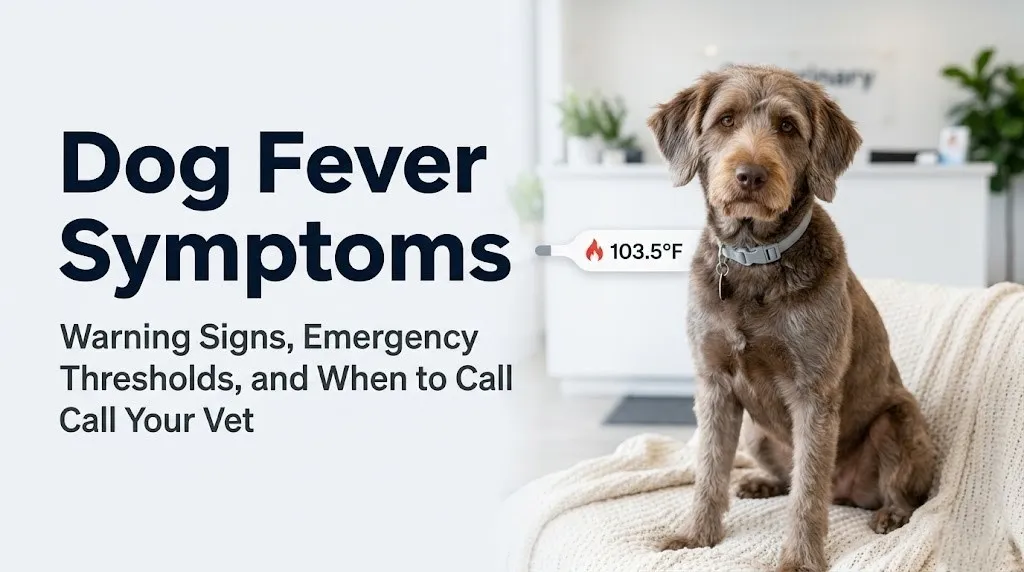
Understanding that 103 degrees is the fever threshold requires understanding that a dog’s normal temperature is already higher than a human’s normal temperature of 98.6 degrees Fahrenheit. A dog at 102 degrees Fahrenheit is not feverish. A dog at 103.5 degrees Fahrenheit is. This distinction catches many owners off guard because they assume a dog feels hot because it is warm-blooded, not because it is febrile.
Puppies under 6 months of age have a slightly different reference range. Their normal rectal temperature can vary between 99 and 102.5 degrees Fahrenheit, with temperatures closer to the lower end more typical in the first weeks of life. A puppy with a rectal temperature above 103 degrees Fahrenheit warrants veterinary evaluation the same day, and a puppy with any concerning symptoms (refusing to nurse or eat, crying persistently, visible lethargy) should be evaluated promptly regardless of the temperature reading.
Quick Tip:
- A digital rectal thermometer (veterinary or human, lubricated with petroleum jelly or water-based lubricant) inserted approximately one inch into the rectum for 60 seconds provides the most accurate at-home temperature reading.
- Ear (tympanic) thermometers designed for dogs are less accurate than rectal measurement and can underestimate temperature by 1 to 2 degrees Fahrenheit if not properly positioned deep in the vertical ear canal.
- Feeling your dog’s ears, nose, or forehead is not a reliable method for estimating temperature and should not be used to decide whether veterinary care is needed.
Key Takeaway: Normal dog temperature is 101 to 102.5 degrees Fahrenheit, fever begins above 103, and 106 degrees Fahrenheit is a veterinary emergency requiring immediate transport, not a phone call or a wait-and-see approach.
How to Tell If Your Dog Has a Fever at Home
The only reliable way to confirm a fever in your dog at home is to measure rectal temperature with a digital thermometer, because no external physical sign including warm ears, dry nose, or hot forehead is accurate enough to confirm or rule out fever without a temperature reading.
The behavioral and physical signs described throughout this article are important warning signals that prompt you to check temperature and seek veterinary care. They are not substitutes for a temperature measurement. A dog with warm ears may be running normally. A dog with a normal-feeling nose may still have a 104-degree fever.
To take your dog’s temperature at home:
- Use a digital rectal thermometer (standard digital or flexible tip) lubricated with a small amount of petroleum jelly or water-based lubricant. Do not use a glass mercury thermometer (breakage risk and mercury toxicity in dogs).
- Position your dog calmly: standing, sitting, or lying on one side. Having a second person hold the dog gently is helpful for larger or restless dogs.
- Gently lift the base of the tail and insert the thermometer approximately one inch into the rectum. Stop if the dog shows pain or extreme resistance and contact your veterinarian.
- Hold the thermometer in place until the digital reading is complete, typically 30 to 60 seconds depending on the device.
- Record the reading and compare to the normal range of 101 to 102.5 degrees Fahrenheit. Write down the time and the temperature to share with your veterinarian.
- Contact your veterinarian if the reading is above 103 degrees Fahrenheit, or go to an emergency veterinary clinic if the reading is above 104 degrees Fahrenheit with other symptoms or above 106 degrees Fahrenheit regardless of symptoms.
Dogs on chronic corticosteroid medications (such as prednisone or dexamethasone) may have a blunted febrile response because these medications suppress the cytokine cascade that drives fever. A dog on long-term steroids with a temperature of only 102.8 degrees Fahrenheit but showing signs of infection or systemic illness should be evaluated by a licensed veterinarian promptly, as the absence of high fever does not rule out serious underlying infection in this population.
Dog Fever Symptoms: Lethargy, Shivering, and Behavior Changes
Lethargy and shivering are among the earliest observable dog fever symptoms, and they reflect the two physiological mechanisms the body activates to reach the new elevated hypothalamic set point: reduced muscle activity to conserve energy for thermogenesis, and active shivering to generate the heat needed to match the reset temperature target.
Lethargy in a febrile dog is not just tiredness. IL-1beta and TNF-alpha, the same cytokines driving the fever, act directly on the limbic system and basal ganglia in the brain, producing a state of behavioral depression characterized by reduced motivation, decreased responsiveness to stimuli, and reduced interaction with the environment. This is a purposeful physiological state: the immune system is diverting energy resources away from behavioral activity and toward the immune response.
Shivering occurs during the fever onset phase, when the body is still warming up to reach the new set point. Think of it like a thermostat that has been turned up. Until the room reaches the new target temperature, the heating system runs at full capacity. In a febrile dog, that “heating system” is skeletal muscle thermogenesis: rapid, involuntary muscle contractions (shivering) that generate body heat. Once the dog’s body reaches the elevated set point, shivering typically stops and panting begins as the thermoregulatory system switches to heat maintenance mode.
Behavioral changes beyond simple lethargy include hiding or seeking unusual isolation, reluctance to move from a resting position, reduced tail wagging or social interaction, and in some dogs, increased clinginess or vocalization. Any behavioral change that is clearly different from your dog’s normal baseline is clinically meaningful and warrants checking the rectal temperature.
Intact female dogs showing lethargy and behavioral change 6 to 8 weeks after their last estrus cycle should be evaluated by a licensed veterinarian urgently for pyometra (uterine infection), which is a major cause of fever in intact female dogs and carries a high mortality risk without treatment.
Dog Warm Ears, Red Eyes, and Dry Nose as Fever Signs
Warm or hot ears, reddened eyes, and a dry warm nasal planum are observable physical findings in a febrile dog, each produced by a distinct aspect of the fever physiology, and while none of them alone confirms fever, their presence together with behavioral changes is a reliable signal to take a rectal temperature reading.
The ears (pinnae) feel warm to hot during fever because fever maintenance involves selective peripheral vasodilation after the initial vasoconstriction of fever onset. As the body stabilizes at its new elevated set point, vasodilation in peripheral structures including the pinnae allows heat exchange from blood to the environment. Dog ears have a large surface area relative to their tissue mass and a rich vascular supply, making them one of the most noticeable locations where fever-related warmth is detectable by touch. However, warm ears can also reflect recent physical activity, environmental heat, or excitement, which is why touch alone is an unreliable diagnostic tool.
The nasal planum (the smooth, moist, hairless skin on the tip of a dog’s nose) is typically moist in a healthy dog due to continuous nasal secretion from the lateral nasal glands and transudation across the nasal mucosa surface. During fever, increased respiratory rate from panting and reduced fluid intake combine to reduce nasal moisture, producing a warm, dry nose. The idea that a dry nose definitively indicates illness is a veterinary myth: a healthy sleeping dog often has a dry nose. Context matters. A dry nose in a lethargic, warm, not-eating dog is clinically meaningful.
Reddened or watery eyes in a febrile dog reflect scleral injection: vasodilation of the conjunctival and scleral blood vessels driven by inflammatory mediators circulating in the bloodstream. The American Veterinary Medical Association notes that systemic inflammation produces ocular surface changes including conjunctival hyperemia that are routinely assessed during veterinary physical examination as part of fever evaluation.
Dog Fever Symptoms: Vomiting, Loss of Appetite, and Panting
Vomiting, loss of appetite, and increased panting without heat or exertion are the three dog fever symptoms most likely to alarm owners, and each reflects a distinct physiological mechanism: gastrointestinal tract disruption from cytokine signaling, central suppression of appetite, and the dog’s respiratory cooling system working at elevated capacity.
IL-1beta and TNF-alpha act on the gastrointestinal tract by disrupting normal gastric and intestinal motility, reducing secretion of digestive enzymes, and triggering nausea. The vomiting center in the medulla oblongata is also sensitive to cytokine signaling. Vomiting in a febrile dog is therefore often a direct consequence of the systemic inflammatory response rather than a primary gastrointestinal problem, though the underlying cause of the fever (such as parvovirus, pyometra, or intestinal infection) may also be producing GI symptoms directly.
Loss of appetite during fever is mediated by the same cytokine pathway. IL-1beta acts on the hypothalamic arcuate nucleus, suppressing neuropeptide Y (NPY) signaling and reducing hunger drive. From an evolutionary perspective, this makes physiological sense: directing the body’s metabolic resources toward immune function rather than digestion during active infection is adaptive. A dog that refuses food for 24 hours during a fever is showing a normal physiological response, but a dog that refuses food and water for more than 24 hours risks dehydration that compounds the fever’s effects.
Panting in a febrile dog without heat exposure or exercise reflects the thermoregulatory system operating at the elevated set point. The American College of Veterinary Emergency and Critical Care notes that a dog panting at rest in a cool environment is always a signal that the dog’s thermoregulatory system is under stress and warrants immediate assessment. Increased panting rate, combined with lethargy and loss of appetite, is one of the most reliable symptom clusters indicating a febrile state requiring veterinary evaluation the same day.
Key Takeaway: Panting at rest in a cool environment, combined with lethargy and refusal to eat, is one of the most reliable observable clusters indicating a febrile dog that needs same-day veterinary evaluation, even before you have a temperature reading.
What Causes Fever in Dogs
Fever in dogs is caused by any condition that activates the immune system’s cytokine cascade, with the most common causes being bacterial, viral, or fungal infections, followed by immune-mediated diseases, toxin ingestion, and neoplasia, according to the Merck Veterinary Manual’s clinical classification of canine pyrexia.
The major cause categories in order of frequency in clinical veterinary practice:
- Infectious causes (most frequent): Bacterial infections (urinary tract infection, pneumonia, skin abscess, wound infection, pyometra in intact females, dental abscess, diskospondylitis); viral infections (parvovirus, distemper, leptospirosis, canine influenza); fungal infections (blastomycosis, histoplasmosis, cryptococcosis in endemic regions); tick-borne infections (Ehrlichia canis, Anaplasma phagocytophilum, Rickettsia rickettsii causing Rocky Mountain spotted fever, Borrelia burgdorferi causing Lyme disease)
- Immune-mediated causes: Immune-mediated hemolytic anemia (IMHA), immune-mediated thrombocytopenia (ITP), systemic lupus erythematosus (SLE), immune-mediated polyarthritis, steroid-responsive meningitis-arteritis
- Inflammatory non-infectious causes: Pancreatitis, inflammatory bowel disease in severe acute flares, aseptic peritonitis
- Neoplasia: Lymphoma, mast cell disease, histiocytic sarcoma (particularly in Bernese Mountain Dogs, Flat-Coated Retrievers), and various carcinomas can produce fever via tumor-associated cytokine release
- Toxin ingestion: Certain toxins including xylitol (in sugar-free products), certain plants, some medications, and various household chemicals can trigger fever as part of a systemic toxic response
- Post-surgical and post-traumatic: Tissue necrosis and inflammatory response following surgery or significant physical trauma
- Vaccine reaction: Typically transient (24 to 48 hours) and mild (below 104 degrees Fahrenheit) following vaccination
If your dog ingested a potentially toxic substance and is showing fever alongside other symptoms, call the ASPCA Animal Poison Control Center at 888-426-4435 immediately. A consultation fee may apply, and early intervention is time-sensitive.
Dog Fever After Vaccination: What Is Normal and What Is Not
A mild fever after vaccination in dogs, typically below 104 degrees Fahrenheit and lasting 24 to 48 hours, is a normal and expected immune response reflecting the adaptive immune system engaging with vaccine antigens to build protective immunity, and it does not require veterinary treatment in an otherwise alert and hydrated dog.
Post-vaccination fever is mediated by the same cytokine pathway as infectious fever. Vaccine antigens activate antigen-presenting cells (dendritic cells and macrophages at the injection site), which produce IL-1beta, IL-6, and TNF-alpha. These cytokines reach the hypothalamus via the bloodstream and produce a mild, transient set-point elevation. The fever signal tells the immune system to mount a robust adaptive response, which is the intended purpose of vaccination.
The AVMA notes that mild lethargy, reduced appetite, and localized swelling or tenderness at the injection site in the 24 to 48 hours following vaccination are expected reactions. These do not warrant emergency veterinary evaluation in a dog that remains alert, responsive, and able to drink water.
Post-vaccination fever requires veterinary evaluation if it exceeds 104 degrees Fahrenheit, if it persists beyond 48 hours, if the dog shows significant vomiting or diarrhea, if facial swelling or hives develop (indicating possible allergic reaction or anaphylaxis), or if the dog collapses or becomes unresponsive. Anaphylaxis typically develops within 15 to 30 minutes of vaccination. Any dog that collapses or shows extreme distress within this window following vaccination needs emergency veterinary care immediately.
Small-breed dogs weighing under 10 pounds appear to have slightly higher rates of post-vaccination systemic reactions compared to large-breed dogs, according to clinical observation reported in Veterinary Clinics of North America: Small Animal Practice. Owners of small dogs may wish to plan to stay at or near the veterinary clinic for 30 minutes after their dog’s vaccination visit to allow monitoring for early anaphylactic signs.
Tick-Borne Diseases and Fever in Dogs
Tick-borne diseases are among the most clinically important and underdiagnosed causes of persistent fever in dogs in tick-endemic regions of the United States, and Ehrlichia canis, Anaplasma phagocytophilum, Rickettsia rickettsii (Rocky Mountain spotted fever), and Borrelia burgdorferi (Lyme disease) each produce fever through distinct pathophysiological mechanisms that respond to specific antibiotic therapy.
Ehrlichia canis and Anaplasma phagocytophilum infect white blood cells directly. Ehrlichia targets monocytes; Anaplasma targets neutrophils. The infected cells release massive quantities of pro-inflammatory cytokines, driving a high, persistent fever typically between 103.5 and 106 degrees Fahrenheit, alongside thrombocytopenia (low platelet count), lymphadenopathy, and in severe cases, hemorrhagic signs including petechiae (pinpoint bleeding spots under the skin) and epistaxis (nosebleed).
Rickettsia rickettsii (Rocky Mountain spotted fever) infects vascular endothelial cells, causing systemic vasculitis throughout the body. This produces fever alongside edema, petechiae, conjunctival reddening, and potentially neurological signs including ataxia and seizure. Rocky Mountain spotted fever is one of the most medically urgent tick-borne diseases in dogs and requires prompt antibiotic treatment (doxycycline) to prevent fatal vasculitis.
Research published in the Journal of Veterinary Internal Medicine has documented that dogs in tick-endemic states (particularly the Southeast, mid-Atlantic, and upper Midwest of the United States) with unexplained fever and thrombocytopenia should receive empirical doxycycline therapy while diagnostic tick serology results are pending, because the diseases progress rapidly and waiting for confirmed results before initiating treatment can worsen outcomes.
Outdoor dogs, hunting dogs, and dogs in areas with high white-tailed deer populations face the highest exposure risk to Ixodes, Dermacentor, and Amblyomma tick species. Year-round tick prevention using licensed veterinary preventive products is the primary risk reduction strategy recommended by the AVMA.
Key Takeaway: A dog with persistent fever, low platelet count on bloodwork, and a history of tick exposure needs empirical doxycycline therapy started before serological tick-borne disease results come back, because diseases like Rocky Mountain spotted fever progress fast enough to be fatal if treatment waits for confirmed results.
Dog Fever vs Heatstroke: A Critical Difference Every Owner Must Know
Dog fever and canine heatstroke (hyperthermia) both produce elevated body temperatures, but they are fundamentally different conditions with different causes, different physiology, different emergency management, and a different level of immediate life threat, and confusing them can cause a pet owner to underestimate the urgency of a heat-related emergency.
True fever (canine pyrexia) is a controlled, hypothalamus-mediated elevation of the thermoregulatory set point driven by endogenous pyrogens in response to infection or inflammation. The body is actively maintaining the elevated temperature as a purposeful immune response. The temperature elevation is typically in the 103 to 105 degree Fahrenheit range and rises slowly. The dog is uncomfortable but physiologically regulated.
Heatstroke (hyperthermia) occurs when external heat load, exertion, or impaired cooling overwhelms the dog’s ability to dissipate heat, producing a body temperature that rises beyond the thermoregulatory system’s ability to control. There is no set-point elevation: the hypothalamus is working normally but cannot overcome the heat input. Temperatures in heatstroke can reach 107 to 110 degrees Fahrenheit or higher within minutes to tens of minutes. At these temperatures, cellular protein denaturation, blood-brain barrier breakdown, disseminated intravascular coagulation (DIC), intestinal mucosal sloughing, renal tubular necrosis, and cardiac arrhythmia can develop rapidly.
The critical practical difference for owners:
| Feature | True Fever (Pyrexia) | Heatstroke (Hyperthermia) |
|---|---|---|
| Cause | Infection, inflammation, immune response | Heat exposure, exercise, airway obstruction |
| Temperature rise speed | Hours to days | Minutes to tens of minutes |
| Hypothalamic set point | Elevated (purposeful) | Normal (overwhelmed) |
| Typical temperature range | 103-105 degrees F | 106-110+ degrees F |
| Response to antipyretics | May reduce temperature | No effect (wrong mechanism) |
| First aid at home | Keep comfortable, offer water, vet same day | Cool immediately with cool (not cold) water, emergency vet now |
| Urgency level | Same-day to urgent veterinary care | Immediate emergency veterinary care |
A dog left in a hot car, a brachycephalic dog that has been exercising in heat, or any dog showing collapse, glazed eyes, bright red mucous membranes, and profuse salivation in a hot environment is experiencing heatstroke. Take your dog to the nearest emergency veterinary clinic immediately. While transporting, apply cool (not ice cold) water to the paw pads, groin, and neck, and run the car’s air conditioning at full capacity.
Puppy Fever Symptoms and Age-Specific Risks
Puppy fever symptoms follow the same general pattern as adult dog fever (lethargy, warmth, reduced appetite, shivering), but puppies face specific additional risks that make fever in dogs under 6 months of age a more urgent clinical concern than fever in a healthy adult dog.
Puppies have less developed immune systems than adult dogs. Their innate immune response is functional but their adaptive immune response (antibody production, T-cell memory) is still maturing. This means that infections that a healthy adult dog might contain relatively efficiently can progress faster and more severely in a puppy. A 10-week-old puppy with a fever of 103.5 degrees Fahrenheit who is not eating or drinking warrants same-day veterinary evaluation rather than a 24-hour wait-and-see approach.
Canine parvovirus is the most clinically urgent fever cause in puppies, particularly those that are incompletely vaccinated or unvaccinated. Parvovirus produces severe hemorrhagic gastroenteritis alongside high fever, and the disease can progress from apparent wellness to life-threatening dehydration and sepsis within 24 to 72 hours. Any puppy with fever alongside bloody or liquid diarrhea, repeated vomiting, and collapse should be taken to a licensed veterinarian or emergency veterinary clinic immediately without waiting.
Dehydration is a compounding risk in puppies during fever. Puppies have a higher surface-area-to-body-mass ratio than adult dogs, meaning they lose fluid and heat more rapidly relative to their body size. A puppy refusing to drink water alongside a fever can develop clinical dehydration within hours. The Merck Veterinary Manual notes that puppies with dehydration exceeding 5 to 8% of body weight (assessed by skin turgor and mucous membrane dryness) require intravenous fluid support from a licensed veterinarian.
Neonatal puppies under 3 weeks of age have an additional thermoregulatory limitation: they cannot shiver effectively and depend on environmental warmth and proximity to the dam and littermates to maintain body temperature. A neonate with apparent fever (temperature above 102 degrees Fahrenheit in the first two weeks of life) alongside failure to nurse, persistent crying, or weight loss requires immediate veterinary evaluation.
Brachycephalic Breeds and Geriatric Dogs: Elevated Fever Risk
Brachycephalic dog breeds and geriatric dogs represent two populations with clinically distinct fever risk profiles: brachycephalic dogs face rapid thermal escalation from impaired cooling, while geriatric dogs face a higher incidence of serious underlying causes and reduced physiological reserve to tolerate even moderate fever.
Brachycephalic breeds, including English Bulldogs, French Bulldogs, Pugs, Boston Terriers, Boxers, Cavalier King Charles Spaniels, and Shih Tzus, have anatomically compressed upper airways from the selective breeding that produced their shortened muzzles. Brachycephalic obstructive airway syndrome (BOAS) narrows the nasal passages, elongates the soft palate, and in severe cases collapses the trachea, substantially reducing the airflow these dogs can move during panting. Since panting is the primary thermoregulatory mechanism in dogs, a brachycephalic dog with a fever has dramatically reduced capacity to maintain its temperature at the elevated set point without it continuing to rise. These breeds can escalate from a mild fever to a dangerous temperature faster than any non-brachycephalic breed. Any fever in a brachycephalic dog warrants same-day veterinary evaluation without exception.
Geriatric dogs (generally over 8 years, or over 6 years for giant breeds such as Great Danes, Bernese Mountain Dogs, and Saint Bernards) have higher rates of fever from neoplasia, immune-mediated diseases, and infections related to declining immune function. The Journal of Veterinary Internal Medicine has published case series showing that fever of unknown origin in dogs over 7 years is associated with neoplastic or immune-mediated causes in a substantially higher proportion of cases than in younger dogs. A geriatric dog with a persistent fever that does not resolve within 72 hours of initial treatment warrants evaluation by a board-certified veterinary internist (DACVIM) for a systematic fever of unknown origin workup.
Dogs with pre-existing chronic kidney disease (CKD) have reduced ability to excrete inflammatory mediators and maintain fluid balance during fever, making them more vulnerable to dehydration and electrolyte disturbance. A dog with known CKD and a fever should be seen by its managing licensed veterinarian within 24 hours rather than monitored at home for the typical 24 to 48 hour window appropriate for otherwise healthy adult dogs.
How a Veterinarian Diagnoses the Cause of Dog Fever
A veterinarian diagnoses the cause of dog fever through a systematic clinical approach that begins with physical examination and initial bloodwork, then expands to targeted diagnostics based on what the initial findings reveal, with the specific tests ordered depending on the dog’s age, breed, vaccination history, geographic location, and symptom pattern.
The standard diagnostic sequence for a dog presented with fever:
- Physical examination: Rectal temperature, heart rate, respiratory rate, mucous membrane color, capillary refill time, lymph node palpation for enlargement, abdominal palpation for pain or masses, joint palpation for swelling (suggesting immune-mediated polyarthritis or Lyme disease), oral examination for dental abscess, fundic eye examination for chorioretinitis (seen in tick-borne diseases and some fungal infections).
- Complete blood count (CBC) with differential: Assesses white blood cell count and differential (neutrophilia with left shift suggests bacterial infection; lymphocytosis suggests viral cause; thrombocytopenia suggests tick-borne disease, IMHA/ITP, or DIC; anemia suggests IMHA or blood loss from underlying disease).
- Serum biochemistry panel: Assesses liver enzyme elevation (hepatic disease, hepatic abscess, leptospirosis), kidney values (infection, dehydration), blood glucose (hypoglycemia in severe sepsis), albumin (low albumin indicates protein-losing nephropathy or severe inflammation), and electrolyte balance.
- Urinalysis with urine culture: Rules out urinary tract infection as fever cause; detects renal disease; screens for leptospiruria.
- Tick-borne disease testing: SNAP 4Dx test (screens for heartworm antigen, Ehrlichia canis, Anaplasma phagocytophilum, Borrelia burgdorferi) plus specific Ehrlichia, Anaplasma, and Rickettsia serology panels based on geographic exposure risk.
- Imaging: Thoracic radiographs (chest X-ray) for pneumonia, pleural effusion, cardiac disease; abdominal ultrasound for pyometra, hepatic abscess, splenic disease, lymph node enlargement, or abdominal mass.
- Culture: Blood culture for suspected bacteremia or sepsis; urine culture for confirmed UTI; aspirate culture for any accessible masses or abscesses.
Intact female dogs with fever are assessed for pyometra with abdominal ultrasound as a priority finding because pyometra is life-threatening and requires emergency surgical or medical management.
Emergency Signs: When to Take Your Dog to the Vet Immediately
Certain dog fever symptoms require immediate emergency veterinary evaluation. Do not wait to see if these resolve on their own, do not call ahead and wait for a callback, and do not attempt home treatment before transport.
Take your dog to the nearest emergency veterinary clinic immediately if you observe:
- Rectal temperature above 106 degrees Fahrenheit (41.1 degrees Celsius), indicating a temperature level associated with multi-organ failure and cellular protein denaturation
- Collapse, inability to stand, or extreme weakness that prevents normal movement
- Seizure or convulsion (rhythmic or tonic-clonic muscle activity, loss of consciousness, uncontrolled urination or defecation during the episode)
- Pale, white, gray, or blue-tinged mucous membranes (gums, inner lips, conjunctiva), indicating cardiovascular compromise or severe anemia
- Bloody diarrhea alongside fever, particularly in unvaccinated or incompletely vaccinated puppies (possible parvovirus, one of the most rapidly fatal canine diseases)
- Rapid, labored, or open-mouth breathing in a brachycephalic dog during or after fever assessment (indicates dangerous airway compromise)
- Signs of heatstroke: rapid temperature rise after sun or heat exposure, bright red mucous membranes, profuse salivation, glazed expression, loss of balance
- Suspected toxin ingestion causing fever: Call the ASPCA Animal Poison Control Center at 888-426-4435 immediately and proceed to the emergency veterinary clinic. A consultation fee may apply.
- Any puppy under 16 weeks with a fever above 104 degrees Fahrenheit, bloody diarrhea, or repeated vomiting
These presentations can indicate sepsis, multi-organ failure, parvoviral infection, heatstroke, or severe immune-mediated disease, all of which require emergency veterinary assessment and treatment that cannot wait for a regular appointment.
Frequently Asked Questions About Dog Fever Symptoms
What are the signs that my dog has a fever?
The most observable signs of fever in a dog are lethargy, shivering, loss of appetite, warm or hot ears, dry and warm nasal planum, reddened eyes, vomiting, and increased panting without heat or exercise.
No single sign confirms fever: the combination of multiple behavioral and physical changes, particularly alongside a rectal temperature above 103 degrees Fahrenheit, is the most reliable indicator.
Any dog showing these signs warrants a rectal temperature check with a digital thermometer, followed by same-day or emergency veterinary evaluation depending on the temperature reading and additional symptoms present.
How can I check my dog’s temperature at home without a thermometer?
There is no reliable method to assess your dog’s fever accurately without a thermometer. Feeling the ears, nose, or forehead is not accurate enough to confirm or rule out fever.
A digital rectal thermometer is the standard at-home method: lubricate the tip, insert approximately one inch into the rectum, and hold for 30 to 60 seconds until the reading is complete.
Normal rectal temperature for an adult dog is 101 to 102.5 degrees Fahrenheit. Any reading above 103 degrees Fahrenheit warrants veterinary contact the same day.
At what temperature should I take my dog to the emergency vet?
A rectal temperature above 106 degrees Fahrenheit (41.1 degrees Celsius) requires immediate emergency veterinary transport with no waiting period.
Temperatures between 104 and 106 degrees Fahrenheit with additional symptoms including vomiting, bloody diarrhea, collapse, pale gums, or seizure also require emergency veterinary care immediately.
The Merck Veterinary Manual identifies 106 degrees Fahrenheit as the threshold at which multi-organ damage risk becomes acute, including renal tubular necrosis, hepatocellular injury, and disseminated intravascular coagulation.
Can I give my dog aspirin or Tylenol for a fever?
Do not give your dog aspirin, acetaminophen (Tylenol), ibuprofen, or any other human over-the-counter pain reliever or fever reducer. These medications are toxic to dogs.
Acetaminophen causes hepatic (liver) necrosis and methemoglobinemia in dogs at doses that are safe for humans. Ibuprofen causes gastrointestinal ulceration and acute kidney injury. Even aspirin, though less acutely toxic than the others, can cause GI bleeding and salicylate toxicity in dogs.
If you believe your dog has ingested any of these medications, call the ASPCA Animal Poison Control Center at 888-426-4435 and go to the nearest emergency veterinary clinic immediately.
How long can a dog fever last before it becomes dangerous?
A fever above 103 degrees Fahrenheit lasting more than 24 to 48 hours warrants veterinary evaluation regardless of the dog’s apparent level of distress, because persistent fever indicates an ongoing process that requires diagnosis.
Fever above 104 degrees Fahrenheit for more than a few hours carries increasing risk of dehydration and cardiovascular stress, particularly in puppies, brachycephalic breeds, and geriatric dogs.
A fever at or above 106 degrees Fahrenheit is dangerous within hours rather than days and constitutes an emergency at any point it is detected.
What is the difference between dog fever and dog heatstroke?
Fever (pyrexia) is a controlled immune response where the hypothalamus deliberately elevates the thermoregulatory set point in response to infection or inflammation. Heatstroke (hyperthermia) is an uncontrolled temperature rise from external heat load or impaired cooling that the body cannot manage.
Fever typically rises slowly (over hours to days), while heatstroke temperatures can escalate within minutes to dangerous levels without the elevated set-point mechanism.
Heatstroke is a true emergency requiring immediate cooling with cool (not ice cold) water applied to the paw pads, groin, and neck, followed by immediate transport to an emergency veterinary clinic, while fever from infection requires same-day to urgent veterinary evaluation rather than acute cooling measures.
Closing
Dog fever symptoms rarely tell you their own cause. What they tell you is that your dog’s immune system is fighting something, and your job is to take an accurate temperature reading, observe the full symptom picture, and match what you see to the right urgency threshold.
If the rectal temperature is above 106 degrees Fahrenheit, or if your dog is collapsing, seizing, or showing pale gums alongside any fever, the emergency veterinary clinic is the only appropriate next step. If the fever is between 103 and 104 degrees Fahrenheit with no emergency signs, same-day veterinary evaluation is the right call, not home management and not waiting until tomorrow to see if it improves.
You now know the physiological reason behind every sign your dog is showing, the specific temperature thresholds that guide the decision, and which populations (puppies, brachycephalic breeds, geriatric dogs, intact females) need faster evaluation than the general guidance covers. Use that knowledge to act with confidence rather than second-guess yourself when it matters most.