Chapped Lips Causes: Why Your Lips Dry, Peel, and Crack
Chapped lips causes range from everyday environmental exposure to nutritional deficiencies, medication side effects, and underlying medical conditions that affect the body’s ability to maintain the lip barrier. The chapped lips causes that matter most in any individual case depend on a specific anatomical vulnerability that makes lips far more susceptible to dryness and cracking than the skin anywhere else on the face.
According to the National Institute of Dental and Craniofacial Research (NIDCR), lip tissue is among the most environmentally sensitive mucosal surfaces in the body. Unlike the rest of your facial skin, the visible lip surface lacks the oil-producing glands and protective cell layers that resist water loss, which is why even minor environmental triggers can produce the cracking, peeling, and soreness that most people experience as routine chapped lips but that can sometimes signal something clinically meaningful.
This article explains the anatomy behind why lips chap at all, the specific physiological mechanism behind each major cause, which causes resolve on their own and which require a physician’s evaluation, and the specific red flag signs that mean chapped lips are more than a cosmetic nuisance.
Why Lips Chap: The Anatomy Behind Chapped Lips Causes
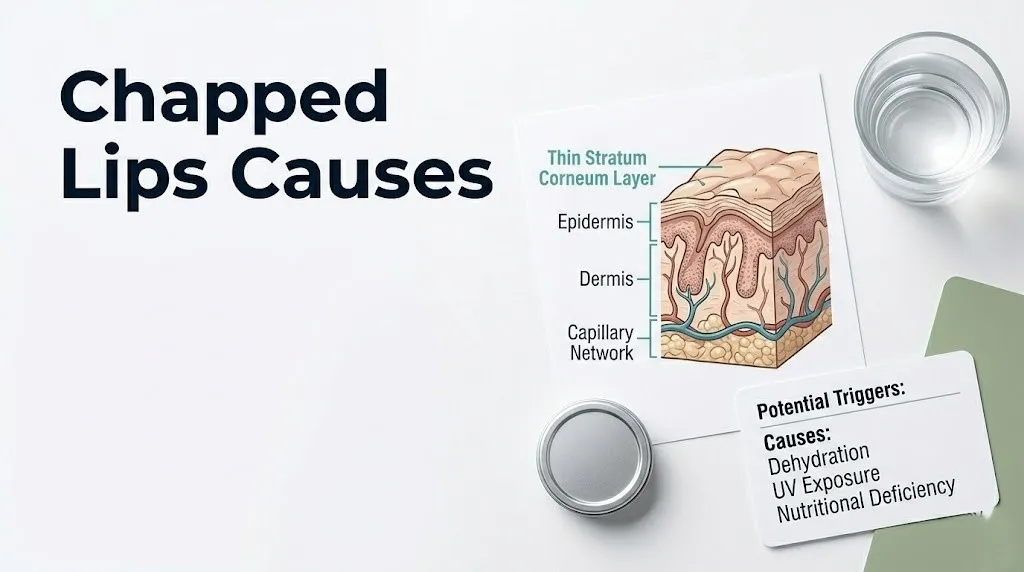
Lips chap more easily than surrounding facial skin because the vermilion zone, the visible red or pink part of the lip, lacks the sebaceous glands and the robust protective cell layers present in normal facial skin. This single anatomical fact explains every chapped lips cause discussed in this article.
Think of sebaceous glands as the skin’s built-in moisturizer factory. Every time a gland secretes sebum (the lipid-rich secretion that coats and waterproofs skin), it deposits a protective film over the surface that slows water evaporation. The vermilion zone has none of these glands. It is, in engineering terms, a surface with no waterproofing layer.
The second vulnerability is the stratum corneum, the outermost layer of the epidermis. In most facial skin, the stratum corneum is 15 to 20 cell layers thick, reinforced with ceramides and other lipids secreted by lamellar bodies within keratinocytes. This lipid matrix fills the spaces between cornified cells like mortar between bricks, creating a barrier that resists transepidermal water loss (TEWL). The lip’s stratum corneum is significantly thinner with fewer lamellar body-derived lipids, making TEWL far more rapid across the vermilion surface.
According to the American Academy of Dermatology (AAD), transepidermal water loss from lip tissue is substantially higher per unit surface area than from the surrounding perioral facial skin, which is why lips respond to dry air, cold temperatures, and dehydration faster and more visibly than adjacent tissue.
A third anatomical factor matters for cracking at the corners of the mouth. The oral commissure, where upper and lower lips meet at each corner, is a point of mechanical stress, repeated flexion, and occasional pooling of saliva, all of which make it a distinct site of vulnerability compared with the central vermilion surface.
Older adults experience an amplified version of this vulnerability because lip tissue undergoes progressive atrophy with age: the labial mucosa thins, keratinocyte turnover slows, and salivary gland output declines, all of which further reduce the lip’s already-limited capacity to resist environmental challenges.
Environmental Causes of Chapped Lips
Environmental causes of chapped lips are the most frequent trigger across the general population, producing lip dryness through direct disruption of the already-thin vermilion barrier. Cold air, low humidity, and wind all increase the rate at which water evaporates from the lip surface.
Cold air holds less water vapor than warm air, which means winter indoor and outdoor environments maintain very low relative humidity. When the surrounding air is drier than the lip surface, water migrates outward by osmotic gradient through a process called transepidermal water loss. The lip’s inadequate lipid barrier cannot slow this gradient sufficiently, and the surface begins to dry, tighten, and scale.
Wind accelerates TEWL further by continuously removing the thin, locally humidified air layer immediately above the lip surface, essentially erasing any residual boundary layer that might slow evaporative loss. Combined cold and wind exposure, such as winter outdoor conditions, can produce visible scaling and fissuring within hours in susceptible individuals.
UV radiation from sunlight presents a different but related environmental threat. Repeated UV-B and UV-A exposure damages keratinocytes in the vermilion epithelium, impairing their ability to produce the lamellar body lipids needed to maintain barrier integrity. Over years of cumulative exposure, this produces the condition called actinic cheilitis (discussed in its own section), but shorter-term sun exposure also produces acute lip dryness by generating reactive oxygen species that damage cell membrane lipids.
Key environmental triggers for chapped lips and their primary mechanisms:
| Environmental Factor | Primary Mechanism | Who Is Most Affected |
|---|---|---|
| Cold air and low humidity | Increased TEWL via osmotic gradient | Anyone in temperate or cold climates in winter |
| Wind exposure | Removes humidified boundary layer above lip surface | Outdoor workers, athletes, cold-climate residents |
| UV radiation (acute) | Reactive oxygen species damage keratinocyte membrane lipids | Light-skinned individuals, people at altitude or near water/snow |
| Indoor heating systems | Reduces indoor humidity below 20-30%, accelerating TEWL | Urban residents in winter with central heating |
| Air travel (cabin air) | Cabin humidity as low as 10-15%, far below ambient levels | Frequent flyers, long-haul travelers |
People with fair skin phototypes (Fitzpatrick I and II) experience UV-related lip damage faster than those with higher melanin content, because melanin in keratinocytes absorbs UV photons and reduces the reactive oxygen species load per cell.
Dehydration and Mouth Breathing as Causes of Dry Chapped Lips
Dehydration causes chapped lips by reducing the moisture available at the body’s mucosal surfaces, including the labial epithelium, which depends partly on adequate systemic hydration to maintain its surface film. When total body water decreases, the kidneys conserve water by reducing urine output. Mucosal surfaces throughout the body, including the oral mucosa, receive less secretory fluid output. The lip surface becomes drier at the cellular level.
The relationship is indirect: the lip does not have its own dedicated hydration mechanism that responds to water intake in the way kidneys do. The mechanism is that generalized cellular dehydration slows keratinocyte metabolic rate, impairs lamellar body secretion of lipids, and reduces salivary gland output, all of which together diminish what little barrier protection the lip normally maintains.
Mouth breathing is a more direct cause of chapped lips. When a person breathes through their mouth habitually, rather than through the nasal passages, the continuous airflow passes directly over the lip surface with each exhaled and inhaled breath. The parotid and sublingual salivary glands normally deposit a thin film of saliva on the inner lips and oral mucosa, providing enzymatic protection and lubrication. Mouth breathing evaporates this film faster than the glands replenish it, and the lips dry from the mucosal side inward as well as from the environmental surface outward.
Nasal obstruction is the most common reason for chronic mouth breathing in the general population. Conditions including seasonal allergic rhinitis, nasal polyps, deviated nasal septum, and upper respiratory tract infections all force mouth breathing and frequently produce chapped lips as a secondary consequence.
According to the Mayo Clinic, chronic nasal obstruction requiring sustained mouth breathing should be evaluated by an otolaryngologist (ear, nose, and throat specialist) to identify and treat the underlying anatomical or allergic cause, rather than treating only the resulting lip dryness.
Children with chronic mouth breathing from adenoid hypertrophy or persistent allergic rhinitis are particularly prone to chapped lips in this category. Their parents frequently report that over-the-counter lip balms provide only temporary relief because the root cause is airway, not lip, pathology.
Lip Licking and Saliva as a Cause of Chapped Lips
Lip licking is among the most self-perpetuating causes of chapped lips: the act intended to relieve dryness directly worsens the underlying barrier damage, creating a cycle that many people cannot break without understanding the mechanism.
Saliva is not a moisturizer. It is a digestive fluid containing salivary amylase (which breaks down starches), salivary lipase (which breaks down lipids), salivary proteases, and a range of other enzymatic proteins designed to begin the chemical digestion of food. When saliva is repeatedly deposited on the lip surface through licking, these enzymes actively degrade the lipid-rich surface film on the vermilion zone.
The evaporation effect compounds the enzymatic damage. Saliva deposited on the lip surface evaporates rapidly, and as it evaporates, it draws water from the underlying epidermal cells through evaporative cooling, leaving the lip surface drier after the licking episode than before it began. This is the same mechanism that makes repeated hand-washing without emollient application progressively damage skin barrier function.
Over time, habitual lip licking produces a clinical pattern called lick eczema or lip licker’s dermatitis, characterized by a ring of dry, red, scaling skin that traces exactly the path the tongue reaches, typically extending just beyond the vermilion border onto the perioral skin. The pattern is diagnostically recognizable to dermatologists and is distinct from other causes of chapped lips.
Clinical Research Finding: A study published in the British Journal of Dermatology identified repeated saliva exposure as one of the primary mechanisms in pediatric lip dermatitis, with the salivary enzyme load being sufficient to measurably reduce the surface lipid film of the vermilion within minutes of repeated application.
Young children aged 2 to 8 are particularly susceptible because habitual lip licking is more common in this age group and the parental instinct to apply lip balm rather than address the behavior means many cases are undertreated for months. Addressing the licking habit, not just applying emollient, is the essential intervention for this specific cause.
Key Takeaway: Environmental dryness, dehydration, and habitual lip licking all work by exploiting the same anatomical weakness of the vermilion zone, but lip licking actively digests the lip surface with salivary enzymes and is one of the most common causes of chapped lips that gets worse, not better, with more lip balm applied without behavioral change.
What Causes Peeling Lips: Nutritional Deficiencies Explained
Nutritional deficiencies cause peeling lips by impairing the metabolic machinery that drives rapid turnover of the lip’s epithelial cells. The vermilion epithelium and oral mucosa have one of the highest cellular turnover rates in the body, replacing their surface cells approximately every 7 to 14 days. This rapid turnover requires a continuous, adequate supply of specific micronutrients.
Riboflavin (vitamin B2) deficiency is the nutritional cause most directly associated with lip chapping and angular fissuring. Riboflavin is an essential cofactor in flavin adenine dinucleotide (FAD) and flavin mononucleotide (FMN), which are required for mitochondrial oxidative phosphorylation in every rapidly dividing cell. Mucosal epithelial cells are particularly sensitive to riboflavin insufficiency because of their high energy demands. The clinical presentation of riboflavin deficiency classically includes angular cheilitis (cracking at the corners of the mouth), a magenta-colored tongue, and a seborrheic skin rash, a constellation called ariboflavinosis.
Iron deficiency causes lip and oral mucosal changes through a different but related mechanism. Iron is a required component of cytochrome c oxidase in the mitochondrial electron transport chain. Rapidly dividing cells, including epithelial cells lining the lips and oral cavity, are among the first to show functional impairment when iron availability decreases. The clinical result is thinned, fragile oral and lip mucosa, angular cheilitis, and a smooth, sore tongue (glossitis).
Zinc deficiency impairs keratinocyte proliferation more directly. Zinc is a required cofactor for more than 300 enzymes, including RNA polymerase and DNA repair enzymes. Without adequate zinc, keratinocyte cell division slows, the epithelium thins, and the lip surface becomes more vulnerable to cracking, scaling, and secondary infection.
Nutritional deficiency causes of peeling and chapped lips:
| Nutrient | Role in Lip Epithelium | Clinical Presentation | At-Risk Populations |
|---|---|---|---|
| Riboflavin (B2) | FAD/FMN cofactor for mitochondrial energy in epithelial cells | Angular cheilitis, magenta tongue, seborrheic dermatitis | Vegans, alcoholics, elderly with restricted diets |
| Iron | Cytochrome c oxidase component for epithelial cell energy | Thin oral mucosa, angular cheilitis, glossitis | Premenopausal females, vegetarians, those with GI blood loss |
| Zinc | RNA polymerase and DNA repair cofactor for keratinocyte division | Peeling lips, delayed wound healing, secondary infections | Vegans, those with Crohn’s disease, alcoholics, elderly |
| Niacin (B3) | NAD/NADH cofactor for cellular energy and DNA repair | Cracked lips, pellagra (dermatitis, diarrhea, dementia) | Alcoholics, maize-staple diet populations |
| Vitamin B6 (Pyridoxine) | Cofactor in amino acid metabolism for protein synthesis in cells | Angular cheilitis, glossitis, peripheral neuropathy | Those on isoniazid therapy, alcoholics |
According to the National Institutes of Health Office of Dietary Supplements, riboflavin deficiency is uncommon in the general U.S. population but is clinically meaningful in individuals with alcoholism, chronic malabsorptive conditions, and strict vegan diets without supplementation. A confirmed nutritional cause requires blood testing rather than empiric supplementation in the clinical setting.
Systemic Medical Conditions That Cause Chapped Lips
Several systemic diseases produce chapped, dry, or persistently peeling lips as a manifestation of their underlying pathophysiology, and these represent the category of causes that most often goes unrecognized in routine care.
Sjogren’s syndrome is an autoimmune condition in which CD4+ T-lymphocytes infiltrate and destroy salivary and lacrimal glands. The result is xerostomia (dry mouth) and keratoconjunctivitis sicca (dry eyes). Without adequate salivary secretion, the thin salivary film that normally lubricates the oral mucosa and inner lip surface is absent, and the lips dry from the inside out. Persistent dry chapped lips in a person who also experiences persistent dry eyes and dry mouth should prompt evaluation for Sjogren’s syndrome with the Sjogren’s Syndrome Foundation recommending referral to a rheumatologist for ANA panel, anti-SSA/SSB antibody testing, and salivary flow rate measurement.
Crohn’s disease can produce orofacial manifestations in approximately 8 to 29% of affected individuals, according to research published in the Journal of the American Academy of Dermatology. The lip changes in Crohn’s are driven by orofacial granulomatosis: CD4+ T-cells and macrophages form granulomas in the lip submucosa, producing swelling, fissuring, and a persistent, non-healing cracked appearance that does not respond to emollient therapy. Lip changes from Crohn’s may precede bowel symptoms in some patients, making lip persistence a potential early diagnostic clue.
Hypothyroidism produces lip and skin dryness through reduced thyroid hormone (T3 and T4) signaling to keratinocytes. Thyroid hormones regulate the rate of keratinocyte proliferation and differentiation. When thyroid hormone levels fall, keratinocyte turnover slows, epidermal cells accumulate in a poorly differentiated state, and the skin and lips become dry, rough, and slow to heal. Checking a thyroid-stimulating hormone (TSH) level is a clinically appropriate step when persistent lip dryness accompanies fatigue, weight gain, constipation, or cold intolerance.
Type 2 diabetes mellitus produces lip and oral mucosal dryness through two mechanisms: elevated blood glucose damages the autonomic nerve fibers that regulate salivary gland secretion (diabetic autonomic neuropathy), reducing saliva output; and elevated glucose in saliva alters the local oral environment in ways that predispose to Candida overgrowth, which can manifest as angular cheilitis at the corners of the mouth.
Immunocompromised individuals, including those on long-term corticosteroid therapy, those receiving chemotherapy, and people living with HIV, face elevated risk for Candida-related angular cheilitis because reduced neutrophil-mediated antifungal defense allows Candida albicans to proliferate at the moist commissural skin.
Key Takeaway: Persistent chapped lips that don’t respond to standard emollient care in 2 to 3 weeks should prompt blood testing for TSH, serum ferritin, zinc, and riboflavin, and clinical screening for Sjogren’s syndrome and Crohn’s disease, because systemic disease is a real but frequently overlooked category of chapped lips causes.
Medications That Cause Dry Chapped Lips
Medications are among the most predictable and dose-dependent causes of chapped lips, yet patients are rarely warned about them in a way that explains the mechanism.
Isotretinoin (13-cis-retinoic acid), used for severe nodulocystic acne, produces chapped lips in nearly 100% of users at therapeutic doses. The mechanism is direct: isotretinoin binds to retinoid receptors (RAR and RXR) in sebaceous glands throughout the body, dramatically reducing sebum production. While this is the intended effect on facial acne, it simultaneously eliminates sebaceous gland activity in the perioral skin and reduces the lamellar body lipid output of keratinocytes throughout the body. The lip surface, already sebaceous-gland-free, loses the minimal additional environmental protection contributed by sebum from surrounding perioral glands. The result is severe, often painful lip chapping that requires aggressive emollient management for the full duration of treatment.
First-generation antihistamines (such as diphenhydramine and chlorpheniramine) block muscarinic acetylcholine receptors in salivary glands, reducing salivary flow and producing xerostomia. Reduced saliva output decreases the lubricating film on the inner lip surface and oral mucosa. Many people using antihistamines for allergic rhinitis notice worsening lip dryness without recognizing the causal link.
Lithium carbonate, used for bipolar disorder, produces lip and skin dryness through a mechanism that involves altered inositol phosphate signaling in epithelial cells and secondary effects on sebaceous gland activity. Diuretics used for hypertension and heart failure cause systemic volume depletion that reduces mucosal secretion rates, producing dry mouth and dry lips as secondary effects.
Chemotherapy agents, including methotrexate and 5-fluorouracil (5-FU), impair rapidly dividing cells throughout the body. Oral mucosal cells and lip epithelial cells are among the most rapidly dividing cells in the body and are therefore among the first to show toxicity, producing mucositis, of which lip dryness, ulceration, and cracking are surface manifestations.
Medications commonly associated with dry chapped lips:
- Isotretinoin and other oral retinoids: near-universal, dose-dependent sebaceous suppression
- First-generation antihistamines (diphenhydramine, hydroxyzine): muscarinic blockade reducing saliva output
- Diuretics (furosemide, hydrochlorothiazide): systemic volume depletion reducing mucosal secretion
- Lithium carbonate: altered inositol signaling and sebaceous gland effects
- Chemotherapy agents (methotrexate, 5-FU, capecitabine): mucosal epithelial cytotoxicity
- Anticholinergic drugs (oxybutynin, tricyclic antidepressants): muscarinic receptor blockade at salivary glands
- Topical acne preparations (benzoyl peroxide, salicylic acid): perioral skin barrier disruption from spillover
Anyone developing chapped lips after starting a new medication should discuss the connection with their prescribing physician before stopping the medication, as many alternatives exist within the same drug class that carry lower xerogenic potential.
What Causes Angular Cheilitis: The Cracked Corners of the Mouth
Angular cheilitis, also called perlèche or commissural cheilitis, is a specific pattern of lip cracking that affects the corners of the mouth rather than the central lip surface. It is a clinically distinct condition from simple environmental lip dryness, with its own set of causes and management approaches.
The oral commissure is an anatomically unique site: it is subject to repeated mechanical flexion with every bite and facial expression, and it collects pooled saliva in individuals with deep commissural folds, excessive saliva production, or deep labiomental folds that create a moist skin pocket. This persistently moist environment is the entry point for the two most common infectious agents in angular cheilitis.
Candida albicans is identified in the majority of angular cheilitis cases when cultured. The organism thrives in moist, warm environments with available carbohydrate substrate from pooled saliva. C. albicans secretes aspartyl proteases and phospholipases that break down the keratin of the commissural skin, producing maceration, redness, cracking, and white plaques at the corners. In immunocompetent individuals, the Candida load is usually manageable, but conditions that impair neutrophil or T-cell antifungal defense, including HIV infection, corticosteroid use, chemotherapy, and uncontrolled diabetes, allow C. albicans to establish persistent angular cheilitis that requires prescription antifungal therapy (topical nystatin or clotrimazole, or systemic fluconazole under physician direction) rather than resolving with emollient alone.
Staphylococcus aureus is the second most common organism, sometimes co-infecting with Candida. Bacterial angular cheilitis produces more honey-crusted, impetiginous-appearing lesions than the white macerated appearance of Candida. A potassium hydroxide (KOH) preparation and bacterial culture help distinguish the two.
Non-infectious causes of angular cheilitis include riboflavin and iron deficiency (covered above), denture-related angular cheilitis in older adults (where ill-fitting dentures reduce vertical facial dimension and deepen commissural folds, increasing saliva pooling), and contact cheilitis from dental materials or oral care products.
According to the Mayo Clinic, angular cheilitis that persists beyond 2 to 3 weeks without improvement, or that recurs repeatedly, warrants culture-based microbiological testing and evaluation for underlying nutritional deficiency or systemic immunocompromise by a primary care physician or dermatologist.
Older adults wearing full dentures are at particularly high risk for denture-related angular cheilitis. A dentist or prosthodontist should assess denture fit in any older adult with persistent commissural cracking.
What Causes Actinic Cheilitis From Sun Damage
Actinic cheilitis (also called solar cheilosis or actinic cheilosis) is a UV-induced condition of the lower lip that represents a precancerous change rather than simple dryness, and it is the most clinically significant cause of persistent lip changes in people with substantial cumulative sun exposure. The lower lip receives significantly more direct UV radiation than the upper lip because of its anatomical angle relative to an overhead sun, which is why actinic cheilitis affects the lower lip almost exclusively.
The mechanism begins with UV-B photons (wavelength 290 to 320 nanometers) penetrating the thin vermilion epithelium and reaching the nuclear DNA of lip keratinocytes. UV radiation induces cyclobutane pyrimidine dimers and 6-4 photoproducts in DNA, which if not repaired by nucleotide excision repair enzymes, produce mutations in the p53 tumor suppressor gene. Keratinocytes with p53 mutations lose their apoptotic signaling, allowing genetically damaged cells to proliferate rather than undergo programmed cell death. Over years to decades of cumulative UV exposure, this produces progressive dysplastic change in the lip epithelium that can advance to squamous cell carcinoma of the lip (ICD-10: C00).
The Journal of the American Academy of Dermatology has published longitudinal data indicating that untreated actinic cheilitis progresses to squamous cell carcinoma in approximately 10 to 30% of cases over the course of years, making it a genuinely premalignant condition that must be distinguished from ordinary chapped lips.
Clinical features that distinguish actinic cheilitis from ordinary chapping:
- Persistent, non-healing dryness, scaling, or white patches on the lower lip that do not respond to emollient therapy
- Loss of the distinct demarcation between the vermilion border and the surrounding skin (the lip border appears “blurred”)
- White plaques (leukoplakia) on the lip surface that cannot be wiped off
- A mixture of red and white areas (erythroleukoplakia) on the lip
- Any persistent ulceration or area of induration (firmness) on the lip
- Atrophic, smooth, pale lower lip with telangiectasia
Actinic cheilitis is most prevalent in people with fair skin phototypes (Fitzpatrick I-III) who have had occupational or recreational outdoor exposure over decades: farmers, sailors, construction workers, surfers, and lifeguards. The American Academy of Dermatology recommends that anyone with these risk factors who develops persistent lower lip changes that don’t resolve with emollient care within 2 to 3 weeks should be evaluated by a board-certified dermatologist promptly, not at the next annual checkup.
Key Takeaway: Actinic cheilitis is not just severely chapped lips from the sun; it is a premalignant condition with a documented 10 to 30% progression rate to squamous cell carcinoma, which means persistent lower lip scaling, white patches, or border blurring in anyone with significant sun exposure history requires dermatology evaluation, not more lip balm.
Contact Cheilitis: Allergic and Irritant Causes of Lip Peeling
Contact cheilitis is lip inflammation caused by direct contact with an allergen or irritant substance, and it is divided into two mechanistically distinct categories that require different diagnostic approaches and management strategies.
Allergic contact cheilitis is a type IV hypersensitivity reaction mediated by sensitized T-lymphocytes. On first exposure to an allergen, dendritic cells in the lip epithelium process and present the allergen to naive T-cells in regional lymph nodes, generating allergen-specific memory T-cells. On subsequent exposures, these memory T-cells release interferon-gamma and TNF-alpha, triggering an inflammatory cascade that produces redness, swelling, itching, and scaling of the lip within 12 to 72 hours of allergen contact. The reaction affects the entire lip surface that contacted the allergen, not just a single point of contact.
The most common allergens in lip products and oral care items that produce allergic contact cheilitis include:
- Propyl gallate (an antioxidant preservative in lipsticks and lip balms)
- Beeswax (a common emollient base in lip balms and cosmetics)
- Lanolin (a common emollient derived from sheep wool fat)
- Fragrance compounds (a broad category including limonene, linalool, and eugenol in flavored lip products)
- Cocamidopropyl betaine (a surfactant in some toothpastes)
- Sodium lauryl sulfate (SLS) (a detergent in most commercial toothpastes, which disrupts the lip epithelium on contact)
- Nickel (from metal musical instruments, orthodontic hardware, or jewelry worn near the mouth)
- Dental materials (acrylics, rubber dam, adhesives in orthodontic brackets)
Irritant contact cheilitis operates through a different mechanism: the offending substance directly damages lip epithelial cells without requiring prior sensitization. SLS is the most common irritant because it dissolves the intercellular lipid matrix of the stratum corneum on direct contact. Repeated application of toothpaste to the lips, or excessive use of certain exfoliating lip scrubs, removes the surface lipid layer and leaves the vermilion stripped and vulnerable.
Patch testing, administered by a board-certified allergist and immunologist or contact dermatitis-trained dermatologist, is the only reliable method to identify the specific allergen causing allergic contact cheilitis. Standard European baseline series and lip-specific allergen series are available. Results guide avoidance, which is curative in allergic contact cheilitis.
Adolescents who wear braces or play woodwind or brass instruments are at higher risk for nickel and rubber-related lip contact allergen exposure. Their primary care physician or orthodontist should be informed of persistent lip reactions during orthodontic treatment.
Exfoliative Cheilitis: Causes of Chronic Peeling Lips
Exfoliative cheilitis (cheilitis exfoliativa) is a rare but distinctive condition characterized by continuous or cyclical peeling of the entire lip surface, producing thick, yellowish or brownish crusts that form and shed repeatedly without the lip healing to a normal state. It is clinically different from ordinary chapped lips in both its persistence and its pattern: the peeling is dramatic, cyclic, and affects the full lip surface rather than isolated dry patches.
The cause of exfoliative cheilitis is not fully established, which distinguishes it from the other cheilitis subtypes. The current clinical evidence points to several contributing mechanisms, none of which is confirmed by controlled clinical trials as a single definitive cause. Emerging and preliminary evidence from case series and observational reports suggests three primary pathways.
The first and most consistently described pathway is behavioral: habitual lip manipulation, including repeated picking, peeling, or chewing of the lip surface, produces ongoing mechanical trauma that prevents normal re-epithelialization. The behavior may be conscious or unconscious, and it is more prevalent in individuals with anxiety disorders, obsessive-compulsive tendencies, or body-focused repetitive behaviors (BFRBs). The lip peeling behavior is self-reinforcing: the newly formed superficial scale provides a satisfying tactile stimulus to peel, which re-injures the epithelium, which produces more scale.
The second pathway involves an infectious component in some patients: Candida albicans has been isolated from exfoliative cheilitis lesions in a subset of cases, suggesting that opportunistic Candida colonization may perpetuate the inflammatory cycle in individuals with impaired commissural or lip immunity.
The third proposed mechanism is an altered immune response: some clinicians have observed associations between exfoliative cheilitis and HIV infection, organ transplantation with immunosuppression, and other states of immune dysregulation, with case reports published in Oral Surgery Oral Medicine Oral Pathology and Radiology documenting improvement in exfoliative cheilitis following immune reconstitution in HIV-positive patients.
Individuals with suspected exfoliative cheilitis should be evaluated by a board-certified dermatologist or oral medicine specialist. Management typically involves ruling out Candida infection with a KOH preparation, addressing behavioral lip manipulation with the support of a mental health professional experienced in body-focused repetitive behaviors, and evaluating immune status in patients with recurrent or severe presentations.
Extremely Dry Chapped Lips Causes in Children and Older Adults
The causes of extremely dry, chapped lips in children and older adults differ from those in the general adult population because of age-specific physiological differences that amplify lip vulnerability at both ends of the age spectrum.
In children, the three most frequent causes of persistent chapped lips are habitual lip licking (detailed in its own section), mouth breathing from adenoid hypertrophy or allergic rhinitis, and iron or zinc deficiency from dietary factors. Children ages 1 to 5 are in a period of rapid growth that creates high iron and zinc demand, and picky eating patterns in this age group often produce dietary inadequacy that clinical evaluation would reveal. The American Academy of Pediatrics (AAP) recommends that any child with persistent lip chapping unresponsive to basic care be screened for iron deficiency with a hemoglobin or hematocrit test at their primary care visit.
A specific pediatric cause worth noting is Kawasaki disease, an acute vasculitis affecting children typically under 5 years of age. One of the diagnostic criteria for Kawasaki disease is cracked, red, bleeding lips alongside fever lasting 5 or more days, a diffuse red rash, swollen hands and feet, red eyes, and enlarged lymph nodes. Kawasaki disease is rare but serious, and lip changes in a febrile child should be reported to a pediatrician or pediatric emergency medicine physician promptly for assessment.
In older adults, the causes of extremely dry chapped lips are dominated by polypharmacy-related xerostomia, denture-related changes, and tissue atrophy from age-related decline in keratinocyte turnover rate. A 2019 study published in Oral Surgery Oral Medicine Oral Pathology and Radiology found that adults over age 65 using five or more medications daily had significantly higher rates of xerostomia and oral mucosal dryness than age-matched controls on fewer medications. The most xerogenic drug classes include anticholinergics, antidepressants, diuretics, and antihistamines.
Quick Tip for older adults with extremely dry chapped lips:
- Ask your primary care physician or pharmacist to review all current medications for xerogenic potential at your next appointment
- Specifically ask about substituting high-anticholinergic medications (first-generation antihistamines, tricyclic antidepressants, oxybutynin) with lower-anticholinergic alternatives where clinically appropriate
- Denture wearers with commissural cracking should have their prosthodontist assess vertical dimension and denture fit before pursuing other treatments
Chapped Lips Causes During Pregnancy and Hormonal Changes
Pregnancy alters the hormonal environment in ways that affect lip and mucosal hydration through several distinct physiological pathways, making chapped lips a common complaint across all three trimesters for reasons that extend beyond simple dehydration.
Estrogen and progesterone both influence mucosal tissue hydration. Early in pregnancy, rapidly rising progesterone increases blood flow to mucous membranes and glandular tissues, which can temporarily improve mucosal moisture. However, the increase in total blood volume by approximately 40 to 50% in pregnancy, combined with greater respiratory rate and increased insensible fluid losses, creates net increased fluid demand that can outpace intake if fluid consumption does not increase proportionally. The lips, lacking sebaceous glands and with their baseline vulnerability to TEWL, are among the first surfaces to reflect this increased fluid demand as visible dryness.
Zinc redistribution in pregnancy is a specific nutritional mechanism. Fetal zinc demand is high throughout pregnancy, particularly in the third trimester when fetal tissue synthesis is most rapid. Maternal plasma zinc levels decline during normal pregnancy as zinc is preferentially directed to the fetal compartment. Since zinc is required for keratinocyte proliferation and lip barrier maintenance, maternal lip barrier function may be subtly impaired even in well-nourished pregnant women.
Morning sickness (nausea and vomiting) in the first trimester produces two additional mechanisms: repeated gastric acid and bile acid exposure to the oral mucosa and lip surface from vomiting directly damages the vermilion epithelium; and reduced food intake during severe nausea episodes compromises nutritional adequacy.
According to the American College of Obstetricians and Gynecologists (ACOG), pregnant women should maintain fluid intake at a minimum of 8 to 12 cups of water daily, increasing further with exercise and heat exposure, with adequate zinc-containing foods or prenatal supplements that include zinc to support both fetal development and maternal mucosal integrity.
Postmenopausal women experience a related mechanism through estrogen loss. Reduced estrogen production from the ovaries after menopause decreases mucosal hydration throughout the body, contributing to vaginal dryness, eye dryness, and oral mucosal dryness including lip dryness. This is a distinct physiological mechanism from environmental chapping and is one reason postmenopausal women may report persistent lip dryness that does not fully respond to emollient products.
Key Takeaway: Chapped lips during pregnancy have specific physiological mechanisms including zinc redistribution to the fetal compartment and increased fluid demand from blood volume expansion, which means that pregnant women experiencing severe lip chapping should ensure their prenatal supplement includes zinc and discuss fluid intake targets with their obstetrician-gynecologist rather than relying solely on topical emollient therapy.
Athletes and Outdoor Workers: Chapped Lips From Environmental Exposure
Athletes and outdoor workers face a concentrated combination of the environmental lip stressors that most people encounter only occasionally. Extended outdoor time across multiple seasons, repeated exposure to wind and UV radiation, increased respiratory rate during exertion (which accelerates lip surface TEWL), and exercise-induced dehydration all combine to make this population among the most consistently affected by chapped lips.
The respiratory rate during vigorous exercise increases from a resting rate of approximately 12 to 16 breaths per minute to 40 to 60 breaths per minute at high exertion. This dramatic increase in airflow across the lip surface during mouth breathing (which becomes unavoidable during vigorous exercise) removes the humidified boundary layer above the lip surface far faster than at rest. Endurance athletes who train for 1 to 4 hours daily, including marathon runners, cyclists, and cross-country skiers, create a near-continuous high-TEWL state across the lip surface during training hours.
Altitude exposure amplifies this mechanism. UV radiation intensity increases by approximately 10 to 12% for every 1,000 meters of altitude gain, according to data from the World Health Organization. Alpine skiers, mountaineers, and high-altitude trekkers therefore receive significantly higher UV lip exposure per hour than sea-level outdoor workers, with snow reflection adding a further UV amplification of up to 80% of incident UV reflected back upward onto the underside of the lower lip. This explains why high-altitude athletes and mountain guides frequently develop actinic cheilitis at younger ages than sea-level outdoor workers.
Swimmers and water-sport athletes face a different specific mechanism: prolonged exposure to chlorinated pool water or salt water removes the surface lipid film from the lip. Chlorine at pool concentrations directly oxidizes the ceramide and fatty acid components of the epidermal lipid barrier. Salt water produces osmotic dehydration of the corneal lip layer during extended immersion.
Practical lip protection strategies for athletes and outdoor workers (not medical recommendations, but evidence-supported practices):
- Petrolatum-based (fragrance-free) lip balm with SPF 30 or above provides both occlusion against TEWL and UV protection for prolonged outdoor exposure
- Reapplication every 2 hours during sun and wind exposure is supported by the American Academy of Dermatology as the standard interval for effective UV protection from lip balm products
- Fluid intake during exercise should compensate for all insensible losses, including the accelerated lip surface TEWL during high-intensity training
- Nasal breathing training for endurance athletes can reduce mouth-breathing-related lip dryness during moderate-intensity training phases
When Chapped Lips Won’t Heal: Red Flags and Causes of Severe Chapped Lips
Chapped lips that persist beyond 2 to 3 weeks despite consistent use of a petrolatum-based emollient product, without an obvious resolving environmental trigger, represent a clinical signal that the cause is something other than ordinary environmental dryness and warrants professional evaluation.
The specific pattern of the unhealing lip change is the most diagnostically informative feature. Different causes produce different clinical signatures that a trained clinician uses to guide the diagnostic process.
Red flag patterns and their most likely causes:
| Clinical Pattern | Most Likely Cause | Appropriate Referral |
|---|---|---|
| Persistent scaling, white patches, blurred lip border on lower lip; outdoor exposure history | Actinic cheilitis (premalignant) | Board-certified dermatologist within 2 to 3 weeks |
| Cracking at corners of mouth with redness and maceration; denture use or immunocompromise | Angular cheilitis from Candida or bacteria | Primary care physician or dermatologist for culture and treatment |
| Cyclic thick crusting and peeling of entire lip surface; lip-picking behavior | Exfoliative cheilitis | Oral medicine specialist or dermatologist |
| Swollen, indurated, non-tender lip enlargement with fissuring; recurrent | Orofacial granulomatosis from Crohn’s disease | Gastroenterologist and dermatologist |
| Lip dryness with dry eyes, dry mouth, joint pain, fatigue | Sjogren’s syndrome | Rheumatologist for ANA and anti-SSA/SSB panel |
| Lip dryness alongside fatigue, weight gain, cold intolerance, constipation | Hypothyroidism | Primary care physician for TSH level |
| Non-healing lip ulcer with raised, indurated edges; tobacco use history | Squamous cell carcinoma of the lip | Board-certified dermatologist or oral maxillofacial surgeon urgently |
| Sudden lip swelling with hives, itching, or throat tightness | Acute allergic reaction (angioedema) | Emergency department immediately |
Additional red flags that warrant prompt medical evaluation:
- Any lip change that bleeds spontaneously without trauma and does not heal
- Lip numbness or tingling without an obvious environmental cause
- Firm lumps or thickening within lip tissue palpable from outside
- Persistent white patches that cannot be wiped off
- Lip changes in a person under 18 accompanied by fever lasting more than 5 days (evaluate for Kawasaki disease)
Anyone whose chapped lips have persisted through multiple seasons, who has a long history of outdoor occupational exposure, or who uses tobacco products should specifically request a lip examination from their primary care physician or dentist at their next scheduled visit, and should not wait for the next annual appointment if any of the above patterns are present.
Emergency Symptoms: When to Call 911 or Go to the ER
Certain lip and mouth symptoms associated with allergic reactions or acute swelling require immediate emergency evaluation. Do not wait to see if these resolve on their own.
Call 911 or go to the nearest emergency room immediately if you experience:
- Rapidly progressive lip swelling that began within minutes of eating, taking a medication, or using a product (indicates angioedema, which can compromise the airway)
- Lip swelling accompanied by swelling of the tongue, throat, or uvula
- Difficulty swallowing or a sensation that the throat is tightening
- Shortness of breath, wheezing, or stridor (high-pitched breathing sound) alongside lip or mouth swelling
- Loss of consciousness or near-fainting in the setting of lip or mouth swelling and a potential allergen exposure
- Lip and facial swelling in a child with fever lasting 5 or more days alongside a rash, red eyes, and swollen hands or feet (evaluate immediately for Kawasaki disease)
These presentations can indicate anaphylaxis or Kawasaki disease-related vasculitis, and they require emergency medical assessment with airway monitoring, epinephrine availability, and urgent laboratory evaluation, not an urgent care appointment or a next-day phone call.
How Chapped Lips Are Diagnosed and When to See a Doctor
The diagnostic approach to chapped lips depends on the pattern, duration, and associated symptoms, and it ranges from a simple visual clinical examination to patch testing, microbiological cultures, blood panels, and tissue biopsy in cases where the cause is not apparent.
For ordinary environmental chapping, no formal diagnostic testing is required. The diagnosis is clinical: a patient reports onset following cold weather, reduced fluid intake, or a new lip product, examination shows dry scaling limited to the vermilion surface without induration, white patches, or border blurring, and the lips improve within 1 to 2 weeks of consistent petrolatum-based emollient use and removal of identified triggers.
When the presentation does not fit this straightforward pattern, the diagnostic process follows a systematic approach to identify the specific underlying cause.
How a physician typically evaluates persistent or atypical chapped lips:
- Clinical history: duration, pattern of onset, seasonal variation, relationship to specific products or exposures, diet, medications, relevant systemic symptoms (dry eyes, dry mouth, joint pain, bowel changes, weight change, fatigue), and tobacco or UV exposure history
- Physical examination: detailed inspection of the full lip surface, oral commissures, oral mucosa, and surrounding perioral skin; assessment for induration, white or red patches, border definition, commissural maceration, and regional lymph node enlargement
- Initial laboratory evaluation where indicated: serum ferritin, zinc level, riboflavin (B2) level, TSH, fasting glucose or HbA1c, complete metabolic panel, ANA panel if Sjogren’s suspected
- Microbiological testing for angular cheilitis: potassium hydroxide (KOH) preparation of commissural swab for Candida; bacterial culture if honey-crusted or purulent presentation
- Patch testing if allergic contact cheilitis is suspected: performed by a board-certified allergist and immunologist or contact dermatitis-trained dermatologist using the North American Standard Series and lip-specific allergen series
- Dermatoscopy or biopsy if actinic cheilitis or squamous cell carcinoma is suspected: lip biopsy is the definitive diagnostic test for actinic cheilitis with severe dysplasia
According to the American Academy of Oral Medicine, any lip change in a person with risk factors for actinic cheilitis that does not resolve within 2 to 3 weeks of emollient therapy should be biopsied rather than monitored indefinitely, because the clinical appearance alone cannot reliably distinguish dysplastic from non-dysplastic tissue.
Bring the following information to a physician appointment for persistent chapped lips:
- A photograph showing the lip appearance at its worst (not just at the appointment when it may be partially improved)
- A complete list of all lip products, toothpastes, mouthwashes, cosmetics, and medications currently in use
- A timeline: when the chapping started, whether it has changed in character over time, and what you have already tried without improvement
- Any relevant systemic symptoms, particularly dry eyes, dry mouth, fatigue, or bowel changes
Key Takeaway: Most chapped lips resolve in 1 to 2 weeks with petrolatum-based emollient and removal of obvious triggers; if yours have not improved in 2 to 3 weeks, the cause requires professional evaluation rather than more lip balm, because the underlying cause determines whether the correct treatment is an antifungal, a patch test, a blood panel, a dermatologist’s biopsy, or management of a systemic disease.
Frequently Asked Questions About Chapped Lips Causes
What is the most common cause of chapped lips?
Environmental exposure to cold air, low humidity, and wind is the most common cause of chapped lips in the general population, acting by accelerating transepidermal water loss across the vermilion zone, which lacks the sebaceous glands that protect surrounding facial skin.
Habitual lip licking is the second most common cause and the most frequently overlooked, because saliva contains amylase and lipase enzymes that actively degrade the lip surface lipid film with each application.
Both causes resolve when the trigger is removed and a petrolatum-based emollient is applied consistently, typically within 7 to 14 days.
What vitamin deficiency causes chapped lips and peeling?
Riboflavin (vitamin B2) deficiency is the nutritional deficiency most directly associated with chapped lips and angular cheilitis, because riboflavin is a required cofactor for the mitochondrial energy production that fuels the rapid cell turnover of oral and lip epithelial tissue.
Iron and zinc deficiencies also produce lip and mucosal changes through their roles in mitochondrial cytochrome function and keratinocyte DNA replication, respectively.
Confirming a nutritional cause requires blood testing (serum ferritin for iron, serum zinc, riboflavin level) ordered by a primary care physician, not empiric supplementation based on symptoms alone.
Why won’t my chapped lips heal even with lip balm?
Chapped lips that don’t heal with lip balm usually indicate either a cause that requires a different intervention (an antifungal for angular cheilitis from Candida, allergen avoidance for contact cheilitis, or treatment of an underlying systemic disease) or that the lip balm itself contains an allergen such as propyl gallate, beeswax, fragrance, or lanolin that is perpetuating the reaction.
Another common reason is continued habitual lip licking or mouth breathing, which re-injures the barrier faster than any emollient can restore it.
If you have been using petrolatum-based, fragrance-free lip balm consistently for 2 to 3 weeks with no improvement, this warrants evaluation by a primary care physician or board-certified dermatologist rather than a product switch.
Can chapped lips be a sign of something serious?
Persistent chapped lips can indicate actinic cheilitis (a premalignant condition that progresses to squamous cell carcinoma in approximately 10 to 30% of untreated cases), Sjogren’s syndrome, Crohn’s disease with orofacial manifestations, hypothyroidism, or uncontrolled diabetes.
Lip changes in a febrile child under 5 alongside a rash, red eyes, and swollen extremities require same-day pediatric evaluation to rule out Kawasaki disease.
Rapidly progressive lip swelling with throat involvement is an emergency requiring immediate 911 contact, not home management.
What causes chapped lips in the corners of the mouth specifically?
Cracking specifically at the corners of the mouth is called angular cheilitis (perlèche) and is most commonly caused by Candida albicans infection of the moist commissural skin, rather than simple environmental dryness.
Angular cheilitis can also result from riboflavin or iron deficiency, ill-fitting dentures that deepen commissural folds and increase saliva pooling, and bacterial infection with Staphylococcus aureus.
A primary care physician or dermatologist can distinguish infectious from nutritional causes with a KOH preparation, bacterial culture, and basic blood tests, because the treatment is entirely different for each cause.
When should I see a doctor for chapped lips?
You should see a primary care physician or board-certified dermatologist if chapped lips have not improved after 2 to 3 weeks of consistent petrolatum-based emollient use without obvious resolving triggers.
Anyone with persistent scaling, white patches, or blurring of the lower lip border and a history of significant sun exposure should be seen by a dermatologist within 2 to 3 weeks rather than waiting for an annual appointment, because actinic cheilitis is a premalignant condition.
Go to the emergency room immediately if lip swelling is rapidly progressive, involves the tongue or throat, or is accompanied by difficulty breathing.
Putting It All Together
The chapped lips causes that matter most are the ones that keep your lips from healing despite consistent care. Simple environmental chapping, lip licking, and dehydration account for the majority of cases and resolve with the right approach and enough time. When they don’t resolve, the cause is almost always something more specific: a nutritional deficiency, a medication effect, an infectious process at the corners of the mouth, a contact allergen in a lip product, or an underlying systemic condition.
Start with a petrolatum-based, fragrance-free emollient and remove obvious triggers. If your lips haven’t improved in 2 to 3 weeks, bring your full medication list, a list of every lip product you use, and a description of any associated symptoms (dry eyes, bowel changes, fatigue, fever) to your primary care physician. Ask specifically whether a ferritin, zinc, riboflavin level, or TSH test is appropriate for your situation.
For anyone with persistent lower lip scaling or a blurred lip border with a history of outdoor exposure, that conversation belongs with a board-certified dermatologist, not a wait-and-see approach.