What Causes Swollen Taste Buds? 14 Causes, Explained
What causes swollen taste buds is most often a condition called transient lingual papillitis, a short-lived inflammation of the fungiform papillae on the tongue’s surface, though acid reflux, vitamin deficiencies, infections, and physical trauma are all clinically recognized causes. Distinguishing between a self-resolving papilla irritation and something that needs prompt evaluation depends on the specific pattern of your symptoms.
According to the National Institute of Dental and Craniofacial Research (NIDCR), the tongue contains thousands of taste buds housed within several types of specialized papillae, and any of these structures can become inflamed from chemical, physical, thermal, or microbial injury. What most people call a “swollen taste bud” is technically an inflamed papilla, and identifying which type of papilla is swollen gives important diagnostic information about the likely cause.
This article covers every clinically recognized cause of swollen taste buds with the specific anatomical and physiological mechanism behind each, explains which causes resolve on their own, which require a provider visit, and which warrant genuinely urgent evaluation.
What Causes Swollen Taste Buds
Swollen taste buds are caused by inflammation of the tongue’s papillae, the specialized tissue structures that house taste receptor cells, triggered by physical injury, chemical irritation, infection, nutritional deficiency, systemic disease, or medication effects.
The term “swollen taste bud” is technically imprecise but clinically useful. Taste buds themselves are microscopic receptor organs embedded within the papillae. What you can actually see and feel is the papilla swelling, not an individual taste bud. That distinction matters because the papilla type affected tells you a great deal about the likely cause.
Causes fall into these broad clinical categories:
- Mechanical/traumatic: biting the tongue, aggressive toothbrushing, sharp food edges
- Chemical/thermal: spicy foods, acidic foods, very hot liquids burning papillae
- Infectious: oral candidiasis, herpes simplex virus, bacterial secondary infection
- Nutritional: vitamin B12, B2, B3, folate, iron, or zinc deficiency
- Gastrointestinal: gastroesophageal reflux disease (GERD) exposing posterior papillae to acid and pepsin
- Systemic: Sjögren’s syndrome, burning mouth syndrome, autoimmune conditions
- Hormonal: pregnancy-related mucosal changes
- Pharmacological: xerostomic medications, ACE inhibitors, chemotherapy agents
- Idiopathic: transient lingual papillitis with no identified trigger
Most isolated swollen papillae in otherwise healthy adults resolve within 3 to 7 days without treatment. The cases that don’t resolve, grow, ulcerate, or become painless are the ones that require prompt clinical evaluation.
According to the American Academy of Oral Medicine (AAOM), persistent oral mucosal lesions lasting more than three weeks without clear etiology require professional examination and, in many cases, tissue sampling to rule out premalignant or malignant change.
Taste Bud Anatomy and Why Papillae Swell
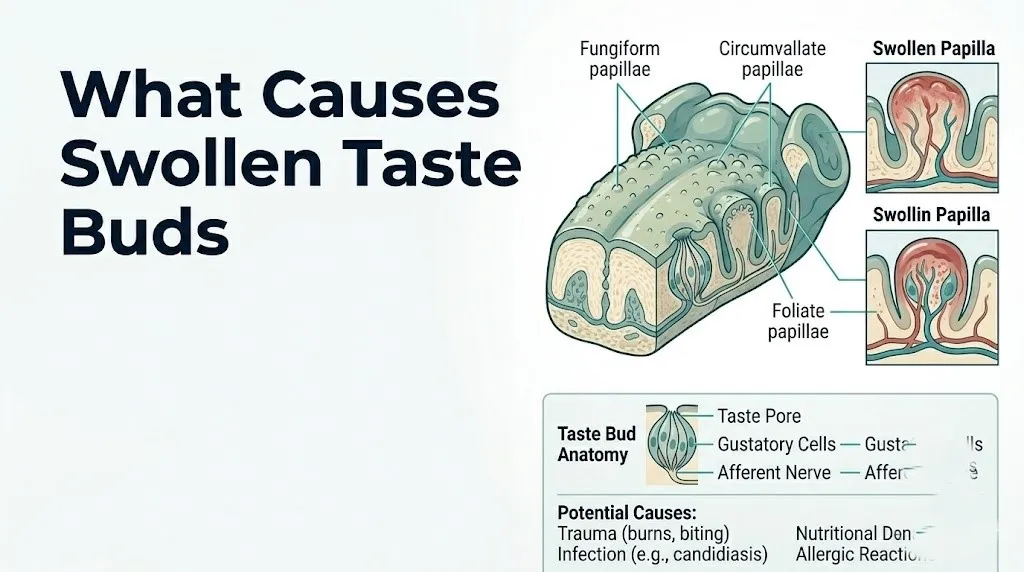
The tongue contains four types of papillae, but only three of them house taste buds and are capable of producing the swollen, painful bumps people notice. Understanding which type is affected helps identify the cause before any clinical examination.
Fungiform papillae are the most commonly inflamed type. They are mushroom-shaped, scattered across the anterior two-thirds of the tongue dorsum, and each contains 3 to 5 taste buds. They are most visible as small reddish dots across the tongue tip and middle. When inflamed, they appear as raised, round, red bumps that are often painful, particularly at the tongue tip.
Circumvallate papillae (also called vallate papillae) are the large, dome-shaped structures forming a V-shaped row at the junction between the front two-thirds and back one-third of the tongue. There are typically 7 to 12 of them. Each contains hundreds of taste buds. Because of their posterior location, they are more exposed to acid and pepsin from GERD and are frequently enlarged in people with chronic reflux.
Foliate papillae are parallel ridges along the lateral margins of the tongue near the back. They contain taste buds and also sit adjacent to lymphoid tissue. Many people discover their foliate papillae for the first time when they become inflamed and fear they are looking at something sinister. Their lateral tongue location and raised, ridged appearance can cause understandable anxiety.
Think of each papilla like a tiny island on the tongue surface, with the taste receptor cells living inside small pores. When the island is flooded with inflammation, the whole structure swells, and the taste pores may become temporarily blocked, which is why taste changes often accompany a swollen papilla.
The swelling itself is produced by the COX-2 inflammatory pathway: tissue injury triggers arachidonic acid release, which COX-2 enzymes convert to prostaglandin E2. Prostaglandin E2 causes local vasodilation and increased vascular permeability, filling the papilla’s connective tissue core with plasma proteins and fluid.
| Papilla Type | Location | Taste Buds per Papilla | Common Inflammatory Cause |
|---|---|---|---|
| Fungiform | Anterior tongue dorsum | 3 to 5 | TLP, trauma, hot foods |
| Circumvallate | Posterior V-row | 100 to 300 | GERD, chronic irritants |
| Foliate | Lateral tongue margins | Variable | Infection, irritation, anxiety-related discovery |
| Filiform | Entire dorsum | None | Do not produce pain or swelling as taste buds |
Transient Lingual Papillitis and Swollen Taste Buds
Transient lingual papillitis (TLP) is the single most common cause of a swollen taste bud, producing one or more acutely inflamed, painful, raised fungiform papillae on the tongue tip or anterior dorsum that typically resolve within 1 to 7 days without treatment.
TLP was formally characterized in the dermatological and oral medicine literature in the 1990s and has since been documented in the Journal of Oral Pathology and Medicine as a benign, self-limiting condition affecting adults and children across all demographic groups. Its cause in individual cases is often not identified, which is why the “transient” and “idiopathic” labels persist.
The typical presentation is:
- One or a few bright red, raised, round papillae on the tongue tip or dorsum
- Sharp, burning, or stinging pain that feels disproportionate to the lesion’s size
- Onset often following specific foods, stress, or minor tongue irritation
- Complete resolution within 1 to 7 days
- Possible recurrence in some individuals
A distinct subtype called eruptive lingual papillitis affects children preferentially, involving multiple inflamed papillae across the tongue simultaneously, often accompanied by hypersalivation and, in some cases, low-grade fever. Research published in Oral Diseases found that eruptive lingual papillitis tends to cluster in household contacts, suggesting a possible infectious trigger, though no specific pathogen has been definitively isolated.
Women appear to report TLP more frequently than men in clinical case series, though it is unclear whether this reflects a true sex-based prevalence difference or a reporting and health-seeking behavior difference. People who identify a consistent dietary or stress trigger may find that avoiding that trigger reduces recurrence frequency.
Quick Tip:
- A single painful red bump on the tongue tip that appeared after eating a specific food and feels better within three days is the textbook TLP presentation.
- If the bump is white, ulcerated, or painless, it is less likely to be TLP and more likely to require clinical examination.
- Children with multiple simultaneous swollen papillae and excessive saliva production should be evaluated by a pediatrician or dentist if the presentation is severe or doesn’t resolve within 10 days.
Key Takeaway: Transient lingual papillitis is the most common cause of a single swollen, painful taste bud and nearly always resolves without treatment within 7 days, but a painless, white, or ulcerated tongue lesion requires professional evaluation regardless of how similar it looks to a simple TLP presentation.
Acid Reflux and Swollen Taste Buds
Gastroesophageal reflux disease (GERD) causes swollen taste buds by repeatedly exposing the posterior tongue’s circumvallate papillae to acidic gastric contents and pepsin enzyme, triggering a chronic low-grade inflammatory response in the papillae’s mucosal epithelium.
When gastric acid refluxes past the upper esophageal sphincter and reaches the oral cavity, it doesn’t just cause the familiar heartburn sensation in the chest. The acid and the digestive enzyme pepsin make direct contact with the posterior oral mucosa. Pepsin is particularly damaging to mucosal epithelium because it remains active at the moderately acidic pH levels found in partially neutralized refluxate that reaches the mouth.
The circumvallate papillae at the posterior tongue are the primary target because they sit closest to the pharynx and are bathed in refluxate during episodes of laryngopharyngeal reflux (LPR), a variant of GERD where acid reaches the throat and mouth without the classic heartburn symptoms. According to the Mayo Clinic, laryngopharyngeal reflux often presents without heartburn in up to 50% of affected patients, meaning many people with posterior tongue papillae inflammation from reflux don’t recognize it as a GERD manifestation.
People with chronic GERD-related posterior tongue inflammation may notice:
- Persistent enlargement or redness of the large bumps at the back of the tongue
- A sensation of mucus or something stuck in the throat
- Altered taste, particularly a sour or bitter background taste
- Morning worsening of tongue soreness (from overnight recumbent reflux)
Adults with obesity, pregnancy, hiatal hernia, or who eat close to bedtime are at higher risk for GERD-related oral and pharyngeal mucosal changes. A board-certified gastroenterologist can confirm GERD through ambulatory pH-impedance monitoring and assess whether posterior papillae inflammation resolves with reflux management.
Spicy and Acidic Foods Causing Taste Buds to Swell
Spicy and acidic foods cause taste buds to swell by directly activating the TRPV1 receptor (transient receptor potential vanilloid 1) in the oral epithelium and triggering a rapid neurogenic inflammatory response in the fungiform papillae within minutes of contact.
Capsaicin, the active compound in chili peppers, binds to the TRPV1 receptor on the free nerve endings of the lingual nerve within and around the fungiform papillae. TRPV1 activation causes immediate calcium influx into the nerve terminal, triggering the release of substance P and calcitonin gene-related peptide (CGRP). These neuropeptides cause vasodilation, mast cell degranulation, and plasma protein extravasation into the papilla stroma, producing the characteristic red, swollen, burning appearance.
Acidic foods work through a different but overlapping mechanism. Citric acid, malic acid, and phosphoric acid in foods and beverages lower the local pH at the tongue surface below the threshold that proton-sensing receptors (including TRPV1 at low pH) and the oral epithelial barrier can tolerate. This produces chemical erosion of the taste pore epithelium and activates the same prostaglandin E2 inflammatory cascade that any other physical injury triggers.
People who eat very hot temperature foods (above approximately 60°C or 140°F) cause thermal injury to the taste receptor cells within the papillae rather than chemical irritation. Thermal damage destroys the microvilli on taste receptor cells and produces acute inflammatory swelling that typically resolves within 3 to 5 days as new receptor cells differentiate from basal cells.
People with burning mouth syndrome (BMS) deserve a specific note here. According to the Mayo Clinic, BMS primarily affects postmenopausal women at a female-to-male ratio of approximately 7 to 1, and even mild food irritants that healthy adults tolerate easily can produce pronounced, painful papillae swelling in BMS patients because the oral mucosa’s baseline pain threshold is pathologically lowered in this condition.
Quick Tip:
- Swollen papillae from hot foods typically appear at the tongue tip and resolve within 5 days.
- Swelling that persists beyond 7 days after a dietary trigger has been removed is no longer explainable by food irritation alone and needs reassessment.
- People with known oral hypersensitivity or BMS should inform their primary care physician or dentist before attributing recurrent papillae swelling to diet.
Trauma and Physical Injury to Taste Buds
Physical trauma causes taste buds to swell when direct mechanical force disrupts the epithelium of a fungiform or foliate papilla, triggering the innate immune inflammatory cascade at the site of tissue disruption within minutes of the injury.
The most common traumatic causes include accidentally biting the tongue, eating hard or sharp-edged foods (chips, crackers, hard crusts), dental procedures that contact the tongue, and repetitive pressure from orthodontic appliances or ill-fitting dentures. The lateral tongue margins and tongue tip are the most vulnerable because they are the areas most likely to be caught between the teeth or pressed against dental hardware.
At the tissue level, trauma ruptures capillaries within the papilla’s connective tissue core. Blood-borne platelets aggregate at the injury site and release platelet-derived growth factor and thromboxane A2, which initiate both clot formation and local mast cell degranulation. The resulting histamine and prostaglandin E2 release drives the visible swelling and erythema. If the surface epithelium is broken, bacteria from the normal oral flora can colonize the wound, potentially converting a simple traumatic papillitis into a secondary bacterial infection that prolongs the inflammatory response.
To monitor a traumatic papilla injury at home:
- Note the date and cause of the injury as specifically as possible.
- Observe the papilla daily for size change, color change (from red to white or gray), or the appearance of an irregular border.
- Avoid pressing, rubbing, or poking the affected area, as repeated mechanical stimulation perpetuates the COX-2 inflammatory response.
- Avoid spicy, acidic, or very hot foods until the area has healed.
- If the lesion has not improved within 7 to 10 days or has grown rather than shrunk, schedule an appointment with a board-certified dentist or oral medicine specialist.
Older adults wearing full or partial dentures face a higher rate of repetitive traumatic papillitis because denture fit changes as the jaw ridge (alveolar bone) resorbs over time, creating localized pressure points that chronically irritate the tongue margin. A dentist specializing in prosthodontics should evaluate any denture-wearing patient with persistent lateral tongue soreness.
Key Takeaway: Traumatic papillitis resolves within 7 to 10 days in most healthy adults, but a tongue lesion that grows, changes color to white or gray, develops an irregular border, or becomes painless rather than tender requires urgent dental or oral medicine evaluation to rule out malignant change.
Vitamin Deficiency and Swollen Taste Buds
Vitamin and mineral deficiencies cause swollen taste buds by disrupting the rapid cell turnover required to maintain healthy oral epithelium, producing a condition called atrophic glossitis in which the tongue mucosa becomes inflamed, smooth, and in some areas, acutely painful.
The taste receptor cells within each taste bud are among the fastest-turning-over cells in the human body, replaced every 10 to 14 days according to research cited by the National Institutes of Health. This rapid renewal rate makes them exquisitely dependent on the nutritional cofactors required for DNA synthesis and cell replication.
Key deficiencies that produce papillae inflammation and tongue changes:
- Vitamin B12 (cobalamin): Deficiency impairs DNA synthesis in rapidly dividing mucosal cells, producing papillae atrophy and inflammation. The tongue appears red, smooth, and sore. B12 deficiency is common in older adults, strict vegans, and people taking metformin long-term (which reduces intestinal B12 absorption via the intrinsic factor pathway).
- Vitamin B2 (riboflavin): Deficiency causes angular cheilitis (cracked corners of the mouth) alongside magenta-colored glossitis with swollen, tender papillae.
- Vitamin B3 (niacin/nicotinic acid): Severe deficiency produces pellagra, which includes fiery red glossitis with papillae swelling as a primary oral manifestation.
- Folate (vitamin B9): Deficiency produces glossitis clinically similar to B12 deficiency and is particularly relevant in pregnancy, when folate demands increase substantially.
- Iron: Iron deficiency anemia reduces hemoglobin delivery to the oral mucosa, producing pallor, mucosal fragility, and painful tongue inflammation. Clinicians may observe papillae swelling in early iron deficiency before full anemia develops.
- Zinc: Zinc deficiency impairs wound healing in oral epithelium and alters taste receptor cell function, producing both dysgeusia (altered taste) and papillae changes.
A complete blood count (CBC) with differential, serum ferritin, serum vitamin B12, serum folate, and serum zinc level ordered by a primary care physician will identify nutritional causes. Older adults, people with malabsorption syndromes (celiac disease, Crohn’s disease, post-bariatric surgery), and strict vegans are at highest risk and should be tested before other causes are attributed.
Dry Mouth and Taste Bud Inflammation
Dry mouth, clinically called xerostomia, causes taste bud inflammation by removing the salivary film that normally protects the tongue papillae from chemical, microbial, and frictional injury, leaving the taste receptor cells and their surrounding epithelium directly exposed to irritants and pathogen colonization.
Saliva is not just a lubricant. It contains immunoglobulin A (secretory IgA), lysozyme, lactoferrin, mucins, and bicarbonate, all of which form an antimicrobial and acid-buffering shield over the tongue surface. When salivary flow drops below approximately 0.1 milliliters per minute (the clinical threshold for xerostomia), this protective film thins or disappears, and the fungiform and foliate papillae become vulnerable to irritation from even mildly acidic foods, minor tongue friction, and opportunistic microbial colonization by Candida albicans.
The taste receptor cells themselves are also directly affected by dryness. Taste transduction requires dissolved taste molecules to reach the taste pores and bind to receptor proteins. When the salivary film is insufficient, taste molecules cannot reach the receptors efficiently, producing dysgeusia alongside physical papillae discomfort.
According to the American Dental Association (ADA), xerostomia affects an estimated 22% of adults, with prevalence rising sharply in adults over 65 and in people taking medications with anticholinergic side effects. Anticholinergic medications reduce salivary gland secretion by blocking muscarinic receptors on the acinar cells of the parotid, submandibular, and sublingual glands. The resulting xerostomia produces secondary papillae inflammation that will not resolve until either the medication is adjusted or salivary substitute therapy is initiated under medical supervision.
People with Sjögren’s syndrome, an autoimmune condition causing lymphocytic infiltration of salivary gland tissue, experience severe chronic xerostomia and are at substantially elevated risk for both recurrent papillae inflammation and oral candidiasis. A rheumatologist manages the systemic aspects of Sjögren’s syndrome, while the oral manifestations are best co-managed with an oral medicine specialist.
Infections That Cause Swollen Taste Buds
Infections cause swollen taste buds when microbial pathogens or their toxins invade the oral mucosal epithelium directly, producing a localized or diffuse inflammatory response in the tongue papillae that differs in character from mechanically or chemically triggered papillitis.
Three infectious categories are clinically relevant:
Oral candidiasis (thrush): Caused by overgrowth of Candida albicans, a fungus normally present in the oral cavity at low levels. When host immunity is compromised (by antibiotic use eliminating competing bacteria, HIV infection, corticosteroid therapy, or uncontrolled diabetes), Candida produces phospholipase and aspartyl proteinase enzymes that invade the oral epithelium. The fungiform and foliate papillae become inflamed within an erythematous (red) base, often with white, curd-like patches that wipe away to reveal bleeding mucosa. The Centers for Disease Control and Prevention (CDC) notes that oropharyngeal candidiasis affects up to 90% of people with HIV at some point during their illness, and up to one-third of cancer patients undergoing chemotherapy.
Herpes simplex virus type 1 (HSV-1): Primary HSV-1 infection (first exposure) causes herpetic gingivostomatitis, which produces multiple painful ulcers and vesicles across the oral mucosa including the tongue, with associated papillae inflammation, fever, and lymphadenopathy. This presentation is most common in children. Recurrent HSV-1 (cold sores) typically occurs at the lip margin but can occasionally involve the tongue tip.
Bacterial secondary infection: The tongue does not commonly develop primary bacterial infections in immunocompetent adults. However, a traumatically injured or persistently inflamed papilla can become secondarily colonized by oral streptococci or staphylococci, particularly if the surface epithelium has been disrupted.
People with HIV infection, organ transplant recipients, or individuals undergoing chemotherapy who develop swollen taste buds with white patches, fever, or difficulty swallowing should contact their treating physician within 24 hours rather than monitoring at home.
Key Takeaway: Oral candidiasis is the most clinically important infectious cause of swollen taste buds in immunocompromised patients, produces a distinctive red and white pattern, and requires antifungal evaluation by the treating physician rather than home monitoring.
Smoking and Taste Buds That Hurt
Smoking causes taste buds to hurt and swell through two parallel mechanisms: direct chemical irritation of the fungiform papillae by tobacco combustion byproducts, and chronic nicotine-induced vasoconstriction that impairs mucosal blood flow and tissue repair capacity in the tongue epithelium.
Cigarette smoke contains over 7,000 chemicals, including acetaldehyde, formaldehyde, acrolein, and polycyclic aromatic hydrocarbons, all of which contact the oral mucosa with every inhalation. These compounds activate the TRPV1 and TRPA1 receptor channels on lingual nerve endings within the fungiform papillae, triggering chronic neurogenic inflammation. Over time, this repeated chemical insult produces papillae changes ranging from acute swelling during active smoking periods to eventual papillae atrophy with chronic exposure.
Nicotine also acts as a vasoconstrictor by stimulating alpha-adrenergic receptors in peripheral blood vessels, including the lingual arteries supplying the tongue. Reduced mucosal blood flow means the papillae receive less oxygen and fewer immune cells during repair phases, prolonging the duration of inflammation from any given irritant and impairing the healing of minor tongue injuries.
According to the CDC, cigarette smoking is one of the most established risk factors for oral squamous cell carcinoma, and the combination of smoking with alcohol use increases oral cancer risk by a factor of 15 compared to non-smoking, non-drinking adults. This is the clinical context in which smokers with persistent tongue lesions, including what they might dismiss as a “swollen taste bud,” need earlier and more urgent professional evaluation than non-smokers with the same presentation.
Pipe and cigar smokers experience a specific pattern of posterior tongue and soft palate irritation from the concentrated heat and chemical load of non-inhaled smoke. Any smoker with a tongue lesion that has not resolved within two weeks should be evaluated by a primary care physician, dentist, or otolaryngologist rather than waiting the three-week threshold appropriate for non-smokers.
Allergies and Swollen Taste Buds
Allergies cause swollen taste buds when an immune-mediated type I hypersensitivity reaction or a delayed type IV hypersensitivity reaction triggers mast cell degranulation and inflammatory cell infiltration in the tongue papillae’s mucosal tissue.
Oral allergy syndrome (OAS), also called pollen-food allergy syndrome, is the most common allergic cause of tongue papillae swelling. It occurs when proteins in raw fruits and vegetables cross-react with inhaled pollen allergens that the immune system has already sensitized to. When a person with birch pollen allergy eats a raw apple, for instance, the immune system misidentifies apple proteins as birch pollen allergens and mounts a rapid IgE-mediated response in the oral mucosa. The resulting mast cell degranulation releases histamine and leukotriene C4, causing immediate papillae swelling, itching, and tingling localized to the tongue, lips, and soft palate. Importantly, OAS symptoms typically resolve within 30 minutes and rarely progress to systemic anaphylaxis.
Allergic contact stomatitis is a slower, delayed-type (type IV) hypersensitivity reaction to substances repeatedly contacting the oral mucosa, including cinnamon flavoring (common in toothpastes and candies), propylene glycol in mouthwashes, nickel in orthodontic appliances, and certain dental materials. This produces persistent, localized papillae inflammation in the areas of contact, often taking 24 to 72 hours to peak after exposure.
A board-certified allergist can confirm OAS through skin prick testing with fresh food extracts and confirms allergic contact stomatitis through patch testing with the suspected allergen panel. Both diagnoses require professional confirmation before any dietary or oral care product changes are made.
Children with known food allergies face elevated rates of oral allergy syndrome as their immune systems develop. Parents who notice tongue or lip swelling immediately after specific foods in a child with known environmental allergies should discuss OAS evaluation with their child’s allergist or pediatrician.
Swollen Taste Buds During Pregnancy and Hormonal Causes
Swollen taste buds during pregnancy result from estrogen and progesterone-driven increases in oral mucosal vascularity and inflammatory sensitivity that make the fungiform and foliate papillae more reactive to irritants that would not cause noticeable swelling in the same person before conception.
Estrogen receptors are expressed in the oral mucosal epithelium and the smooth muscle of lingual blood vessels. Rising estrogen levels during the first trimester increase mucosal blood flow and capillary permeability throughout the oral cavity, producing a baseline state of increased tissue reactivity. This is the same physiological mechanism responsible for pregnancy gingivitis, which affects an estimated 60 to 75% of pregnant women according to data published in the Journal of Periodontology.
Progesterone amplifies this effect by reducing the threshold for prostaglandin E2 release in gingival and mucosal tissues. In practical terms, a mildly spicy meal, a small bite injury, or a food that caused no tongue reaction before pregnancy may produce visible papillae swelling during the second trimester.
Pregnant women also face specific nutritional vulnerabilities that can independently cause papillae inflammation:
- Folate demand increases dramatically during pregnancy, and even women taking prenatal vitamins can develop relative folate deficiency affecting oral mucosal cell renewal.
- Iron deficiency anemia is common in the second and third trimesters and produces mucosal pallor and papillae tenderness that resembles but differs from inflammatory papillitis.
- Pregnancy-related acid reflux, present in approximately 17 to 45% of pregnancies according to the American College of Gastroenterology, adds a GERD component to posterior tongue papillae changes.
Pregnant women who develop swollen, painful tongue papillae should inform their obstetrician-gynecologist rather than self-treating with oral rinses or over-the-counter products without medical guidance, as certain mouthwash ingredients have not been evaluated for safety in pregnancy.
Key Takeaway: Swollen taste buds during pregnancy commonly result from estrogen-driven mucosal hyperreactivity combined with folate or iron insufficiency, and the right first step is informing your obstetrician-gynecologist rather than attributing the change to a specific food.
Medication-Induced Swollen Taste Buds
Several prescription and over-the-counter medications cause swollen taste buds through direct effects on oral mucosal cell biology, salivary gland function, or the immune environment of the tongue, making medication review an essential part of any workup for persistent papillae inflammation.
The mechanisms differ by drug class:
- ACE inhibitors (used for hypertension and heart failure): Bradykinin accumulation caused by ACE inhibition produces episodic swelling of the oral and pharyngeal mucosa, including the tongue, a condition called ACE inhibitor-induced angioedema. This can involve the tongue papillae as part of broader mucosal swelling and, in severe cases, constitutes a medical emergency because of airway compromise risk.
- Metformin (used for type 2 diabetes): Reduces intestinal absorption of vitamin B12 by competing with the intrinsic factor-B12 complex at ileal receptors. Long-term metformin use produces B12 deficiency that manifests as atrophic glossitis with papillae inflammation, typically appearing after 3 or more years of continuous use.
- Anticholinergic medications (certain antihistamines, bladder medications, antidepressants with anticholinergic activity): Reduce salivary flow by blocking muscarinic M3 receptors on salivary gland acinar cells, producing xerostomia and secondary papillae inflammation.
- Chemotherapy agents: Many cytotoxic drugs cause oral mucositis, a direct toxic effect on the rapidly dividing mucosal epithelium of the tongue, producing widespread painful erosions and papillae inflammation. This is distinct from infection and does not respond to antifungal therapy.
- Bisphosphonates (used for osteoporosis): Have been associated with osteonecrosis of the jaw and local oral mucosal changes in case reports, though the mechanism of papillae-specific effects is not fully characterized.
Anyone experiencing new or worsening tongue papillae swelling after starting a new medication should bring a complete and current medication list, including all supplements and over-the-counter products, to their dentist, primary care physician, or oral medicine specialist.
Risk Factors for Swollen and Inflamed Taste Buds
Certain physiological states, behavioral patterns, and medical diagnoses make swollen taste buds more likely to develop and less likely to resolve quickly, which changes the clinical calculus of when to monitor at home versus when to seek evaluation.
| Risk Factor | Mechanism of Increased Risk | Clinical Implication |
|---|---|---|
| GERD or frequent acid reflux | Acid and pepsin exposure to posterior tongue papillae | Circumvallate papillae most affected; gastroenterology evaluation warranted |
| Cigarette or pipe smoking | Chemical TRPV1 activation, vasoconstriction, carcinogen exposure | Lower threshold for professional evaluation of any tongue lesion |
| Immunosuppression (HIV, transplant, chemotherapy) | Reduced mucosal immunity, Candida overgrowth risk | Any tongue change warrants 24 to 48-hour physician notification |
| Xerostomic medication use | Loss of salivary protective film | Secondary papillae inflammation; medication review by prescribing provider |
| Strict vegan diet without B12 supplementation | B12 deficiency producing atrophic glossitis | CBC, serum B12 testing by primary care physician |
| Pregnancy (especially second trimester) | Estrogen-driven mucosal hyperreactivity, folate demand increase | Obstetrician-gynecologist notification for new oral changes |
| Age over 60 | Reduced salivary flow, immune senescence, oral cancer risk elevation | Lower threshold for professional lesion evaluation |
| Heavy alcohol use combined with smoking | Synergistic carcinogen exposure to oral mucosa | Oral cancer risk 15 times higher; urgent evaluation for any persistent lesion |
| Known oral allergy syndrome | IgE-mediated immediate hypersensitivity to food proteins | Allergist evaluation; learn to distinguish OAS from systemic allergy |
| Orthodontic appliances or dentures | Repetitive localized trauma to tongue margin papillae | Prosthodontist or orthodontist evaluation for appliance adjustment |
Biological sex differences are worth noting specifically. Burning mouth syndrome affects postmenopausal women at a female-to-male ratio of approximately 7 to 1, according to the Mayo Clinic, and produces chronic bilateral tongue burning with heightened papillae sensitivity that amplifies any concurrent irritant. Older males face a statistically higher rate of oral squamous cell carcinoma, making persistent tongue lesions in men over 50 a higher-priority referral than the same lesion in a younger woman with no other risk factors.
When Swollen Taste Buds Signal a Serious Condition
Most swollen taste buds are benign, self-limiting, and resolve within days. The minority that don’t resolve, or that present with specific features, require timely professional evaluation because oral squamous cell carcinoma and other serious oral conditions can present with findings that laypeople mistake for a persistent or unusual “swollen taste bud.”
According to the NIDCR, oral cavity cancer (including tongue cancer) accounts for approximately 54,000 new cases in the United States annually. The five-year survival rate for oral cavity cancer caught at a localized stage is approximately 84%, compared to approximately 38% for cancer that has spread to regional lymph nodes, which underscores the importance of not delaying evaluation of concerning oral lesions.
Features that distinguish a concerning tongue lesion from benign papillitis:
- Painlessness: A raised or thickened tongue lesion that is not tender to touch is more likely to be a concerning lesion than an inflamed papilla, which is typically painful. Pain is the hallmark of benign papillitis. Absence of pain in a visible lesion is a red flag.
- Duration beyond three weeks: Benign transient papillitis resolves within days to two weeks. Any tongue lesion persisting beyond three weeks requires examination.
- White patch (leukoplakia) or red patch (erythroplakia): Oral leukoplakia is a white mucosal patch that cannot be wiped away, present in approximately 1 to 3% of adults, and carries a malignant transformation rate of approximately 1 to 2% per year according to data published in the Journal of Oral Pathology and Medicine. Oral erythroplakia (red patch) carries a substantially higher malignant transformation rate and requires immediate biopsy.
- Induration (firmness): A tongue lesion that feels hard or firm when pressed, unlike the soft tissue of an inflamed papilla, warrants urgent referral.
- Irregular border: Benign papillitis has smooth, rounded borders. Irregular, ragged, or asymmetric borders suggest neoplastic tissue architecture.
- Ulceration with raised edges: A crater-like ulcer with raised, indurated borders rather than a simple raised papilla is a warning sign for oral cancer.
Any person with a combination of smoking, heavy alcohol use, HPV infection history, or age over 50 who notices a persistent tongue lesion should be seen by a primary care physician or dentist within one to two weeks, not at the next available appointment months away.
Emergency Symptoms: When to Call 911 or Go to the ER
Certain symptoms associated with tongue swelling and oral mucosal inflammation require immediate emergency evaluation. Do not wait to see if these resolve on their own.
Call 911 or go to the nearest emergency room immediately if you experience:
- Rapidly expanding tongue or throat swelling that interferes with swallowing or makes breathing feel difficult or strained (this may indicate ACE inhibitor-induced angioedema, severe allergic reaction, or Ludwig’s angina, a serious deep neck space infection)
- Tongue swelling accompanied by throat tightening, hives across the body, lightheadedness, or rapid heart rate within minutes of eating a food (signs of anaphylaxis requiring immediate epinephrine administration)
- High fever (above 103°F / 39.4°C) with tongue swelling, difficulty opening the mouth, and neck stiffness (possible signs of deep neck space infection requiring emergency surgical evaluation)
- Sudden, severe throat or tongue swelling with no clear preceding cause in a person taking an ACE inhibitor medication (ACE inhibitor angioedema can progress rapidly and cause fatal airway obstruction)
These presentations can indicate anaphylaxis, ACE inhibitor angioedema, or serious oral and neck space infections and require emergency medical assessment, not an urgent care appointment or a phone call.
For tongue or oral lesions without airway involvement, the urgent threshold is a persistent, painless, or ulcerated lesion lasting more than three weeks without improvement: schedule an appointment with a board-certified dentist, oral medicine specialist, or otolaryngologist within one to two weeks of recognizing the three-week non-resolution pattern.
What Doctor Treats Swollen Taste Buds and How Diagnosis Works
The right provider for swollen taste buds depends on what the clinical picture suggests and how long the problem has been present.
For most healthy adults with a single painful papilla of recent onset:
- A board-certified dentist is the most accessible first-line evaluator and can distinguish benign papillitis from lesions requiring further workup during a standard oral examination.
- A primary care physician is appropriate when you suspect a systemic cause (vitamin deficiency, GERD, medication effect, autoimmune disease) and need blood testing or medication review.
For specific clinical circumstances, additional specialists become relevant:
- Oral medicine specialist (board-certified through the American Academy of Oral Medicine): For recurrent, persistent, or diagnostically unclear oral lesions
- Otolaryngologist (ENT specialist): For posterior tongue or throat involvement, suspected cancer referral, or laryngopharyngeal reflux evaluation
- Board-certified gastroenterologist: When GERD is suspected as the underlying driver of posterior tongue papillae inflammation
- Board-certified allergist: For suspected oral allergy syndrome or allergic contact stomatitis confirmed through skin prick and patch testing
- Rheumatologist: When Sjögren’s syndrome is suspected based on dry eyes, dry mouth, and recurrent oral inflammation
- Oral and maxillofacial surgeon: For incisional or punch biopsy of suspicious tongue lesions
How a swollen taste bud diagnosis typically unfolds in a clinical setting:
- Clinical oral examination: the provider uses a tongue depressor and light to assess the number, size, color, texture, border regularity, and tenderness of affected papillae.
- Medical and medication history review: current medications, recent dietary changes, smoking status, GERD symptoms, immune status.
- If oral candidiasis is suspected: a potassium hydroxide (KOH) preparation of a mucosal swab viewed under microscopy to identify Candida hyphae.
- If nutritional deficiency is suspected: CBC with differential, serum ferritin, serum vitamin B12, serum folate, and serum zinc ordered by a primary care physician.
- If GERD is suspected: referral to gastroenterology for ambulatory pH-impedance monitoring or empirical proton pump inhibitor trial under physician supervision.
- If allergy is suspected: referral to allergist for skin prick testing or patch testing.
- If any lesion meets the criteria for potentially malignant change: direct referral for oral cytology brush biopsy or incisional biopsy under local anesthesia by an oral and maxillofacial surgeon or oral medicine specialist.
Before your appointment, photograph the affected area in good lighting, note the exact date symptoms started, list all medications and supplements, and document any preceding events (specific foods, trauma, new medications, illness).
Frequently Asked Questions About Swollen Taste Buds
What is the most common cause of a swollen taste bud?
Transient lingual papillitis is the most common cause of a single swollen, painful taste bud, involving acute inflammation of one or more fungiform papillae on the tongue’s anterior surface.
It typically resolves without treatment within 3 to 7 days and is documented in the Journal of Oral Pathology and Medicine as a benign, self-limiting condition.
If the lesion does not follow this resolution pattern, a board-certified dentist or oral medicine specialist should examine it.
How long does a swollen taste bud usually last?
A swollen taste bud caused by transient lingual papillitis or minor food irritation typically resolves within 3 to 7 days in otherwise healthy adults.
Post-traumatic papillitis from biting the tongue may take up to 10 days to fully resolve, depending on how deeply the epithelium was disrupted.
Any papillae swelling persisting beyond three weeks without a clear ongoing cause requires professional clinical evaluation.
Can acid reflux cause swollen taste buds?
Acid reflux causes swollen taste buds by exposing the circumvallate papillae at the posterior tongue to gastric acid and pepsin enzyme, producing chronic low-grade inflammatory changes in those structures.
The Mayo Clinic notes that laryngopharyngeal reflux, a variant of GERD, presents without classic heartburn in up to 50% of affected patients, meaning many people don’t connect their posterior tongue inflammation to reflux.
A board-certified gastroenterologist can confirm this cause through ambulatory pH-impedance monitoring.
Are swollen taste buds on the tip of the tongue different from those at the back?
Swollen taste buds at the tongue tip involve fungiform papillae and most commonly result from transient lingual papillitis, food irritation, or minor trauma.
Swollen structures at the back of the tongue involve circumvallate papillae, which are larger and more likely to be inflamed by GERD, chronic irritants, or posterior oral infections.
The foliate papillae on the lateral tongue margins are a third distinct structure that can be inflamed by localized infection or trauma and are sometimes mistaken for something more serious due to their ridged appearance.
Can a swollen taste bud be a sign of cancer?
Most swollen taste buds are not cancerous, but oral squamous cell carcinoma can present as a persistent, painless, or ulcerated raised lesion on the tongue that laypeople misidentify as a swollen taste bud.
The NIDCR reports that oral cavity cancer affects approximately 54,000 Americans annually, and early detection substantially improves survival rates.
A tongue lesion that is painless, has an irregular border, feels firm, or has not resolved within three weeks requires evaluation by a dentist, oral medicine specialist, or ENT, not continued home monitoring.
When should I see a doctor for a swollen taste bud?
See a board-certified dentist or primary care physician if a swollen taste bud has not resolved within 10 to 14 days, if multiple papillae are affected simultaneously without a clear dietary cause, or if the lesion is accompanied by white patches, ulceration, or painlessness.
People with HIV, cancer, or who are taking immunosuppressive medications should contact their treating physician within 24 to 48 hours of noticing new tongue changes, given their elevated risk of oral candidiasis and mucosal infection.
Go to the emergency room immediately if tongue swelling is accompanied by difficulty breathing, throat tightening, or rapid whole-body swelling.
Closing
The most important clinical takeaway from everything covered here is this: the pattern matters more than the presence of swelling. A single painful red bump that appeared after eating jalapeños and disappears within five days is textbook transient lingual papillitis. A painless, firm, or ulcerated lesion that stays put beyond three weeks is something that a board-certified dentist or oral medicine specialist needs to see.
If your swollen taste bud fits the benign pattern, monitor it over the next week and remove the obvious trigger if you can identify one. If it doesn’t fit that pattern, or if you have any of the risk factors covered in this article (smoking, GERD, immunosuppression, alcohol use, age over 50), don’t wait for it to resolve on its own.
You now have the anatomical and clinical framework to describe your symptoms accurately to a provider and to understand exactly which type of evaluation your situation warrants. That precision gets you a faster, more useful answer from any clinician you see.