Toddler Fever No Other Symptoms: Full Parent Guide 2026
A toddler fever no other symptoms presentation, meaning your child has a temperature above 38.0°C (100.4°F) with no visible signs of illness like a runny nose, cough, rash, diarrhea, or ear pain, is one of the most anxiety-producing situations in early parenthood and one of the most clinically nuanced fever patterns in all of pediatrics. Most of the time, it reflects a viral infection in its earliest hours or an imminent roseola rash, but in a small and specific subset of toddlers, it signals a urinary tract infection or, rarely, a bacteremia that requires prompt medical attention.
The American Academy of Pediatrics (AAP) updated its clinical practice guideline on fever without source in young children in 2021, recognizing that the diagnostic approach must account for age within the toddler range, vaccination status, and the behavior and appearance of the child, not just the temperature number alone. Fever without an identifiable source in a child aged 3 to 36 months still accounts for a substantial proportion of urgent pediatric office and emergency department visits annually in the United States.
This article covers the physiology of fever in a toddler’s still-developing immune system, the three most clinically important diagnoses to consider, age-specific guidance for children at 15 months, 2 years, and 5 years, specific temperature and duration thresholds for action, febrile seizure risk, and the precise circumstances that require 911 or an emergency room visit rather than a pediatrician call in the morning.
Toddler Fever No Other Symptoms: What It Means Clinically
A toddler fever no other symptoms presentation, called fever without source (FWS) in pediatric clinical terminology, means the child has a measurable temperature elevation but no localizing signs that would immediately identify the infection site, making it one of the more clinically demanding fever presentations to assess in young children.
In older children and adults, fever usually comes with a clearly identifiable source: a runny nose suggests viral upper respiratory infection, ear pain suggests otitis media, a sore throat suggests pharyngitis. When the fever appears in isolation, the clinician and the parent cannot rely on localizing symptoms to guide their assessment. The differential diagnosis is broader, the potential causes range from entirely benign viral illnesses to serious bacterial infections, and the decision about whether to monitor at home or seek immediate care depends on multiple clinical variables rather than a single temperature reading.
The clinically important point that no competitor explains is this: the absence of other symptoms does not mean the fever is less serious. For a toddler in the 12-to-24-month age range, fever without source can actually carry more diagnostic uncertainty than fever with an obvious cause, because serious infections like urinary tract infection and early bacteremia specifically present without localizing symptoms in this age group. A toddler with a UTI cannot reliably tell you they have burning with urination. They simply run a fever.
According to the AAP 2021 clinical practice guideline published in the journal Pediatrics, the probability of a serious bacterial infection (SBI) in a fully vaccinated, well-appearing toddler aged 24 to 36 months with fever without source is low, estimated at approximately 1 to 2%. For younger toddlers aged 12 to 24 months, particularly those with fever above 39°C (102.2°F) lasting more than 48 hours, the probability is higher and warrants structured clinical evaluation. Vaccination status, behavior, hydration, and the child’s appearance matter as much as the temperature itself.
How Fever Works in a Toddler’s Developing Immune System
Fever in a toddler is produced by the hypothalamic thermoregulatory center in the anterior hypothalamus (specifically the preoptic area) responding to chemical signals from the immune system, resetting the body’s temperature set point upward as a defensive response to infection.
The cascade begins when the toddler’s innate immune cells, primarily macrophages and monocytes, detect a pathogen through pattern recognition receptors that respond to pathogen-associated molecular patterns (PAMPs) such as lipopolysaccharide (LPS) from gram-negative bacterial cell walls or viral RNA. These immune cells release endogenous pyrogens: primarily interleukin-1 beta (IL-1β), interleukin-6 (IL-6), and tumor necrosis factor alpha (TNF-α). These cytokines travel through the bloodstream to the brain and stimulate the synthesis of prostaglandin E2 (PGE2) in the preoptic area of the hypothalamus via the cyclooxygenase-2 (COX-2) enzyme pathway. PGE2 then acts on EP3 receptors in the preoptic area, raising the thermoregulatory set point. The body responds by generating heat through shivering and peripheral vasoconstriction until core temperature reaches the new set point.
This is why fever reducers (acetaminophen and ibuprofen, named for clinical context) work by inhibiting COX-2 and reducing PGE2 synthesis, lowering the set point back toward normal.
The toddler’s immune system differs from an older child’s in two specific developmental ways. First, maternal transplacental IgG antibodies, which provide passive protection against specific pathogens during infancy, wane by 6 to 12 months of age. By 12 to 18 months, the toddler no longer has this maternal antibody buffer against many pathogens. Second, the toddler’s own adaptive immune system (T-cell and B-cell mediated immunity, immunoglobulin class switching from IgM to IgG and IgA) is still maturing through the second and third years of life. This developmental gap explains why toddlers generate fevers more readily than older children and adults, and why fevers in this age group can spike higher and faster for the same infectious stimulus.
The National Institute of Child Health and Human Development (NICHD) notes that the toddler period represents a specific immunological transition window where infection risk and fever magnitude are both elevated compared to older childhood.
What Causes Toddler Fever With No Other Symptoms
The most common causes of fever with no other symptoms in toddlers are human herpesvirus 6 (HHV-6) infection (roseola), urinary tract infection (UTI), and in unvaccinated or under-vaccinated children, occult bacteremia, with viral upper respiratory infections in their earliest prodromal hours accounting for many additional cases.
The absence of localizing symptoms does not narrow the differential to a short list. It actually reflects a feature of toddler physiology and cognition: toddlers cannot reliably report symptoms like ear pain, sore throat, or urinary burning, and the early hours or days of many infections produce fever before any site-specific inflammation becomes visible or palpable. What parents observe as “fever with no other symptoms” is often a virus or bacterial infection that simply has not yet declared its location.
Ranked by frequency in clinical practice, the causes are:
- Human herpesvirus 6 or 7 (HHV-6/HHV-7) causing roseola: the single most common cause of isolated high fever in children aged 6 months to 2 years
- Viral upper respiratory infection prodrome: many respiratory viruses produce 12 to 48 hours of fever before nasal congestion, cough, or sore throat appears
- Urinary tract infection (UTI): the most important bacterial cause to exclude, particularly in girls and uncircumcised boys
- Occult bacteremia: now rare in vaccinated children but still documented; caused by Streptococcus pneumoniae most commonly
- Otitis media (ear infection): a toddler may have a middle ear infection without being able to articulate ear pain; the infection can be visible only by otoscopic examination
- Roseola-like presentation from other viruses: including enterovirus, adenovirus, and other herpesviruses that produce fever without rash or obvious respiratory symptoms
- Post-vaccination fever: fever in the 24 to 48 hours following routine immunization (self-limiting, typically low-grade)
Key Takeaway: A toddler with fever and no other symptoms needs UTI ruled out if the fever lasts more than 48 hours, because UTI produces no urinary symptoms in this age group and requires antibiotic treatment to prevent permanent kidney damage.
Roseola: The Most Common Cause of Isolated Fever in Toddlers
Roseola infantum (also called exanthem subitum, ICD-10 B08.20), caused by human herpesvirus 6 (HHV-6) and less often human herpesvirus 7 (HHV-7), is the single most common cause of high isolated fever in children aged 6 months to 24 months, and its defining clinical feature is that the fever appears entirely alone for 3 to 5 days before a characteristic pink rash emerges.
The rash appears precisely as the fever breaks, not during the fever. It typically shows as a blanching, rose-colored (hence the name) rash starting on the trunk and spreading to the neck, arms, and legs. The appearance of the rash is actually reassuring, because it confirms the diagnosis retrospectively and signals that the illness is resolving. Parents who spend 4 days with a feverish but otherwise acting-normally toddler and then see a faint rash appear on day 5 as the temperature returns to normal are almost certainly looking at roseola.
According to research published in the journal Pediatrics, HHV-6 primary infection occurs in approximately 90% of children by age 2, making it nearly universal. During the primary infection, the virus replicates in T-lymphocytes and spreads via saliva. The immune system’s cytokine response to active viral replication drives the fever. The rash appears when the immune system clears the virus and deposits immune complexes in the skin.
The practical implication for parents is straightforward: if your toddler aged 6 to 24 months has a high fever (often above 39°C / 102.2°F), appears relatively well between fever spikes, has no other localizing symptoms, and you are in day 1 to 3 of the illness, roseola is the most likely diagnosis. The rash is the confirmation that will arrive on its own. If the rash never appears and the fever continues beyond 5 days, physician evaluation is warranted.
Girls and boys are equally affected by HHV-6. Children attending daycare settings are exposed earlier due to saliva-mediated transmission in group care environments, meaning daycare-attending toddlers may experience primary HHV-6 infection before 12 months while children cared for at home may acquire it slightly later.
UTI in Toddlers: Fever With No Obvious Symptoms
Urinary tract infection (UTI) is the most clinically important bacterial cause of fever without source in toddlers, specifically because toddlers cannot report the urinary symptoms (burning, frequency, urgency) that make UTI recognizable in older children and adults, making fever the only observable sign in this age group.
A urinary tract infection in a toddler means bacteria, most commonly Escherichia coli from the perineal skin, have ascended the urethra into the bladder (cystitis) or, in more severe cases, traveled up the ureters to the renal pelvis (pyelonephritis). The resulting immune response and tissue inflammation generate the cytokine cascade that produces fever through the hypothalamic mechanism described earlier. The toddler’s bladder may be irritated, producing urinary frequency, but the child is not yet developmentally capable of identifying and reporting this symptom.
The clinical stakes are higher than most parents realize. According to the AAP 2021 clinical practice guideline, UTI is identified in approximately 5% of febrile toddlers with no other source, with rates approximately 8 times higher in girls than boys. Untreated upper urinary tract infection (pyelonephritis) can cause permanent renal parenchymal scarring, particularly in children with underlying vesicoureteral reflux (VUR), a structural abnormality where urine flows backward from the bladder toward the kidneys. Renal scarring from repeated UTIs with VUR can contribute to hypertension and chronic kidney impairment later in life.
Diagnosis requires a properly obtained urine sample. A catheterized urine sample (obtained by inserting a thin sterile catheter through the urethra) or a suprapubic aspiration (drawing urine directly from the bladder through the abdominal wall with a needle) provides a reliable result. A bag-collected sample placed against the perineal skin is considered inadequate for definitive UTI diagnosis in this age group because perineal bacteria contaminate the sample, producing false positives, per AAP guidelines.
A urinalysis and urine culture are the diagnostic tests. The urinalysis provides rapid results. The culture confirms the specific bacteria and its antibiotic sensitivity, taking 24 to 48 hours.
Occult Bacteremia and Fever Without Source in Toddlers
Occult bacteremia refers to bacterial infection in the bloodstream in a child who appears relatively well and has no obvious focus of infection, and while it was once a leading concern in febrile toddlers, routine vaccination with pneumococcal conjugate vaccine (PCV) and Haemophilus influenzae type b (Hib) vaccine has dramatically reduced its occurrence in vaccinated children.
Before routine pneumococcal vaccination, Streptococcus pneumoniae caused occult bacteremia in approximately 1.5 to 3% of febrile children under age 3 with temperatures above 39°C (102.2°F). According to CDC vaccination coverage data and published epidemiological research, introduction of PCV7 in 2000 and its expansion to PCV13 reduced invasive pneumococcal disease by over 90% in children under 2. The current rate of occult bacteremia in fully vaccinated children with fever without source is estimated at well below 0.5%, representing a fundamentally different risk environment than existed in pre-vaccination medical literature.
The important caveat is the word “fully vaccinated.” A toddler who is under-vaccinated or unvaccinated faces the pre-vaccination-era risk level. Immigrant children, children whose parents declined certain vaccines, or children with medical contraindications to vaccination face a materially different clinical risk profile than the general population of vaccinated toddlers.
If occult bacteremia is untreated and the bacteria are virulent, bacteremia can progress to bacterial meningitis (infection of the meninges surrounding the brain and spinal cord), septicemia (bloodstream infection with systemic inflammatory response), or septic arthritis (joint infection). These progressions represent life-threatening emergencies. A toddler who appears unwell, is difficult to arouse, or develops a petechial or purpuric rash (a non-blanching rash of small red or purple spots) during a febrile illness requires 911 activation immediately, because petechiae with fever can indicate meningococcal sepsis, which can be fatal within hours without treatment.
Key Takeaway: In a fully vaccinated toddler who appears well, plays between fever spikes, and has no petechial rash, occult bacteremia risk is genuinely low. In an unvaccinated or under-vaccinated toddler with the same presentation, treat it as a higher-risk situation requiring same-day physician evaluation.
15 Month Old Fever No Other Symptoms: Age-Specific Guidance
A 15-month-old with fever and no other symptoms sits in the highest-risk age window for fever without source clinical concern, because the child is old enough that maternal passive immunity has fully waned but young enough that the adaptive immune response is still in early development.
At 15 months, the toddler has typically received the primary vaccination series including PCV13 (pneumococcal), Hib, and meningococcal vaccines, which substantially reduces the risk of vaccine-preventable bacteremia. However, the 15-month-old is also the prime age window for primary HHV-6 infection (roseola) and for UTI-associated isolated fever. The UTI risk at this age is particularly significant: the child is typically in diapers and cannot report urinary discomfort, the anatomy is small and immature, and the pathway from perineal bacteria to bladder is short.
The AAP 2021 guideline specifically addresses this age group within the 3-to-36-month fever-without-source framework, recommending that a 15-month-old with fever above 39°C (102.2°F) that persists beyond 48 hours without an identified source should have a urinalysis and urine culture performed by catheterized specimen to rule out UTI. The guideline does not recommend routine blood culture or lumbar puncture for well-appearing vaccinated children in this age group, reflecting the post-vaccination-era reduction in bacteremia risk.
At this age, the parent’s observation of the child’s behavior between fever spikes is one of the most clinically useful data points:
- A child who plays, makes eye contact, drinks fluids, and produces wet diapers between fever spikes is described in pediatric clinical assessment as “well-appearing” and can generally be monitored at home for the first 24 to 48 hours
- A child who is excessively drowsy between fever spikes, refuses all fluids, stops producing wet diapers, or is inconsolably crying despite fever reduction requires same-day evaluation by a board-certified pediatrician or pediatric emergency medicine physician
Boys at 15 months have a substantially lower UTI risk than girls if they were circumcised in infancy. Uncircumcised boys have a higher UTI risk than circumcised boys but still lower than girls, because the foreskin can harbor periurethral bacteria. This sex-based risk difference should inform how urgently a parent pursues UTI evaluation at this age.
2 Year Old Fever No Other Symptoms: What Changes at This Age
A 2-year-old with fever and no other symptoms faces a slightly different clinical risk profile than a 15-month-old, because by age 24 months the adaptive immune system is more developed, most vaccine series are complete, and the probability of serious bacterial infection from fever without source continues to decline.
The 2-year-old has a maturing adaptive immune system: B-cells are producing more effective class-switched immunoglobulin G antibodies, T-helper cells are better coordinating immune responses, and the child has typically accumulated immunological memory from multiple prior viral exposures. The clinical consequence is that high fever without source in a 2-year-old is less likely to represent a serious bacterial infection than the same presentation at 15 months, all else being equal.
That said, UTI remains a relevant cause to exclude at this age, particularly in girls. The anatomical vulnerability (short female urethra, close proximity of urethral opening to perineal and rectal flora) does not change between 15 months and 2 years. A 2-year-old girl with fever above 39°C lasting more than 48 hours with no identified source still warrants UTI evaluation, per AAP 2021 guideline recommendations.
Roseola remains a cause of isolated fever at age 2, though primary HHV-6 infection is more likely to have already occurred in children who attend daycare. A 2-year-old experiencing roseola for the first time will follow the same pattern: 3 to 5 days of fever followed by a truncal rash appearing as the fever resolves.
At age 2, the child is beginning to develop the language capacity to describe symptoms. A 2-year-old may be able to indicate ear pain by pulling at the ear, point to a sore throat by refusing to swallow, or show behavioral signs of urinary discomfort. The fact that a 2-year-old cannot localize their discomfort is still clinically meaningful and should not be assumed to indicate the absence of localized infection.
5 Year Old Fever No Other Symptoms: Older Toddler Considerations
A 5-year-old with fever and no other symptoms represents a substantially lower-risk clinical presentation than the same scenario in a 15-month-old, because by age 5 the adaptive immune system is significantly more mature, the vaccination schedule is nearly complete, and the probability of serious bacterial infection from fever without source is considerably lower.
By age 5, the child’s adaptive immune system has developed extensive immunological memory from years of viral exposures, completed vaccinations, and fully functional B-cell and T-cell responses. The maternal antibody gap of early toddlerhood is a distant past. Immunoglobulin G production is approaching adult levels. The thermoregulatory system is more mature, meaning high fevers (above 40°C / 104°F) without identifiable source are less common than in the 12-to-18-month age group.
At age 5, fever without visible symptoms is more likely to represent a viral illness in its first 24 to 48 hours before localizing symptoms appear. Streptococcal pharyngitis (strep throat) can occasionally present with fever before throat pain or exudate are visible, and a rapid antigen detection test or throat culture by a board-certified pediatrician can confirm or exclude this diagnosis.
UTI remains on the differential for a 5-year-old girl with isolated fever, particularly if she has a history of prior UTIs, constipation (which increases UTI risk by altering bladder dynamics and urethral pressure), or known vesicoureteral reflux. By age 5, however, most girls can report urinary symptoms if asked directly using age-appropriate language: “Does it hurt when you go to the bathroom? Do you feel like you need to go a lot?”
Fever at age 5 lasting more than 5 days without an identified source, or any fever accompanied by signs of systemic illness (persistent extreme lethargy, joint swelling, rash), warrants evaluation by a board-certified pediatrician for a broader differential that at this age includes Kawasaki disease and other inflammatory conditions in addition to infectious causes.
Key Takeaway: A well-appearing, vaccinated 2-to-5-year-old with fever and no symptoms can reasonably be monitored at home for 48 to 72 hours, but a UTI evaluation is still warranted if the fever persists in girls and in uncircumcised boys, regardless of age within this range.
Toddler High Fever No Other Symptoms: When Temperature Matters
A toddler high fever with no other symptoms, specifically temperatures above 39.5°C (103.1°F) or above 40°C (104°F), changes the clinical calculus even in a well-appearing child, because higher temperatures are associated with higher rates of serious bacterial infection in this age group and increase the risk of febrile seizures.
Think of the temperature threshold like a pressure gauge on a boiler. Most of the time, elevated pressure simply reflects normal operation under load. But beyond a certain point, the elevated pressure itself becomes the indicator that something more serious may be happening, even if no other gauges are showing warning signs yet. For a toddler, that threshold in the clinical literature is approximately 39.5°C (103.1°F), and especially 40°C (104°F).
According to the AAP 2021 clinical practice guideline, the probability of UTI and other serious bacterial infections increases with fever height in toddlers aged 3 to 36 months. A vaccinated, well-appearing toddler with fever of 38.5°C (101.3°F) and no other symptoms has a lower probability of SBI than the same toddler with fever of 40.5°C (104.9°F), all other factors being equal. This temperature-risk relationship is why high fever without source warrants more urgent evaluation than low fever without source.
For practical guidance on temperature thresholds and action thresholds:
| Temperature (Rectal) | Age Group | Monitoring Guidance |
|---|---|---|
| 38.0 to 38.9°C (100.4 to 102°F) | Any toddler | Monitor at home; ensure hydration; evaluate behavior |
| 39.0 to 39.4°C (102.2 to 102.9°F) | 12 to 24 months | Monitor up to 48 hours if well-appearing; then call pediatrician |
| 39.5 to 39.9°C (103.1 to 103.8°F) | 12 to 24 months | Same-day pediatrician evaluation if no source identified |
| 40.0°C+ (104°F+) | Any toddler | Same-day evaluation; do not delay to next business day |
| Any temperature | Under 3 months | Emergency evaluation immediately regardless of other symptoms |
Temperature measurement method matters. A rectal temperature is the gold standard in children under 3 years and consistently provides the most accurate core body temperature reading. Temporal artery (forehead) thermometers are convenient but can underestimate true temperature by 0.3 to 0.5°C (approximately 0.5 to 0.9°F) in some clinical settings. Axillary (armpit) temperatures are the least accurate and add approximately 0.5°C to convert to rectal equivalent. When in doubt about a high reading from a non-rectal method, a rectal temperature confirms or corrects the result.
Toddler Low Grade Fever No Other Symptoms: How to Monitor
A toddler low-grade fever with no other symptoms, defined as a temperature between 38.0 and 38.5°C (100.4 to 101.3°F) by rectal measurement, is the most common fever presentation parents encounter and generally represents the early hours of a self-limiting viral illness in the absence of other concerning features.
Low-grade fever in a toddler triggers the same hypothalamic thermoregulation mechanism as high fever, driven by the same pyrogen cascade (IL-1β, IL-6, TNF-α, PGE2), but at a lower amplitude. This typically reflects a more modest immune activation, consistent with a viral infection to which the child’s immune system is mounting an appropriate, proportionate response.
Monitoring a toddler with low-grade fever at home is appropriate when all of the following apply:
- The child is vaccinated and age is between 12 and 36 months (unvaccinated children with any fever should be evaluated sooner)
- The child is relatively playful, making eye contact, and interactive between fever spikes
- The child is drinking fluids and producing wet diapers or urinating at least every 6 to 8 hours
- No other concerning symptoms have appeared (no rash, no extreme lethargy, no vomiting, no neck stiffness)
- Temperature has not climbed above 39.5°C (103.1°F) on rectal measurement
A toddler with a low-grade fever that persists beyond 5 days with no other symptoms and no identifiable source should be evaluated by a board-certified pediatrician, regardless of how well the child appears. Prolonged low-grade fever lasting more than 5 to 7 days in a toddler warrants a broader differential diagnosis that includes early Kawasaki disease, inflammatory conditions, and other non-infectious causes that are outside the typical viral illness timeline.
Children with chronic conditions including sickle cell disease, primary immunodeficiency, or those with central venous catheters in place should not be monitored at home with any fever. These children require same-day evaluation because their baseline infection risk and the consequences of missed serious bacterial infection are substantially higher than in healthy toddlers.
How Long Is Too Long for Toddler Fever With No Other Symptoms
Toddler fever with no other symptoms lasting more than 48 to 72 hours without an identifiable source is the threshold at which a physician evaluation is warranted in most vaccinated, well-appearing toddlers, because beyond this duration the probability of a bacterial cause (particularly UTI) increases enough to justify testing.
Most viral illnesses that cause isolated fever in toddlers resolve or begin to show localizing symptoms (runny nose, cough, rash) within 24 to 72 hours. The natural history of roseola involves fever for 3 to 5 days before the rash appears, which means roseola can produce fever beyond the 48-hour monitoring window. This does not mean that all toddlers with 3 days of isolated fever have roseola and should simply wait for a rash. It means that by day 3, UTI exclusion and clinical assessment are warranted to ensure roseola is not being assumed when a treatable bacterial infection is actually present.
For a practical decision framework:
To assess whether your toddler’s fever duration warrants physician contact:
- Note the start time and temperature of the first fever episode, using rectal thermometry for the most accurate reading.
- Track temperature every 4 to 6 hours during waking hours and record whether the child appears well between spikes: playing, drinking, making eye contact.
- At 48 hours of persistent fever above 38.0°C (100.4°F) without any other symptom appearing, call the pediatrician’s office during business hours to report the duration and temperature pattern and ask about next steps, even if the child appears well.
- At 72 hours or beyond without an identified source, request a same-day appointment; a catheterized urinalysis is the minimum evaluation to exclude UTI in girls and uncircumcised boys.
- At any point during monitoring, if the fever exceeds 40°C (104°F), or any emergency symptom appears (seizure, petechial rash, extreme lethargy, stiff neck, difficulty breathing), do not wait for a scheduled appointment.
The AAP 2021 guideline does not recommend routine blood culture for well-appearing, vaccinated toddlers beyond this age, departing from older practice patterns driven by pre-vaccination-era bacteremia risk.
Febrile Seizures and High Fever in Toddlers
Febrile seizures are seizures triggered by the rapid rise of body temperature in young children, occurring in approximately 2 to 5% of children between ages 6 months and 5 years, with peak incidence between 12 and 18 months, according to the American Academy of Pediatrics.
The mechanism is neurophysiological, not simply about high temperature. It is the rate of temperature rise, rather than the absolute peak temperature alone, that most consistently triggers a febrile seizure. When temperature rises quickly, the immature pediatric brain’s inhibitory GABA-mediated neuronal circuits cannot suppress the burst of cortical electrical activity that a rapid temperature change triggers. The result is a generalized tonic-clonic seizure, most commonly lasting less than 3 minutes, in a child who was previously well.
A simple febrile seizure (ICD-10 R56.00) lasts less than 15 minutes, is generalized (affecting the whole body), and does not recur within 24 hours. This is the most common type and, while terrifying to witness, does not cause brain damage in an otherwise healthy child and does not significantly increase the lifetime risk of epilepsy, according to AAP guidance. A complex febrile seizure (ICD-10 R56.01) lasts more than 15 minutes, is focal (affecting one limb or one side of the body), or recurs within the same 24-hour illness period. Complex febrile seizures warrant more thorough neurological evaluation.
Call 911 immediately for any toddler experiencing a seizure associated with fever, whether it is the first febrile seizure or a recurrence, because:
- A seizure lasting more than 5 minutes requires emergency benzodiazepine administration to halt the seizure and prevent status epilepticus
- The first febrile seizure in a child cannot be reliably classified at home as simple or complex until it stops and the child’s full neurological status is assessed
Children with a prior febrile seizure have an approximately 30% chance of recurrence with subsequent febrile illnesses, according to research published in the journal Pediatrics. A child with known prior febrile seizures and a current fever should have the pediatrician contacted early in the febrile illness rather than waiting until the 48-hour threshold.
Key Takeaway: Febrile seizures are triggered by rapid temperature rise, not simply by high temperature, and the first febrile seizure in a toddler always warrants a 911 call and emergency evaluation, even if it resolves within 3 minutes.
When to Go to the ER for Toddler Fever With No Other Symptoms
Certain presentations of toddler fever with no other symptoms require immediate emergency evaluation. Do not wait to see if these resolve on their own.
Call 911 or go to the nearest emergency room immediately if your toddler:
- Has a seizure of any duration: first febrile seizures require emergency evaluation, and any seizure lasting more than 5 minutes requires an immediate 911 call because of the risk of status epilepticus
- Develops a petechial or purpuric rash: small red, purple, or brown spots that do not disappear when pressed with a glass or finger (the “glass test”) during a febrile illness can indicate meningococcal sepsis, which is potentially fatal within hours and requires emergency antibiotics immediately
- Shows extreme lethargy: if your toddler cannot be aroused to a normal level of alertness, is limp, or does not respond normally to your voice or touch even between fever spikes, this requires emergency evaluation for sepsis or meningitis
- Has stiff neck or neck pain: in a toddler, resistance to bending the neck forward (nuchal rigidity) is a warning sign of bacterial meningitis and constitutes a medical emergency
- Is breathing with difficulty: rapid, labored, or grunting breathing during a febrile illness can indicate pneumonia, croup, or sepsis affecting the cardiorespiratory system
- Shows signs of severe dehydration: no wet diaper or urination in 8 or more hours, no tears when crying, a sunken anterior fontanelle (if still open at 15 to 18 months), dry lips and mouth, or extreme lethargy
- Has any fever and is under 3 months of age: in infants under 3 months, any temperature at or above 38.0°C (100.4°F) rectally is an emergency regardless of how the infant appears, because this age group cannot mount a normal immune response and is vulnerable to rapid-onset serious bacterial infection
These presentations indicate bacterial meningitis, meningococcal sepsis, septicemia, status epilepticus, or severe dehydration, and require emergency medical evaluation at a pediatric emergency department, not a pediatrician phone call or an urgent care visit.
How to Monitor a Toddler With Fever and No Other Symptoms at Home
Monitoring a toddler with fever and no other symptoms at home is appropriate for well-appearing, vaccinated children when the fever is below 39.5°C (103.1°F) and no emergency symptoms are present, but requires structured observation rather than passive waiting.
Active at-home monitoring means assessing specific clinical indicators every few hours:
To monitor a toddler with fever and no other symptoms effectively at home:
- Measure temperature by rectal thermometry every 4 to 6 hours during waking hours. Do not rely on forehead strips or axillary measurement as your primary temperature tracking tool.
- Offer fluids at every temperature check: breast milk, formula, or water for children over 12 months, and age-appropriate oral hydration solutions if diarrhea or vomiting develops. Count wet diapers every 8 hours to confirm adequate hydration.
- Observe the child’s behavior between fever spikes for 15 to 20 minutes after a dose of a fever-reducing medication has taken effect. A child who plays, makes eye contact, and accepts fluids is “well-appearing” in clinical terms. A child who is still limp and unresponsive after temperature has been reduced is not, and warrants same-day evaluation.
- Check the skin at each temperature measurement for any rash: blanching pink spots (consistent with roseola if they appear as fever is resolving) are reassuring; non-blanching red, purple, or brown spots anywhere on the body during active fever are a medical emergency.
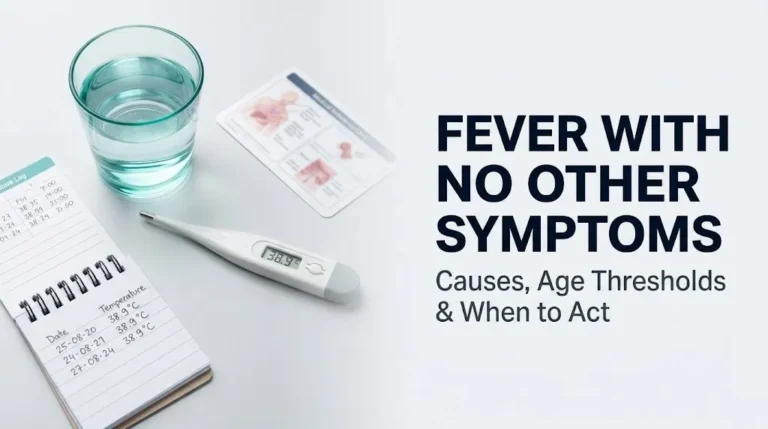
- Record every temperature measurement, the time, the amount of any fever-reducing medication given, and your behavior observation notes, and bring this log to the pediatrician appointment. This information helps the physician assess the fever pattern and respond to medication, which carries diagnostic weight.
Ibuprofen is generally not recommended for infants under 6 months. Children over 6 months and into the toddler years can receive weight-based doses of either acetaminophen or ibuprofen for fever and discomfort relief, as directed by the prescribing information and confirmed with the pediatrician.
Frequently Asked Questions About Toddler Fever With No Other Symptoms
What does it mean when a toddler has a fever but no other symptoms?
A toddler fever with no other symptoms is called fever without source (FWS) in pediatric clinical terminology and most commonly represents an early viral illness or roseola.
In a small proportion of cases, approximately 5% according to the AAP 2021 clinical practice guideline, it indicates a urinary tract infection, which produces no urinary symptoms in toddlers because they cannot report dysuria or urinary frequency.
The absence of other symptoms does not make the fever less serious; it simply means the infection has not yet declared its location through localizing signs.
How long should I let my toddler have a fever before calling the doctor?
A vaccinated, well-appearing toddler aged 12 to 36 months with fever and no other symptoms can be monitored at home for 48 hours, after which physician contact is warranted to arrange evaluation including UTI exclusion.
Any fever that climbs above 39.5°C (103.1°F) without an identified source, or any fever lasting more than 5 days in a toddler of any age, warrants a same-day evaluation regardless of how well the child appears.
An unvaccinated toddler or a toddler with a chronic immune condition should be evaluated the same day as the fever onset rather than waiting 48 hours.
Is a fever of 104 in a toddler with no other symptoms an emergency?
A temperature of 40°C (104°F) in a toddler with no other symptoms warrants same-day evaluation by a board-certified pediatrician, not necessarily 911, provided the child is alert, drinking fluids, and has no emergency symptoms.
If the toddler with a 104°F fever is also excessively lethargic between fever spikes, has a non-blanching rash, is having a seizure, or appears to be in respiratory distress, that combination requires Call 911 immediately or immediate transport to a pediatric emergency department.
Temperature alone is one variable; the child’s behavior and appearance between fever spikes carry equal or greater clinical weight in assessing urgency.
Can teething cause a fever in a toddler?
Teething does not cause fever above 38.0°C (100.4°F) rectally, according to research published in Pediatrics and the position of the American Academy of Pediatrics.
Studies have found that gum irritation from teething can produce a very slight elevation in baseline temperature (below 38.0°C) that resolves within hours of tooth eruption, but this is not clinically defined as fever.
A toddler with a measurable fever of 38.0°C or above should not have the fever attributed to teething; another cause should be investigated.
What is roseola and how do I know if that’s what my toddler has?
Roseola is a viral illness caused by human herpesvirus 6 (HHV-6) that produces 3 to 5 days of high isolated fever in children aged 6 months to 2 years, followed by a characteristic blanching pink rash on the trunk that appears precisely as the fever resolves.
You cannot confirm roseola during the fever phase because the rash has not yet appeared; it is typically diagnosed retrospectively when the rash emerges as the child’s temperature returns to normal.
If your toddler in this age group has high fever with no other symptoms and then develops a faint pink rash as the fever breaks, roseola is the most clinically consistent explanation.
When should I take my toddler with a fever to the emergency room?
Take your toddler to the emergency room immediately if they develop a seizure, a non-blanching petechial or purpuric rash, extreme unresponsive lethargy, stiff neck, difficulty breathing, or have not produced a wet diaper in 8 or more hours.
Any infant under 3 months old with any fever at or above 38.0°C (100.4°F) rectally requires emergency evaluation immediately regardless of how the infant appears, because this age group cannot mount a reliable immune response against serious infection.
Call 911 immediately rather than driving to the ER if your toddler is actively seizing, unconscious, or showing signs of severe respiratory distress.
Closing
The most important thing to carry away from this article is the 48-hour rule for vaccinated, well-appearing toddlers: monitor at home if the child is alert, drinking, and making wet diapers, but contact a pediatrician at the 48-hour mark if no other symptoms have appeared to point toward a cause, because UTI evaluation is the minimum clinical step that should not be skipped.
Keep a simple fever log: time, temperature by rectal measurement, and one behavioral note per entry. That log gives the pediatrician the information needed to triage your child’s situation accurately and efficiently.
If your toddler develops a non-blanching rash, a seizure, or becomes unresponsive during any febrile illness, that is a 911 call. Not tomorrow. Not urgent care. Now.