Pain Around Ribs and Back: Symptoms, Signs and Causes (2026)
Pain around the ribs and back symptoms can arise from sources as different as a strained intercostal muscle and an inflamed kidney, which is why the location alone rarely tells you the full story. What you need to understand first is whether the pain is coming from the structural framework of the rib cage itself or being referred from an internal organ that shares a nerve pathway with the thoracic back.
According to the National Institute of Diabetes and Digestive and Kidney Diseases (NIDDK), gallbladder disease alone affects approximately 10 to 15 percent of adults in the United States, and kidney stones affect roughly 11 percent of men and 6 percent of women over a lifetime, both conditions capable of producing pain felt as a wrapping sensation around the ribs and into the back. The fact that so many distinct structures share overlapping nerve pathways in the thoracic region makes this one of the most clinically complex pain locations on the body.
This article walks through every major category of rib-back pain: the specific anatomical structures involved, the physiological mechanisms behind each pain type, how organ-sourced pain differs from musculoskeletal pain, which symptoms require urgent evaluation, and exactly when you need emergency care.
Pain Around Ribs and Back Symptoms: What You Need to Know First
Pain around the ribs and back arises from one of two primary mechanisms: direct irritation of structures in the thoracic chest wall, or referred pain from internal organs whose nerve signals converge on the same spinal cord segments as the rib cage and back.
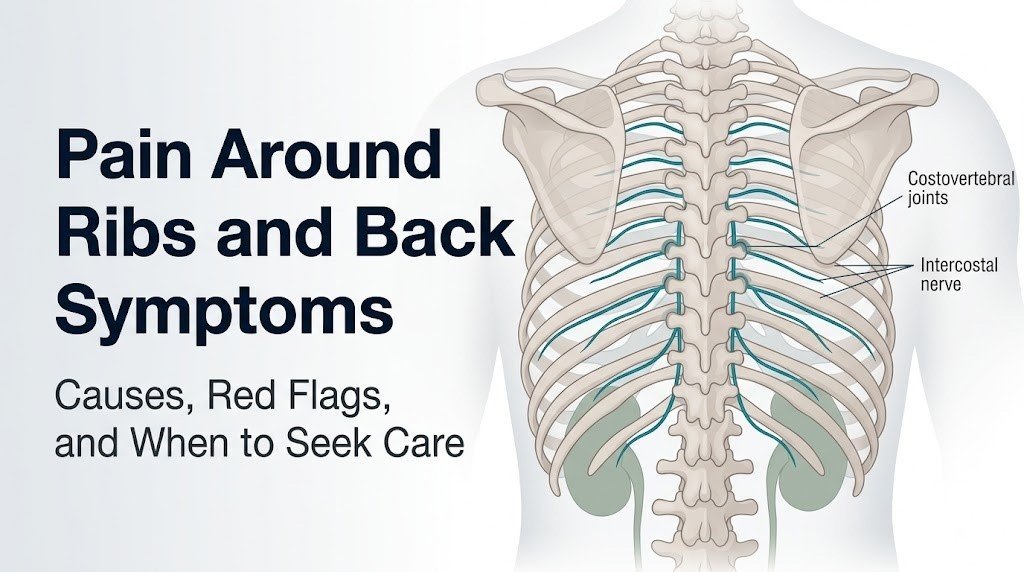
The thoracic rib cage is a complex, interconnected structure. Each of the twelve ribs articulates with the thoracic vertebral bodies (T1-T12) via the costovertebral joint, where the rib head meets the vertebral body, and the costotransverse joint, where the rib tubercle meets the transverse process. Between each pair of ribs, three layers of intercostal muscles (external, internal, and innermost) run diagonally, and beneath them travels the intercostal nerve, an artery, and a vein. Any injury, inflammation, or mechanical irritation of these structures sends pain signals both around the rib cage and posteriorly toward the spine simultaneously.
Think of the rib cage like a suspension bridge: the ribs are the cables, the thoracic vertebrae are the towers, and the intercostal muscles and nerves are the tension lines running through the whole system. Stress or injury to one part radiates tension throughout the structure, which explains why rib cage pain rarely stays in one spot.
Symptoms associated with rib-back pain vary widely based on the underlying source:
- Pain that is sharp, localized, and worsens with specific movements suggests a musculoskeletal origin
- Pain that is deep, aching, and relatively constant regardless of position suggests an organ source
- Pain that burns, tingles, or follows a band-like distribution around the body wall suggests a nerve origin
- Pain accompanied by fever, chills, or systemic illness suggests an infectious or inflammatory organ cause
- Pain that is severe, sudden-onset, and associated with sweating, nausea, or hemodynamic instability requires emergency evaluation without delay
People with pre-existing scoliosis may experience rib-back pain that is asymmetric and positional from the outset, reflecting the rotational load on costovertebral joints on the concave side of the curve.
What Causes Pain Around the Ribs and Back
The causes of pain around the ribs and back span at least eight distinct anatomical categories, from the outermost musculoskeletal layers to deep retroperitoneal organs.
Understanding the cause requires understanding where the pain is located, what quality it has, what makes it better or worse, and whether it is accompanied by any systemic symptoms. Each cause has a distinct physiological mechanism.
| Cause Category | Primary Mechanism | Common Pain Quality | Associated Symptoms |
|---|---|---|---|
| Musculoskeletal | Nociceptor activation in costovertebral joint capsule or intercostal muscle | Sharp, positional, movement-related | Tenderness on palpation, worsens with twisting |
| Intercostal neuralgia | Irritation of T1-T12 intercostal nerve branches | Burning, dermatomal, band-like | Skin hypersensitivity along affected dermatome |
| Pleuritis | Inflammation of the parietal pleura adjacent to thoracic wall | Sharp, worsens with deep breath | Dry cough, low-grade fever |
| Kidney (renal) | Renal capsule distension or ureteral spasm referred via T10-L1 | Deep, aching, flank-dominant | Nausea, changes in urine color or frequency |
| Gallbladder | Biliary duct obstruction with gallbladder wall distension | Severe cramping, right-sided | Nausea, vomiting after fatty meals, jaundice |
| Pancreas | Pancreatic duct obstruction, enzymatic autodigestion | Severe, bores through to mid-back | Nausea, vomiting, elevated lipase |
| Shingles (prodrome) | Varicella-zoster virus reactivation in dorsal root ganglion | Burning, dermatomal, precedes rash | Skin hypersensitivity, no visible rash initially |
| Aortic aneurysm | Adventitial stretch or periaortic inflammation | Tearing, severe, sudden | Hypotension, pulsatile abdominal mass |
Women develop gallbladder disease at approximately twice the rate of men, according to the American College of Gastroenterology, with pregnancy, oral contraceptive use, and high estrogen states all increasing bile lithogenicity through estrogen-mediated reduction in bile acid synthesis and increased cholesterol saturation.
Somatic vs. Visceral Pain in the Rib and Back Region
The single most clinically useful concept for understanding rib and back pain is the distinction between somatic pain and visceral referred pain, because these two categories have fundamentally different origins, qualities, and urgency profiles.
Somatic pain originates in structures you can touch and feel: the intercostal muscles, the costovertebral joint capsule, the costal cartilage, the thoracolumbar fascia, and the erector spinae muscle group. It travels via the posterior primary rami and lateral cutaneous branches of the intercostal nerves (T1-T12) to the dorsal horn of the thoracic spinal cord. The brain accurately localizes this pain because somatic nociceptors map precisely to defined body surface areas. You can often reproduce somatic pain by pressing directly on the painful structure.
Visceral referred pain originates inside an organ: the gallbladder wall, the renal capsule, the parietal pleura, or the pancreatic ductal system. These organs send their pain signals via splanchnic nerves (for abdominal organs) or the phrenic nerve (for diaphragmatic irritation) to the same dorsal horn segments (T6-L2) that receive input from the thoracic back and flank. Because the brain cannot distinguish which input came from the organ and which came from the corresponding back or flank territory, it attributes the pain to the external body wall. This is why kidney stone pain feels like it is coming from the flank and back when the stone is inside the ureter.
Here is the practical clinical difference:
- Somatic rib-back pain: reproducible with palpation, changes with position, worsened by specific movements, localized
- Visceral rib-back pain: not reliably reproducible with palpation of the painful area, persists regardless of position, accompanied by nausea or systemic symptoms, deeper and more diffuse
People taking nonsteroidal anti-inflammatory drugs (NSAIDs) chronically should know that these medications can mask visceral pain from inflammatory organ conditions, potentially delaying recognition of a worsening gallbladder or kidney infection./
Key Takeaway: The most important question to ask about rib and back pain is whether pressing directly on the painful spot reproduces it. If it does, the source is likely musculoskeletal. If it does not, an internal organ source must be considered.
Upper Rib and Back Pain Symptoms
Upper rib and back pain, involving roughly the T1-T6 region and the upper costal margin, carries a different set of probable causes than lower rib-back pain, and several of these causes require prompt evaluation.
The upper thoracic ribs articulate with the T1-T6 vertebrae and are stabilized by the posterior intercostal muscles and the serratus posterior superior muscle, which runs from the lower cervical and upper thoracic spinous processes to the angles of ribs 2 through 5. Strain or dysfunction here produces pain that feels like it is wrapping around the upper chest wall from the back.
Conditions presenting with upper rib and back pain include:
- Thoracic disc herniation at the T3-T5 levels (uncommon but produces band-like, burning pain that wraps from the spine around the chest wall; account for roughly 0.25 to 0.75 percent of all disc herniations, according to the American Academy of Orthopaedic Surgeons)
- Costochondritis of the upper costal cartilages (inflammation of the junction between the rib and the sternum, producing anterior chest and referred dorsal pain)
- Pleuritis from viral infection or pneumonia (the parietal pleura of the upper lung lobes refers pain to the upper back and interscapular region)
- Myocardial ischemia (cardiac ischemia can present with upper back and left rib pain in some individuals, particularly women and people with diabetes)
- Cervicogenic referred pain radiating downward from the C5-C8 nerve roots into the upper thoracic back and lateral rib area
The upper rib-back pain pattern in women warrants special attention. Research published in the Journal of the American Heart Association has established that women experiencing myocardial infarction are more likely than men to present with upper back, jaw, or interscapular pain rather than classic substernal chest pressure, making upper rib-back pain a cardiac red flag in women with cardiovascular risk factors.
Pain Under the Right Rib Cage and Back Symptoms
Pain under the right rib cage radiating to the right back is one of the most clinically instructive pain patterns in the entire rib-back complex, because it narrows the anatomical source to a relatively specific set of structures.
The structures in and around the right costal margin include the gallbladder (tucked just beneath the right hepatic lobe at the intersection of the right lateral and inferior hepatic borders), the right hepatic lobe itself, the hepatic flexure of the colon, and the lower pole of the right kidney, which sits just inferior to the right twelfth rib in the retroperitoneal space.
Gallbladder pain is the most common cause of right rib-back pain in adults. When a gallstone temporarily obstructs the cystic duct, the gallbladder wall contracts against the obstruction. This distension activates nociceptors in the gallbladder wall, sending signals via the splanchnic nerves to the T5-T9 dorsal horn. The brain refers this pain to the right upper quadrant, the right epigastrium, and classically to the right infrascapular back and right shoulder tip (via phrenic nerve irritation of the adjacent diaphragm). The National Institute of Diabetes and Digestive and Kidney Diseases notes that this pain, called biliary colic, typically begins within 30 to 60 minutes of a fatty meal, peaks within one to two hours, and resolves within four to six hours if the stone passes back.
Pain lasting longer than six hours under the right rib cage with fever and right-sided back pain suggests acute cholecystitis (infection and inflammation of the gallbladder wall) rather than simple biliary colic. Acute cholecystitis requires same-day evaluation by an emergency medicine physician.
Liver conditions including hepatitis (viral or alcohol-related), liver abscess, and hepatic congestion from right heart failure can all cause a dull, persistent aching under the right rib cage extending into the right mid-back. This pain reflects distension of the Glisson’s capsule, the fibrous envelope surrounding the liver, which is richly innervated by pain-sensitive nerve fibers.
Pain Under the Left Rib Cage and Back Symptoms
Pain under the left rib cage extending into the left back reflects a different set of anatomical neighbors: the spleen, the splenic flexure of the colon, the tail of the pancreas, the stomach (particularly the gastric fundus and greater curvature), the left kidney, and the lower lobe of the left lung via the adjacent left parietal pleura.
Splenic causes of left rib-back pain are underrecognized. Splenomegaly from any cause, including infectious mononucleosis, portal hypertension from liver disease, hematologic malignancies, or inflammatory conditions, stretches the splenic capsule and produces a dull, aching left flank and left rib pain. A 2020 study published in the American Journal of Emergency Medicine noted that spontaneous splenic rupture, though rare, can present with sudden severe left rib-back pain and hemodynamic instability in patients with known or undiagnosed mononucleosis.
Pancreatic pain deserves particular attention in the left rib-back pattern. The body and tail of the pancreas lie transversely across the posterior upper abdomen, with the tail extending toward the splenic hilum near the left T12-L1 level. When the pancreatic duct is obstructed (by a stone, stricture, or tumor) or when pancreatic tissue is autodigested in acute pancreatitis, the enzymatic and inflammatory process activates nociceptors via the celiac plexus and splanchnic nerves, producing a pain that the American College of Gastroenterology describes as severe, boring, and radiating directly through to the mid-left back. This is the classic “boring through to the back” quality of pancreatic pain.
Colonic causes, including splenic flexure syndrome (gas trapping at the left bend of the colon), produce intermittent, cramping, left rib-based pain that typically resolves with passage of gas or a bowel movement and is not associated with systemic symptoms.
Key Takeaway: Right rib-back pain most often points to gallbladder, liver, or right kidney causes; left rib-back pain most often points to splenic, pancreatic, left kidney, or gastric causes, and the quality of the pain (cramping vs. boring vs. aching vs. sudden-severe) is the most reliable first clue.
Pain Around Ribs and Lower Back Symptoms
Pain around the ribs and lower back symptoms involving the lower costal margin and lumbosacral region reflects a clinically distinct zone where the thoracic cage meets the abdominal and pelvic anatomy.
The lower ribs (ribs 10, 11, and 12) are the “floating ribs,” attaching posteriorly to the T10-T12 vertebral bodies but having no anterior sternal attachment. The quadratus lumborum muscle runs from the iliac crest to the twelfth rib and the transverse processes of L1-L4, making it a bridge between the lower rib cage and the lumbar spine. Strain or spasm of the quadratus lumborum produces pain felt simultaneously at the lower rib margin and in the lumbar back, often described as a vice-like grip spanning from flank to back.
The kidneys are the most important organ cause of lower rib-back pain. Both kidneys sit in the retroperitoneal space at approximately the T12-L3 levels, with the right kidney slightly lower due to hepatic displacement. Renal causes of lower rib-back pain include:
- Nephrolithiasis (kidney stones): produces severe, colicky, intermittent pain radiating from the costovertebral angle downward through the flank and into the groin as the stone descends the ureter
- Pyelonephritis (kidney infection): produces a constant, deep, aching pain at the costovertebral angle with tenderness on percussion, accompanied by fever, chills, and urinary symptoms
- Renal cysts: usually produce a dull, chronic aching at the flank and lower rib margin, often discovered incidentally
- Renal infarction: produces sudden, severe flank and lower rib-back pain with hematuria, a rare but serious vascular emergency
The NIDDK reports that pyelonephritis is more common in women than men due to the shorter female urethra facilitating ascending bacterial migration from the lower urinary tract, and that this condition can progress to urosepsis if untreated, making prompt evaluation by a primary care physician or emergency medicine physician essential when urinary symptoms accompany lower rib-back pain.
Sharp Pain Around the Ribs and Back
Sharp pain around the ribs and back typically indicates a different mechanism than the deep, constant aching of organ-sourced pain, and the quality itself helps locate the source.
True sharpness in the rib-back region usually means one of three things: acute mechanical disruption of a joint or muscle, nerve irritation producing lancinating pain along a dermatomal path, or sudden distension or rupture of a hollow structure.
Rib fractures produce a sharp, severe, precisely localized pain that worsens dramatically with breathing, coughing, or pressing on the fracture site. Even a single rib fracture can limit respiratory excursion enough to cause shallow breathing, increasing the risk of pneumonia through atelectasis. A 2022 observational analysis published in JAMA Surgery found that patients with three or more rib fractures had significantly higher rates of pulmonary complications than those with fewer fractures, supporting the importance of adequate pain management and incentive spirometry.
Pneumothorax produces a sudden, sharp, unilateral chest and back pain at the moment of onset, followed by progressive shortness of breath. In a spontaneous pneumothorax, air enters the pleural space without trauma, typically in tall, thin young males. The sudden loss of negative pleural pressure causes the lung to partially or fully collapse, and the sharp pain reflects the acute visceral and parietal pleural separation.
Costovertebral joint dysfunction, meaning acute subluxation or inflammation of the joint where a rib meets its thoracic vertebra, produces a very sharp, catching pain that feels like a rib has “gone out.” It is worsened by twisting, deep breathing, or sustained postures and is completely reproducible by pressing directly on the joint. This is the most common benign cause of acute sharp rib-back pain in people aged 20 to 50.
For individuals on anticoagulant therapy (warfarin, apixaban, rivaroxaban), any new sharp rib-back pain following minor trauma warrants evaluation, as these medications significantly elevate the risk of rib fracture hematoma formation and retroperitoneal bleeding.
Rib and Back Pain When Breathing
Rib and back pain that worsens specifically with breathing is a symptom pattern that narrows the differential diagnosis considerably, because it implicates either the pleural surfaces, the costovertebral joints, the intercostal muscles, or any structure that moves with respiratory excursion of the rib cage.
The hallmark of pleuritis (inflammation of the pleural lining) is sharp, stabbing pain that intensifies precisely at the moment of peak inspiration and eases during exhalation or breath-holding. This happens because the parietal pleura is densely innervated by the intercostal nerves, and when it becomes inflamed (from viral infection, pneumonia, pulmonary embolism, or autoimmune disease), any expansion of the lung that presses the visceral pleura against the inflamed parietal surface triggers a sharp nociceptive response.
According to the U.S. National Library of Medicine, pleuritis causes include viral respiratory infections (the most common cause in otherwise healthy adults), bacterial pneumonia, pulmonary embolism, lupus (systemic lupus erythematosus), and rheumatoid arthritis. The distinction between pleuritis from a benign viral infection and pleuritis from a pulmonary embolism is clinically critical. Pleuritis from a pulmonary embolism will typically be accompanied by sudden onset, tachycardia, and in some cases hemoptysis.
Step-by-step approach to describing breathing-related rib-back pain to a physician:
- Note exactly which phase of breathing worsens the pain: inhalation, exhalation, or both
- Note whether the pain is sharp and stabbing or dull and pressure-like
- Identify whether the pain prevents you from taking a full breath
- Note whether the pain location moves or stays fixed
- Record any accompanying symptoms: fever, cough, blood in sputum, leg swelling, recent travel, prolonged immobility, or prior clot history
- State the exact duration: sudden onset today vs. gradual onset over days
People with systemic lupus erythematosus (SLE) should be aware that pleuritis is one of the most common cardiopulmonary manifestations of lupus, occurring in approximately 30 to 50 percent of patients with SLE over their disease course, according to the National Institute of Arthritis and Musculoskeletal and Skin Diseases (NIAMS). New or worsening breathing-related rib-back pain in a person with lupus warrants same-day contact with their rheumatologist.
Key Takeaway: Rib and back pain that is specifically tied to the moment of peak inhalation and eases completely with breath-holding is a strong clinical signal for pleural involvement, not a musculoskeletal cause, and requires medical evaluation to rule out pulmonary embolism.
Musculoskeletal Causes of Rib and Back Pain
Musculoskeletal causes account for the majority of rib and back pain presentations in primary care, and they are the category most likely to be self-resolving with conservative care, but only when the diagnosis is correctly established.
The thoracolumbar fascia is a layered connective tissue sheet that wraps the erector spinae, quadratus lumborum, and serratus posterior inferior muscles of the lower thoracic and upper lumbar back. Overuse, sudden twisting, heavy lifting, prolonged poor posture, or direct impact can cause microtears in the fascia or the attached muscle fibers, triggering a local inflammatory response with prostaglandin E2 release that sensitizes intercostal and lumbar nerve endings. The resulting pain pattern spreads across the lower rib cage and into the mid to upper lumbar back.
Costochondritis is inflammation of the costal cartilage where the bony rib meets the sternum anteriorly. Though the inflammation itself is anterior, the mechanical stress it creates on the rib as a structural unit can produce referred pain posteriorly along the rib toward the thoracic spine. It is most common between ages 20 and 40 and is frequently triggered by upper respiratory infections that cause repetitive coughing.
The costovertebral joint deserves special recognition as a source of rib-back pain that is widely underdiagnosed. These small synovial joints between the rib heads and the thoracic vertebral bodies are subject to the same degenerative changes as any other synovial joint, including osteoarthritis, joint capsule inflammation, and hypomobility. Pain from costovertebral joint dysfunction is typically:
- Located at the paraspinal area, 2 to 4 centimeters lateral to the thoracic spinous processes
- Sharp and catching with rotation or deep breath
- Reproducible by palpating directly over the joint
- Not accompanied by fever, weight loss, or systemic symptoms
Quick Tip:
- Musculoskeletal rib-back pain that improves within 72 hours with rest, ice in the first 24 hours, and non-prescription analgesics is typically safe to continue monitoring at home
- Musculoskeletal pain that does not improve after 72 hours, or that worsens, warrants evaluation by a primary care physician
- Older adults, people with osteoporosis, and those on long-term corticosteroid therapy should have new rib-back pain evaluated sooner rather than later, given their elevated risk of vertebral compression fracture, even from low-impact mechanisms
Intercostal Neuralgia Symptoms and Rib Pain
Intercostal neuralgia is pain arising from irritation or damage to one or more of the intercostal nerves that run in grooves along the inferior margin of each rib between the intercostal muscles, and it produces a highly distinctive symptom pattern that is frequently misdiagnosed as a musculoskeletal or cardiac problem.
Each intercostal nerve is the ventral ramus of a thoracic spinal nerve (T1-T12). After exiting the intervertebral foramen, it travels in the costal groove beneath the rib, branching into a lateral cutaneous branch (mid-axillary line) and an anterior cutaneous branch (near the sternum). When an intercostal nerve is irritated, compressed, or damaged, pain follows this anatomical course exactly, producing a characteristic band-like or girdle-like distribution of pain that wraps from the back, around the side of the rib cage, to the front of the chest or abdomen.
Research published in the Journal of Pain Research in 2021 describes intercostal neuralgia as producing a combination of burning pain, electric shock sensations, and skin hypersensitivity (allodynia) along the dermatomal band, often severe enough to be confused with cardiac chest pain when the T4-T6 nerves are involved.
Causes of intercostal neuralgia include:
- Herpes zoster (shingles): varicella-zoster virus reactivation in the dorsal root ganglion of a thoracic level, which may produce burning intercostal pain for two to four days before any skin rash appears
- Post-thoracotomy or post-surgical nerve injury
- Rib fracture with nerve entrapment
- Thoracic disc herniation compressing a nerve root
- Direct trauma to the costal groove
The Centers for Disease Control and Prevention (CDC) reports that herpes zoster affects approximately one million Americans annually, with the incidence rising sharply after age 50. The prodromal burning pain of shingles, before the rash appears, is one of the most commonly missed causes of acute unilateral rib-back pain in adults over 50, because the clinical picture looks like intercostal neuralgia without an obvious cause.
Immunocompromised individuals, including those on chronic immunosuppressive medications, biologic agents, or with HIV, are at substantially higher risk of shingles and may present with atypical, multidermatomal involvement.
Kidney Pain Location and Back Pain
Kidney pain is consistently felt in the costovertebral angle, the triangular space bounded by the twelfth rib above and the erector spinae muscle medially, and this anatomical precision reflects the renal capsule’s innervation via the T10-L1 posterior rami.
Understanding kidney pain location requires understanding renal anatomy. The kidneys are retroperitoneal organs, lying posterior to the peritoneum and anterior to the quadratus lumborum and psoas major muscles, at approximately the T12-L3 vertebral levels. They sit just below the lower costal margin posteriorly. When the renal capsule is distended by swelling from infection, obstruction, or hemorrhage, or when the ureter goes into spasm around a passing stone, the nociceptive signal travels via the renal plexus and splanchnic nerves to the T10-L1 dorsal horn. This produces pain felt at the flank, the lower rib margin, and the ipsilateral low back, and it can radiate anteriorly toward the groin as the stone descends into the lower ureter.
The clinical distinction between kidney pain and musculoskeletal lumbar pain:
| Feature | Kidney Pain | Musculoskeletal Back Pain |
|---|---|---|
| Location | Costovertebral angle, flank | Midline or paraspinal lumbar |
| Response to movement | Not significantly changed by position | Worsened by specific movements |
| Costovertebral angle tenderness | Present (percussion tenderness) | Usually absent |
| Associated symptoms | Fever, chills, urinary changes, nausea | None typically |
| Onset | Often sudden or rapidly worsening | Often gradual after activity |
| Pain quality | Deep, aching or severe colicky | Aching, stiff, or sharp-catching |
The NIDDK notes that kidney stones are more likely in individuals with a high-sodium diet, chronic dehydration, a family history of nephrolithiasis, or a history of inflammatory bowel disease affecting oxalate absorption. Men between 30 and 50 years old have the highest incidence of a first kidney stone episode.
Women who have had recurrent urinary tract infections and now develop back pain at the costovertebral angle with fever should be evaluated for pyelonephritis the same day they develop symptoms, as untreated upper urinary tract infection can progress to bacteremia within hours.
Key Takeaway: Kidney pain is felt at the costovertebral angle (where the twelfth rib meets the paraspinal muscles) and produces percussion tenderness at that exact point, which distinguishes it reliably from musculoskeletal lumbar back pain.
Rib and Back Pain in Pregnancy
Rib and back pain is one of the most common musculoskeletal complaints of pregnancy, affecting an estimated 45 to 76 percent of pregnant women at some point during gestation, according to research cited by the American College of Obstetricians and Gynecologists (ACOG).
The anatomical mechanism is direct. As the uterus enlarges through the second and third trimester, it displaces the diaphragm superiorly by up to four centimeters. This displacement increases the costal angle (the angle between the lower rib margins), widens the rib cage circumference, and places the lower ribs under sustained mechanical stretch. The result is a persistent aching, pressure, or burning sensation at the lower rib margins bilaterally, often described as a “rib flare” that worsens in later pregnancy and with prolonged sitting.
Additional contributors to rib-back pain in pregnancy:
- The hormone relaxin, secreted by the corpus luteum and placenta, loosens the costovertebral joint ligaments and the sacroiliac joint capsule, increasing joint laxity and susceptibility to microtrauma and inflammation
- Rapid weight gain shifts the center of gravity anteriorly, increasing thoracic kyphosis and placing compensatory stress on the posterior costovertebral joints and thoracolumbar fascia
- The growing fetus may directly press against the lower ribs from inside, particularly in the final trimester when fetal limbs can press into the maternal costal margin
Rib and back pain in pregnancy that is sharp and unilateral, accompanied by fever, painful urination, or costovertebral angle tenderness, requires same-day evaluation by the treating obstetrician-gynecologist to rule out pyelonephritis, a particularly serious complication of pregnancy that can trigger preterm labor.
New or sudden severe upper right rib pain in pregnancy with headache, visual disturbances, or edema should be evaluated as a potential sign of HELLP syndrome (hemolysis, elevated liver enzymes, low platelet count) or preeclampsia, both of which require emergency obstetric evaluation. These are not benign pregnancy-related rib pains.
Rib and Back Pain in Older Adults and Postmenopausal Women
In adults over 65 and postmenopausal women, the diagnostic considerations for rib and back pain include several conditions that are rare or absent in younger populations, and standard clinical assumptions based on younger-adult presentations do not apply.
Vertebral compression fractures (VCFs) are the most commonly missed cause of sudden or subacute thoracic rib-back pain in older adults. These fractures occur when osteoporotic bone in the thoracic vertebral body (most often T6-T12) collapses under axial load, even from low-energy mechanisms like bending forward, sneezing, or a minor fall. The American Academy of Orthopaedic Surgeons (AAOS) estimates that vertebral compression fractures occur in approximately 1.5 million Americans annually, with the majority occurring in postmenopausal women and older men on long-term corticosteroid therapy.
The pain pattern of a VCF is mid-thoracic or upper lumbar, sharp and acute at onset, worsened dramatically by standing and movement, partially eased by lying flat. It is often accompanied by a new visible thoracic kyphosis. Unlike musculoskeletal strain, VCF pain does not significantly improve within 72 hours.
Shingles (herpes zoster) reactivation is another disproportionately important cause of rib-back pain in older adults. The CDC reports that the incidence of shingles rises from approximately 5 per 1,000 person-years in adults aged 50 to 59 to greater than 10 per 1,000 person-years in adults over 80. The prodromal phase, where burning dermatomal pain precedes the skin rash by two to five days, means that rib-back pain in an older adult may be the first and only manifestation of shingles before the rash appears.
Risk factors that increase the severity of rib and back pain presentations in older adults:
- Osteoporosis (T-score below -2.5 on bone density scan)
- Long-term corticosteroid therapy (prednisone or equivalent)
- Prior history of fragility fractures
- Vitamin D deficiency (compromises bone mineral density further)
- Multiple myeloma (plasma cell malignancy that erodes vertebral bone and ribs)
Any new rib-back pain in a postmenopausal woman or an adult over 65 that is severe, worsens over days rather than improving, or is accompanied by unexplained weight loss, night sweats, or diffuse bone tenderness requires evaluation by a primary care physician within 48 hours and may warrant imaging of the thoracic spine and laboratory assessment including serum protein electrophoresis to rule out malignancy.
Emergency Symptoms: When to Call 911 or Go to the ER
Certain symptoms associated with pain around the ribs and back require immediate emergency evaluation. Do not wait to see if these resolve on their own.
Call 911 or go to the nearest emergency room immediately if you experience:
- Sudden, severe tearing or ripping pain in the back behind the ribs, especially if it radiates between the shoulder blades (potential thoracic aortic dissection or ruptured aortic aneurysm)
- Severe rib or back pain with shortness of breath, rapid heart rate, or sudden drop in blood pressure (potential pulmonary embolism or tension pneumothorax)
- Rib and back pain accompanied by coughing up blood (potential pulmonary embolism or severe pulmonary infection)
- Severe pain under the right rib cage with fever above 101°F (38.3°C), chills, jaundice (yellowing of skin or eyes), or vomiting (potential acute cholecystitis with sepsis)
- Severe left or mid-back pain radiating through to the abdomen with nausea and vomiting in a person with a history of alcohol use or recent gallstone diagnosis (potential acute pancreatitis)
- Rib and back pain with sweating, chest tightness, left arm pain, or jaw pain, particularly in women or people with diabetes (potential myocardial infarction, which can present atypically)
- Severe flank or lower rib-back pain with blood in the urine and a known history of kidney disease or anticoagulant use (potential renal infarction or retroperitoneal hemorrhage)
- Rib-back pain with new neurological symptoms: leg weakness, numbness in the groin, loss of bladder or bowel control (potential thoracic spinal cord compression requiring emergency neurosurgical evaluation)
- Any rib-back pain that is the “worst pain of your life” at onset, regardless of accompanying symptoms
These presentations can indicate life-threatening vascular, pulmonary, cardiac, biliary, or spinal emergencies that require emergency medical assessment and intervention, not an urgent care appointment or a phone call to a nurse line.
How Rib and Back Pain Is Diagnosed
Diagnosis of pain around the ribs and back begins with a structured clinical history and physical examination that is specifically designed to separate musculoskeletal causes from organ-sourced causes and to identify any red flag features requiring urgent investigation.
A primary care physician or emergency medicine physician will typically ask about:
- The exact location of the pain and whether it is reproducible by pressing on that location
- The quality: sharp, dull, burning, cramping, tearing, or pressure-like
- What makes it worse: specific movements, breathing, eating, urination, or nothing
- Associated symptoms: fever, chills, nausea, urinary changes, weight loss, skin changes, cough
- Duration and onset: gradual or sudden
- Relevant history: recent illness, trauma, travel, surgery, medications, prior similar episodes
Physical examination for rib-back pain includes palpation of the costovertebral angle and rib margins, percussion of the costovertebral angle for kidney tenderness, auscultation of the lungs for pleural friction rub or absent breath sounds, and assessment for Murphy’s sign (pain on deep inspiration during palpation of the right upper quadrant, suggesting gallbladder inflammation).
Diagnostic tests ordered depend on the suspected source:
| Test | What It Evaluates | When It Is Ordered |
|---|---|---|
| Complete blood count (CBC) | Infection, anemia | Fever, systemic symptoms, suspected infection |
| Comprehensive metabolic panel (CMP) | Liver function, kidney function, electrolytes | Any suspected organ involvement |
| Lipase | Pancreatic inflammation | Mid-back or boring upper abdominal pain |
| Urinalysis and urine culture | Kidney infection, kidney stones | Flank pain, urinary symptoms, fever |
| Abdominal ultrasound | Gallbladder, liver, kidneys, spleen | Right or left rib pain, organ-suspected cause |
| CT abdomen and pelvis (with contrast) | Full abdominal organ assessment, vascular structures | Severe pain, suspected aortic pathology, unclear source |
| Chest X-ray | Pneumonia, pneumothorax, pleural effusion | Breathing-related rib pain, fever, cough |
| MRI thoracic spine | Disc herniation, vertebral fracture, cord compression | Neurological symptoms, suspected spine cause |
| ECG (electrocardiogram) | Cardiac ischemia, pericarditis | Upper rib-back pain in cardiac risk patients |
For a straightforward case of suspected musculoskeletal rib-back pain in an otherwise healthy adult under 50 with no red flag features, a physician may elect to begin with a clinical examination alone and order imaging only if the pain does not improve within two to four weeks. This is consistent with guidelines from the American Academy of Family Physicians for the initial management of thoracic musculoskeletal pain.
Key Takeaway: A definitive diagnosis of rib and back pain always requires a clinical examination, and in many cases laboratory testing or imaging, because the physical location of the pain does not reliably identify its source without these tools.
Frequently Asked Questions About Pain Around Ribs and Back
What does it mean when you have pain around your ribs and back at the same time?
Pain around the ribs and back at the same time typically means that either the intercostal nerves, which wrap from the thoracic spine around the rib cage, are being irritated, or that an internal organ is referring pain through shared nerve pathways to both the front and back of the torso.
Musculoskeletal causes, kidney conditions, gallbladder disease, pleuritis, and shingles (herpes zoster) are the most common sources of this simultaneous rib-back pain pattern.
A clinical examination by a primary care physician is the appropriate first step to determine which category applies, especially when pain has lasted more than 72 hours or is accompanied by any systemic symptoms.
Can kidney problems cause pain around the ribs and into the back?
Kidney problems are a well-established cause of pain around the ribs and into the back, felt most intensely at the costovertebral angle where the twelfth rib meets the paraspinal muscles.
Kidney stones cause intermittent, severe, colicky pain radiating from the flank downward; kidney infections (pyelonephritis) cause a constant, deep aching at the same location with fever and urinary symptoms.
Any lower rib and back pain accompanied by fever, chills, or changes in urination requires same-day evaluation by a primary care physician or emergency medicine physician.
How do I know if my rib and back pain is a muscle problem or something with my organs?
Musculoskeletal rib and back pain can typically be reproduced by pressing directly on the painful area and is worsened by specific movements like twisting or deep breathing.
Organ-sourced pain is usually not reproduced by pressing on the skin surface, remains relatively constant regardless of body position, and is often accompanied by nausea, fever, or changes in urine, stool, or appetite.
When in doubt, particularly if the pain has persisted beyond 72 hours or includes any systemic symptoms, evaluation by a primary care physician is the appropriate course of action.
What does gallbladder pain in the ribs and back feel like?
Gallbladder pain in the ribs and back typically presents as a severe, cramping or squeezing pain in the right upper quadrant and right lower rib margin, often radiating to the right infrascapular back and sometimes to the right shoulder tip.
According to the National Institute of Diabetes and Digestive and Kidney Diseases, this pain usually begins within one hour of eating a fatty meal and can last from 30 minutes to several hours.
Pain lasting more than six hours, accompanied by fever, chills, or yellowing of the skin or eyes, warrants emergency medical evaluation for acute cholecystitis.
When should rib and back pain make me go to the emergency room?
Rib and back pain that is sudden and severe, described as tearing or ripping, or that is accompanied by shortness of breath, sweating, fever above 101°F, blood in the urine, vomiting, or neurological changes requires immediate emergency evaluation.
These symptom combinations can indicate aortic dissection, pulmonary embolism, acute cholecystitis with sepsis, or other life-threatening conditions.
Call 911 or go to the nearest emergency room immediately if any of these features are present.
Can pain around the ribs and lower back be a sign of something serious?
Pain around the ribs and lower back can signal serious conditions including kidney infection, kidney stones, vertebral compression fracture, pancreatitis, and in older adults, possible malignancy involving the thoracic spine or ribs.
Red flag features that indicate a serious cause include pain accompanied by fever, unexplained weight loss, night sweats, blood in the urine, or pain that is severe, progressive, and unresponsive to rest and non-prescription analgesics.
A primary care physician should evaluate any lower rib and back pain lasting more than one week without a clear, improving musculoskeletal cause.
Understanding Your Symptoms and Taking the Right Next Step
Pain around the ribs and back is anatomically complex. The same region of the body houses the thoracic spine, intercostal nerves, costovertebral joints, the base of the lungs, the diaphragm, and multiple abdominal organs, all sharing overlapping nerve pathways. Recognizing whether your pain is positional, reproducible by touch, and movement-related (musculoskeletal) or deep, constant, and accompanied by systemic symptoms (organ-sourced) is the most practically useful distinction you can make before speaking with a provider.
If your rib and back pain has lasted more than 72 hours, is accompanied by fever, urinary changes, shortness of breath, or nausea, schedule a same-day or next-day evaluation with your primary care physician and bring a clear account of the pain location, quality, duration, what worsens it, and any accompanying symptoms. If the pain is sudden, severe, or includes any of the emergency features described in this article, do not wait: call 911 or go to the nearest emergency room immediately.
Your body’s pain signals in this region are specific, not random. Getting the anatomy right is what leads to the right diagnosis.