Sun Poisoning Symptoms: Signs, Causes & When to Act
Sun poisoning symptoms range from deep skin blistering and spreading rash to fever, nausea, confusion, and dangerous dehydration, all driven by a measurable inflammatory cascade that starts in your skin cells and can spread into your bloodstream. Recognizing the specific pattern matters: the difference between a bad sunburn and true sun poisoning is not severity of redness, but whether the damage has triggered a body-wide immune and inflammatory response.
The American Academy of Dermatology reports that roughly one in three Americans gets sunburned at least once a year, and a meaningful subset of those burns cross the threshold into systemic reactions that require more than aloe and rest. Sun poisoning can progress to heat stroke, dangerous dehydration, and, in people with certain medical conditions or on specific medications, a severe allergic-type reaction within hours of exposure.
This guide covers every recognized symptom with the specific physiology behind it, how mild presentations differ from severe ones, which populations face the highest risk, and the exact thresholds that separate home management from an emergency room visit.
Sun Poisoning Symptoms
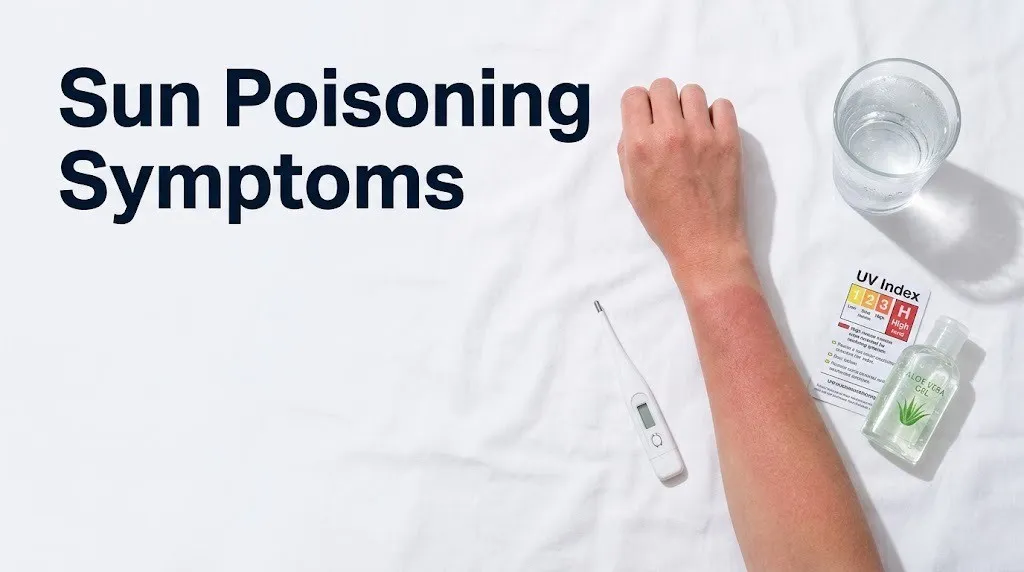
Sun poisoning symptoms include both localized skin damage and systemic body-wide reactions, produced when ultraviolet radiation triggers an inflammatory cascade that extends beyond the skin and enters the bloodstream.
The condition sits on a spectrum. At one end, you have an exceptionally severe sunburn with intense redness and pain. At the other, you have a full systemic inflammatory response with fever, shaking chills, nausea, dizziness, and in extreme cases, confusion or loss of consciousness. What separates sun poisoning from an ordinary sunburn is whether the body’s inflammatory response has gone systemic, meaning it has moved out of the skin and is now affecting your cardiovascular system, your central nervous system, and your fluid and electrolyte balance.
The core physiological event is this: ultraviolet B (UVB) radiation, at wavelengths between 290 and 320 nanometers, penetrates the epidermis and is absorbed by keratinocytes, the primary structural cells of the outer skin layers. This absorption causes direct DNA damage, specifically the formation of thymine dimers, abnormal bonds between adjacent thymine bases in the DNA strand. In response to that damage, keratinocytes trigger a rapid immune signaling cascade.
According to research published in the Journal of Investigative Dermatology, UV-damaged keratinocytes release prostaglandin E2 via activation of the enzyme cyclooxygenase-2 (COX-2), along with interleukin-1 beta (IL-1b) and tumor necrosis factor-alpha (TNF-alpha). These inflammatory mediators are what produce every symptom you experience: local redness, swelling, pain, and, when the concentrations become high enough to enter systemic circulation, the fever, headache, nausea, and chills that define sun poisoning.
Think of it like a factory fire alarm system. A small fire triggers local sprinklers. A large fire triggers the entire building’s alarm, flood response, and calls in the fire department. Sun poisoning is what happens when the fire is big enough to trigger the whole building.
Key recognized symptoms include:
- Intense skin redness that is deeper and more painful than a typical sunburn
- Skin swelling and a sensation of heat radiating from the surface
- Blistering, which may be widespread rather than localized to one spot
- Severe skin pain, including pain produced by light touch or clothing contact
- Headache, ranging from dull to severe
- Nausea, with or without vomiting
- Fever, sometimes accompanied by shaking chills
- Dizziness or lightheadedness, particularly when standing
- Dehydration signs including extreme thirst, reduced urination, and dry mouth
- Fatigue that is out of proportion to normal sun exposure tiredness
- In severe cases: confusion, rapid heart rate, and loss of consciousness
What Are Symptoms of Sun Poisoning
The symptoms of sun poisoning fall into two distinct categories: cutaneous (skin-based) symptoms and systemic symptoms, and understanding which category your symptoms fall into tells you how seriously your body is being affected.
Cutaneous symptoms appear first, typically within two to six hours of UV exposure. They reflect localized inflammatory damage to the epidermis and dermis. The dermis, the layer of skin just below the epidermis, contains a dense capillary network. When prostaglandin E2 and histamine dilate those capillaries and increase their permeability, plasma leaks into surrounding tissue. That leakage is what produces the redness, warmth, and swelling visible on the skin surface. When the fluid accumulates between skin layers rather than being reabsorbed, blisters form.
Systemic symptoms appear later, generally four to twelve hours after exposure, as the inflammatory mediator load in the blood reaches the organs. The hypothalamus, the brain region that regulates body temperature, responds to circulating prostaglandins by resetting its thermoregulatory set point upward. That upward reset is the physiological definition of fever: the body isn’t malfunctioning, it’s implementing an inflammatory instruction it received from the bloodstream. This same process happens during a bacterial infection, which is part of why severe sun poisoning can feel flu-like.
| Symptom Category | Specific Symptom | Onset Timing |
|---|---|---|
| Cutaneous | Redness and warmth | 2 to 6 hours post-exposure |
| Cutaneous | Swelling and edema | 2 to 8 hours post-exposure |
| Cutaneous | Blistering | 6 to 24 hours post-exposure |
| Cutaneous | Skin pain, including touch sensitivity | 2 to 12 hours post-exposure |
| Systemic | Headache | 4 to 12 hours post-exposure |
| Systemic | Nausea or vomiting | 4 to 16 hours post-exposure |
| Systemic | Fever and chills | 6 to 24 hours post-exposure |
| Systemic | Dizziness or fainting | 4 to 24 hours post-exposure |
| Systemic | Confusion or disorientation | 12 to 48 hours if untreated |
| Systemic | Dehydration and electrolyte loss | Progressive over 6 to 48 hours |
People taking nonsteroidal anti-inflammatory drugs (NSAIDs) before or during sun exposure should note that these medications partially block the COX-2 pathway, which means they may reduce skin pain without reducing the underlying UV damage. The reduced pain can mask how serious the burn is, leading to longer continued exposure.
Sun Poisoning vs. Sunburn: How to Tell the Difference
The difference between sun poisoning and a sunburn lies in whether the inflammatory response has extended beyond the skin and produced body-wide symptoms, not simply in how red or painful the skin looks.
An ordinary sunburn, even a painful one, remains a localized skin injury. You’ll feel skin pain, redness, and heat. You may peel as the damaged skin sheds over the following days. But you won’t feel sick. You won’t have a fever. You won’t be nauseated or dizzy. Your level of tiredness after a sunburn is normal fatigue, not the deep systemic exhaustion produced by a body-wide inflammatory response.
Sun poisoning includes all of the above skin symptoms, plus at least one or more systemic symptoms: fever, nausea, vomiting, chills, headache, dizziness, or confusion. The Mayo Clinic notes that the presence of systemic symptoms separates sun poisoning from a severe sunburn and changes the clinical approach, because systemic presentations may require intravenous fluid replacement, antihistamine therapy, or emergency evaluation rather than home rest alone.
| Feature | Ordinary Sunburn | Sun Poisoning |
|---|---|---|
| Skin redness | Present | Present, often more intense |
| Skin pain | Present | Present, often severe |
| Blistering | Possible in severe sunburn | Common, may be widespread |
| Fever | Absent | Present (above 101°F/38.3°C) |
| Nausea or vomiting | Absent | Often present |
| Chills | Absent | Often present |
| Headache | Mild at most | Moderate to severe |
| Dizziness | Absent | Often present |
| Confusion | Absent | Can occur in severe cases |
| Fatigue | Mild | Often significant |
| Body-wide systemic response | No | Yes |
Children under age 5 and adults over age 65 show a blurrier line between sunburn and sun poisoning because their thermoregulatory systems are less precise. A child can develop a fever from UV damage that would not produce a fever in a healthy adult with the same burn coverage, which means the threshold for seeking evaluation is lower in both of these age groups.
Key Takeaway: Sun poisoning is not just a worse sunburn. It’s the presence of body-wide symptoms like fever, nausea, and chills, driven by inflammatory mediators that have entered the bloodstream, and that distinction determines whether home care is appropriate.
Symptoms of Mild Sun Poisoning
Mild sun poisoning presents primarily with intense localized skin symptoms and one or two systemic symptoms that are manageable without medical intervention, as long as the person is able to stay hydrated, maintain oral fluid intake, and rest in a cool environment.
The defining feature of mild sun poisoning is that systemic symptoms, if present, are limited in intensity and do not include confusion, syncope, inability to keep fluids down, or high fever. A person with mild sun poisoning typically has a large area of severely reddened, painful skin, possibly with early blistering at the most exposed sites. They may have a mild to moderate headache and feel somewhat nauseated. They may feel chilled despite a normal or low-grade elevated body temperature.
According to the American Academy of Dermatology, mild presentations can often be managed at home with the following approach:
- Move immediately out of the sun and into a cool, shaded indoor environment.
- Apply cool (not ice-cold) water compresses to the affected skin for 15 to 20 minutes at a time. Ice is not appropriate; extreme cold can cause additional skin damage and promote vasoconstriction that traps heat.
- Begin drinking fluids immediately. Water is appropriate, and electrolyte solutions (not high-sugar sports drinks) can help replace sodium and potassium lost through dilated capillaries and sweat.
- Take an over-the-counter pain reliever such as ibuprofen or naproxen to reduce prostaglandin-mediated pain and inflammation, unless you have a contraindication to NSAIDs. Do not take aspirin in children under 18 due to the risk of Reye’s syndrome.
- Avoid applying petroleum-based products like petroleum jelly to burned skin during the acute phase; they trap heat and can worsen discomfort.
- Monitor symptoms every two to three hours. If any symptom worsens, particularly fever above 101°F/38.3°C, increased vomiting, increased dizziness, or new confusion, escalate to urgent care or the emergency room.
- Do not return to sun exposure for at least 48 to 72 hours, or until all skin symptoms have substantially resolved.
People with type 1 or type 2 diabetes mellitus should treat even mild sun poisoning more cautiously. Dehydration raises blood glucose, and inflammatory stress can further destabilize glycemic control. Blood glucose monitoring every two to three hours is warranted during recovery.
Sun Poisoning Skin Symptoms: Redness, Blisters, and Rash
The skin symptoms of sun poisoning reflect the extent of UV-induced damage across the epidermis and the upper dermis, and they range from deep erythema and edema to large, fluid-filled blisters covering significant body surface area.
Erythema, the clinical term for skin redness, occurs because prostaglandin E2 and histamine released by damaged keratinocytes cause the capillaries in the papillary dermis to dilate dramatically. When you press on severely sunburned skin and the redness momentarily blanches, that blanching confirms the redness is produced by dilated blood-filled capillaries rather than skin bleeding. Non-blanching redness would suggest a different process.
Edema, or swelling, follows as the same inflammatory mediators increase capillary permeability, allowing protein-rich fluid to leak into the dermis. This gives severely burned skin a puffy, tight, shiny appearance. The sensation often described as skin “feeling like it’s on fire” reflects both the dilated surface vessels and the direct stimulation of nociceptors, pain receptors in the dermis, by prostaglandin E2.
Bullae and vesicles (blisters) form when fluid accumulation occurs between the epidermis and the dermis rather than being reabsorbed. The American Academy of Dermatology advises against popping sun-poisoning blisters deliberately. Intact blisters protect the raw tissue beneath from infection. A ruptured blister converts a closed wound into an open one, increasing the risk of bacterial entry, particularly Staphylococcus aureus and Streptococcus pyogenes.
The rash associated with sun poisoning is different from the typical redness of a sunburn. It may appear mottled or splotchy rather than uniformly red, and it may have a slightly raised texture in some areas, particularly in individuals who are developing a separate photosensitivity reaction such as polymorphic light eruption (PLE) alongside their sunburn.
People with a prior history of eczema (atopic dermatitis) or psoriasis may experience a flare of their underlying condition in the same UV-damaged skin regions, complicating the skin picture. If you notice well-defined plaques or intensely itchy patches that look distinct from the burned areas, mention that history to any provider who evaluates you.
Sun Poisoning Symptoms on Face
Sun poisoning symptoms on the face follow the same inflammatory pathway as body symptoms but carry additional clinical concerns because of the face’s proximity to the eyes, airways, and major lymph nodes, as well as the concentration of sebaceous glands and thinner eyelid skin.
Facial sun poisoning typically presents with deep redness and significant swelling, particularly around the cheeks, nose, forehead, and under the eyes. The periorbital region (the tissue directly around the eyes) has especially loose connective tissue beneath the skin, which means it can swell substantially with even moderate inflammatory fluid accumulation. Swollen eyelids after severe facial sun exposure are common and generally resolve within 24 to 48 hours with cold compresses and elevation (keeping the head above the level of the heart while resting).
Photophobia, or pain and discomfort in response to bright light, frequently accompanies facial sun poisoning. This is produced partly by corneal UV exposure and partly by the systemic inflammatory state producing general sensory sensitivity. If you are experiencing photophobia after facial sun exposure, protect your eyes with UV-blocking sunglasses and stay in a dim environment until symptoms resolve.
Facial blistering, when present, demands particular attention. Blisters near the lips, nose, or eyelids are more vulnerable to rupture from normal facial movement, and the mucous membranes of the lips and inner nose are susceptible to secondary infection. The Centers for Disease Control and Prevention recommends keeping all sun-damaged skin, including facial areas, clean and lightly covered rather than exposed to air blowing directly on it.
Quick Tip:
- Sleeping with your head elevated on two pillows reduces nighttime facial swelling by allowing inflammatory fluid to drain with gravity rather than accumulating around the eyes.
- Do not apply topical antibiotics or medicated creams to sun-poisoned facial skin without guidance from a primary care physician or dermatologist. Certain ingredients, including some found in over-the-counter antibiotic ointments, can cause additional contact sensitization on already-damaged skin.
- People who wear contact lenses should switch to eyeglasses until all facial swelling and photophobia have completely resolved, as lens wear on an inflamed eye can worsen corneal irritation.
Key Takeaway: Facial sun poisoning is not just a cosmetic concern. Swelling around the eyes, photophobia, and lip blistering all warrant monitoring, and persistent facial swelling with fever or throat tightness requires same-day emergency evaluation.
Systemic Symptoms of Sun Poisoning in Adults
The systemic symptoms of sun poisoning in adults are produced when the inflammatory mediators released by UV-damaged skin, particularly prostaglandin E2, interleukin-1 beta, and tumor necrosis factor-alpha, reach high enough concentrations to enter systemic circulation and begin affecting organs far from the skin surface.
This systemic spread is what distinguishes sun poisoning from any other form of sunburn. The body is not merely managing a skin injury at this point. It is running a full innate immune response, similar in mechanism to the way it responds to an infection. This is why people with severe sun poisoning describe the experience as feeling like they have the flu: they are experiencing the same cytokine-mediated malaise, fever, headache, and body aches that accompany many systemic infections.
The organs and systems most affected in adults include:
- The hypothalamus: resetting the body’s temperature set point upward, producing fever and the sensation of chills as the body works to reach that elevated set point
- The central nervous system: systemic inflammation produces headache, general cognitive slowing, and in severe cases, confusion or delirium
- The cardiovascular system: widespread vasodilation reduces peripheral vascular resistance, potentially dropping blood pressure and producing lightheadedness or syncope, especially when standing
- The gastrointestinal tract: inflammatory signals reaching the area postrema (the chemoreceptor trigger zone in the brainstem’s medulla oblongata) produce nausea and vomiting
- The kidneys: significant dehydration from fluid loss through damaged skin and from vasodilation-driven sweat increases the kidney’s workload and can reduce urine output
A 2021 study published in JAMA Dermatology examining UV-related illness presentations in emergency departments found that adults over age 60 were more likely to present with cardiovascular symptoms (low blood pressure, tachycardia) than younger adults with similar burn coverage, because age-related reductions in cardiovascular reserve make compensation for vasodilation less effective.
People taking thiazide diuretics such as hydrochlorothiazide for blood pressure management face a compounded risk: these medications already reduce blood volume and electrolyte levels, and the additional dehydration and electrolyte loss from sun poisoning can precipitate dangerously low sodium levels (hyponatremia) or low potassium (hypokalemia).
Sun Poisoning Headache and Dizziness
A sun poisoning headache is produced by two distinct physiological mechanisms operating simultaneously, and understanding both explains why it doesn’t respond well to hydration alone.
The first mechanism is cerebral vasodilation. Circulating prostaglandin E2 acts on cerebral blood vessels much the way it acts on dermal capillaries: it promotes dilation. Dilated cerebral blood vessels stretch the surrounding dural (brain membrane) pain receptors, producing a throbbing, pressure-type headache that often worsens with movement. This mechanism is similar to the one responsible for migraine headache, which is why people with a history of migraines sometimes report that sun poisoning triggers a classic migraine attack.
The second mechanism is dehydration. Significant fluid loss through damaged skin and through the vasodilation-driven increase in sweating reduces plasma volume. Reduced plasma volume lowers blood pressure and reduces cerebral perfusion pressure slightly, adding a dull, generalized ache that can compound the vascular headache.
Dizziness with sun poisoning is most commonly orthostatic hypotension, the drop in blood pressure that occurs when you stand up after lying down. Vasodilation has already reduced peripheral vascular resistance. When you stand, the cardiovascular system normally compensates by transiently increasing heart rate and constricting peripheral blood vessels. In a dehydrated, vasodilated state, that compensation is sluggish, blood pools momentarily in the lower extremities, and cerebral perfusion dips briefly. The result is the classic lightheaded, room-spinning sensation that makes people with sun poisoning feel unsteady when they try to walk.
Quick Tip:
- Drink 8 to 16 ounces of an electrolyte solution (containing sodium, not just water) before trying to stand up after lying down with sun poisoning symptoms.
- Rise slowly from a lying to a sitting position and pause for 30 seconds before standing.
- People with orthostatic hypotension as a pre-existing condition or those on alpha-blocker medications for blood pressure or prostate health face a higher risk of fainting from this process. They should remain lying down until a caregiver or family member is present.
Key Takeaway: A sun poisoning headache is driven by cerebral vasodilation from circulating prostaglandins and compounded by dehydration. Plain water alone is not enough to fully address it. Electrolyte replacement is required.
Sun Poisoning Nausea and Vomiting
Nausea and vomiting in sun poisoning are produced by the direct action of systemic inflammatory mediators on the brainstem’s area postrema, a chemosensitive region in the medulla oblongata that monitors blood chemistry and triggers vomiting in response to detected toxins or inflammatory signals.
The area postrema lacks the blood-brain barrier that protects most brain tissue from circulating chemicals. This architectural feature is deliberate: the brainstem uses this region to monitor blood composition and react to chemical threats. When prostaglandin E2 and cytokine concentrations from severe UV-induced skin inflammation rise high enough in the systemic circulation, the area postrema detects the abnormal chemical environment and activates the vomiting center. This is the same mechanism by which high fevers from any cause produce nausea.
The nausea of sun poisoning is often worsened by dehydration. Electrolyte imbalance, particularly low sodium, directly disrupts gastrointestinal motility and can intensify nausea and vomiting, creating a feedback cycle: vomiting worsens dehydration, which worsens the electrolyte imbalance, which worsens the nausea.
The National Institutes of Health notes that the inability to maintain oral fluid intake due to nausea or vomiting represents a clinical threshold requiring professional intervention, because without the ability to replace lost fluids orally, dehydration progresses and the only effective treatment is intravenous fluid replacement.
For people experiencing mild nausea with sun poisoning:
- Sip small amounts of cool, electrolyte-containing fluids (4 to 6 ounces every 15 to 20 minutes) rather than drinking large volumes quickly.
- Avoid carbonated beverages during active nausea. They can increase gastric distension and trigger vomiting.
- Lie down in a cool room. Physical activity and heat worsen nausea by increasing systemic prostaglandin levels and reducing gastric motility further.
Pregnant women with sun poisoning face a higher risk of dangerous dehydration from vomiting. The combination of pregnancy-related nausea and sun poisoning-related nausea can make maintaining adequate hydration extremely difficult. A pregnant person who cannot keep fluids down for two or more hours after sun poisoning should be evaluated at an emergency department, not an urgent care clinic, to allow for intravenous hydration and fetal monitoring if needed.
Sun Poisoning Fever and Chills
A fever with sun poisoning is not a sign of infection. It is the direct result of prostaglandin E2 from damaged skin entering the bloodstream and reaching the preoptic area of the hypothalamus, where it binds to EP3 receptors and resets the thermoregulatory set point upward.
Here’s the specific physiological chain: prostaglandin E2 acts as an endogenous pyrogen, a substance that raises the hypothalamic temperature set point. When the set point rises above the current body temperature, the hypothalamus initiates heat-conservation behaviors: vasoconstriction in the peripheral blood vessels (which is why skin looks pale or mottled during chills), and shivering, which generates metabolic heat. The person feels intensely cold, shivering and shaking, even though their body temperature is already elevated. That experience of shaking cold while running a fever is exactly what people mean when they describe sun poisoning chills.
According to the Mayo Clinic, a fever associated with sun poisoning typically ranges from 100°F to 103°F (37.8°C to 39.4°C) in moderate cases. A fever above 103°F (39.4°C) indicates a more severe systemic response and warrants emergency evaluation, not just urgent care.
| Fever Level | Temperature Range | Recommended Action |
|---|---|---|
| Low-grade | 99°F to 100.9°F (37.2°C to 38.3°C) | Monitor at home, increase oral fluids |
| Moderate | 101°F to 102.9°F (38.3°C to 39.4°C) | Contact primary care physician or go to urgent care |
| High | 103°F to 104°F (39.4°C to 40°C) | Go to the emergency room |
| Very high / dangerous | Above 104°F (40°C) | Call 911 immediately |
Older adults, particularly those over age 75, and people with chronic kidney disease may not mount a robust fever response because of reduced immune reactivity and impaired thermoregulation. The absence of fever in these individuals does not mean sun poisoning is not severe. Hypotension, confusion, or reduced urination in the absence of fever should be taken as seriously as a high fever would be in a younger person.
Key Takeaway: Sun poisoning chills and fever are hypothalamic responses to systemic prostaglandin signaling, not signs of infection. A fever above 103°F (39.4°C) or any fever accompanied by confusion, chest pain, or difficulty breathing requires emergency room evaluation, not a wait-and-see approach at home.
How Long Do Sun Poisoning Symptoms Last
Sun poisoning symptoms typically last between three and seven days for moderate presentations, with skin symptoms often persisting the longest and systemic symptoms like fever and nausea generally resolving within the first two to three days.
The timeline varies by the extent of UV exposure, the total body surface area affected, the presence or absence of systemic symptoms, and whether the person was able to receive appropriate early care. The National Institutes of Health notes that the acute inflammatory phase of UV-induced skin injury peaks at 12 to 24 hours post-exposure and begins declining over the following 48 to 72 hours as the COX-2 pathway activity reduces and damaged cells are cleared by the immune system.
Typical symptom progression by day:
- Day 1 (within hours of exposure): Redness, warmth, and pain begin. Initial nausea or headache may appear late in the day.
- Day 2 (24 to 48 hours post-exposure): Skin pain and swelling peak. Fever and systemic symptoms are at their worst. Blistering is fully developed.
- Day 3 to 4: Skin pain begins to lessen. Fever should be resolving if the person is adequately hydrated. Fatigue remains.
- Day 5 to 7: Skin begins to peel as damaged epidermal cells shed. Itching often increases during this phase. Systemic symptoms should be largely gone.
- Week 2: Skin texture and color begin normalizing. Hyperpigmentation (darkening) of the affected area may persist for weeks to months, depending on skin type.
Symptoms that are getting worse after 48 hours rather than better, or that are not showing any improvement by day four, are not following a normal recovery trajectory. This pattern warrants evaluation by a primary care physician or dermatologist to rule out a secondary infection of blistered skin, a complicating photosensitivity disorder, or inadequate fluid replacement.
People on oral corticosteroids for any pre-existing condition may have a blunted fever response and may heal more slowly because corticosteroids suppress the same immune pathway that normally drives skin repair.
Sun Poisoning Symptoms in Children
Sun poisoning symptoms in children follow the same inflammatory pathway as in adults, but children are at higher risk of faster and more severe progression due to physiological differences in thermoregulation, skin barrier function, and body surface area to body mass ratio.
Children, particularly those under age 5, have a higher ratio of body surface area to body mass than adults. This means that for the same amount of sun exposure, a child loses more heat and fluid relative to their total body weight. Dehydration from sun poisoning develops more rapidly in young children and can become dangerous within hours, rather than the one to two days it might take in an adult.
The American Academy of Pediatrics states that no sunscreen is recommended for infants under 6 months of age and that sun exposure should be avoided entirely in this age group. For children 6 months to 5 years, even moderate sun poisoning can produce a fever that requires pediatric evaluation the same day.
Key warning signs of serious sun poisoning in a child include:
- Fever above 102°F (38.9°C) in any child, and above 100.4°F (38°C) in infants under 3 months
- Extreme fussiness, inconsolable crying, or unusual quietness or lethargy
- Refusing to drink fluids for more than two hours
- Fewer wet diapers or significantly reduced urination in the hours following sun exposure
- Blistering covering any area of the face, genitals, or hands in a child under 5
- Any sign of confusion, unsteadiness, or loss of consciousness
- Complaints of severe headache or stomach pain that do not resolve with rest and fluids
A child who has experienced significant sun poisoning should be evaluated by a pediatrician or pediatric emergency medicine physician. Do not manage systemic symptoms in a child under age 5 at home without a provider’s guidance. Children’s thermoregulatory systems are less stable than adults’, and what appears to be a manageable presentation can progress to heat stroke within hours in small children.
Sun Poisoning Symptoms on Dark Skin
Sun poisoning symptoms in people with darker skin tones, classified as Fitzpatrick skin types IV through VI on the standard dermatological classification scale, are real, clinically recognized, and can be severe, but they are often missed or delayed in diagnosis because the most obvious visual cue of severe sun damage, intense red coloration, is less visible against deeper baseline pigmentation.
Melanin, the pigment that gives skin its color, is produced by melanocytes in the basal layer of the epidermis. Higher melanin concentrations provide meaningful photoprotection by absorbing and scattering UV photons before they reach the deeper keratinocytes. This is why Fitzpatrick Type VI skin has a natural sun protection factor equivalent of approximately 13 to 15, compared to roughly 1 to 3 for Fitzpatrick Type I. However, that protection is not absolute. Prolonged or extreme UV exposure, especially at high altitudes or in reflective environments like beaches or snow, can overcome even high-melanin skin’s natural protection.
In darker skin tones, the skin symptoms of sun poisoning may present as:
- A dusky gray, purplish, or ashen discoloration rather than red
- Skin that feels hot and painful to the touch with a different visual appearance than expected for a burn
- Swelling and tightness that is more prominent than visible color change
- Blistering that appears similar to blistering in lighter skin tones
- Post-inflammatory hyperpigmentation that develops more rapidly and more intensely than in lighter skin tones
Systemic symptoms (fever, nausea, chills, headache) are produced by the same inflammatory pathway regardless of skin tone and will present identically. The systemic presentation often gives the first clear clinical signal in people with darker skin, because it may be the symptom that prompts them or their providers to recognize that sun poisoning has occurred when the skin surface alone did not make it obvious.
Research published in JAMA Dermatology has documented disparities in provider recognition of sunburn and sun poisoning in patients with darker skin tones, which underscores the clinical importance of taking systemic symptoms seriously and not using visual skin appearance alone to assess UV injury severity.
Key Takeaway: People with darker skin can and do get sun poisoning. The skin may not look classically red, but systemic symptoms like fever, nausea, and chills are produced by the same mechanism and carry the same urgency regardless of skin tone.
Medications and Conditions That Worsen Sun Poisoning Symptoms
Dozens of commonly prescribed medications dramatically lower the UV exposure threshold needed to trigger a severe inflammatory skin response, meaning that people on these drugs can develop sun poisoning from an amount of sun exposure that would cause nothing more than mild pinkness in someone not taking them.
This category of drug effect is called photosensitivity, and it operates through two distinct mechanisms: phototoxic reactions and photoallergic reactions. A phototoxic reaction is essentially an amplified sunburn: the medication or its metabolites absorb UV energy in the skin and release it as reactive oxygen species and inflammatory mediators, triggering the same prostaglandin cascade at a much lower UV dose. A photoallergic reaction is an immune-mediated response where the UV-activated drug or its metabolite acts as a hapten, binding to skin proteins and triggering a type IV delayed hypersensitivity response.
Commonly prescribed medications with clinically documented photosensitizing effects include:
- Doxycycline (antibiotic used for acne, Lyme disease, malaria prevention): one of the most potent photosensitizers among common antibiotics
- Hydrochlorothiazide (HCTZ) (thiazide diuretic for blood pressure): associated with squamous cell carcinoma risk with long-term use and acute photosensitivity reactions
- Fluoroquinolone antibiotics (ciprofloxacin, levofloxacin): produce phototoxic reactions, particularly affecting UV-exposed skin areas
- Amiodarone (antiarrhythmic cardiac medication): causes long-lasting photosensitivity because it accumulates in skin tissue
- Certain retinoids (isotretinoin, tretinoin): thin the outer skin layer and reduce the skin’s UV barrier
- Phenothiazines (some antipsychotic medications): well-documented photosensitizers
- Sulfonamide antibiotics: associated with photoallergic reactions
- Naproxen and certain other NSAIDs: associated with pseudo-porphyria, a phototoxic reaction pattern
Pre-existing medical conditions that amplify UV sensitivity include:
- Systemic lupus erythematosus (SLE): photosensitivity is a recognized diagnostic criterion under the ACR/EULAR classification criteria for SLE, affecting approximately 45 to 60% of people with this condition
- Porphyria cutanea tarda: a metabolic disorder of heme production that produces extreme UV photosensitivity
- Xeroderma pigmentosum: a rare genetic DNA repair disorder producing extreme sensitivity to any UV exposure
Anyone taking a photosensitizing medication should discuss specific sun protection strategies with the prescribing physician. They should not assume that the same sun exposure that was safe before starting the medication remains safe while taking it.
Polymorphous Light Eruption and Solar Urticaria Symptoms
Polymorphous light eruption (PLE) and solar urticaria are two distinct photosensitivity conditions that can occur alongside or instead of ordinary sun poisoning, and their symptoms are distinct enough to warrant separate recognition.
Polymorphous light eruption is the most common form of abnormal photosensitivity, affecting an estimated 10 to 15% of the population in the Northern Hemisphere, according to data published in Archives of Dermatological Research. It is not simply a sunburn. It is an immune-mediated skin reaction triggered by UVA (and sometimes UVB) radiation in genetically predisposed individuals. The reaction typically appears within 30 minutes to several hours after UV exposure and presents as:
- Intensely itchy red papules (small raised bumps), plaques, or vesicles on UV-exposed skin
- A rash that is distinctly itchier than a standard sunburn and often out of proportion to the degree of redness
- Lesions that spare areas regularly exposed to the sun (neck and hands often show less reaction than less-regularly exposed areas like the chest)
- Resolution within several days of sun avoidance, without the peeling associated with sunburn
Solar urticaria is rarer and more dramatic. It is an IgE-mediated allergic reaction where UV exposure triggers immediate mast cell degranulation, releasing histamine and other mediators within minutes of sun exposure. This produces:
- Hives (urticarial wheals) appearing within 5 to 30 minutes of UV exposure
- Intense itching and burning on exposed skin
- In severe cases, angioedema (swelling of deeper skin layers, including lips, throat, and eyelids)
- In the most severe cases, anaphylaxis: throat tightening, difficulty breathing, drop in blood pressure, and loss of consciousness
Solar urticaria that produces any throat swelling, difficulty breathing, or lightheadedness is a medical emergency. Call 911 immediately if any of those symptoms occur.
People with a personal or family history of allergic diseases (asthma, eczema, anaphylaxis) are at higher risk of solar urticaria. A dermatologist or allergist-immunologist can confirm the diagnosis through controlled light exposure testing (phototesting) and manage it with antihistamines or in severe cases with omalizumab, a monoclonal antibody that has shown efficacy for solar urticaria in clinical trials.
Key Takeaway: Polymorphous light eruption and solar urticaria are not the same as sun poisoning, but they can occur in the same person on the same day. If your skin reaction features intense itching with hive-like bumps rather than a uniform burn, or if hives appear within minutes of sun exposure, a dermatologist or allergist evaluation is the appropriate next step.
Emergency Symptoms of Sun Poisoning: When to Call 911 or Go to the ER
Certain symptoms associated with sun poisoning require immediate emergency evaluation. Do not wait to see if these resolve on their own.
Call 911 or go to the nearest emergency room immediately if you or someone with you experiences:
- A body temperature above 104°F (40°C): this crosses the clinical threshold for heat stroke, a life-threatening neurological emergency in which the hypothalamus loses the ability to regulate temperature, and brain and organ damage can begin within minutes
- Loss of consciousness or fainting, even briefly
- Confusion, disorientation, or inability to answer simple questions correctly
- Seizures following sun exposure
- Rapid heart rate above 120 beats per minute at rest combined with dizziness or low blood pressure
- Inability to stand without fainting or falling
- Difficulty breathing, throat tightening, or tongue swelling: these indicate anaphylaxis, particularly in the context of solar urticaria
- Absence of urination for more than 8 hours combined with other systemic symptoms, indicating severe dehydration
- Chest pain or palpitations
- Skin that has turned bluish or grayish around the lips or fingertips, indicating inadequate oxygenation or cardiovascular compromise
Heat stroke is the most dangerous complication of sun poisoning. The Centers for Disease Control and Prevention reports that heat stroke causes approximately 700 deaths per year in the United States, and the survival window is narrow. A body temperature above 104°F (40°C) with altered mental status requires intravenous cooling in an emergency setting. Pouring water on someone or placing them in shade is not sufficient treatment at this stage.
These presentations can indicate heat stroke, severe electrolyte crisis, anaphylaxis, or cardiovascular collapse, and they require emergency medical assessment, not an urgent care appointment or a phone call.
Frequently Asked Questions About Sun Poisoning Symptoms
What does sun poisoning feel like?
Sun poisoning feels like an intensely painful, hot, and swollen sunburn combined with systemic flu-like symptoms including headache, nausea, chills, and deep fatigue.
The skin feels tight, burning, and exquisitely sensitive to touch, while the body experiences the systemic effects of an inflammatory response that has moved beyond the skin and into the bloodstream.
People consistently describe the experience as “feeling sick” rather than simply “looking burned,” which is the defining functional difference from an ordinary sunburn.
Can sun poisoning make you sick to your stomach?
Yes, sun poisoning causes nausea and vomiting through a specific physiological mechanism: circulating prostaglandins and inflammatory cytokines from UV-damaged skin stimulate the brainstem’s area postrema, the chemoreceptor trigger zone, which activates the vomiting reflex.
This is the same brainstem region that responds to motion sickness and certain medications, which is why the nausea of sun poisoning can feel very similar to chemotherapy-related nausea.
If you cannot keep fluids down for more than two hours due to vomiting, seek emergency or urgent care evaluation, because intravenous fluid replacement may be needed.
How long does sun poisoning last?
Moderate sun poisoning typically lasts three to seven days, with systemic symptoms like fever and nausea resolving in the first two to three days and skin symptoms, including peeling and itching, persisting through day five to seven.
Severe sun poisoning with extensive blistering may take up to two weeks for full skin healing, and post-inflammatory hyperpigmentation can persist for weeks to months afterward.
Symptoms that worsen after the first 48 hours or that have not improved at all by day four warrant evaluation by a primary care physician or dermatologist.
What is the difference between sun poisoning and a bad sunburn?
The defining difference is whether the inflammatory response has remained confined to the skin or has extended into the body systemically, producing fever, nausea, chills, headache, dizziness, or confusion.
A severe sunburn, even one with significant redness and pain, does not produce systemic symptoms: if you feel sick rather than just burned, that is the clinical signal that the response has crossed into sun poisoning territory.
The distinction matters because systemic sun poisoning may require intravenous fluids, antihistamine therapy, or emergency evaluation, while even a severe sunburn can typically be managed at home.
Can you get sun poisoning on a cloudy day?
Yes, sun poisoning can occur on a cloudy day because up to 80% of UV radiation passes through cloud cover, according to the Centers for Disease Control and Prevention.
UVB radiation, the primary driver of UV-induced skin inflammation, is not blocked by clouds, and reflective surfaces like water, sand, and snow amplify UV intensity regardless of cloud conditions.
People who stay outdoors for extended periods on overcast days without sun protection are at real risk of sun poisoning, especially at high altitudes or near reflective water surfaces.
When should I go to the emergency room for sun poisoning?
Go to the emergency room immediately if sun poisoning symptoms include a body temperature above 103°F (39.4°C), confusion or loss of consciousness, difficulty breathing or throat tightening, inability to stand without fainting, or absence of urination for more than 8 hours.
These symptoms indicate that sun poisoning has progressed to heat stroke, severe dehydration, anaphylaxis, or electrolyte crisis, all of which require emergency medical treatment that cannot be provided at home or at an urgent care clinic.
Any symptom that is worsening rather than stabilizing after the first 24 hours of home management also warrants same-day evaluation by a primary care physician or emergency medicine physician.
Closing
The range of sun poisoning symptoms, from deep blistering and intense skin pain to fever, nausea, and dizziness, reflects a single underlying biological event that has moved from a localized skin injury into a body-wide inflammatory response. Knowing which category your symptoms fall into, skin-only or systemic, is the practical tool that determines your next step.
If your symptoms include anything systemic, particularly fever above 101°F, persistent vomiting, confusion, dizziness that prevents normal standing, or any throat tightening, do not monitor at home. A primary care physician or emergency medicine physician, not an urgent care nurse hotline, is the appropriate first contact. Bring a list of any medications you take, because photosensitizing drugs change the clinical picture.
The reader who finishes this guide has the specific clinical knowledge to recognize where their symptoms sit on the spectrum, understand why those symptoms are happening at a physiological level, and make a confident, informed decision about when home care is appropriate and when the emergency room is the right and necessary choice.