Pancreatitis in Cats: Symptoms Every Owner Must Know
Pancreatitis in cats symptoms range from subtle behavioral changes like hiding and reduced appetite to acute, life-threatening collapse, and knowing the difference can determine whether your cat survives. This condition inflames the pancreas, an organ that sits tucked near the stomach and small intestine, and its symptoms are notoriously easy to miss in cats because felines are biologically wired to conceal illness.
According to research published in the Journal of Veterinary Internal Medicine, pancreatitis may be one of the most underdiagnosed conditions in domestic cats, with post-mortem studies finding pancreatic inflammation in a substantial proportion of cats that showed no obvious clinical signs during life. That finding should tell every cat owner something important: this disease frequently hides until it doesn’t.
This article covers every recognized clinical sign of feline pancreatitis, the physiology behind each one, the critical difference between acute and chronic presentations, which cats are at highest risk, how veterinarians diagnose it, and exactly when symptoms cross the threshold from “call the vet tomorrow” to “go to the emergency clinic right now.”
What Is Pancreatitis in Cats
Pancreatitis in cats is inflammation of the pancreas caused by premature activation of the organ’s own digestive enzymes, which then begin destroying the tissue that produced them.
The pancreas in cats performs two distinct roles. Its exocrine function produces digestive enzymes: trypsinogen, lipase, amylase, and phospholipase A2. These enzymes are stored in an inactive form inside specialized cells called acinar cells and are meant to activate only after reaching the small intestine. Its endocrine function produces insulin and glucagon, hormones that regulate blood glucose.
When something disrupts the safeguards that keep these enzymes inactive inside the gland, trypsinogen converts prematurely to trypsin within the acinar cells themselves. Trypsin then activates the other enzymes. The result is a self-digesting cascade: the pancreas begins breaking down its own tissue, triggering local tissue destruction and a flood of pro-inflammatory cytokines including tumor necrosis factor alpha (TNF-alpha), interleukin-1 (IL-1), and interleukin-6 (IL-6).
This cytokine release is not just a local event. In moderate to severe cases, it drives a systemic inflammatory response that can affect the liver, kidneys, intestines, and even the blood’s ability to clot properly.
One anatomical feature makes cats especially vulnerable to multi-organ involvement. In cats, the pancreatic duct and the common bile duct share a single opening into the duodenum, called the major duodenal papilla. In dogs, these ducts enter the duodenum separately. Because of this shared anatomy, pancreatic inflammation in cats frequently spreads into the biliary system and liver, explaining why liver disease so often accompanies feline pancreatitis.
Quick Tip:
- The feline pancreas sits in the cranial abdomen, nestled between the stomach and the first section of the small intestine (the duodenum).
- Cats cannot be reliably assessed for pancreatic pain using the same abdominal palpation cues used in dogs; their pain responses are subtler.
- Senior cats and those with prior liver or intestinal disease have less physiological reserve when the cytokine cascade fires.
Feline Pancreatitis Symptoms: The Full Clinical Picture
The full symptom picture of feline pancreatitis includes lethargy, anorexia, vomiting, weight loss, dehydration, abdominal pain, and in severe cases, jaundice, hypothermia, and collapse.
What makes this condition particularly challenging is that cats express illness differently than dogs or humans. A dog with abdominal pain typically guards its abdomen visibly, may stretch forward in a “prayer position,” and vomits repeatedly. A cat with the same level of pain may simply become quieter, stop jumping on furniture, hide under the bed, and eat less. These behavioral changes are easy to misread as mild stress or normal aging.
| Symptom | Frequency in Affected Cats | Clinical Significance |
|---|---|---|
| Lethargy / decreased activity | Most common sign | Often the earliest and most consistent finding |
| Anorexia (reduced or absent appetite) | Very common | Can trigger hepatic lipidosis within 48 to 72 hours |
| Vomiting | Common in acute; less consistent in chronic | Driven by duodenal inflammation and nausea signaling |
| Weight loss | Common in chronic cases | Reflects reduced caloric intake and malabsorption |
| Dehydration | Common in moderate to severe cases | Result of vomiting, reduced fluid intake, and fluid shifts |
| Abdominal pain or hunched posture | Present but often subtle | Cats rarely cry out; watch for posture changes |
| Jaundice (icterus) | Less common; indicates hepatic involvement | Yellowing of gums, inner ear skin, or sclera of eye |
| Fever | Variable | Occurs in acute inflammatory phase |
| Hypothermia | Severe cases only | Indicates hemodynamic compromise; emergency sign |
| Collapse or inability to stand | Severe acute cases | Requires immediate emergency veterinary care |
According to the Merck Veterinary Manual, the most consistently reported signs of feline pancreatitis are lethargy and anorexia, which together appear far more reliably than vomiting (which is consistently present in only 35 to 50 percent of affected cats, unlike in dogs where vomiting is more universal).
Senior cats over 10 years of age may show an even more muted symptom profile, making the condition harder to identify. Their baseline energy levels may already be lower, and reduced appetite may be misattributed to dental pain or normal aging.
Signs of Pancreatitis in Cats Every Owner Can Observe
The owner-observable signs of pancreatitis in cats are behavioral and physical changes that do not require veterinary training to notice, but do require paying close attention to your cat’s normal baseline.
Because cats are stoic animals governed by a prey-species instinct to conceal vulnerability, they rarely communicate pain the way humans do. The most reliable observable signs are changes from what is normal for your specific cat.
Watch for the following at home:
- Hiding more than usual or choosing unusual, inaccessible resting places (inside closets, behind appliances, under beds)
- Reluctance to be touched, especially around the belly or flanks, from a cat that normally tolerates handling
- A hunched or “tucked” body posture when sitting or standing, with the back slightly rounded and the head held lower than normal
- Reduced jumping or avoidance of furniture the cat previously used freely
- Decreased grooming, which produces a dull, unkempt coat over days to weeks
- Reduced or absent food interest, even for favorite foods or treats
- Drooling or lip-licking in a cat that does not normally do this (a nausea signal in cats)
- Yellowing of the gums, the whites of the eyes, or the pale skin inside the ear flap (jaundice indicating liver involvement)
- Rapid or labored breathing inconsistent with activity level (a sign of systemic involvement)
Younger adult cats (2 to 6 years) may show fewer behavioral changes initially because they have greater physiological reserve. This can create a false sense of security. A young cat refusing food for more than 24 hours still warrants a same-day call to a licensed veterinarian.
Acute Pancreatitis in Cats: Symptoms and Severity
Acute pancreatitis in cats presents as a rapid-onset illness with sudden severe symptoms, including profound lethargy, complete appetite loss, repeated vomiting, abdominal pain, and potentially life-threatening systemic effects.
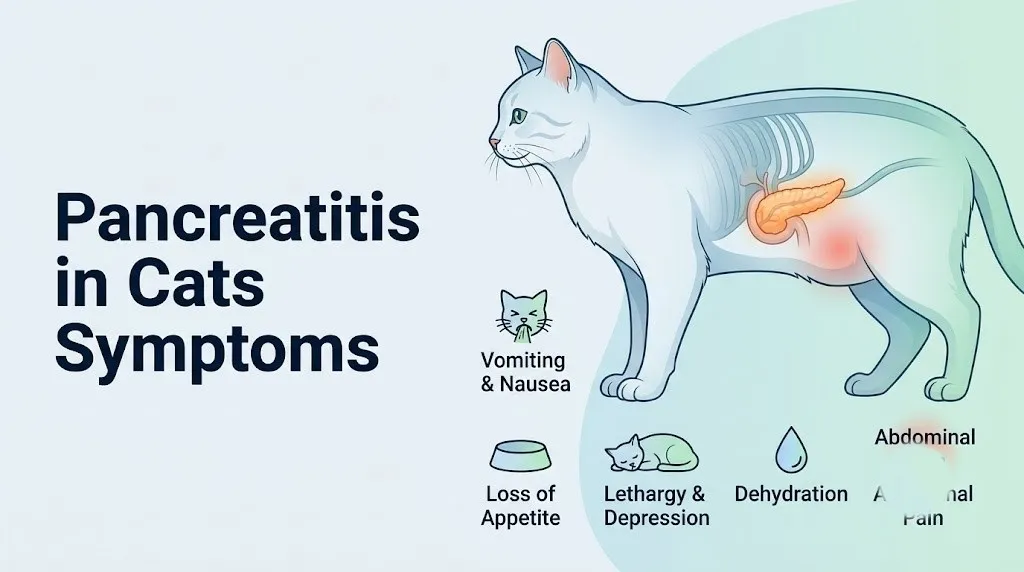
In acute feline pancreatitis, the premature trypsin activation and subsequent cytokine cascade happen quickly. The pancreatic tissue and surrounding peripancreatic fat undergo rapid inflammation and necrosis in the most severe cases. This is called necrotizing pancreatitis, and it carries the highest mortality risk.
| Severity Level | Observable Signs | Veterinary Action Required |
|---|---|---|
| Mild acute | Single vomiting episode, mild lethargy, reduced appetite for less than 24 hours | Same-day veterinary evaluation |
| Moderate acute | Repeated vomiting, complete anorexia, visible discomfort, dehydration | Urgent veterinary visit; likely hospitalization |
| Severe acute | Collapse, hypothermia, jaundice, inability to stand, labored breathing | Emergency veterinary clinic immediately |
The speed of deterioration in acute cases can be rapid. A cat that appeared mildly unwell in the morning can deteriorate to a state of cardiovascular compromise within hours, particularly if dehydration and electrolyte losses from repeated vomiting are not corrected with intravenous fluid support.
Research published in the Journal of Feline Medicine and Surgery indicates that the severity of the acute inflammatory response correlates with the degree of systemic cytokine elevation. Cats with concurrent liver disease or dehydration at the time of presentation tend to have more severe clinical courses.
Cats with diabetes mellitus who develop acute pancreatitis face a compounded risk: pancreatic inflammation can disrupt islet of Langerhans function, destabilizing insulin production and making blood glucose management substantially harder during the illness. Diabetic cat owners should contact their veterinarian immediately if acute symptoms appear.
Key Takeaway: Acute pancreatitis in cats can deteriorate from mild to life-threatening within hours; complete anorexia, repeated vomiting, and abdominal pain posture all warrant same-day veterinary evaluation, not a wait-and-see approach.
Chronic Pancreatitis in Cats: Subtle Signs That Are Easy to Miss
Chronic pancreatitis in cats presents as a long-term, low-grade inflammation with intermittent, often subtle symptoms that wax and wane over weeks or months, making it one of the most commonly missed diagnoses in domestic cats.
Unlike the acute form, chronic feline pancreatitis does not announce itself dramatically. The acinar cells sustain ongoing low-level damage, and the pancreatic architecture gradually changes through a process of fibrosis, where functional tissue is replaced by non-functional scar tissue. This fibrosis can ultimately impair both exocrine and endocrine pancreatic function.
Owners of cats with chronic pancreatitis often describe a pattern that looks like this: the cat eats somewhat less than it used to, seems less playful, maybe loses half a pound over a few months, grooms a little less, and occasionally vomits or skips a meal. Each individual sign seems explainable in isolation. Taken together, they paint a picture of a cat whose quality of life has been quietly declining.
Signs specific to the chronic presentation:
- Gradual, progressive weight loss over weeks to months without an obvious dietary change
- Intermittent vomiting, typically 1 to 2 times per week rather than repeated episodes on a single day
- Variable appetite, with some days eating normally and others showing no interest
- Persistent mild lethargy, distinguishable from the dramatic collapse of acute cases
- Coat quality decline from reduced grooming driven by low-grade nausea and discomfort
- Exocrine pancreatic insufficiency (EPI) in advanced chronic cases, where so much functional acinar tissue is lost that fat and protein digestion fail, producing greasy, voluminous stools and severe weight loss
Siamese cats are specifically documented in veterinary literature as having a breed-associated predisposition to chronic pancreatitis. According to the Cornell University College of Veterinary Medicine Feline Health Center, this breed appears to develop the chronic form more frequently than other cat breeds, though the specific genetic mechanism is not yet fully established.
Cat Pancreatitis Lethargy and Appetite Loss: What’s Actually Happening
Lethargy and appetite loss in cats with pancreatitis are not just incidental findings: they are direct physiological consequences of pancreatic inflammation and the systemic cytokine response it triggers.
When TNF-alpha, IL-1, and IL-6 enter systemic circulation from an inflamed pancreas, they act on the hypothalamus, the brain region that regulates body temperature, hunger signaling, and energy expenditure. These cytokines suppress appetite by altering hypothalamic neuropeptide Y and leptin sensitivity signaling pathways. This is the same mechanism behind the appetite suppression seen in other serious inflammatory conditions. It is not behavioral. It is biochemically driven.
The lethargy is similarly physiological. Inflammatory cytokines redirect metabolic resources away from voluntary activity and toward immune response. The cat is not being lazy. Its body is diverting energy to manage an internal crisis.
The anorexia creates a separate, potentially fatal secondary problem specific to cats. Unlike most mammals, cats have a metabolic requirement to process dietary fat through the liver continuously. When they stop eating, the body mobilizes fatty acids from fat stores and floods the liver with them. The feline liver, unlike a human or canine liver, handles this poorly. Hepatic lipidosis (fatty liver disease) can develop within 48 to 72 hours of complete food refusal, adding a second life-threatening condition on top of the primary pancreatitis.
This hepatic lipidosis risk makes anorexia in cats a time-sensitive emergency regardless of what is causing it. A cat that has not eaten in 48 hours needs veterinary evaluation the same day, without exception.
Overweight cats face amplified risk. Their existing fat reserves are larger, meaning the lipid mobilization into the liver happens faster and more severely when anorexia sets in.
Key Takeaway: A cat that has not eaten for 48 hours risks developing hepatic lipidosis on top of pancreatitis; this combination requires same-day veterinary evaluation without waiting to see if appetite returns on its own.
Vomiting and Nausea in Cats With Pancreatitis
Vomiting in cats with pancreatitis occurs because pancreatic inflammation directly irritates the duodenum, stimulates the chemoreceptor trigger zone in the brainstem, and produces nausea-signaling through multiple gastrointestinal neural pathways.
The duodenum sits directly adjacent to the head of the pancreas. When pancreatic inflammation spreads into the surrounding tissue, it irritates the duodenal wall, triggering the enteric nervous system to signal the brainstem’s vomiting center. Simultaneously, the systemic cytokine release acts on the chemoreceptor trigger zone (CTZ) in the medulla oblongata, compounding the nausea signal.
A practical point worth understanding: vomiting is a less universal symptom of feline pancreatitis than most online content suggests. Research from the Journal of Veterinary Internal Medicine has documented that vomiting occurs in only approximately 35 to 50 percent of cats with confirmed pancreatitis, compared to over 90 percent of affected dogs. This means the absence of vomiting absolutely does not rule out pancreatitis in a cat.
What may be easier to observe than outright vomiting is nausea behavior in cats:
- Repeated lip-licking or tongue-flicking not associated with eating or grooming
- Drooling from a cat that does not normally drool
- Repeated swallowing motions
- Turning away from food immediately after approaching the bowl
- Retching without producing vomit
Kittens and young cats may vomit more readily than senior cats, because their vagal reflex sensitivity tends to be higher. In older cats, the reduced vomiting response may actually mask severity: a senior cat that is not vomiting but is completely anorexic and lethargic may be as ill as a younger cat that is actively vomiting.
Abdominal Pain in Cats With Pancreatitis
Abdominal pain is present in most cats with pancreatitis, but it is rarely expressed the way a human or a dog would express pain, and recognizing it requires knowing what feline pain actually looks like.
When the pancreas undergoes autodigestion and surrounding tissue becomes inflamed, the peritoneum (the membrane lining the abdominal cavity) and local nerve endings become sensitized. Pancreatic pain in all species is transmitted via the splanchnic nerves, which carry visceral pain signals to the spinal cord. In humans and dogs, this produces audible distress. In cats, the stoic response suppresses most overt pain signaling.
Observable indicators of abdominal pain in cats:
- Hunched posture while standing or sitting, with the spine slightly arched and the belly appearing “sucked up”
- Reluctance or refusal to be picked up from a cat that normally tolerates handling
- Flinching, pulling away, or vocalizing when the belly is gently touched
- Pressing the belly against a cool surface (floor tile, bathtub) to seek temperature relief
- Sitting with all four paws tucked tightly under the body with minimal relaxation
- Facial tension: narrowed eyes, flattened whisker position, ears slightly rotated back
The Feline Grimace Scale, a validated veterinary pain assessment tool developed and published in the Journal of Veterinary Internal Medicine in 2019, codifies these facial indicators for clinical use. Veterinary staff use it to assess pain in cats who cannot verbalize discomfort. Pet owners can use the same principles: a cat showing orbital tightening, muzzle tension, and ear rotation backward is expressing pain.
Male and female cats express visceral pain with comparable subtlety. Age matters more than sex: cats over 12 years of age may show even fewer behavioral pain signals due to general behavioral slowing, making clinical assessment by a veterinarian essential.
Key Takeaway: Cats in abdominal pain typically show postural and facial changes rather than vocalizing; a hunched posture, flinching at belly touch, and unusual hiding are the signs to act on.
What Causes Pancreatitis in Cats
Pancreatitis in cats is caused by any factor that triggers premature activation of pancreatic digestive enzymes, though in the majority of feline cases, no specific cause is identified and the condition is classified as idiopathic.
In dogs, dietary indiscretion (eating high-fat food) is a leading identified trigger. In cats, this relationship is far weaker. The American Veterinary Medical Association (AVMA) and veterinary internists broadly recognize that feline pancreatitis more often arises from systemic inflammation, concurrent disease, or unknown triggers than from diet alone.
Known and suspected causes include:
- Idiopathic origin: The most common classification. No external trigger is identified. This applies to the majority of feline cases.
- Infectious disease: Toxoplasma gondii infection has been associated with pancreatic inflammation in cats. Herpesvirus, calicivirus, and certain bacterial infections have also been implicated in research literature.
- Organophosphate toxin exposure: Insecticide exposure can trigger acute pancreatic injury. If toxin exposure is suspected, call the ASPCA Animal Poison Control Center at 888-426-4435 immediately.
- Abdominal trauma: Physical injury (falls from height, vehicle strikes) can traumatize the pancreas directly and trigger enzyme activation.
- Concurrent inflammatory bowel disease or cholangiohepatitis: These conditions share inflammatory pathways with pancreatitis and appear to trigger or perpetuate pancreatic inflammation in cats. This triad is discussed in detail in the next section.
- Certain medications: Some drugs, including potassium bromide (used in cats with seizure disorders) and some organochlorine compounds, have been associated with pancreatic injury in feline patients.
- Hypercalcemia: Elevated blood calcium levels can activate trypsinogen prematurely within acinar cells, triggering the autodigestion cascade.
- Pancreatic duct obstruction: Physically blocking enzyme outflow causes back-pressure within the ductal system, ultimately forcing premature intracellular enzyme activation.
A licensed veterinarian cannot determine the cause of pancreatitis from a pet owner’s description alone. Physical examination and laboratory testing are required in every case.
Feline Triaditis and Concurrent Disease in Cats
Feline triaditis is the simultaneous occurrence of pancreatitis, inflammatory bowel disease (IBD), and cholangiohepatitis (inflammation of the liver and bile ducts) in the same cat, and it is far more common in cats than in any other domestic species.
The anatomical reason for this clustering goes back to the shared ductal anatomy described earlier. Because the feline pancreatic duct and the common bile duct enter the duodenum through a single shared opening, inflammation in any one of these three organs readily spreads to the other two. IBD affecting the duodenal wall can directly trigger biliary and pancreatic inflammation. Pancreatic inflammation can back-propagate into the bile duct and liver.
Research published in the Journal of Veterinary Internal Medicine found that a substantial proportion of cats with confirmed pancreatitis, in some study populations exceeding 50 percent, also had concurrent IBD, cholangiohepatitis, or both when thorough post-mortem examination was performed. This concurrent disease burden is one reason feline pancreatitis is so frequently underdiagnosed during life: owners and even general practitioners may treat one condition while the other two remain unrecognized.
Clinical implications for owners:
- A cat diagnosed with IBD that develops new symptoms (increased lethargy, jaundice, acute appetite loss) may be developing pancreatitis or cholangiohepatitis as concurrent conditions.
- Treatment of pancreatitis alone may not resolve symptoms if IBD or cholangiohepatitis are also active. A board-certified veterinary internist is often best positioned to manage triaditis comprehensively.
- Bloodwork for a cat with suspected pancreatitis should always include liver function values (alanine aminotransferase (ALT), bilirubin, alkaline phosphatase) to screen for hepatobiliary involvement.
Cats over 7 years of age have a substantially higher prevalence of triaditis than younger cats, reflecting the cumulative inflammatory burden that tends to accumulate across multiple organ systems with age.
Key Takeaway: More than half of cats with pancreatitis may simultaneously have IBD or liver inflammation as part of feline triaditis, meaning treatment of pancreatitis alone may not resolve all symptoms unless concurrent conditions are also identified.
Which Cats Are at Highest Risk for Pancreatitis
Certain cats face measurably higher risk for developing pancreatitis based on breed, age, weight, and concurrent health conditions.
The following groups have the highest documented risk in veterinary clinical literature:
By breed:
- Siamese cats are the most consistently documented high-risk breed for chronic pancreatitis. The Cornell University College of Veterinary Medicine has noted this breed predisposition, though the underlying genetic mechanism is still being studied.
- Other oriental breeds (Burmese, Tonkinese) may share elevated risk based on clinical observation, though breed-specific data is less established for these breeds than for Siamese.
By age:
- Middle-aged to senior cats (7 years and older) have higher prevalence. The risk continues to rise with age.
- Cats over 10 years of age face compounded risk because they more often carry concurrent diseases (IBD, liver disease, chronic kidney disease) that increase susceptibility.
By weight:
- Overweight and obese cats have elevated systemic inflammatory tone, which may lower the threshold for pancreatic enzyme activation. Their hepatic lipidosis risk during anorexia is also higher.
By health history:
- Cats with prior or active inflammatory bowel disease have substantially elevated pancreatitis risk due to shared inflammatory pathways.
- Cats with chronic kidney disease (CKD) may develop pancreatitis more frequently, and the two conditions complicate each other’s management.
- Cats with diabetes mellitus face a bidirectional risk: diabetes is both a risk factor for pancreatitis and a potential consequence of severe chronic pancreatic inflammation that destroys islet cells.
- Cats with known toxoplasma or other systemic infections are at elevated risk for infectious-triggered pancreatitis.
Indoor-only cats with a stable diet are not immune. The idiopathic nature of most feline pancreatitis means no cat’s lifestyle provides full protection.
How Is Pancreatitis Diagnosed in Cats
Pancreatitis in cats is diagnosed through a combination of physical examination, blood panel analysis, the feline pancreatic lipase immunoreactivity test, and abdominal ultrasound, because no single test provides definitive confirmation on its own.
A licensed veterinarian will typically follow this diagnostic sequence:
- Physical examination: Assess body weight, hydration status, abdominal tenderness, temperature, heart rate, respiratory rate, and mucous membrane color. An icteric (yellow) tinge to the gums or eyes signals hepatic involvement. Abdominal palpation in an awake cat is limited, but a painful response or a palpable abdominal mass may support the diagnosis.
- Complete blood count (CBC): Looks for elevated white blood cell count (indicating infection or severe inflammation), anemia, and platelet changes that may reflect coagulopathy in severe cases.
- Serum chemistry panel: Evaluates liver enzyme levels (ALT, alkaline phosphatase), bilirubin, total protein, albumin, blood glucose, blood urea nitrogen (BUN), creatinine, and electrolytes. Elevated liver values support concurrent hepatic involvement. Low albumin indicates protein loss from systemic inflammation. Electrolyte abnormalities (particularly low potassium, or hypokalemia) are common in vomiting cats and affect treatment planning.
- Feline pancreatic lipase immunoreactivity (fPLI) test: The most specific blood test for feline pancreatitis currently available. Discussed in detail in the following section.
- Abdominal ultrasound: Allows direct visualization of the pancreas, surrounding tissue, biliary system, liver, and intestines. An experienced ultrasonographer can identify pancreatic enlargement, hyperechoic peripancreatic fat (a sign of local inflammation), and concurrent liver or biliary changes consistent with triaditis.
- Urinalysis: Assesses kidney function and hydration status, important for fluid therapy planning.
Definitive confirmation requires histopathological examination of pancreatic tissue (biopsy), which is rarely performed in living cats due to the risk of anesthesia in an already ill patient. Diagnosis is typically made by clinical evidence combining the above tests.
The Feline Pancreatic Lipase Immunoreactivity Test Explained
The feline pancreatic lipase immunoreactivity (fPLI) test, commercially available as the Spec fPL test from IDEXX Laboratories and the SNAP fPL test for in-clinic rapid screening, is currently the most specific blood test for detecting pancreatic inflammation in cats.
Standard blood lipase and amylase measurements, which are useful in human pancreatitis diagnosis, perform poorly in cats. Cats can have pancreatitis with normal lipase and amylase values on a standard chemistry panel, and conversely, elevated lipase can occur from non-pancreatic causes in cats. This is a critical species-specific difference.
The Spec fPL test measures a form of lipase produced specifically by pancreatic acinar cells using an immunoassay method, meaning it targets only pancreatic-origin lipase rather than lipases from other tissues. According to research published in the Journal of Veterinary Internal Medicine, the Spec fPL test demonstrates higher sensitivity and specificity for feline pancreatitis than standard lipase measurement.
Understanding the test results:
| Spec fPL Result | Interpretation | Next Step |
|---|---|---|
| Less than 3.5 mcg/L | Pancreatitis unlikely | Investigate other causes if symptoms persist |
| 3.5 to 5.3 mcg/L | Borderline; pancreatitis possible | Repeat test in 2 to 4 weeks or proceed with ultrasound |
| Greater than 5.3 mcg/L | Consistent with pancreatitis | Treat for pancreatitis; add ultrasound for severity assessment |
The SNAP fPL is a rapid in-clinic qualitative version. It gives a normal or abnormal result rather than a precise number, making it useful for rapid triage but not for tracking disease progression over time.
Cats on certain medications (corticosteroids, some antibiotics) may have altered fPLI values. A cat’s recent feeding status does not significantly affect fPLI results, unlike some human diagnostic tests that require fasting.
Key Takeaway: Standard lipase tests do not reliably detect pancreatitis in cats; the Spec fPL test is the most specific blood-based diagnostic tool currently available and should be requested by name if pancreatitis is suspected.
Emergency Signs: When to Take Your Cat to the Vet Immediately
Certain symptoms associated with pancreatitis in cats require immediate emergency veterinary evaluation. Do not wait to see if these resolve on their own.
Take your cat to an emergency veterinary clinic immediately if you observe:
- Complete refusal to eat for more than 24 to 48 hours, because hepatic lipidosis can begin developing within that timeframe and becomes a second life-threatening condition
- Vomiting more than 2 to 3 times in a 24-hour period, causing rapid dehydration and electrolyte loss
- Visible yellowing of the gums, the whites of the eyes, or the pale skin inside the ear flap (jaundice), indicating liver involvement
- Collapse or inability to stand or maintain normal body posture, indicating hemodynamic compromise
- Labored, rapid, or shallow breathing inconsistent with the cat’s activity level
- Hypothermia: a cat that feels cold to the touch on the ears, paws, or belly, which signals cardiovascular decompensation
- Extreme lethargy with no response to your voice, touch, or usual stimuli
- Abdominal distension or a visibly swollen belly in combination with any other listed sign
- Suspected toxin or insecticide exposure that could have triggered acute pancreatic injury; call the ASPCA Animal Poison Control Center at 888-426-4435 immediately in addition to going to the emergency veterinary clinic
These presentations can indicate severe acute pancreatitis, necrotizing pancreatic necrosis, systemic inflammatory response syndrome, or secondary hepatic lipidosis, all of which require emergency intravenous treatment and close monitoring, not an urgent care appointment scheduled for the following morning.
If your regular veterinary clinic is closed, locate your nearest 24-hour emergency veterinary hospital before a crisis occurs so you are not searching under pressure. Keep that address and phone number accessible at home.
Cat Pancreatitis Treatment and Home Monitoring
Treatment for cat pancreatitis is managed by a licensed veterinarian and centers on supportive care: correcting dehydration, controlling nausea, managing pain, and restoring nutritional intake as quickly as possible.
There is no specific medication that stops the enzymatic autodigestion cascade once it has begun. Treatment addresses the consequences: fluid losses, inflammation, pain, and secondary complications.
Standard veterinary treatment approaches include:
- Intravenous (IV) fluid therapy: Corrects dehydration and electrolyte imbalances (particularly hypokalemia from vomiting), maintains blood pressure, and supports organ perfusion. This is the single most important treatment in moderate to severe cases.
- Anti-nausea medication: Maropitant (Cerenia) is the most commonly used anti-nausea agent in cats and works by blocking substance P at the neurokinin-1 receptor in the brainstem’s vomiting center. It also has some visceral analgesic effects in addition to antiemetic action.
- Pain management: Buprenorphine is the most commonly used opioid analgesic for feline pancreatitis pain. Adequate pain control is not optional: pain causes stress, stress elevates cortisol, and elevated cortisol impairs immune function and delays recovery.
- Nutritional support: Early nutritional intervention is prioritized in feline pancreatitis management. Cats that will not eat voluntarily may require a feeding tube (typically a nasogastric or esophagostomy tube) to prevent hepatic lipidosis. The old “pancreatic rest” concept of withholding food no longer applies to feline pancreatitis management based on current veterinary clinical evidence.
- Appetite stimulants: Mirtazapine (as an oral tablet or transdermal gel) is used to stimulate appetite in recovering cats.
For home monitoring after discharge, a licensed veterinarian will give specific instructions. General principles include:
- Offer small, frequent meals of the food your veterinarian recommends rather than one or two large portions.
- Track food intake daily, noting the amount consumed at each meal.
- Record any vomiting episodes: time, frequency, and whether food or bile was produced.
- Weigh your cat weekly using a baby scale or pet scale; weight loss of more than a few ounces per week warrants a call to your veterinarian.
- Observe daily for the emergency signs listed in the previous section.
Can Cats Recover From Pancreatitis
Many cats recover from pancreatitis, particularly when the condition is mild to moderate and veterinary treatment is started promptly, but recovery outcomes depend substantially on disease severity, concurrent conditions, and how quickly treatment begins.
Mild acute pancreatitis treated with IV fluids, anti-nausea medication, and appropriate nutritional support typically resolves within 3 to 7 days of inpatient or outpatient care. Most cats return to normal or near-normal function following a single mild episode.
Moderate to severe acute pancreatitis carries higher complication rates. Complications can include:
- Development of pancreatic pseudocysts (fluid-filled areas within or around the damaged pancreas)
- Hepatic lipidosis as a secondary condition from prolonged anorexia
- Disseminated intravascular coagulation (DIC) in the most severe cases, which represents a medical emergency
- Progression to exocrine pancreatic insufficiency (EPI) if enough acinar tissue is destroyed by recurrent inflammation
Chronic pancreatitis in cats typically cannot be cured but can often be managed long-term. The goal shifts from resolution to stability: controlling flares, maintaining adequate nutrition, managing concurrent diseases (IBD, cholangiohepatitis), and protecting quality of life.
According to the Journal of Feline Medicine and Surgery, cats with chronic pancreatitis managed with appropriate veterinary support and owner monitoring can maintain reasonable quality of life for months to years. Prognosis worsens when triaditis is present and all three conditions are active simultaneously, because each disease complicates the management of the others.
Cats that recover from acute pancreatitis are not immune to recurrence. Your veterinarian may recommend periodic fPLI monitoring, regular check-ups, and careful attention to the early warning signs discussed throughout this article.
Frequently Asked Questions About Pancreatitis in Cats
What are the first signs of pancreatitis in a cat?
The first signs of pancreatitis in a cat are typically lethargy and reduced appetite, which often appear before vomiting or other obvious symptoms develop.
Many cats also begin hiding more than usual, show reluctance to be touched around the belly, and decrease grooming activity in the early stages.
These behavioral changes are easy to dismiss as stress or aging, which is why pancreatitis is so frequently caught late; any combination of these signs lasting more than 24 hours warrants a call to a licensed veterinarian.
Can a cat have pancreatitis without vomiting?
Yes, a cat can have pancreatitis without vomiting, and this is more common in cats than in dogs or humans with the same condition.
Research in the Journal of Veterinary Internal Medicine documents that vomiting occurs in only approximately 35 to 50 percent of cats with confirmed pancreatitis.
Lethargy and anorexia are more reliable indicators in cats than vomiting, so the absence of vomiting should never be used to rule out pancreatitis.
How long does pancreatitis last in cats?
Mild acute pancreatitis in cats typically resolves within 3 to 7 days with appropriate veterinary treatment including IV fluids, anti-nausea medication, and nutritional support.
Moderate to severe cases may require 1 to 2 weeks of hospitalization and a longer recovery period at home.
Chronic pancreatitis does not resolve completely but can be managed long-term with veterinary care, with cats experiencing flares and periods of relative stability over months to years.
What should I not feed a cat with pancreatitis?
Your veterinarian’s nutritional recommendations are the authoritative guide for any specific cat with pancreatitis, and dietary decisions during illness should not be made based on general articles alone.
As a general principle, high-fat foods and treats should be avoided during and after a pancreatitis episode, because dietary fat stimulates pancreatic enzyme secretion through cholecystokinin signaling.
A licensed veterinarian may recommend a low-fat, highly digestible prescription diet or a small-volume, frequent-meal feeding schedule tailored to your cat’s specific concurrent conditions and caloric needs.
Is pancreatitis painful for cats?
Pancreatitis is painful for cats, though cats express pain through subtle postural and behavioral changes rather than vocalizing or crying.
Signs of abdominal pain in cats include a hunched body posture, reluctance to be picked up, flinching when the belly is touched, and a tense facial expression as described by the validated Feline Grimace Scale.
Adequate pain management with medications such as buprenorphine is a standard part of feline pancreatitis treatment and is considered essential to recovery, not optional.
How do vets test for pancreatitis in cats?
Veterinarians diagnose pancreatitis in cats using a combination of physical examination, a complete blood count, a serum chemistry panel, the feline pancreatic lipase immunoreactivity (Spec fPL) test, and abdominal ultrasound.
The Spec fPL test is the most specific blood test for feline pancreatitis currently available and is far more reliable in cats than standard lipase measurements from a routine chemistry panel.
No single test confirms the diagnosis on its own; the Spec fPL result is interpreted alongside ultrasound findings, liver values, and clinical signs to form a complete clinical picture.
Closing
Recognizing pancreatitis in cats requires knowing that this disease almost never announces itself the way people expect. A cat that is quieter than normal, eating less, and choosing to hide is a cat that may need veterinary evaluation today, not at the end of the week.
The two most actionable takeaways from everything covered here: anorexia lasting more than 48 hours is a veterinary urgency in any cat regardless of cause, and the Spec fPL test is the specific diagnostic tool you should ask your veterinarian about by name if pancreatitis is on the table. Standard blood panels miss it.
Trust the behavioral signs your cat is showing you. They are not subtle by accident. They are how cats communicate that something has gone wrong inside.