COVID Symptoms Day by Day: Full 2026 Timeline Guide
COVID symptoms day by day follow a predictable biological sequence tied to the SARS-CoV-2 replication cycle, the innate immune response, and the inflammatory cascade that determines whether an infection stays mild or becomes severe. Knowing what each day typically brings, and what symptom changes mean you need to act rather than wait, is the most practically useful information anyone infected with COVID-19 can have.
The Centers for Disease Control and Prevention reports that while most people with COVID-19 recover at home within 10 to 14 days, a subset experiences rapid deterioration between days 5 and 10, the window most health content fails to address with the specificity that would actually help someone decide what to do. Understanding why that window exists, and what it looks like in real time, is what separates useful health information from generic symptom lists.
This guide maps the complete COVID-19 symptom timeline from the incubation period through recovery, explains the physiological mechanism behind each day’s presentation, addresses how the symptom pattern differs for vaccinated, elderly, and immunocompromised individuals, and gives you specific clinical thresholds for when home monitoring must stop and emergency evaluation must begin.
COVID Symptoms Day by Day: What the Full Progression Looks Like
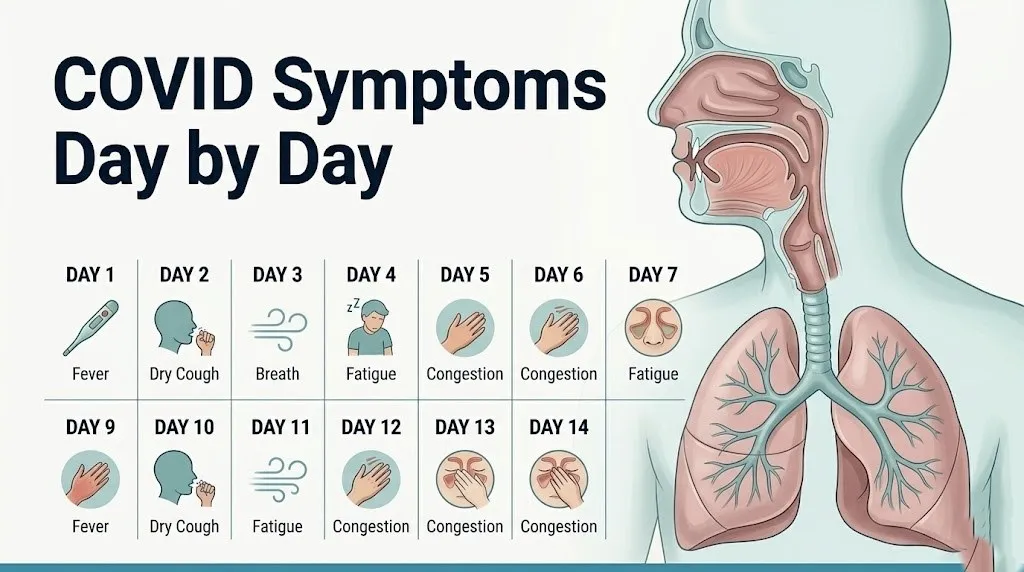
COVID-19 symptoms day by day follow three distinct biological phases: viral expansion in the upper respiratory tract (approximately days 1 through 5 post-symptom onset), immune-inflammatory escalation (approximately days 5 through 10), and resolution or transition to post-acute symptoms (days 10 and beyond).
The sequence is not random. It is driven by where the virus replicates first, which immune mechanisms respond and in what order, and which organ systems become involved as the immune response intensifies. Most people with mild to moderate COVID-19 follow the upper-respiratory phase without progressing to the inflammatory phase. The minority who deteriorate do so almost exclusively in the days-5-to-10 window, which makes that window the most clinically important period to monitor.
| Phase | Days (Post-Symptom Onset) | Dominant Mechanism | Primary Symptoms |
|---|---|---|---|
| Viral expansion phase | Days 1 to 5 | SARS-CoV-2 replication in nasal epithelium, type I interferon release | Fever, fatigue, sore throat, nasal congestion, myalgia |
| Immune-inflammatory phase | Days 5 to 10 | IL-6 and TNF-alpha cytokine surge, possible lower respiratory involvement | Persistent fever, dyspnea, chest tightness, worsening fatigue |
| Resolution or PASC onset | Day 10 onward | Viral clearance, adaptive immune response, possible post-acute sequelae | Improvement in most; persistent fatigue, brain fog, dyspnea in a subset |
For individuals with the 2024-2025 updated vaccine booster, the inflammatory phase is typically abbreviated or absent, and most symptoms concentrate in the first four to five days of illness.
People with chronic obstructive pulmonary disease (COPD) enter the immune-inflammatory phase with a lower physiological reserve, meaning dyspnea becomes functionally limiting at lower degrees of gas exchange impairment than in healthy adults.
How SARS-CoV-2 Infects the Body and Why Symptoms Follow a Timeline
SARS-CoV-2 infection follows a specific anatomical sequence because the virus requires ACE2 receptors (angiotensin-converting enzyme 2) on the surface of host cells to enter them, and ACE2 receptor density varies across organ systems in a pattern that directly predicts which symptoms appear when.
The initial infection site is the nasal epithelium, specifically the ciliated columnar epithelial cells lining the upper airway that have the highest surface ACE2 density in the respiratory system. The virus’s spike protein binds ACE2 with high affinity, enters the cell via transmembrane serine protease 2 (TMPRSS2) cleavage, and begins replicating within 12 to 24 hours of exposure. This is why nasal and throat symptoms dominate the early illness picture.
Think of the spike protein and ACE2 receptor relationship like a key in a lock. The spike protein is cut precisely to fit ACE2. Once the door opens, viral RNA pours in and commandeers the cell’s machinery to produce copies of the virus. The more ACE2 locks available in a given tissue, the more readily that tissue becomes infected.
The Lancet published data from large prospective cohort studies confirming that olfactory sustentacular cells (support cells in the olfactory epithelium) express particularly high ACE2 levels, which explains why anosmia develops when the virus reaches this cell population, typically between days 3 and 5 of illness. The olfactory neurons themselves are not directly infected; it is the sustentacular cells that die that disrupt olfactory signal transduction.
The timeline of symptom appearance maps precisely to the time the virus takes to replicate sufficiently in each anatomical compartment to trigger a local and then systemic immune response. Individual variation in ACE2 receptor density, baseline immune function, and pre-existing inflammatory status all modify this timeline.
COVID Incubation Period and Day 1 Symptoms
The incubation period of COVID-19 with current circulating subvariants in 2025-2026 (primarily JN.1 lineage descendants) is approximately 2 to 4 days from exposure to symptom onset, shorter than the 5 to 7 day incubation associated with the original SARS-CoV-2 strain.
Day 1 of illness (the first day symptoms are felt, not the day of exposure) is often characterized by a subtle prodrome: fatigue that seems out of proportion to activity level, a mildly sore or scratchy throat, and possibly a low-grade fever between 99°F and 100.4°F (37.2°C and 38°C). Many people attribute day-1 symptoms to poor sleep, seasonal allergies, or a generic cold starting.
The type I interferon response is already active on day 1, even before the person recognizes they are ill. Infected nasal epithelial cells release IFN-alpha and IFN-beta as part of the innate antiviral alarm system. These interferons trigger systemic effects through the JAK-STAT signaling pathway, producing the generalized fatigue, low-grade fever, and malaise that characterize the earliest illness day.
Quick Tip:
- If you have known COVID-19 exposure and feel unexpectedly tired within 2 to 4 days, test immediately with a rapid antigen test before symptoms develop further.
- Day 1 is the optimal day to contact a primary care physician or telehealth provider to discuss antiviral eligibility, since the prescription window for nirmatrelvir-ritonavir is 5 days from symptom onset.
- Individuals over age 65 or with immunocompromising conditions should not wait for test confirmation before contacting their physician if exposure is known and symptoms have started, because the treatment window may close before confirmation is available.
Key Takeaway: Day 1 of COVID-19 often feels like mild fatigue and a scratchy throat driven by the type I interferon alarm response, which is also the same day that antiviral treatment eligibility begins, making early contact with a primary care physician on day 1 the single most time-sensitive action a high-risk individual can take.
Day 2 and Day 3 COVID Symptoms: The Early Immune Response
By days 2 and 3, symptoms are typically well-established and no longer ambiguous, as SARS-CoV-2 replication in the upper respiratory tract has reached a level sufficient to produce a full innate immune response throughout the body.
The hypothalamus receives prostaglandin E2 (PGE2) signaling from cyclooxygenase-2 (COX-2) enzyme activity in response to IL-1 beta and IL-6 released by activated macrophages and monocytes in the infected nasal mucosa. PGE2 raises the hypothalamic temperature set point, producing fever. By day 2 to 3, fever in adults typically ranges from 100.4°F to 103°F (38°C to 39.4°C), though approximately 25 to 30% of people with confirmed COVID-19 do not develop fever at all, according to prospective data published in JAMA.
Myalgia (muscle aching) on days 2 to 3 is not damage to muscle tissue directly. It results from cytokine-mediated impairment of skeletal muscle mitochondria: IL-6 and TNF-alpha reduce mitochondrial oxidative phosphorylation efficiency, meaning muscles produce less ATP for the same oxygen consumption, making every movement feel disproportionately effortful. This is why COVID fatigue on day 2 to 3 feels qualitatively different from ordinary tiredness.
Common day 2-3 symptoms in order of reported frequency (based on prospective cohort data from The Lancet):
- Fatigue and general malaise (reported by approximately 60 to 70% of symptomatic cases)
- Headache (reported by approximately 55 to 70% of symptomatic cases)
- Sore throat (reported by approximately 50 to 60% of symptomatic cases with JN.1 lineage infections)
- Nasal congestion or runny nose (reported by approximately 45 to 60%)
- Fever or chills (approximately 40 to 55%, lower in vaccinated individuals)
- Myalgia (approximately 35 to 50%)
- Cough (approximately 30 to 50%, typically dry and non-productive at this stage)
Children under age 12 report fever and sore throat more prominently on days 2 to 3 than adults, but less frequently report myalgia, possibly because the pediatric innate immune response to SARS-CoV-2 generates a less intense cytokine release pattern than adult immune systems.
Day 3 COVID Symptoms and What Drives the Fever and Fatigue
Day 3 of COVID-19 is often described by patients as the worst day of the early illness period, because viral load in the upper respiratory tract typically peaks between days 2 and 4 post-symptom onset, driving the immune response to its highest intensity in the first week.
Fever on day 3 is mechanistically driven by the same PGE2-hypothalamic pathway activated on day 2, but now with a higher cytokine load amplifying the signal. The fever serves a genuine biological purpose: elevated core temperature (between 38°C and 40°C) increases the rate of interferon production, speeds up natural killer (NK) cell and CD8+ T lymphocyte activity, and slows SARS-CoV-2 replication rate by approximately 200-fold for each degree Celsius above the virus’s optimal replication temperature, according to research published in the New England Journal of Medicine on coronavirus thermolability.
The fatigue on day 3 is also now compounded by the metabolic cost of fever itself: every 1°C rise in body temperature above baseline increases cellular metabolic demand by approximately 10 to 13%, meaning a person running a 39°C fever is metabolically running harder than at baseline even while lying still.
| Symptom | Day 3 Mechanism | Why It Feels This Way |
|---|---|---|
| High fever (38-40°C) | PGE2 raising hypothalamic set point via IL-1β and IL-6 signaling | Chills before fever peaks; sweating as set point resets downward |
| Extreme fatigue | IL-6 and TNF-alpha impairing mitochondrial oxidative phosphorylation | Heaviness in limbs, inability to concentrate |
| Headache | Meningeal inflammation via cytokine crossing the blood-brain barrier | Pressure-type headache, worsened by movement |
| Dry cough | Irritation of tracheal and bronchial mucosa by viral replication products | Non-productive, often worse lying down |
| Body aches | Prostaglandin E2 sensitizing peripheral nociceptors in muscle tissue | Deep aching not relieved well by position change |
Adults over age 65 produce approximately 50% less type I interferon in response to SARS-CoV-2 than adults under age 40, according to research from Nature Medicine. This reduced interferon response means the virus replicates longer before the immune alarm fully fires, which is a key mechanism behind the higher severity rates in older adults.
Day 4 COVID Symptoms: Peak Early Illness
Day 4 of COVID-19 represents the peak of the early viral-expansion phase for most people, with symptom intensity at its highest point before the virus begins to be cleared by the adaptive immune response in the following days.
The adaptive immune response, specifically activated CD4+ helper T cells directing antibody production by B cells and CD8+ cytotoxic T cells killing infected nasal epithelial cells, begins organizing around days 4 to 5. For vaccinated individuals with immunological memory from prior antigen exposure, this response is faster and more efficient. Breakthrough infections in fully vaccinated individuals often see symptom intensity begin declining by late day 4 or early day 5 rather than continuing to escalate.
Day 4 specific symptom patterns:
- Anosmia (loss of smell) and ageusia (loss of taste) frequently appear or worsen on day 4, as SARS-CoV-2 has had sufficient time to infect and destroy enough sustentacular cells in the olfactory epithelium to disrupt olfactory transduction. With JN.1 lineage variants, anosmia is reported less frequently than with the original Wuhan strain or delta variant, appearing in approximately 10 to 20% of cases rather than the 50 to 60% rates from earlier variant eras.
- Cough may worsen on day 4, becoming more frequent and slightly productive in some cases as the bronchial mucosal inflammatory response intensifies.
- Gastrointestinal symptoms (nausea, loose stools, diarrhea) peak around day 3 to 5 in the subset of people who experience them, driven by SARS-CoV-2 infecting ACE2-expressing enterocytes in the small intestinal epithelium.
According to JAMA Internal Medicine data from breakthrough infection cohorts, vaccinated individuals report day 4 as the day they most frequently begin noticing symptom improvement, while unvaccinated individuals more commonly report day 4 as peak severity before a continued plateau at day 5.
Pregnant individuals in the third trimester should note that day 4 fever above 39°C warrants direct contact with their obstetrician-gynecologist the same day, because sustained high fever in the third trimester carries risk of preterm labor and fetal tachycardia.
Key Takeaway: Day 4 is the peak of early illness for most people, and the divergence point where vaccinated individuals typically begin improving while unvaccinated or high-risk individuals are most likely to plateau or enter the inflammatory escalation phase in the days immediately ahead.
Day 5 COVID Symptoms: The Critical Turning Point
Day 5 of COVID-19 is the single most clinically important day to monitor carefully, because it marks the transition between the viral-expansion phase and the immune-inflammatory phase, and it is the point at which a minority of infected people begin to deteriorate rather than improve.
For the majority of adults with mild to moderate COVID-19 and no high-risk comorbidities, day 5 brings the first signs of improvement: fever that begins to trend down, fatigue that is slightly less severe, and a general sense that the worst has passed. This is the adaptive immune response gaining the upper hand over viral replication.
For a subset of people, particularly those with uncontrolled type 2 diabetes mellitus, obesity with BMI above 35, age over 65 with no recent booster, or active immunosuppressive conditions, day 5 brings something different: new or worsening chest tightness, the first appearance of shortness of breath with mild exertion, or a fever that re-escalates after appearing to improve. This pattern is called a biphasic fever and it reflects the secondary inflammatory cytokine surge driven by IL-6 and TNF-alpha from macrophage and monocyte activation in the lower respiratory tract.
The WHO clinical severity classification identifies the transition from mild to moderate-severe COVID-19 as occurring when oxygen saturation (SpO2) drops below 94% on room air. Day 5 is the day to begin active SpO2 monitoring if you have not already, using a pulse oximeter.
Day 5 action guide:
- Measure SpO2 twice daily, morning and evening. Target: at or above 94% on room air at rest.
- Count your resting respiratory rate for one full minute. Target: 20 breaths per minute or fewer.
- Walk from one room to another and note whether shortness of breath develops. Breathlessness with minimal exertion is an escalation sign.
- Check temperature: a fever that re-rises above 38.5°C (101.3°F) after a 24-hour period of lower temperature is a warning sign.
- If SpO2 is below 94%, respiratory rate is above 25 per minute, or exertional dyspnea is new: contact a primary care physician immediately or go to urgent care. Do not wait until the next morning.
COVID Day 7 Symptoms: Improvement or Escalation
By day 7 of COVID-19, the clinical picture has typically declared itself one of two trajectories: steady improvement toward recovery, or persistent or worsening symptoms that indicate the inflammatory phase has become clinically consequential.
For most adults without high-risk comorbidities, day 7 brings a substantially reduced fever burden (either resolved or only low-grade intermittent), improved energy levels compared to days 3 to 5, a cough that may be more productive but less frequent, and persisting but improving nasal congestion. Viral load in the upper respiratory tract has typically declined to a level below the infectious threshold in most people by day 7, though contagiousness can persist beyond this point.
For individuals who have not improved by day 7, two distinct patterns matter clinically:
Pattern 1 (Persistent upper respiratory symptoms without worsening): Continued sore throat, nasal congestion, cough, and fatigue without new or worsening chest symptoms. This is a slower recovery trajectory, common in people over 50, those with a high initial viral load, and those with pre-existing chronic sinusitis or asthma. It does not indicate severe disease but warrants primary care physician contact if symptoms have not begun improving at all by day 7.
Pattern 2 (New or worsening lower respiratory symptoms): New onset of dyspnea, chest tightness, or SpO2 decline after a period of apparent improvement. This pattern suggests early acute respiratory distress syndrome (ARDS) development or evolving COVID pneumonia with bilateral alveolar involvement. This is a medical emergency. It does not wait for the next available appointment.
The National Institutes of Health COVID-19 Treatment Guidelines state that clinical deterioration in COVID-19 most commonly occurs between days 5 and 10 post-symptom onset, making day 7 a decision point rather than simply a waypoint.
Immunocompromised individuals on active chemotherapy, biologic therapy for inflammatory conditions, or following organ transplant may show prolonged viral shedding past day 14 and require direct management by their treating oncologist, rheumatologist, or transplant physician rather than standard isolation guidance timelines.
Key Takeaway: Day 7 is a clinical declaration point: if you are meaningfully better, the trajectory is recovery; if symptoms are the same or worse than day 5, contact a physician that day, because the inflammatory escalation window is still open.
COVID Symptoms First Week: What to Monitor Every Day
Monitoring COVID-19 symptoms through the first week requires tracking five specific parameters every day, not just noting how you feel in general terms.
The first week is a dynamic clinical picture. Symptom intensity rises, peaks, and either reverses or escalates, and the difference between a person who catches deterioration early and one who ends up in the emergency room is often whether they were tracking the right numbers or simply waiting to “feel better.”
Daily home monitoring protocol for the first week:
- Temperature: Measure twice daily (morning and evening). Record the exact number. A fever that was trending down and then rises again is a warning sign regardless of the absolute temperature.
- Oxygen saturation (SpO2): Use a pulse oximeter placed on a warm finger at rest. Measure in the sitting position after resting quietly for two minutes. Normal at rest: at or above 94%. Below 94%: contact your primary care physician or go to urgent care immediately.
- Resting respiratory rate: Count breaths for one full minute by watching chest rise and fall. Normal adult range: 12 to 20 breaths per minute. Above 25: contact your physician. Above 30: go to the emergency room.
- Exertional SpO2 drop: After walking from one room to another (approximately 30 to 40 steps), recheck SpO2 immediately. A drop of more than 3 percentage points from resting baseline warrants same-day physician contact.
- Fluid intake and urination: Track whether you are drinking at least 1.5 liters per day and urinating at least four times per day. Dehydration from fever and poor intake worsens all symptoms and increases clot risk from the hypercoagulable state that SARS-CoV-2 infection can produce via endothelial inflammation.
The CDC recommends that individuals who test positive and are at high risk for severe outcomes (age over 65, immunocompromised, pregnancy, BMI above 40, diabetes, heart disease, or chronic lung disease) contact a healthcare provider within 24 hours of testing positive, specifically to discuss antiviral treatment options, which have a narrow 5-day window from symptom onset.
Elderly patients living alone present a specific monitoring challenge because cognitive effects of fever and hypoxia may impair their ability to self-assess deterioration accurately. A daily check-in call or visit from a family member during the first 7 to 10 days is clinically advisable for this population.
COVID Shortness of Breath: When It Starts and What It Means
Shortness of breath (dyspnea) in COVID-19 typically begins between days 5 and 8 post-symptom onset in moderate-to-severe cases, and its appearance represents one of the most clinically important symptom transitions in the entire illness course.
Dyspnea in COVID-19 is produced by a specific sequence of events in the lower respiratory tract. SARS-CoV-2 reaches the alveolar Type II pneumocytes (the surfactant-producing cells lining the alveoli) either through direct aspiration of virus from the upper respiratory tract or via viremic dissemination. Infection and death of alveolar Type II cells disrupts surfactant production. Surfactant is the phospholipid compound that reduces surface tension in the alveoli; without adequate surfactant, alveoli collapse on expiration (atelectasis) and resist reinflation. The result is impaired gas exchange: oxygen cannot cross the alveolar-capillary membrane efficiently, and SpO2 begins to fall.
The process is compounded by endothelial inflammation in the pulmonary microvasculature, which produces microthrombi that reduce effective capillary blood flow through the gas exchange zones, worsening the V/Q mismatch (ventilation-perfusion mismatch) that produces hypoxemia.
The WHO defines severe COVID-19 in adults as any combination of: SpO2 below 94% on room air, respiratory rate above 30 breaths per minute, or lung infiltrates on imaging covering more than 50% of lung fields. These thresholds do not require a hospital oxygen monitor to trigger action. A home pulse oximeter costing under $30 provides the SpO2 reading that matters most.
One of the most discussed phenomena in COVID-19 clinical literature is “happy hypoxia” or silent hypoxemia: SpO2 falling to 85 to 90% without the person feeling severely short of breath at rest. This occurs because SARS-CoV-2 infection may impair the normal respiratory drive response to low oxygen through mechanisms involving brainstem chemoreceptor function. Adults with diabetes, obesity, or neurological comorbidities appear more susceptible to this silent presentation. A pulse oximeter catches what the person’s own perception may miss.
Symptoms of COVID-19 Day by Day in Vaccinated vs. Unvaccinated People
The day-by-day COVID-19 symptom trajectory differs in measurable and clinically meaningful ways between individuals who have received the updated 2024-2025 COVID-19 vaccine formulation and those who have not been vaccinated or whose last dose was more than 12 months prior.
Vaccination, particularly with the updated mRNA formulation matched to JN.1 lineage antigens, does not prevent infection entirely, but it does two things that alter the temporal symptom pattern: it pre-arms the adaptive immune response (T cell and B cell memory) so that the response activates 2 to 3 days earlier than in a naive immune system, and it reduces the intensity of the IL-6 and TNF-alpha cytokine surge, which is the mechanism responsible for severe lower respiratory involvement.
| Symptom Timeline Feature | Vaccinated (Updated Booster) | Unvaccinated or No Booster >12 Months |
|---|---|---|
| Symptom onset post-exposure | Similar (2 to 4 days) | Similar (2 to 5 days) |
| Peak symptom day | Days 2 to 4 | Days 4 to 6 |
| Fever frequency and intensity | Lower; often low-grade or absent | Higher; more frequently reaches 39°C |
| Anosmia or ageusia | Less common (approximately 10%) | Less common with JN.1 but higher baseline risk |
| Lower respiratory involvement | Rare without high-risk comorbidities | More common; especially days 5 to 8 |
| Total symptom duration | Typically 5 to 7 days | Typically 7 to 14 days |
| Hospitalization risk | Reduced by approximately 50 to 60% | Higher, particularly age over 65 |
This does not mean vaccinated people should not monitor carefully. Breakthrough infections in vaccinated individuals over 65, or in vaccinated people with active immunosuppression, can follow a trajectory closer to the unvaccinated pattern because the vaccine-induced immune response is less robust in these groups.
JAMA Internal Medicine prospective data from 2023 and 2024 show that the symptom duration advantage of vaccination is most pronounced in the first 4 days: vaccinated individuals report approximately 40% lower symptom burden scores on days 2 through 4 compared to matched unvaccinated controls.
COVID-19 Symptoms Day by Day in High-Risk Populations
COVID-19 symptoms day by day follow a different and more dangerous trajectory in specific high-risk populations, not because the virus behaves differently in these individuals, but because the host physiological response to the same viral replication pattern is amplified, impaired, or modified in ways that shift the risk curve substantially.
Adults over age 65: Reduced type I interferon production (IFN-alpha and IFN-beta) from aging innate immune cells (a process called immunosenescence) means the early antiviral alarm fires more slowly, allowing higher viral replication before the immune response catches up. The result is that the peak viral load occurs later, the inflammatory cytokine surge (IL-6, TNF-alpha) is more intense when it does arrive, and the recovery period is longer. Fever may be absent even in moderate COVID-19 in this population because the thermoregulatory response is blunted with age.
Individuals with type 2 diabetes mellitus: Hyperglycemia impairs neutrophil function (reduced phagocytosis and killing of infected cells), reduces complement system efficiency, and creates a pro-inflammatory baseline state with elevated CRP and IL-6 before infection even begins. The result is a stronger and less regulated cytokine response, higher risk of bacterial superinfection during COVID-19 illness, and slower upper respiratory mucosal healing.
Pregnant individuals (third trimester): Reduced functional residual capacity of the lungs (the growing uterus elevates the diaphragm by up to 4 cm, reducing lung volume) means hypoxemia becomes functionally limiting at higher SpO2 levels than in non-pregnant adults. Pregnant individuals in the third trimester should contact their obstetrician-gynecologist if SpO2 drops below 95% (one percentage point above the general emergency threshold), because fetal oxygen delivery is already at greater risk.
People with BMI above 35: Excess adipose tissue expresses high ACE2 levels and serves as an additional viral reservoir. Adipose tissue also produces leptin and adipokines that dysregulate the macrophage inflammatory response, producing a more intense and less self-regulated cytokine release pattern.
The American Academy of Family Physicians recommends that all of these high-risk groups contact their primary care provider within 24 hours of a positive COVID-19 test, regardless of symptom severity on the day of diagnosis, to establish a monitoring plan and discuss antiviral eligibility.
Key Takeaway: In people over 65, fever may be absent even in moderate-to-severe COVID-19, meaning SpO2 monitoring is more reliable than temperature monitoring for tracking clinical deterioration in this age group.
COVID Day 10 Symptoms and the Path to Recovery
For most adults with mild to moderate COVID-19, day 10 marks the end of the acute illness phase: fever has resolved for at least 24 to 48 hours, energy levels are noticeably improved over the day-4-through-7 period, and the most disruptive symptoms (sore throat, significant nasal congestion, body aches) have substantially diminished.
The CDC isolation guidance, last updated for 2024-2025, indicates that most people may end isolation when they have been fever-free for at least 24 hours without fever-reducing medication and symptoms are improving. Day 10 is typically the outer boundary of infectious spread for most people, though individuals with high-risk conditions or immunocompromising conditions may remain infectious beyond this point and should discuss specific return-to-activity guidance with their primary care physician.
Symptoms that commonly persist at day 10 even in people who are recovering normally:
- A lingering dry or mildly productive cough (may persist 2 to 4 weeks in some individuals due to airway hyperreactivity from mucosal inflammation)
- Fatigue that is substantially improved but not fully resolved (may persist 1 to 3 weeks post-recovery)
- Mild congestion or post-nasal drip
- Reduced exercise tolerance compared to pre-illness baseline
Persistence of fever, chest pain, dyspnea, or SpO2 below 94% at day 10 is not normal recovery and requires urgent evaluation by a primary care physician or, if dyspnea and low SpO2 are present, emergency medicine evaluation the same day.
Athletes and individuals with physically demanding occupations should not return to full-intensity training until symptom-free for at least 7 days and until resting heart rate has returned to pre-illness baseline, because myocarditis (cardiac muscle inflammation) is a recognized, though uncommon, complication of COVID-19 that can present with exertional chest pain, palpitations, and arrhythmia in the weeks following acute illness.
Long COVID Symptoms: What Begins After Day 10
Post-acute sequelae of SARS-CoV-2 (PASC), widely known as long COVID, refers to symptoms that persist or newly appear beyond four weeks after the initial infection, affecting an estimated 10 to 20% of people who had symptomatic COVID-19, according to prospective cohort data published in The Lancet.
Long COVID is not a single condition with a single mechanism. The current clinical and research evidence points to several distinct physiological pathways that can operate independently or together in different individuals: persistent viral reservoir in gut-associated lymphoid tissue (producing ongoing immune activation), autoimmune antibody production triggered by molecular mimicry between viral epitopes and self-antigens, autonomic nervous system dysregulation (specifically postural orthostatic tachycardia syndrome, or POTS, which causes heart rate to rise abnormally when standing), and ongoing low-grade inflammation in the central nervous system affecting the brain regions responsible for cognition and fatigue regulation.
Recognized long COVID symptoms that may begin emerging after day 10:
- Persistent fatigue disproportionate to activity (fatigue that does not improve with rest, affecting daily function)
- Brain fog: difficulty concentrating, word-finding difficulty, short-term memory impairment (a clinical descriptor for cognitive dysfunction linked to neuroinflammation and microglial activation)
- Exertional intolerance: worsening of fatigue or other symptoms specifically after physical or cognitive effort (known as post-exertional malaise, or PEM)
- Palpitations or rapid heart rate when standing (POTS pattern)
- Persistent shortness of breath despite normal SpO2 at rest
- Continued or new joint pain, with no pre-existing arthritis
- Persistent anosmia or parosmia (distorted smell perception) beyond 6 weeks
The National Institutes of Health RECOVER initiative (Researching COVID to Enhance Recovery) is the largest coordinated U.S. research effort studying long COVID mechanisms. Their published data confirm that long COVID affects people across all age groups, including previously healthy young adults, and that neither vaccination nor mild acute illness prevents long COVID entirely, though vaccination is associated with a reduced long COVID risk.
Adults experiencing symptoms consistent with long COVID beyond 4 weeks should be evaluated by their primary care physician, who may refer to a board-certified pulmonologist (for persistent dyspnea), a neurologist (for brain fog and POTS), or a dedicated long COVID clinic if available in their region.
When to Go to the ER with COVID: Specific Clinical Thresholds
Certain symptoms associated with COVID-19 require immediate emergency evaluation. Do not wait to see if these resolve on their own.
Call 911 or go to the nearest emergency room immediately if you experience:
- SpO2 below 94% on room air as measured by a pulse oximeter after resting quietly for two minutes, because this threshold indicates impaired pulmonary gas exchange that may progress to respiratory failure within hours
- Respiratory rate above 30 breaths per minute at rest (count your breaths for one full minute), because this rate indicates the respiratory muscles are working at near-maximum effort to maintain oxygenation
- New or worsening chest pain or chest pressure that is persistent rather than fleeting, because COVID-19-related myocarditis and pericarditis can produce cardiac compromise requiring emergency evaluation
- Confusion, disorientation, or altered mental status, including sudden difficulty staying awake, because hypoxia-related brain dysfunction is a sign that oxygenation has been critically compromised
- Blue or gray color of the lips, fingernails, or skin (cyanosis), which reflects severe hypoxemia and is a late and serious warning sign
- Inability to stay awake or walk without losing balance
- Fever above 40°C (104°F) that does not respond to antipyretics (fever-reducing medication), particularly in elderly adults or young children, because this level of sustained hyperthermia carries risk of febrile seizure (in children) and cardiac arrhythmia (in adults with pre-existing cardiovascular disease)
- Exertional SpO2 drop below 90%: if SpO2 was 94% at rest but falls below 90% after walking 30 steps, go to the emergency room immediately
These presentations can indicate acute respiratory distress syndrome (ARDS), myocarditis, or severe systemic hypoxemia and require emergency medical assessment, not an urgent care appointment or a phone call.
COVID Recovery Timeline: What to Expect Week by Week
The COVID-19 recovery timeline varies based on illness severity, individual immune function, age, vaccination status, and whether antiviral treatment was initiated during the acute phase, but a general week-by-week framework reflects the clinical experience documented across large observational cohorts.
Week 1 (Days 1 to 7): The acute viral phase. Symptoms are most intense between days 3 and 6. Recovery for most vaccinated, otherwise healthy adults begins in the second half of this week. High-risk individuals may still be in the escalation phase at the end of week 1.
Week 2 (Days 8 to 14): The transition week. Most people who will recover fully begin feeling substantially improved by days 10 to 12. Fatigue and cough may persist but trend downward. Return to sedentary activities (desk work, light household tasks) is typically feasible by mid-week 2 for those with mild to moderate illness. Any new or returning respiratory symptoms in week 2 warrant prompt physician contact.
Week 3 (Days 15 to 21): Gradual return to normal activity for most mild-to-moderate cases. Exercise tolerance may still be reduced. Sleep may be disrupted. Persistent fatigue at this point, if not improving, warrants clinical evaluation to rule out long COVID onset. The WHO defines persistent symptoms that cross the 3-week mark as warranting formal clinical documentation and assessment.
Week 4 and beyond: Full recovery for most mild cases. Persistent symptoms at the 4-week mark meet the clinical definition for further investigation under NIH RECOVER research protocols and national long COVID clinical guidance. At this threshold, request a referral from your primary care physician for formal evaluation if symptoms remain functionally limiting.
Elderly adults and those with significant comorbidities often take 3 to 6 weeks to return to their pre-illness functional baseline even after a non-severe infection, and should plan activity return accordingly with guidance from their primary care physician.
Key Takeaway: The recovery timeline for mild-to-moderate COVID-19 is typically 7 to 14 days to near-normal function, but persistent fatigue, exertional intolerance, or any new respiratory or cardiac symptom after week 2 deserves formal clinical evaluation rather than continued home monitoring.
Frequently Asked Questions About COVID Symptoms Day by Day
What day are COVID symptoms the worst?
For most adults, COVID-19 symptoms are worst between days 3 and 5 post-symptom onset, when viral load is at its peak and the cytokine response from activated macrophages and monocytes is at its most intense.
Vaccinated individuals often experience peak severity on days 2 to 4, while unvaccinated individuals more commonly peak on days 4 to 6.
High-risk individuals who enter the inflammatory phase can experience a second worsening around days 6 to 8, driven by IL-6 and TNF-alpha cytokine surge affecting the lower respiratory tract.
When does shortness of breath start with COVID?
Shortness of breath in COVID-19 typically begins between days 5 and 8 post-symptom onset in people who develop lower respiratory involvement.
It occurs when SARS-CoV-2 infects alveolar Type II pneumocytes, disrupting surfactant production and causing gas exchange impairment and falling oxygen saturation.
Any shortness of breath that develops with minimal exertion, or any SpO2 reading below 94% on a pulse oximeter, requires same-day medical evaluation.
How long are you contagious with COVID-19?
Most people with COVID-19 are most contagious from approximately 2 days before symptom onset through day 5 of illness, when viral load is highest.
The Centers for Disease Control and Prevention states that most people are no longer infectious by day 10, though individuals who remain symptomatic or who are immunocompromised may shed infectious virus for longer.
Contagiousness declines as symptoms improve, and ending isolation requires being fever-free for 24 hours without fever-reducing medication in addition to improving symptoms.
What do COVID symptoms feel like on day 3?
Day 3 of COVID-19 typically feels like extreme fatigue, a persistent headache, high fever with chills, body aches in the muscles, and a dry cough that worsens when lying down.
The fatigue on day 3 is qualitatively different from ordinary tiredness because it is produced by cytokine-mediated impairment of skeletal muscle mitochondria, making even minimal movement feel effortful.
Many people describe day 3 as the day they feel worst in the entire illness, which is consistent with the viral load peak occurring between days 2 and 4.
When should I go to the hospital with COVID?
Go to the emergency room immediately if your oxygen saturation (SpO2) drops below 94% on a pulse oximeter at rest, if your breathing rate exceeds 30 breaths per minute, if you have new chest pain or pressure, if you become confused or cannot stay awake, or if your lips or fingertips turn blue.
These are signs of severe hypoxemia, acute respiratory distress, or cardiac complication that cannot be managed at home or in urgent care.
Do not wait to see if these resolve on their own: call 911 or go to the nearest emergency room without delay.
What are the signs that COVID is getting better?
The clearest signs that COVID-19 is improving are a fever that trends down and stays down without returning, SpO2 that remains consistently at or above 94%, and energy levels that are noticeably improved from the day-3-to-5 peak.
Improved appetite, less intense headache, and a cough that becomes less frequent rather than more productive are additional positive trajectory markers.
The absence of new symptoms, particularly no new shortness of breath or chest symptoms after day 5, is one of the most reliable indicators that the illness is following a recovery rather than escalation course.
Closing
The most actionable thing to take from this guide is the day-5-to-7 monitoring window. That is when COVID-19 either begins resolving or begins escalating, and the difference between the two trajectories is visible in three numbers: SpO2, respiratory rate, and temperature trend. Tracking those three parameters twice daily from day 5 onward is not excessive caution. It is the specific, targeted monitoring that the clinical evidence supports.
If you are in a high-risk group (age over 65, immunocompromised, diabetes, obesity, cardiovascular disease, or pregnancy), contact your primary care physician within 24 hours of a positive test, not on day 4 or 5 when symptoms worsen. The antiviral treatment window closes 5 days after symptom onset.
You now have the specific clinical picture, the specific thresholds, and the specific action framework to navigate COVID-19 illness with accurate information rather than general reassurance. Use the numbers. Trust the timeline. Act on the thresholds.