Bad Master Cylinder Symptoms and Warning Signs 2026
Bad master cylinder symptoms range from a soft, spongy brake pedal to a pedal that sinks slowly to the floor under steady pressure, and any of these changes mean your hydraulic braking system is no longer working as designed. Recognizing these warning signs early is not a matter of saving money on a repair. It is a matter of stopping your vehicle before it stops stopping.
The National Highway Traffic Safety Administration (NHTSA) consistently identifies brake system failure as one of the leading mechanical contributors to vehicle crashes, with hydraulic braking component defects accounting for a substantial share of brake-related incidents in annual traffic safety data. The master cylinder sits at the center of that hydraulic system, and when it starts to fail, every other brake component downstream is affected.
This article covers every recognized symptom of a failing brake master cylinder, explains the specific hydraulic mechanism behind each one, distinguishes master cylinder failure from air in the brake lines, and gives you a clear safety framework for deciding whether your vehicle can be driven to a shop or needs to stay parked.
Bad Master Cylinder Symptoms: What You Need to Know First
Bad master cylinder symptoms are produced by one core failure: the cylinder’s ability to generate and hold hydraulic pressure is compromised. Understanding this single mechanical principle helps explain every symptom on this list.
Your brake pedal is connected to a pushrod that drives pistons inside the master cylinder. When those pistons move forward, they compress brake fluid, which is an incompressible liquid, through sealed circuits to your brake calipers or wheel cylinders at each wheel. The braking force you feel in the pedal is hydraulic pressure doing mechanical work at the wheels.
When the master cylinder fails, one of two things typically happens. Either the internal rubber piston cup seals degrade and allow fluid to bypass internally without generating downstream pressure, or fluid leaks externally from the cylinder body, reservoir, or connections. Both failure modes reduce the system’s ability to hold and transmit pressure. The pedal symptoms you feel are the hydraulic consequences of that pressure loss.
The specific symptom pattern tells a trained technician which failure mode is active. A pedal that sinks under sustained pressure with no visible fluid puddle under the car points strongly to internal seal bypass. A pedal that gradually gets lower over days while the reservoir level drops points to external leakage. Both require professional repair before the vehicle is driven.
Key failure modes at a glance:
| Failure Mode | Mechanism | Primary Symptom |
|---|---|---|
| Internal seal bypass | Worn cup seals allow fluid to cycle internally | Sinking pedal, no visible leak |
| External fluid leak | Cracked housing, failed O-ring, or fitting failure | Low reservoir, wet brake components |
| Air intrusion | Fluid loss followed by air entering the circuit | Spongy, compressible pedal feel |
| Bore corrosion | Moisture-damaged cylinder bore prevents seal contact | Intermittent or progressive pedal loss |
Older vehicles are at the highest risk for internal seal bypass because piston cup seals are made of EPDM rubber or other elastomers that degrade over years of thermal cycling and chemical exposure from moisture-contaminated brake fluid.
What Is a Master Cylinder and How Does It Work
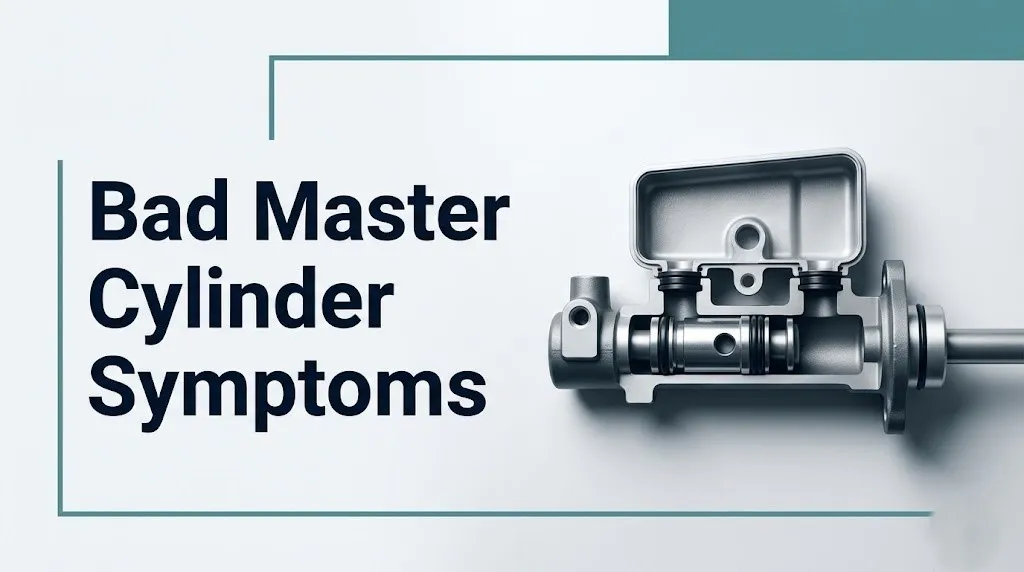
The brake master cylinder is the hydraulic pump at the heart of your vehicle’s entire braking system. It converts the mechanical force you apply to the brake pedal into the hydraulic pressure that actually stops your vehicle at each wheel.
Modern vehicles use a tandem master cylinder, which contains two separate piston assemblies housed in a single aluminum or cast iron bore. These two pistons serve two independent brake circuits. On most vehicles, these circuits are arranged in a diagonal split pattern: the left front and right rear share one circuit, and the right front and left rear share the other. This dual-circuit design means a failure in one circuit still leaves the other functional, providing partial braking ability even if one circuit fails completely.
Think of the tandem master cylinder like two separate syringe plungers inside one housing. When you press the brake pedal, a pushrod from the brake booster drives the primary piston forward. That piston compresses fluid in its circuit. Simultaneously, fluid pressure from the primary side pushes the secondary piston forward, compressing fluid in its circuit. Both circuits pressurize simultaneously from a single pedal input, applying brakes at all four wheels.
The cylinder bore is precision-machined to extremely tight tolerances. The rubber piston cup seals on each piston create the pressure boundary that prevents fluid from bypassing. When those seals degrade, the fluid has nowhere to go except backward past the seals, which means no pressure reaches the wheels.
According to SAE International brake system design standards, the hydraulic force multiplied through a properly functioning master cylinder can generate several hundred pounds per square inch of brake line pressure from a modest pedal input, demonstrating the high mechanical leverage at stake when seal integrity fails.
Vehicles with ABS also have an ABS modulator connected to the brake circuits downstream of the master cylinder. This modulator can independently reduce, hold, or restore pressure at individual wheels, but it cannot compensate for a master cylinder that is no longer generating adequate primary pressure.
Spongy or Soft Brake Pedal: The Most Common Symptom
A spongy or soft brake pedal is the most frequently reported symptom of a bad master cylinder and the one that most often sends drivers to search for answers. The pedal depresses more easily than usual, requires more travel to achieve the same deceleration, or simply does not feel solid.
The physical reason for this is that hydraulic brake fluid is designed to be incompressible. When your system is functioning correctly, every millimeter of pedal travel directly translates into pressure at the wheels with no wasted motion. When fluid can bypass a degraded piston cup seal internally, pedal movement compresses nothing useful. The fluid cycles within the cylinder bore rather than transmitting pressure outward, and the pedal feels like it is pushing through a compressible medium rather than a solid hydraulic column.
This same spongy feeling can also occur when air enters the brake circuit, which is covered in detail later in this article. The key distinction worth noting here is that air-related sponginess tends to appear suddenly after brake work or a fluid loss event, while master cylinder sponginess typically develops gradually over weeks or months as seal wear progresses.
Pedal feel comparison by failure type:
| Pedal Characteristic | Master Cylinder Seal Bypass | Air in Brake Lines | Normal Function |
|---|---|---|---|
| Initial pedal resistance | Reduced | Reduced | Firm |
| Travel before braking begins | Increased | Increased | Short |
| Pedal behavior under sustained hold | Slowly sinks | May remain spongy but stable | Holds firm |
| Symptom onset pattern | Gradual, progressive | Sudden after service or fluid loss | N/A |
| Pedal recovery after release | Normal | Normal | Normal |
Drivers with larger foot size or a heavier driving style may notice pedal changes later than average because they apply more force, which partially compensates for the reduced pressure generation. This means the symptom may already be advanced by the time it becomes obvious.
Any brake pedal that has changed noticeably in feel or travel distance warrants evaluation by an ASE-certified brake technician. Do not delay based on the fact that the vehicle still stops, because degraded master cylinders can fail completely with little additional warning.
Brake Pedal Slowly Sinks to the Floor
A brake pedal that slowly sinks toward the floor while you hold steady pressure is one of the most diagnostically specific bad master cylinder symptoms. Unlike a pedal that simply feels soft on initial application, a sinking pedal points specifically to a loss of pressure that occurs over time rather than instantly.
The hydraulic mechanism here is internal seal bypass. When you apply and hold the brake pedal, you are holding the piston in a compressed position within the bore. If the cup seals have degraded enough to allow fluid to slip past them under sustained pressure, the piston slowly creeps forward as the fluid escapes behind the seal. The pedal follows the piston, sinking toward the floor even though your foot has not moved.
Picture a hydraulic jack that has a slow internal leak in its sealing valve. You pump it up, it holds for a moment, and then the load slowly descends as fluid bypasses the valve. A master cylinder with degraded cup seals behaves identically: it builds pressure briefly, then allows that pressure to bleed away as fluid bypasses internally.
To confirm this symptom at home before taking your vehicle to a shop:
- Start the vehicle with the engine running to activate the brake booster.
- Apply firm, steady pressure to the brake pedal and hold for 30 seconds without pumping.
- Watch and feel whether the pedal remains stationary or slowly moves toward the floor.
- Note whether the vehicle is fully stopped during this test (do this in a safe, stationary position, never in traffic).
- If the pedal drops more than 1 to 2 inches under constant pressure, report this specific finding to your technician.
Pedal sinking that occurs only when the engine is running (booster pressurized) and not when the engine is off points more specifically to the master cylinder or booster interface. A technician will use this distinction during diagnosis.
Older vehicles, particularly those over ten years old with no documented brake fluid service, are the highest-risk group for this symptom because brake fluid moisture content above 3% (as specified by SAE J1704) accelerates the elastomeric degradation of piston cup seals significantly.
Brake Pedal Goes to the Floor While Driving
A brake pedal that travels all the way to the floor with little or no vehicle deceleration represents a brake failure emergency. This is the most severe of all bad master cylinder symptoms, and it demands immediate action.
This symptom occurs when one or both hydraulic circuits have lost pressure completely. In a dual-circuit tandem master cylinder system, both pistons must fail for total pedal loss to occur. This happens in severe internal seal bypass, catastrophic external fluid loss that empties the reservoir, or bore damage that prevents either piston from building pressure. When both circuits lose pressure, no hydraulic force reaches any wheel, and the vehicle will not slow from brake pedal input alone.
According to FMVSS 105, the Federal Motor Vehicle Safety Standard governing hydraulic brake systems, all vehicles sold in the United States must retain partial braking ability when one of the two hydraulic circuits fails. A pedal going completely to the floor with no deceleration indicates that the redundancy designed into the dual-circuit system has also been overcome, making this an immediate safety emergency.
If your brake pedal drops to the floor while driving:
- Do not pump the pedal repeatedly in traffic. This can temporarily redistribute remaining fluid but is not reliable.
- Apply the parking brake or emergency brake gradually, not abruptly, to avoid rear wheel lockup and loss of steering control.
- Downshift if your vehicle has manual or paddle-shift transmission to use engine braking.
- Steer immediately toward the shoulder, a runaway truck ramp, an open parking area, or any safe stopping zone.
- Call 911 if the vehicle cannot be safely brought to a stop.
- Do not drive the vehicle again until a complete brake system inspection has been performed by an ASE-certified brake technician.
This symptom is not a “get it checked soon” situation. It is a do-not-drive situation. A vehicle with a pedal that drops to the floor is mechanically incapable of reliably stopping within a safe distance.
Key Takeaway: A spongy pedal means your master cylinder is likely bypassing fluid internally. A pedal that sinks under held pressure confirms internal seal failure. A pedal that drops to the floor while driving is a brake emergency requiring immediate roadside action.
Brake Warning Light and Master Cylinder Failure
The brake warning light on your dashboard can indicate a master cylinder problem, though it does not diagnose the master cylinder specifically. Understanding what triggers the light helps you interpret it correctly.
Most vehicles have a two-function brake warning light. The first function activates when the parking brake is engaged. The second function activates when a pressure differential sensor detects unequal pressure between the two hydraulic circuits, or when the brake fluid level in the reservoir drops below the minimum threshold. The master cylinder and its reservoir are directly involved in both of the latter triggers.
When a master cylinder fails internally, fluid level in the reservoir often stays relatively stable because the fluid is cycling internally rather than leaving the system. This means the fluid-level-triggered warning light may not illuminate during early internal seal failure, making this symptom less reliable as an early indicator of internal bypass. External fluid loss, however, will drop the reservoir level and reliably trigger the low-fluid warning.
The pressure differential sensor sits between the two hydraulic circuits. If one circuit loses pressure while the other maintains it (for example, if one piston seal fails before the other), this sensor detects the pressure imbalance and triggers the warning light. This makes the light a more reliable indicator of partial circuit failure than of early symmetrical seal degradation.
What to do when your brake warning light illuminates:
- Check first that the parking brake is fully released.
- Open the hood and visually inspect the brake fluid reservoir level against the MIN and MAX markings on the translucent reservoir body.
- If the level is low, do not simply top it off without investigating why. A low level without any visible external leak is a sign that brake pads are worn down, or that fluid is being lost internally, both of which need professional evaluation.
- If the level is at MIN or below, do not drive the vehicle until the cause is identified.
Vehicles equipped with electronic brake force distribution (EBD) may display a separate ABS or EBD warning light in addition to the primary brake warning indicator when hydraulic pressure irregularities are detected.
Master Cylinder Failure Symptoms: Visible Fluid Leak
A visible brake fluid leak at or near the master cylinder is a direct symptom of external seal failure, housing damage, or connection failure. Knowing where to look and what brake fluid looks like helps you identify this before it becomes a pressure-loss event.
Brake fluid is a polyalkylene glycol ether-based fluid in DOT 3, DOT 4, and DOT 5.1 formulations. Fresh brake fluid is clear to light amber in color, with a slightly oily texture and a faintly chemical smell. Older, contaminated brake fluid becomes dark brown. This is different from engine oil, which is darker and slicker, and from power steering fluid, which is often red or amber and thinner in texture.
Look for these specific locations where external master cylinder leaks appear:
- Between the master cylinder body and the brake booster, at the rear face of the cylinder where the pushrod enters
- At the brake line fittings where the hydraulic lines attach to the front face of the master cylinder
- Around the base of the attached reservoir where the reservoir seats into the cylinder body
- On the firewall below the master cylinder inside the engine compartment, indicating fluid is weeping downward from the above connection points
- On the carpet or floor mat on the driver’s side, indicating the rear seal is leaking fluid past the booster seal and into the passenger compartment
Fluid found on the driver’s side floor mat under the brake pedal area is a particularly serious finding because it indicates the master cylinder’s rear seal has failed completely. At this point the master cylinder is no longer sealed from the passenger cabin, and brake fluid (which is corrosive to paint and irritating to skin and eyes) may be contaminating the interior while the hydraulic circuit is simultaneously losing pressure.
According to AAA vehicle maintenance research, deferred brake fluid service is associated with accelerated corrosion of metal brake components and degradation of rubber seals. Vehicles that have never had a brake fluid flush are significantly more likely to present with external seal leaks than vehicles on a regular 2-year or 30,000-mile brake fluid replacement schedule.
Drivers of high-mileage vehicles or vehicles with long deferred maintenance histories should have brake fluid inspected by a technician at the first sign of any moisture on brake system components.
Internal Master Cylinder Leak Symptoms
Internal master cylinder leak symptoms are the most dangerous brake failure presentations because there is no visible fluid on the ground to alert the driver. The fluid is not leaving the system. It is bypassing the piston seals and cycling backward within the cylinder bore, generating heat without generating useful pressure.
This failure mode occurs when the rubber piston cup seals wear thin, stiffen, or develop surface irregularities that prevent them from maintaining contact with the cylinder bore wall under pressure. The fluid finds the path of least resistance, which is backward past the degraded seal rather than forward into the hydraulic circuit toward the wheels.
The cylinder bore itself can also contribute. Microscopic pitting or corrosion on the bore wall from moisture-contaminated fluid creates a surface that even healthy seals cannot seal against completely. In this scenario, replacing only the seals (a master cylinder rebuild) does not solve the problem, and bore replacement or full master cylinder replacement is required.
Diagnosing internal bypass requires a specific in-vehicle test. An ASE-certified technician will apply firm, sustained pressure to the brake pedal with the engine running and observe whether the pedal holds stationary or slowly sinks. If the pedal sinks but there is no external fluid loss visible anywhere on the brake system, internal bypass is the most likely diagnosis.
Internal vs. external master cylinder leak at a glance:
| Feature | Internal Bypass Leak | External Fluid Leak |
|---|---|---|
| Visible puddle under vehicle | No | Yes |
| Reservoir fluid level change | Minimal or none | Gradually drops |
| Brake warning light | May not trigger early | Likely triggers when low |
| Pedal behavior | Sinks under sustained hold | Progressively lower travel |
| Diagnostic confirmation | Pedal sinkage test | Visual inspection of lines/fittings |
| Repair complexity | Master cylinder replacement | Fitting or seal repair |
Vehicles with cast iron cylinder bores are more susceptible to internal corrosion pitting than those with anodized aluminum bores, making them disproportionately represented in internal bypass failure cases, particularly in regions with high ambient humidity.
Key Takeaway: Internal master cylinder failure leaves no fluid puddle on the ground, making it the failure mode most likely to be overlooked until pedal travel becomes dangerous. A sinking pedal with no visible leak is the diagnostic fingerprint.
Air in Brake Lines Symptoms
Air in brake lines symptoms closely resemble bad master cylinder symptoms, and distinguishing between them requires understanding what physically changes when air enters a hydraulic circuit. Air, unlike brake fluid, is compressible. When air occupies part of a brake circuit, the compressible air column absorbs pedal force before pressure can reach the wheel.
The most recognizable symptom of air in brake lines is a pedal that feels spongy, soft, or springy at the beginning of travel and then becomes firmer as you push deeper. This is because you are first compressing the air pocket, which yields and compresses, and only then beginning to pressurize the incompressible fluid column that actually drives the calipers. The pedal does not sink the way an internally bypassing master cylinder pedal sinks; it feels more like compressing a partially inflated balloon rather than pushing against a solid fluid mass.
Air typically enters the brake circuit through one of three pathways: during brake system service when lines are opened and not properly bled, when a leak depletes the fluid reservoir below the pickup port and allows the master cylinder to draw air, or when a flex hose internally deteriorates and creates a pocket that traps air bubbles.
Symptoms that suggest air in the brake lines specifically:
- Pedal is spongy from the first touch but firms up when pushed harder
- Symptom appeared suddenly after brake work or a brake fluid change
- Pumping the pedal briefly improves the pedal feel (pumping temporarily moves air bubbles away from the caliper)
- No progressive pedal sinking under sustained hold
- Brake fluid reservoir level is at or near minimum
Pumping the pedal to temporarily improve braking is a key distinguishing behavior. Air in the lines typically responds to pumping because the repeated piston strokes move the air bubble toward a bleed point. Internal master cylinder bypass does not respond to pumping in the same way because the fault is upstream at the pressure-generating piston itself.
High-altitude driving can cause very small existing air micro-bubbles in brake fluid to expand slightly due to reduced atmospheric pressure, which may temporarily worsen air-related symptoms at elevation.
Symptoms of Air in Brake Lines Versus Master Cylinder Failure: Key Differences
Separating the symptoms of air in brake lines from master cylinder failure symptoms is one of the most practically important distinctions in brake system diagnosis, because the repair for each is completely different.
Air in the lines is resolved by bleeding the brake system, which is a straightforward procedure that a technician performs by systematically opening bleed nipples at each wheel and flushing fluid through until no air bubbles emerge. A failing master cylinder requires component replacement, a more involved and more expensive repair. Misdiagnosing one for the other means spending money on the wrong fix while the actual problem continues.
According to a technical service bulletin framework used by ASE-certified brake specialists, a systematic pedal behavior test performed with the engine running can differentiate between the two failure modes in most cases without specialty equipment.
Step-by-step differentiation test (to describe to your technician):
- With the vehicle stationary and engine running, apply firm pressure to the brake pedal.
- Observe whether the pedal is immediately spongy from first touch (air) or feels initially firm before slowly sinking (master cylinder bypass).
- Release the pedal fully and rapidly pump it 3 to 4 times. Note whether pedal feel improves after pumping.
- Apply and hold steady pressure again for 30 seconds. Observe whether the pedal holds position or slowly drops.
- If pumping temporarily improves the pedal: air in lines is the more likely diagnosis.
- If the pedal holds briefly then slowly sinks regardless of pumping: internal master cylinder bypass is more likely.
No home test can confirm either diagnosis with certainty. Both conditions require professional hydraulic system inspection and brake fluid analysis before repair is performed.
Comparison of presentations:
| Clinical Feature | Air in Brake Lines | Bad Master Cylinder |
|---|---|---|
| Pedal character | Spongy, springy, compressible | Sinking under sustained hold |
| Response to pumping | Often improves temporarily | Does not reliably improve |
| Onset pattern | Sudden, often after service | Gradual, progressive |
| Fluid reservoir level | Often low or at MIN | May be stable |
| Diagnostic resolution | System bleeding | Master cylinder replacement |
Vehicles that have recently had brake calipers replaced, brake pads replaced on seized slider pins, or any brake line opened for any reason should have their brake fluid inspected for air before attributing a spongy pedal to the master cylinder.
Contaminated Brake Fluid as a Sign of Master Cylinder Failure
Contaminated brake fluid is both a symptom of an aging, degrading brake system and an accelerating cause of master cylinder failure. Recognizing what contaminated brake fluid looks like gives you an early warning before mechanical symptoms appear.
Fresh DOT 3 or DOT 4 brake fluid is clear to pale yellow and transparent when held up to light. Brake fluid that has absorbed water and begun to oxidize progressively darkens, moving from golden yellow to amber to dark brown to nearly opaque black in severely neglected systems. Fluid that is dark brown or black has typically exceeded its useful service life and is actively degrading the rubber seals, hoses, and metal components it contacts.
Glycol-ether-based brake fluids are hygroscopic by their chemical nature. They absorb moisture from the atmosphere through rubber brake hoses (which are permeable to water vapor) and through the vented reservoir cap. Over 2 to 3 years of normal service, most brake fluid accumulates enough water content to measurably lower its wet boiling point, the boiling point measured after moisture absorption. As the wet boiling point drops, the fluid becomes more prone to vapor lock during hard braking, where localized boiling creates compressible gas bubbles in the caliper and line.
Brake fluid condition indicators:
- Clear to pale yellow: healthy, within service life
- Amber to golden: serviceable, approaching replacement interval
- Medium brown: exceeded service interval, replace at next service
- Dark brown to black: actively degrading seals, replace immediately and inspect master cylinder and calipers for seal damage
- Milky or cloudy white: water contamination is severe, possible caliper or cylinder corrosion
According to the National Highway Traffic Safety Administration’s brake maintenance guidance, vehicles that operate with significantly water-contaminated brake fluid are at higher risk for hydraulic component failure, including master cylinder seal degradation and caliper corrosion, than those on a regular fluid replacement schedule.
Rubber particulate matter floating in the fluid, visible as dark specks or a powdery suspension, indicates that piston cup seals or hose liners have already begun to physically disintegrate, which is a direct indicator that master cylinder internal seals may be compromised.
Key Takeaway: Checking brake fluid color in the reservoir takes ten seconds and costs nothing. Dark brown fluid is not normal aging; it is active seal degradation happening inside your brake system right now.
Failing Master Cylinder Symptoms in Vehicles With ABS
Vehicles equipped with an anti-lock braking system (ABS) present failing master cylinder symptoms somewhat differently than non-ABS vehicles, and understanding the differences prevents misattribution of symptoms to the ABS modulator when the master cylinder is the actual source of failure.
The ABS modulator is a downstream hydraulic unit. It intercepts brake line pressure from the master cylinder and can independently pulse, hold, or release pressure at individual wheels to prevent wheel lockup during panic braking. Crucially, the ABS modulator can only work with the pressure the master cylinder generates. If the master cylinder is not generating adequate hydraulic pressure, the ABS system has nothing to modulate, and its intervention during emergency braking is reduced or eliminated.
In ABS-equipped vehicles with a degrading master cylinder, drivers sometimes notice an ABS warning light illuminating alongside or instead of the brake warning light. This happens because pressure sensors within the ABS modulator detect abnormal pressure readings from the master cylinder’s output and flag the deviation as a system fault. The ABS warning light in this context is a consequence of the master cylinder’s pressure deficit, not a primary ABS modulator failure.
Some ABS-equipped vehicles also perform automatic brake system self-tests during initial startup at low speeds, generating a brief pulsing sensation in the pedal and a characteristic clicking sound from the modulator. Drivers unfamiliar with this normal function sometimes mistake it for a brake symptom. Distinguishing normal ABS self-test behavior from abnormal pedal symptoms requires familiarity with what normal feels and sounds like on a given vehicle.
ABS-specific considerations when master cylinder failure is suspected:
- An ABS warning light that appears simultaneously with a soft pedal warrants same-day inspection, not dismissal as an electronics glitch
- ABS-equipped vehicles may have slightly different pedal feel during normal braking compared to non-ABS vehicles, but any sustained sinking or progressive softening is abnormal regardless of ABS presence
- Traction control systems (TCS) and electronic stability control (ESC) also use the ABS modulator and hydraulic circuits, meaning master cylinder pressure deficits may also impair these systems
Hybrid and electric vehicles use electrohydraulic or fully electronic braking systems where the master cylinder and brake-by-wire interface may differ significantly from conventional systems. Owners of hybrid and electric vehicles experiencing brake pedal symptoms should seek diagnosis from technicians specifically trained in their vehicle’s braking architecture.
What Causes a Master Cylinder to Fail
Master cylinder failure results from specific, identifiable physical processes rather than random mechanical breakdown. The most common root causes are seal degradation from brake fluid contamination, mechanical wear from high-mileage use, bore corrosion from moisture exposure, and physical damage from external impact or improper repair.
Piston cup seal degradation is the dominant failure mechanism in vehicles over eight years old. The EPDM or nitrile rubber seals that create the pressure boundary around each piston are constantly exposed to high-temperature brake fluid under repeated pressure cycling. As brake fluid accumulates moisture and oxidative byproducts over time, the chemical environment inside the cylinder bore becomes increasingly hostile to rubber. The seals stiffen, crack at the seal lip, or develop surface deformities that prevent them from maintaining contact with the bore wall.
Bore corrosion occurs when water-contaminated brake fluid reaches the polished metal bore surface and initiates oxidative corrosion. Pitting on the bore surface prevents even healthy seals from achieving a complete seal, creating micro-channels through which fluid bypasses even after seal replacement. In corroded bores, the only effective repair is full master cylinder replacement.
Causes of master cylinder failure by frequency and mechanism:
| Cause | Mechanism | Risk Factors | Relative Frequency |
|---|---|---|---|
| Piston cup seal wear | Thermal and chemical degradation of elastomer | Age, deferred fluid service, high mileage | Most common |
| Bore corrosion | Moisture-induced pitting of cylinder wall | Humid climate, contaminated fluid, no service history | Common |
| O-ring failure at reservoir | UV and thermal aging of reservoir seat seals | Age, direct sun exposure, under-hood heat | Moderate |
| Brake line fitting failure | Vibration fatigue, corrosion at threaded fitting | Road salt exposure, high mileage, improper torque | Moderate |
| Physical damage | Impact from road debris or improper jack placement | Off-road driving, collision damage | Less common |
According to AAA’s vehicle maintenance research, brake fluid that has not been replaced for more than 3 years is a statistically significant predictor of rubber brake component degradation, including master cylinder seal failure.
Vehicles operating in geographic regions with heavy road salt use during winter, particularly the upper Midwest and northeastern United States, show disproportionately higher rates of external brake component corrosion, including fitting failures and reservoir seal degradation.
How to Test for a Bad Master Cylinder
Testing for a bad master cylinder involves a set of specific in-vehicle and visual checks that a technician performs to confirm that the master cylinder is the source of brake system symptoms rather than a caliper, wheel cylinder, brake line, or ABS modulator issue.
No home test can confirm a master cylinder diagnosis definitively, but understanding the professional testing process helps you describe your symptoms accurately and understand what your technician finds.
Standard master cylinder diagnostic procedure:
- Visual inspection of the reservoir: The technician checks fluid level, fluid color, and the presence of rubber particulate matter floating in the fluid. Black or brown fluid with visible debris is a diagnostic indicator of internal seal degradation.
- External leak inspection: The technician examines the entire master cylinder body, all brake line fittings at the forward face of the cylinder, the rear seal area at the booster interface, and the reservoir seat seals for any signs of fluid weeping or staining.
- Static pedal hold test: With the engine running (to activate the brake booster), the technician applies firm, steady pressure to the brake pedal and holds for 30 to 60 seconds, watching for any pedal movement downward under constant foot pressure.
- Fluid pressure test with gauge: A technician with brake pressure testing equipment may attach a hydraulic gauge to a brake line fitting and measure actual line pressure generated by pedal application, comparing it to manufacturer specification.
- Isolation test: By clamping individual brake lines and repeating the pedal hold test, a technician can determine whether the pressure loss is occurring at the master cylinder level or downstream in a specific circuit.
- Brake fluid water content test: A refractometer or test strip is used to measure brake fluid moisture content. A reading above 3% confirms that fluid has exceeded its service life and that seal degradation is likely.
- Final interpretation: All findings are combined to distinguish between master cylinder internal bypass, air in the circuit, external fluid loss, and downstream component failure.
An ASE-certified brake technician should perform these steps. A shop that replaces the master cylinder based only on a spongy pedal without performing an isolation test may miss an air-in-lines diagnosis or a caliper issue, leading to an unnecessary part replacement.
Can You Drive With a Bad Master Cylinder
Whether you can drive with a bad master cylinder depends entirely on which specific symptoms are present and how severe they are. There is no universal answer, but there is a clear safety framework.
A vehicle with early, mild bad master cylinder symptoms such as a slightly spongy pedal with normal pedal height and normal braking distance may still have partial hydraulic function in both circuits. Driving this vehicle a short distance to a repair facility, during off-peak hours on low-speed roads with light traffic, is a calculated risk some drivers accept. It is not a recommendation, and it does not make the drive safe in an objective sense.
A vehicle showing moderate to severe symptoms should not be driven at all. The threshold for “do not drive” includes:
- Any pedal that sinks more than 2 inches under sustained hold
- Any pedal that requires pumping before the vehicle slows adequately
- Any pedal that has reached or nearly reached the floor
- Any noticeable increase in stopping distance
- Any brake warning light combined with a changed pedal feel
According to NHTSA brake failure data, the progression from intermittent brake system symptoms to complete hydraulic failure can occur rapidly and without additional warning, particularly in master cylinders with internally corroded bores where seal contact is already marginal.
Driving a vehicle to a repair shop on a flat, uncrowded road at low speed with maximum following distance, parking brake accessible, and a clear awareness of alternate stopping options is the maximum driving scenario that can be considered. Highway driving, heavy traffic, downhill routes, or any situation requiring emergency braking with a suspected bad master cylinder is not a manageable risk.
The safest action is to have the vehicle transported by flatbed tow truck to an ASE-certified brake repair facility or dealership service department. Call a towing service and do not feel pressured to drive a vehicle with active brake symptoms because transportation is inconvenient.
Key Takeaway: If your brake pedal is sinking, significantly lower than normal, or requires pumping to slow the vehicle, the master cylinder has failed to a degree where driving is a genuine safety risk, not an inconvenience.
When to Replace a Bad Brake Master Cylinder
Replacing a bad brake master cylinder is the definitive repair for internal seal bypass, bore corrosion, or a cylinder housing that has physically failed. The timing and method of replacement depends on the diagnostic findings and the vehicle’s overall brake system condition.
In most cases, a master cylinder that has failed internally due to seal bypass is not successfully repaired by rebuilding with new seals alone. If the cylinder bore has any corrosion pitting, surface roughness, or dimensional wear, new seals will not seal the bore correctly, and the same symptoms will return within a short service interval. This is why most professional brake technicians recommend full master cylinder replacement rather than rebuild for cylinders that have developed internal bypass.
Master cylinder replacement typically includes:
- Removing the brake lines from the cylinder (lines must be plugged to prevent fluid loss and air ingestion)
- Disconnecting the pushrod from the brake booster
- Removing the old cylinder from the booster mounting
- Installing the new cylinder with new gaskets and torqueing line fittings to specification
- Bench bleeding the new master cylinder before installation to remove air from the cylinder body before it enters the brake lines
- System bleeding at all four wheels after installation to purge any remaining air from the circuits
- Road testing with pedal pressure measurements to confirm correct hydraulic function
Bench bleeding before installation is a step that significantly reduces the risk of air in the lines after the repair. A technician fills the new master cylinder, connects temporary bleeding tubes that loop back into the reservoir, and pumps the piston manually until no air bubbles emerge from the tubes. Skipping this step is one of the most common causes of a spongy pedal immediately after master cylinder replacement.
After master cylinder replacement, a full brake fluid flush is advisable if the fluid in the system was contaminated, which it almost always is when a master cylinder has failed from seal degradation. Flushing with fresh, moisture-free fluid protects the new cylinder and all downstream rubber components from the chemical environment that degraded the previous cylinder.
Brake system inspection at time of master cylinder replacement should also include:
- Brake line condition (corrosion, kinking, or external damage)
- Flex hose condition (internal deterioration, cracking, or swelling)
- Caliper and wheel cylinder condition (sticking, leaking, or corroded pistons)
- Brake pad and rotor condition and measurement
Scheduling all of this through a licensed repair facility ensures a complete hydraulic system assessment rather than a single component swap that leaves underlying contributors unaddressed.
Emergency Symptoms: When to Call 911 or Stop Driving Immediately
Certain bad master cylinder symptoms and brake failure presentations require immediate action. Do not wait to see if these resolve on their own or improve with repeated pedal pumping.
Stop driving and call for emergency assistance immediately if:
- Your brake pedal drops to the floor with no vehicle deceleration: This indicates complete or near-complete hydraulic failure in both brake circuits and the vehicle cannot stop reliably from the brake pedal alone.
- Brake pedal feel changes suddenly while driving at highway speed: A sudden change in pedal character during driving indicates a rapid hydraulic pressure event such as a brake line rupture or catastrophic seal failure.
- Vehicle pulls severely to one side during braking combined with a soft pedal: This combination suggests one hydraulic circuit has failed completely, leaving only one set of wheels with braking force.
- Burning smell combined with smoke from a wheel and a changed pedal: This may indicate a seized caliper combined with hydraulic system stress, which is a fire risk in addition to a brake failure risk.
- Brake pedal is unresponsive and vehicle speed is not decreasing: Call 911 immediately. Apply the parking brake gradually, downshift if possible, and steer toward a safe stopping area.
If the brake pedal drops to the floor while driving:
- Stay calm and grip the steering wheel firmly.
- Apply the parking or emergency brake gradually, not in one sudden pull.
- Downshift to a lower gear if your vehicle allows it.
- Steer toward an open area, shoulder, or any space away from traffic.
- Turn on hazard lights to alert other drivers.
- Call 911 once you have brought the vehicle to a safe stop.
These presentations indicate hydraulic braking system failure at the point where continued driving creates an imminent risk to the driver, passengers, and other road users. This is a mechanical emergency, not an urgent care appointment situation.
Frequently Asked Questions About Bad Master Cylinder Symptoms
What are the first signs of a bad master cylinder?
The first signs of a bad master cylinder are typically a brake pedal that feels softer than usual or requires more travel to slow the vehicle.
A pedal that slowly sinks toward the floor when held under steady pressure, with no visible brake fluid puddle under the car, is one of the earliest and most specific indicators of internal seal bypass.
These symptoms usually develop gradually over weeks to months rather than appearing suddenly, giving drivers a window to have the system inspected before complete hydraulic failure occurs.
Can a master cylinder fail with no visible brake fluid leak?
Yes, a master cylinder can fail completely with no visible brake fluid on the ground.
Internal seal bypass, the most common master cylinder failure mode, causes fluid to cycle within the cylinder bore rather than escaping externally, leaving the reservoir level relatively stable and producing no puddle under the vehicle.
This makes internal bypass more dangerous than external leaks because there is no visible warning sign that the hydraulic system is losing pressure-generating capacity.
What does a spongy brake pedal mean for my master cylinder?
A spongy brake pedal means the brake circuit contains either a bypassing piston seal or air bubbles, both of which create a compressible column where an incompressible fluid column should be.
If the sponginess appeared gradually over time with no recent brake work, the master cylinder’s internal piston cup seals are the most likely cause.
An ASE-certified brake technician can confirm which failure is present using a combination of pedal hold testing, visual inspection, and brake fluid analysis.
How do I know if I have air in my brake lines or a bad master cylinder?
Air in brake lines produces a pedal that feels springy and spongy from first touch but tends to firm up slightly with deeper pressure or improves temporarily after pumping the pedal.
A bad master cylinder typically produces a pedal that holds initially and then slowly sinks under sustained pressure, a pattern that pumping does not reliably improve.
Both conditions require professional diagnosis; no home test can confirm either with certainty, but the onset pattern and pumping response are the most useful differentiating observations to report to a technician.
How long does a brake master cylinder last?
Brake master cylinders typically last between 100,000 and 150,000 miles or 8 to 12 years of service under normal conditions, though this range varies with climate, driving style, and brake fluid maintenance history.
Vehicles that have never had their brake fluid replaced are at substantially higher risk of early master cylinder seal failure because moisture-contaminated glycol-ether fluid actively degrades rubber piston cup seals and corrodes aluminum or iron cylinder bores.
A brake fluid replacement every 2 to 3 years, or per the vehicle manufacturer’s specified interval, is the single most effective maintenance step for extending master cylinder service life.
What happens if your master cylinder fails completely while driving?
If the master cylinder fails completely while driving, the brake pedal will drop to the floor with no significant vehicle deceleration from the brake pedal alone.
The driver must apply the parking or emergency brake gradually, downshift if the vehicle allows, and steer toward a safe stopping area away from traffic.
Call 911 once the vehicle is safely stopped, as complete brake failure at speed is a traffic emergency and the vehicle must not be driven again until a full brake system inspection and master cylinder replacement have been completed.
What to Do Right Now
If you have recognized one or more bad master cylinder symptoms in your vehicle, the most important immediate step is honest assessment of severity. A slightly spongy pedal that appeared gradually and has not worsened is a schedule-an-appointment-today situation. A pedal that sinks, requires pumping, or has moved noticeably lower than normal is a call-a-tow-truck situation.
Your brake fluid reservoir takes ten seconds to inspect. If the fluid is dark brown, cloudy, or filled with floating particles, your brake seals are already degrading regardless of how the pedal currently feels. Tell your technician the exact symptoms: when they started, whether they are progressive, and whether the pedal holds under sustained pressure or slowly sinks. That description cuts the diagnostic time in half.
No hydraulic brake symptom resolves on its own. The mechanical processes causing these symptoms are progressive by nature. Getting an ASE-certified brake technician’s evaluation before symptoms advance from “spongy” to “floor” is not being overcautious. It is exactly the decision that keeps you, your passengers, and everyone else on the road in the margin of safety