Sinus Headache Symptoms, Causes, and Warning Signs 2026
Sinus headache symptoms include facial pressure and pain, nasal congestion, postnasal drip, and a dull to throbbing ache localized to the forehead, cheeks, or the area behind the eyes, all produced by inflammation and fluid buildup within the paranasal sinuses. These symptoms occur when inflamed sinus tissue and accumulated mucus increase pressure inside the sinus cavities, and that pressure activates pain-sensing nerve fibers of the trigeminal nerve (cranial nerve V) that run through the bones of the face and skull.
According to the Centers for Disease Control and Prevention (CDC), approximately 29 million adults in the United States are diagnosed with sinusitis each year, making sinus-related head pain one of the most frequently reported reasons for primary care visits nationwide. The condition generates billions of dollars in annual healthcare costs and accounts for a large share of antibiotic prescriptions, many of which, per Cochrane Database of Systematic Reviews evidence, are prescribed for viral infections where antibiotics offer no clinical benefit.
This article covers every recognized symptom of sinus headache with a specific explanation of why each symptom occurs, how to distinguish acute from chronic presentations, which symptoms are warning signs of serious complications, and how a sinus headache is differentiated from migraine, one of the most clinically important distinctions in this topic.
Sinus Headache Symptoms: What You Need to Know
The core symptoms of a sinus headache are facial pressure, head pain localized to the area over or below specific sinuses, nasal congestion, and pain that worsens with sudden head movement or bending forward.
Recognizing these symptoms accurately matters because the clinical picture of a sinus headache overlaps with migraine in ways that cause frequent misidentification. A study published in the Archives of Internal Medicine found that 88 percent of people who self-diagnosed a sinus headache actually met the diagnostic criteria for migraine when evaluated by a neurologist. That figure is not a minor statistical footnote: it means the majority of people treating themselves for sinus pain may be managing the wrong condition entirely.
Understanding sinus headache symptoms also shapes treatment decisions in meaningful ways. Viral sinus inflammation resolves without antibiotics in the majority of cases, per the American Academy of Family Physicians (AAFP). Bacterial sinusitis requires targeted treatment. Migraine requires a completely different pharmacological approach. Getting the symptom picture right is the first step in every one of those pathways.
Key sinus headache symptoms at a glance:
- Dull, deep pressure or aching pain in the forehead, cheeks, or around the eyes
- Nasal congestion or stuffiness on one or both sides
- Thick, discolored nasal discharge (yellow or green)
- Postnasal drip causing throat irritation or cough
- Facial tenderness to touch over the cheeks, forehead, or nasal bridge
- Sense of fullness or pressure behind the eyes
- Reduced sense of smell (hyposmia) or altered smell (parosmia)
- Pain that worsens when bending forward or lying flat
- Low-grade fever in bacterial sinusitis cases
- Fatigue related to disrupted sleep from congestion
People with pre-existing allergic rhinitis often experience sinus headache symptoms that are recurrent and seasonal rather than isolated to a single illness episode, reflecting ongoing mucosal inflammation rather than acute infection.
What Is a Sinus Headache?
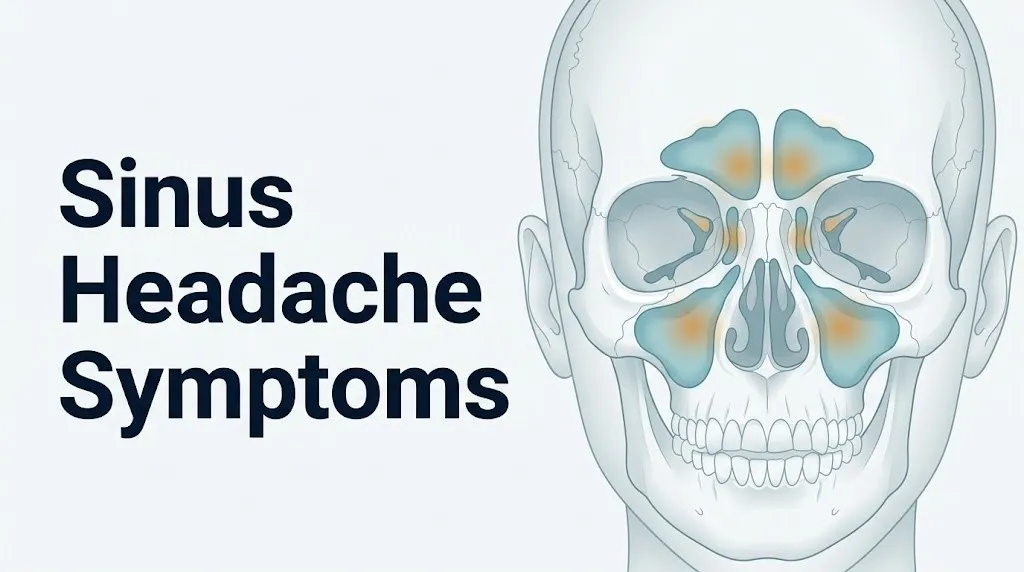
A sinus headache is head and facial pain produced by inflammation within one or more of the four paired paranasal sinus cavities: the maxillary sinuses (in the cheekbones), the frontal sinuses (above the eyebrows in the frontal bone), the ethmoid sinuses (between the eyes in the ethmoid bone), and the sphenoid sinuses (deep behind the nasal cavity in the sphenoid bone).
Think of the paranasal sinuses as four pairs of air-filled chambers built into the skull bones. Normally they are lined with a thin layer of mucus-producing tissue, and tiny hair-like structures called cilia sweep that mucus out through narrow drainage pathways called ostia into the nasal cavity. When those drainage pathways become blocked, because of viral infection, bacterial infection, allergic inflammation, or a structural obstruction, pressure builds inside the chambers. That pressure is what produces the pain.
Clinically, the condition is called rhinosinusitis rather than simply sinusitis, because the nasal passages and sinus cavities almost always become inflamed together. The American Academy of Otolaryngology Head and Neck Surgery (AAO-HNS) clinical practice guideline defines rhinosinusitis as inflammation of the nasal mucosa and one or more of the paranasal sinuses, confirmed by symptoms lasting at least 10 days or accompanied by specific clinical findings.
It is worth noting that the label “sinus headache” is not an official clinical diagnosis. It is a symptom descriptor. The underlying clinical diagnosis driving the symptoms is rhinosinusitis, and the specific type (viral, bacterial, allergic, or fungal), duration, and severity of that rhinosinusitis determines the full clinical picture. This distinction matters when discussing treatment, because the right management depends entirely on the underlying cause, not just the presence of head pain and pressure.
Older adults with diabetes mellitus or those on immunosuppressive therapy face a higher risk of developing invasive fungal sinusitis, a rare but serious form that can cause severe unilateral facial pain, visual changes, and dark nasal crusting requiring emergency evaluation.
What Does a Sinus Headache Feel Like?
A sinus headache typically feels like a constant, dull-to-deep pressure or aching sensation in the front of the head, behind the cheeks, around the eyes, or across the bridge of the nose, and the pain tends to be steady rather than pulsating.
That steady, pressure-like quality is one of the key clinical features that distinguishes sinus headache pain from migraine. Migraine pain is typically described as pulsating or throbbing, often unilateral, and frequently accompanied by nausea, vomiting, and sensitivity to light and sound. Sinus headache pain, when it is truly caused by sinusitis, is more of a deep, constant weight, as if someone is pressing firmly on the face from the outside in.
The intensity can range from mild and distracting to moderately severe. True sinus headache rarely produces the debilitating pain severity that migraine does, though severe bacterial sinusitis or sphenoid sinusitis (discussed later) is an important exception. Most people with sinus headache can continue daily activities, though they are uncomfortable and often fatigued from broken sleep caused by congestion.
| Sinus Headache Sensation | Clinical Description | Physiological Reason |
|---|---|---|
| Deep facial pressure | Constant ache in cheeks, forehead | Increased intrasinus pressure activating trigeminal nociceptors |
| Pain around the eyes | Pressure feeling behind or above the eyeball | Ethmoid and frontal sinus inflammation near orbital walls |
| Fullness behind the nose | Heavy, blocked sensation in mid-face | Nasal mucosal edema obstructing nasal airway |
| Worse on waking | Symptoms peak in the morning | Mucus pools when lying flat, maximum overnight pressure accumulation |
| Tender to touch | Pressing on cheeks or forehead increases pain | Periosteal nerve sensitization from adjacent sinus inflammation |
Pregnant women often describe sinus headache symptoms as more intense than in their non-pregnant state. Elevated estrogen and progesterone during pregnancy cause nasal mucosal engorgement, narrowing the ostiomeatal drainage pathway and increasing susceptibility to sinusitis, while also limiting the OTC medications that can be safely used for relief.
Sinus Headache Location and Pressure Points
Sinus headache location maps directly onto the anatomy of whichever sinus cavity is inflamed, and knowing which location is affected tells you which sinus is involved.
The maxillary sinuses are the largest of the four sinus pairs, sitting inside the cheekbones on either side of the nose. When they are inflamed, pain and pressure concentrate in the cheeks, just below the eyes, and can radiate to the upper back teeth. The frontal sinuses, sitting above the eyebrows in the forehead, produce pain in the central and lateral forehead, often mistaken for tension headache. The ethmoid sinuses, a honeycomb-like cluster of small air cells between the eyes, inflame to produce pain at the nasal bridge, behind the eyes, and across the upper nose. The sphenoid sinuses, the deepest pair, cause pain that is described as deep, retro-orbital (behind the eyes), or sometimes at the top of the head or base of the skull, a location that makes sphenoid sinusitis diagnostically challenging and easy to miss.
Tender pressure points, areas where pressing on the face reproduces or worsens the headache, correspond precisely to the anatomical location of each sinus:
- Pressing over the cheekbone just below the eye socket reproduces maxillary sinus pain
- Pressing above the inner corner of the eyebrow reproduces frontal sinus pain
- Pressing gently at the bridge of the nose between the eyes can reproduce ethmoid pain
- Sphenoid sinus tenderness cannot be elicited by external pressure because of its deep anatomical location
According to the AAO-HNS Adult Sinusitis Clinical Practice Guideline, facial tenderness and localized pain that correlates with sinus anatomy is one of several clinical features used by clinicians to assess likely sinus involvement, though these physical examination findings alone are not sufficient to confirm a bacterial cause.
Children younger than 5 years old have incompletely developed maxillary and frontal sinuses, meaning their sinus headache pain patterns differ meaningfully from adults. The ethmoid sinuses are the most developed at birth, so ethmoid sinusitis and periorbital (around-the-eye) swelling are more common presentations of sinusitis in young children than the cheek-pain pattern typical of adult maxillary sinusitis.
Key Takeaway: Sinus headache pain location directly reflects which paranasal sinus is inflamed: cheek and upper tooth pain points to the maxillary sinus, forehead pain to the frontal sinus, behind-the-eye pain to the ethmoid or sphenoid sinuses.
Sinus Headache and Nasal Congestion
Nasal congestion is one of the two cardinal symptoms of rhinosinusitis-driven sinus headache, alongside facial pain or pressure, and its presence alongside head pain is a clinically important indicator that a sinus source is involved.
The congestion occurs when the nasal mucosa swells in response to infection or allergic inflammation. The inferior and middle nasal turbinates, scroll-shaped bony structures inside the nasal cavity covered by a thick mucosa, become engorged with blood through a process called vascular engorgement of the nasal cavernous sinusoids. This engorgement can narrow or completely block the nasal airway and simultaneously block the ostia through which the paranasal sinuses drain, creating the dual problem of congested nasal passages and pressure-filled sinus cavities.
Nasal discharge in sinus headache changes character as the condition evolves. Early viral sinusitis typically produces clear, thin nasal discharge. After 3 to 5 days, this discharge often thickens and may turn yellow or green as neutrophils (white blood cells recruited to fight the infection) accumulate and die in the mucus, releasing green-colored myeloperoxidase enzyme. The American Academy of Family Physicians notes that yellow or green discharge alone does not indicate bacterial infection and should not automatically prompt antibiotic treatment, as this color change occurs in viral sinusitis as well.
Postnasal drip (mucus draining from the sinus cavities backward down the throat) is a frequent accompanying symptom. It causes throat irritation, a chronic need to clear the throat, and a nighttime cough that worsens when lying down because gravity increases postnasal flow.
People with nasal polyps (benign inflammatory growths of nasal mucosa, more common in people with aspirin sensitivity, asthma, or chronic allergic rhinitis) experience more persistent and treatment-resistant nasal congestion. The American Academy of Allergy Asthma and Immunology (AAAAI) notes that nasal polyps physically obstruct sinus drainage pathways, making sinusitis episodes longer, more severe, and more likely to recur without surgical or biological treatment.
Sinus Headache Facial Pain and Referred Pain
Sinus headache facial pain extends well beyond the sinuses themselves because of how the trigeminal nerve (cranial nerve V) transmits pain signals across the face, forehead, and upper jaw, producing what clinicians call referred pain.
The trigeminal nerve is the main sensory nerve of the face and the primary pain-signaling pathway for sinus inflammation. Its three branches cover different facial territories: the ophthalmic branch (V1) serves the forehead and area around the eye socket, the maxillary branch (V2) covers the cheeks, nasal passages, upper jaw, and upper teeth, and the mandibular branch (V3) covers the lower jaw. Nociceptors embedded in the periosteum lining the sinus walls transmit pain signals through these branches. Because the same nerve branch supplies multiple facial regions simultaneously, pain from one sinus can feel as if it is coming from a face region that has nothing to do with the sinus itself.
Think of it like a fire alarm system with multiple speakers wired to the same circuit. When the circuit triggers, sound comes from every speaker, not just the one nearest the smoke. Inflamed maxillary sinus mucosa triggers V2, which then signals pain from the cheeks, the nasal passages, the upper teeth, and the infraorbital area below the eye, all at once.
This referred pain mechanism also explains one of the most disorienting aspects of sinus headache: feeling pain deep inside the skull or behind the eyes when no obvious structural problem is visible from outside. According to the National Institute of Allergy and Infectious Diseases (NIAID), the deep periorbital and behind-the-eye pain associated with ethmoid and sphenoid sinusitis is among the most frequently misattributed sinus symptoms, often leading people to seek ophthalmological evaluation before a sinus cause is identified.
Women experience sinus-related facial pain at higher rates than men overall, with research indicating that allergic rhinitis, the most common predisposing condition for recurrent sinusitis, affects approximately 30 percent of women compared with 22 percent of men in the United States, based on National Institutes of Health (NIH) epidemiological data.
Why Sinus Headaches Get Worse When Bending Over
A sinus headache that sharply intensifies when bending forward at the waist is one of the most clinically reliable indicators that the pain has a true sinus origin rather than a migrainous or tension-type cause.
When you bend forward, gravitational force redistributes the fluid and mucus sitting inside the sinus cavities. Accumulated mucus shifts toward the sinus ostia (drainage openings) and toward the frontal walls of the sinus cavities. This sudden fluid shift increases intrasinus pressure abruptly, pressing against the periosteum-lined sinus walls and intensifying nociceptor activation throughout the trigeminal pathway. The result is a rapid, sharp increase in facial pain and head pressure that typically eases partially when you return to upright posture.
The same mechanism explains why lying flat at night worsens sinus headache symptoms for many people. In the horizontal position, the maxillary sinuses drain less efficiently because their ostia are positioned toward the top of the sinus cavity (anatomically, the drainage exits near the sinus roof, not the floor). Mucus pools in the sinus floor overnight, pressure accumulates, and symptoms are often at their worst in the morning on waking.
Quick Tip:
- Sinus pain that worsens sharply on bending forward (bending to pick something up, tying shoes) supports a sinus inflammation source rather than a pure tension headache or migraine
- Sleeping with the head slightly elevated on an extra pillow can reduce overnight mucus pooling and lessen morning sinus headache intensity
- For people with allergic rhinitis who are also using nasal corticosteroid spray, using the spray while slightly tilting the head forward allows better distribution toward the ethmoid and frontal sinus ostia, though a prescribing physician or pharmacist should confirm the correct technique for the specific product
People with obstructive sleep apnea who use CPAP machines may experience sinus headache worsening related to the dry or pressurized air if a heated humidifier is not used, as dry airflow reduces mucociliary clearance efficiency and promotes mucosal edema.
Key Takeaway: Pain that spikes acutely when bending forward is one of the most specific physical signs that sinus pressure is the actual source of the headache, produced by sudden intrasinus fluid redistribution activating trigeminal nociceptors.
Sinus Headache With Fever: What It Means
A fever accompanying sinus headache symptoms is a clinically meaningful sign that shifts the differential diagnosis toward bacterial sinusitis rather than viral sinusitis or non-infectious sinusitis caused by allergy.
Most viral sinusitis cases produce either no fever or a low-grade fever below 38 degrees Celsius (100.4 F). A fever at or above 38.5 degrees Celsius (101.3 F) alongside sinus symptoms lasting more than 10 days, or a fever appearing after a period of initial improvement followed by worsening, is one of the clinical criteria the AAO-HNS Adult Sinusitis Clinical Practice Guideline identifies as a sign that bacterial superinfection has likely occurred and antibiotic therapy should be considered.
The fever is produced by prostaglandin E2 (PGE2) acting on the hypothalamic thermoregulatory center. During bacterial sinusitis, macrophages and neutrophils at the infection site release interleukin-1 beta and interleukin-6, which travel through the bloodstream to the hypothalamus, where they stimulate PGE2 synthesis. PGE2 then resets the hypothalamic temperature setpoint upward, producing systemic fever.
This distinction has direct clinical consequences. A 2012 systematic review published in the Cochrane Database of Systematic Reviews found that the proportion of acute sinusitis cases caused by bacteria rather than viruses ranges from approximately 0.5 to 2 percent of all viral upper respiratory infections. Fever combined with severe facial pain, purulent (pus-like) nasal discharge, and symptoms persisting beyond 10 days raises the probability of bacterial cause substantially.
| Fever Pattern | Most Likely Cause | Clinical Action |
|---|---|---|
| No fever, mild symptoms under 10 days | Viral rhinosinusitis | Monitor at home, supportive care |
| Low-grade fever under 38.5C, resolving | Viral rhinosinusitis resolving | Continue monitoring, no antibiotics needed |
| Fever 38.5C or above, symptoms over 10 days | Possible bacterial sinusitis | Evaluation by primary care physician recommended |
| High fever 39C or above with severe facial pain | Likely bacterial sinusitis | Same-day evaluation by primary care physician |
| Fever with neck stiffness, altered consciousness | Possible intracranial complication | Call 911 or go to ER immediately |
Older adults, particularly those over 65, may not mount a significant fever response even during bacterial sinusitis because of age-related changes in immune signaling, a phenomenon called blunted febrile response. In this population, the absence of fever does not rule out bacterial infection, and a lower threshold for clinical evaluation is appropriate.
Acute vs. Chronic Sinus Headache Symptoms
The duration of sinus headache symptoms is one of the most clinically important pieces of information for determining both the cause and the appropriate management, and it is governed by a specific classification system defined by the AAO-HNS.
Acute rhinosinusitis is defined as sinus inflammation lasting up to 4 weeks. It is the most common form and accounts for the overwhelming majority of sinus headache presentations. Symptoms develop quickly, typically within 5 to 7 days of an upper respiratory viral infection, and include facial pain, nasal congestion, purulent discharge, and often a low-grade fever. The American Academy of Otolaryngology Head and Neck Surgery states that approximately 70 percent of acute sinusitis cases caused by viruses resolve spontaneously within 7 to 10 days without antibiotic treatment.
Subacute rhinosinusitis describes symptoms lasting between 4 and 12 weeks. This pattern often indicates incomplete resolution of an acute episode and warrants primary care evaluation to determine whether bacterial infection requires treatment.
Chronic rhinosinusitis refers to persistent sinus inflammation lasting 12 weeks or longer, confirmed by symptom criteria and typically by imaging or endoscopy. Chronic sinus headache symptoms differ from acute ones in important ways: facial pain is often less severe and more of a dull, constant pressure rather than an acute ache, thick nasal discharge may persist without systemic fever, and hyposmia (reduced sense of smell) is common and sometimes the primary complaint.
Recurrent acute rhinosinusitis describes four or more separate acute episodes per year, each lasting at least 10 days, with complete symptom resolution between episodes. This pattern requires evaluation by an otolaryngologist (ENT specialist) to identify anatomical or immune factors predisposing to recurrence.
People with asthma face a higher risk of chronic rhinosinusitis because the upper and lower respiratory tracts share a common inflammatory pathway, a concept the AAAAI describes as the “unified airway” model. Persistent sinus inflammation in people with asthma can worsen lower airway disease control, making chronic sinus symptoms clinically important to treat even when they seem mild.
Sinus Headache Triggers and Barometric Pressure
Environmental and physiological triggers can initiate or worsen sinus headache symptoms by directly affecting sinus mucosal health, drainage efficiency, or the sensitivity of the trigeminal pain pathway.
Barometric pressure changes are among the most consistently reported sinus headache triggers. When atmospheric pressure drops rapidly (as happens before a storm, during ascent in an aircraft, or with altitude changes during driving in mountainous terrain), the air pressure inside the sinus cavities temporarily exceeds the surrounding atmospheric pressure. This pressure differential distends the sinus walls and activates periosteal nociceptors, producing an acute increase in facial pain and head pressure. Research published in JAMA Otolaryngology has documented the association between weather-related barometric pressure drops and increased emergency department visits for sinusitis-related head pain.
Other documented sinus headache triggers include:
- Allergen exposure (pollen, mold spores, dust mites, animal dander triggering histamine-mediated mucosal edema in people with allergic rhinitis)
- Dry air and low humidity (reducing mucociliary clearance efficiency, allowing mucus to thicken and cilia to function less effectively)
- Cigarette smoke and air pollution (damaging ciliary function and promoting mucosal inflammation via direct chemical injury to nasal epithelium)
- Upper respiratory viral infections (rhinovirus, coronavirus, influenza virus as primary triggers of acute rhinosinusitis)
- Swimming in chlorinated pools (chlorine can irritate nasal mucosa and introduce water into the sinus cavities via the nasal passages, predisposing to sinusitis in frequent swimmers)
- Air travel (recirculated dry cabin air combined with altitude-related pressure changes)
- Alcohol consumption (vasodilatory effect on nasal mucosal blood vessels, worsening congestion and potentially triggering headache through histamine release in fermented beverages)
People who work outdoors in environments with high allergen loads (farming, landscaping, construction) or significant air pollution exposure face elevated rates of recurrent sinusitis and associated headache compared with indoor workers, based on occupational health data from the CDC National Institute for Occupational Safety and Health (NIOSH).
Key Takeaway: Barometric pressure drops, allergen exposure, dry air, and viral respiratory infections are the most common identifiable triggers for sinus headache episodes, and tracking these exposures helps identify patterns that a primary care physician or allergist can use to develop a prevention strategy.
Sinus Headache in Children and Older Adults
Sinus headache symptoms in children and older adults differ meaningfully from the typical adult presentation, and applying standard adult symptom criteria to these groups can lead to missed diagnoses in both directions.
In children, the frontal sinuses do not fully develop until approximately age 5 to 7, and the maxillary sinuses complete development by early adolescence. Before these sinuses are fully formed, sinusitis in young children (aged 1 to 5 years) primarily involves the ethmoid sinuses, producing periorbital swelling (puffy, red skin around one or both eyes), irritability, and nighttime cough as more prominent symptoms than the classic facial pain pattern seen in adults. The American Academy of Pediatrics (AAP) Clinical Practice Guideline on pediatric sinusitis states that in young children, the most reliable clinical indicators of bacterial sinusitis are nasal discharge or daytime cough persisting for 10 or more days without improvement, rather than facial pain alone.
Children with sinus headache may not report head pain or facial pressure clearly because of developmental limitations in describing location-specific discomfort. They may present with persistent nighttime cough, bad breath (halitosis from postnasal drip and bacterial growth in stagnant mucus), and behavioral changes from disrupted sleep rather than the pain-focused complaint typical of adults.
In older adults (aged 60 and above), sinus headache symptoms present with several clinically important differences:
- Fever may be absent or low-grade even in confirmed bacterial sinusitis due to blunted febrile immune response
- Nasal mucosal atrophy (thinning of the nasal mucosa that occurs naturally with aging) can reduce the sense of congestion even when sinuses are inflamed, making symptoms seem less severe than they are
- Concurrent dry eye syndrome and dental disease can create confusing symptom overlap with sinus facial pain
- Older adults using angiotensin-converting enzyme (ACE) inhibitors for blood pressure management may experience chronic dry cough related to the medication, which can mimic postnasal drip and complicate the clinical picture
Older adults are also at higher baseline risk for complications of sinusitis, including orbital cellulitis and intracranial extension, partly because of the reduced immune surveillance that accompanies normal aging and the higher prevalence of comorbid conditions like diabetes in this population.
Sinus Headache vs. Migraine Symptoms
This is the most clinically consequential distinction in sinus headache medicine: the overwhelming majority of headaches labeled as sinus headaches by patients are actually migraines, and getting this distinction right determines whether treatment works.
The landmark SINUS study, published in the Archives of Internal Medicine, found that 88 percent of patients who self-reported sinus headache and had no clinical evidence of active sinusitis (no fever, no purulent discharge, no imaging findings) met International Headache Society diagnostic criteria for migraine. This happened because migraine activates the trigeminal vascular pathway, producing nasal congestion, facial pressure, and periorbital pain through a completely different mechanism than sinusitis, one involving calcitonin gene-related peptide (CGRP) release and neurogenic inflammation, rather than infectious or allergic mucosal inflammation.
| Feature | True Sinus Headache (Sinusitis) | Migraine With Sinus Symptoms |
|---|---|---|
| Pain character | Dull, deep, constant pressure | Pulsating, throbbing, often severe |
| Pain location | Bilateral, corresponds to sinus anatomy | Often unilateral, can be bilateral |
| Nasal discharge | Purulent (yellow or green) or thick | Clear, watery, or absent |
| Fever | May be present in bacterial sinusitis | Absent |
| Nausea or vomiting | Absent | Present in 80% of migraine episodes |
| Light/sound sensitivity | Absent | Present in 80% of migraine episodes |
| Duration | Days to weeks of ongoing symptoms | 4 to 72 hours per episode |
| Triggers | Infection, allergens, weather | Hormonal shifts, food, stress, sleep disruption |
| Treatment response | Nasal decongestants, saline, antibiotics for bacterial cases | Triptans, anti-nausea medications, preventive therapy |
The key differentiating clinical features most reliably separating the two conditions are the presence of purulent nasal discharge and fever (pointing toward sinusitis) versus nausea, vomiting, and photo or phonophobia (pointing toward migraine). Clear, watery nasal congestion during a headache episode does not confirm a sinus cause: it may simply be a migraine-associated autonomic response.
Women are disproportionately affected by migraine, with the American Migraine Foundation estimating that migraine affects approximately 18 percent of women compared with 6 percent of men, driven in part by estrogen fluctuation across the menstrual cycle. This makes the sinus headache versus migraine distinction particularly important in women of reproductive age, who are at the highest statistical risk of having migraine misidentified as sinus headache.
Sinus Headache Tooth Pain and Ear Pain
Upper tooth pain and ear pain are two commonly overlooked symptoms of sinus headache that cause people to seek dental or ear, nose, and throat care before a sinus source is identified, and both arise from the same trigeminal nerve referral mechanism.
Upper tooth pain in sinus headache originates primarily from maxillary sinusitis. The roots of the upper molars and premolars sit anatomically close to or occasionally protrude slightly into the floor of the maxillary sinus cavity. When the maxillary sinus mucosa becomes inflamed and the sinus fills with fluid, pressure on the sinus floor directly compresses the dental nerve fibers entering the upper tooth roots through the infraorbital foramen and alveolar nerve branches of V2. The result is a dull, aching pain in the upper back teeth that can be difficult to distinguish from a true toothache. The clinical distinguishing feature: sinus-related tooth pain typically affects multiple upper teeth simultaneously and is accompanied by other sinus symptoms, whereas dental pain from an infected or cracked tooth tends to be localized to a single tooth and is reproducible by tapping or biting on that specific tooth.
Ear pain and fullness in sinus headache arise from Eustachian tube dysfunction. The Eustachian tube connects the middle ear cavity to the nasopharynx (back of the nasal cavity). When the nasopharyngeal opening of the Eustachian tube becomes blocked by swollen mucosa during sinusitis, the middle ear cannot equalize pressure. The resulting negative middle ear pressure produces a sense of fullness, muffled hearing, and sometimes pain in the ear, even though the ear itself has no primary infection.
Red flags that distinguish sinus-related ear and tooth symptoms from primary dental or ear disease:
- Tooth pain involving several upper teeth simultaneously (more consistent with sinus source than dental disease)
- Ear fullness that fluctuates with swallowing or yawning (Eustachian tube opening intermittently, pointing to nasopharyngeal congestion)
- Ear or tooth symptoms accompanied by nasal congestion, facial pressure, and colored nasal discharge (clinical picture pointing to sinusitis)
- Tooth pain that a dentist cannot reproduce on examination and for which X-rays show no dental pathology (pointing clinician toward a sinus evaluation)
People wearing orthodontic appliances or who have had recent dental work on upper molars may find it harder to distinguish sinus-referred tooth pain from post-procedural dental discomfort. An otolaryngologist referral is appropriate if dental evaluation is unrevealing.
Key Takeaway: Upper tooth pain affecting several teeth at once and ear fullness with muffled hearing during a sinus headache episode are classic referred-pain presentations of maxillary sinusitis and Eustachian tube dysfunction, not signs of primary dental or ear disease.
Severe Sinus Headache Symptoms
Severe sinus headache symptoms, meaning those that are significantly more intense than a typical sinus pressure headache or that are accompanied by systemic or neurological findings, require prompt medical evaluation because they may indicate bacterial infection extending beyond the sinus cavities.
A routine sinus headache from viral sinusitis or mild bacterial sinusitis produces moderately uncomfortable facial pressure. Pain described as the worst headache of the person’s life, sudden onset severe headache, or sinus pain accompanied by visual changes, swelling around the eye, facial numbness, or confusion is not a routine sinus headache presentation. These patterns raise the clinical concern for serious complications including:
Orbital cellulitis: Infection spreading from the ethmoid sinuses through the thin medial orbital wall (the lamina papyracea) into the soft tissues surrounding the eye. Symptoms include periorbital (around-the-eye) redness and swelling, proptosis (forward protrusion of the eyeball), pain with eye movement, and potentially double vision. This requires emergency evaluation.
Subperiosteal abscess and orbital abscess: Collections of pus forming between the periosteum and orbital wall, or within the orbital fat, requiring surgical drainage.
Intracranial extension: Infection spreading from the frontal sinus or ethmoid sinus into the intracranial space, potentially producing epidural abscess, subdural empyema, or bacterial meningitis. Symptoms include severe persistent headache, neck stiffness, fever, photophobia, and altered mental status.
Severe sinus symptoms requiring same-day or emergency evaluation:
- Facial pain rated 8 or above on a 10-point scale with no prior history of migraine
- Periorbital swelling, redness, or protrusion of one eye
- Double vision or sudden change in vision quality
- Neck stiffness combined with headache and fever
- Altered mental status, confusion, or unusual drowsiness
- Numbness or tingling in the face
- Severe headache that developed suddenly within seconds (“thunderclap” onset)
A 2021 analysis published in JAMA Otolaryngology documented that orbital complications of sinusitis, while rare, occur most frequently in children and young adults with ethmoid sinusitis, underscoring the importance of recognizing early periorbital signs in pediatric patients with sinus symptoms.
Emergency Symptoms: When to Call 911 or Go to the ER
Certain symptoms associated with sinus headache require immediate emergency evaluation. Do not wait to see if these resolve on their own.
Call 911 or go to the nearest emergency room immediately if you experience:
- Sudden, severe headache described as the worst you have ever had, regardless of other sinus symptoms present
- Neck stiffness combined with severe headache and fever (possible bacterial meningitis)
- Swelling, redness, or protrusion of one or both eyes, or pain when moving the eyes (possible orbital cellulitis or abscess)
- Sudden vision loss, double vision, or blurring of vision during a sinus headache episode
- Confusion, altered mental status, unusual drowsiness, or difficulty staying awake
- Facial numbness or weakness on one side
- High fever above 39.4 degrees Celsius (103 F) with severe facial pain that is not responding to OTC pain relief
- Seizure occurring during or after a sinus headache episode
- Swelling or redness spreading from around the eyes to the forehead or cheeks
These presentations can indicate orbital cellulitis, subperiosteal abscess, epidural abscess, subdural empyema, or bacterial meningitis, all of which are life-threatening or sight-threatening complications of bacterial sinusitis that require emergency medical assessment, not an urgent care appointment or a phone call.
How Is a Sinus Headache Diagnosed?
A sinus headache is diagnosed through a combination of clinical history, physical examination, and in selected cases, imaging or specialist evaluation, because no single test confirms the diagnosis in isolation.
The clinical history is the most important starting point. A physician evaluating sinus headache symptoms will ask about the duration of symptoms, whether nasal discharge is present and its character, whether fever occurred, whether symptoms follow a prior upper respiratory infection or allergen exposure, and whether previous sinus headache episodes have been documented. The AAO-HNS Adult Sinusitis Clinical Practice Guideline specifies that a clinical diagnosis of acute rhinosinusitis can be made when purulent nasal discharge is accompanied by nasal obstruction, facial pain or pressure, or both, and when symptoms have persisted for at least 10 days or follow a “double sickening” pattern of initial improvement followed by worsening.
Physical examination includes inspection of the nasal passages with a nasal speculum or otoscope, palpation of the facial pressure points over each sinus cavity, and examination of the posterior pharynx for postnasal drip. Anterior rhinoscopy may reveal mucosal edema, purulent discharge, or the presence of nasal polyps.
Imaging is not routinely recommended for straightforward acute sinusitis. The AAO-HNS guideline explicitly advises against ordering plain film sinus X-rays, as they have poor sensitivity and specificity compared with computed tomography (CT) scan of the sinuses, which provides detailed cross-sectional imaging of all four sinus pairs and can identify mucosal thickening, air-fluid levels, and bony changes. CT scanning of the sinuses is typically reserved for cases with suspected complications, chronic sinusitis, treatment failure, or planned surgical evaluation.
Nasal endoscopy, performed by an otolaryngologist using a thin flexible or rigid camera inserted through the nostril, provides direct visualization of the nasal passages, ostia, and posterior sinus cavities. It can identify anatomical abnormalities (deviated septum, nasal polyps, turbinate hypertrophy) and guide culture collection for antibiotic sensitivity testing in refractory cases.
To describe your sinus headache symptoms clearly at a medical appointment:
- Note the exact location of head and facial pain and use the sinus anatomy map to describe whether it is in the cheeks, forehead, behind the eyes, or across the nasal bridge
- Record how long symptoms have been present and whether they followed a cold or flu
- Describe the nasal discharge character: thin and clear, thick, yellow, or green
- Note whether fever occurred and if so, how high and when
- Mention any associated symptoms: tooth pain, ear fullness, cough, reduced smell
- List all medications tried and whether they provided any relief
- Inform the physician of any history of allergic rhinitis, nasal polyps, asthma, or prior sinus surgery
People with a history of immune deficiency conditions (such as common variable immunodeficiency or IgA deficiency) or those on chronic immunosuppressive therapy should alert their evaluating physician, as these conditions alter the microbiology of sinusitis and require modified diagnostic and treatment approaches.
Frequently Asked Questions About Sinus Headache Symptoms
What are the first signs of a sinus headache?
The first signs of a sinus headache are typically nasal congestion, facial pressure or fullness in the cheeks or forehead, and a dull ache that develops gradually rather than suddenly.
These early symptoms usually appear within 5 to 7 days of a viral upper respiratory infection or during an allergic flare, reflecting the onset of mucosal inflammation and the beginning of sinus drainage impairment.
If first symptoms are improving within 10 days without fever or worsening pain, a primary care evaluation is generally not yet needed, per the AAO-HNS Adult Sinusitis guideline.
How do I know if I have a sinus headache or a migraine?
True sinus headache from sinusitis produces constant facial pressure, purulent nasal discharge (yellow or green mucus), and sometimes fever, while migraine typically causes pulsating or throbbing pain, nausea, and sensitivity to light and sound.
Clear or watery nasal congestion during a headache does not indicate sinus disease: it can be a migraine-associated autonomic response produced by trigeminal activation.
If your headaches recur repeatedly without fever or colored discharge, a neurologist or primary care physician can evaluate whether migraine is the actual diagnosis.
Can a sinus headache cause tooth pain?
Yes, sinus headache from maxillary sinusitis can cause pain in the upper back teeth because the roots of the upper molars sit close to the floor of the maxillary sinus cavity.
When the maxillary sinus fills with fluid and pressure, it compresses the dental nerve branches of the maxillary division (V2) of the trigeminal nerve, producing referred pain in multiple upper teeth simultaneously.
If a dentist cannot find dental disease to explain your upper tooth pain and it accompanies nasal congestion and facial pressure, a sinus evaluation by a primary care physician or otolaryngologist is appropriate.
How long does a sinus headache usually last?
A sinus headache from viral sinusitis typically lasts 7 to 10 days, resolving as the viral infection clears and mucosal inflammation subsides.
Bacterial sinusitis headache may persist beyond 10 days and often requires antibiotic treatment before symptoms fully resolve, while chronic sinusitis can produce ongoing facial pressure lasting 12 weeks or longer.
Any sinus headache that has lasted more than 10 days, worsened after an initial period of improvement, or recurred four or more times in a year warrants evaluation by a primary care physician.
What makes a sinus headache worse?
Bending forward at the waist, lying flat, barometric pressure drops (before storms or during air travel), and allergen exposure are the most common factors that acutely worsen sinus headache symptoms.
Dry air reduces mucociliary clearance, thickening mucus and increasing sinus congestion, while cigarette smoke directly damages the cilia responsible for clearing mucus from the sinus cavities.
Alcohol can worsen sinus congestion through nasal mucosal vasodilation and histamine release from fermented beverages, making it a frequently overlooked trigger.
When should I go to the ER for a sinus headache?
Go to the emergency room immediately if a sinus headache is accompanied by neck stiffness, swelling or protrusion of one eye, sudden vision change, altered mental status, or a fever above 39.4 degrees Celsius (103 F) with severe unrelenting pain.
These symptoms can indicate bacterial meningitis, orbital cellulitis, or intracranial abscess, all of which are medical emergencies that require immediate imaging, intravenous antibiotics, and specialist evaluation in a hospital setting.
Do not drive yourself if you are experiencing confusion, vision changes, or severe neurological symptoms: call 911.
What to Do Next
Sinus headache symptoms range from a manageable, self-resolving facial pressure during a cold to a presentation that requires same-day or emergency medical evaluation. Knowing which pattern you are in matters practically and clinically.
If your symptoms have lasted fewer than 10 days, are improving, include clear or light-yellow nasal discharge, and are not accompanied by fever above 38.5 C, high-quality self-care (saline nasal irrigation, adequate hydration, steam inhalation, and OTC analgesics where appropriate and not contraindicated for you personally) is a reasonable first approach, consistent with the guidance of the American Academy of Otolaryngology Head and Neck Surgery.
If symptoms have lasted beyond 10 days, are worsening after initial improvement, include fever or severe facial pain, or are recurring multiple times per year, contact a primary care physician. If any symptom from the emergency section appears, stop reading and get to an emergency room or call 911. Your sinus headache picture is specific to your anatomy, your history, and your pattern: a clinician who examines you can answer what an article cannot