What Causes Lower Back Pain in Females: 17 Reasons (2026)
Lower back pain in females has causes that extend well beyond muscle strain and poor posture, including a distinct set of gynecological, hormonal, and reproductive conditions that have no equivalent in male physiology. Understanding what is driving the pain in a woman’s body specifically requires looking at the uterus, ovaries, hormonal cycle, and the unique biomechanical architecture of the female pelvis, not just the lumbar spine in isolation.
According to the National Institute of Arthritis and Musculoskeletal and Skin Diseases (NIAMS), lower back pain affects an estimated 80% of adults at some point in their lives, and research consistently shows that women report it at higher rates than men, particularly during reproductive years. A 2019 study published in the Spine journal found that women aged 20 to 50 have a statistically higher incidence of sacroiliac joint dysfunction and menstrual-cycle-related lumbar pain compared to age-matched men.
This article covers the full spectrum: the most common structural causes, the gynecological conditions that produce referred lumbar pain through shared nerve pathways, the hormonal mechanisms that make female spinal anatomy uniquely vulnerable during specific life stages, and the red flags that require same-day or emergency evaluation.
What Causes Lower Back Pain in Females
Lower back pain in females is caused by a combination of musculoskeletal, gynecological, hormonal, urological, and systemic conditions, many of which are specific to or more prevalent in female physiology. The most common cause overall is musculoskeletal strain involving the erector spinae and multifidus muscle groups alongside the L4-L5 and L5-S1 intervertebral discs, but a meaningful proportion of lower back pain in women originates in pelvic organs and is transmitted to the lumbar region through shared nerve pathways.
The key physiological reason women experience back pain differently is the anatomy of the inferior hypogastric plexus, a nerve network that serves both the lumbar spine structures and the reproductive organs. When the uterus, ovaries, or fallopian tubes become inflamed, distended, or irritated, pain signals travel through this shared plexus and are interpreted by the brain as coming from the lower back.
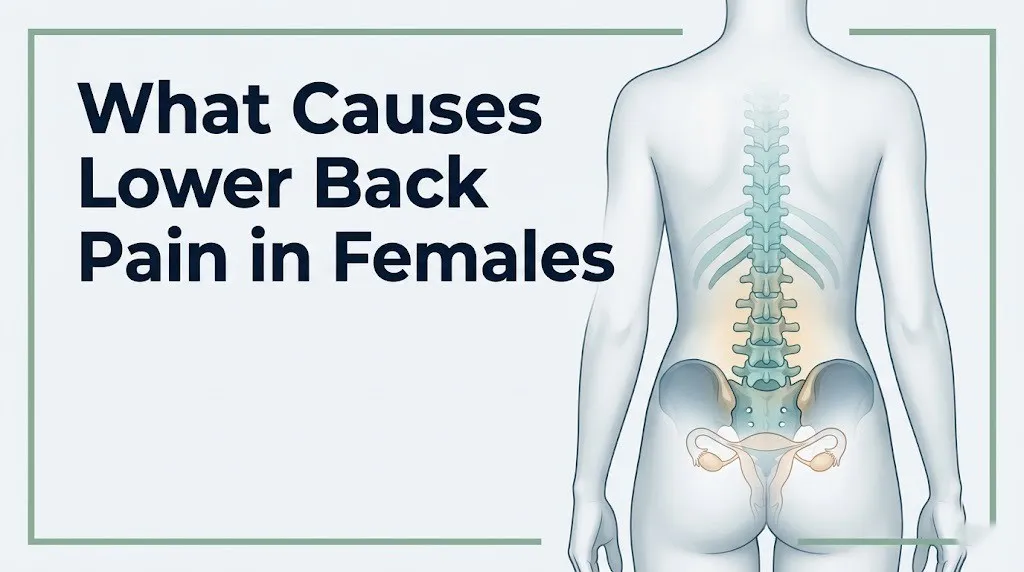
Women also carry more hormonal variability across the lifespan. Prostaglandins, relaxin, and estrogen fluctuate significantly across the menstrual cycle, pregnancy, and menopause, and each of these hormones directly affects spinal ligament stability, bone density, and pain sensitivity.
Key categories of causes in females:
- Musculoskeletal: muscle strain, disc herniation, sacroiliac joint dysfunction, piriformis syndrome
- Hormonal and menstrual: dysmenorrhea, premenstrual syndrome, ovulation pain
- Gynecological: endometriosis, uterine fibroids, ovarian cysts, pelvic inflammatory disease
- Pregnancy and postpartum: relaxin-induced laxity, diastasis recti, pelvic girdle pain
- Age-related: degenerative disc disease, osteoporosis, perimenopausal hormonal shifts
- Urological: kidney stones, urinary tract infection, pyelonephritis
Lower Back Pain Causes Female: A Frequency-Based Overview
The most common cause of lower back pain in females across all age groups is mechanical lumbar strain, meaning injury or overuse of the muscles and connective tissue of the lumbar spine rather than structural disc or organ pathology.
That said, frequency shifts dramatically based on age and reproductive status. In women of reproductive age (roughly 15 to 50), gynecological causes account for a proportion of lower back pain presentations that clinicians consistently observe, with endometriosis alone estimated to affect approximately 10% of reproductive-age women worldwide according to a 2023 review published in the New England Journal of Medicine. A substantial fraction of those women report lower back pain as a primary symptom.
The table below ranks causes by approximate clinical likelihood across different female life stages:
| Cause | Most Likely Age Group | Mechanism Category |
|---|---|---|
| Lumbar muscle strain | All ages | Musculoskeletal |
| Dysmenorrhea (menstrual cramps with back pain) | Teens to late 40s | Hormonal/gynecological |
| Sacroiliac joint dysfunction | Reproductive age, pregnant | Biomechanical/hormonal |
| Endometriosis | 20s to 40s | Gynecological/inflammatory |
| Uterine fibroids | 30s to 50s | Gynecological/structural |
| Ovarian cysts | 20s to 40s | Gynecological/structural |
| Disc herniation (L4-L5, L5-S1) | 30s to 50s | Structural |
| Osteoporosis-related fracture | 50s and older | Hormonal/structural |
| Pyelonephritis (kidney infection) | All ages | Urological |
| Pelvic inflammatory disease | Sexually active women | Infectious |
Women who are pregnant or recently postpartum represent a distinct category where multiple causes can coexist simultaneously.
Causes of Back Pain in Women: Musculoskeletal vs. Gynecological
Back pain in women falls into two broad mechanistic categories: musculoskeletal causes, which originate in the bones, discs, muscles, or ligaments of the lumbar spine itself, and gynecological causes, which originate in the pelvic organs but produce lumbar pain through a process called referred visceral pain.
Musculoskeletal back pain in women typically worsens with movement, is reproducible by pressing on specific spinal or paraspinal points, and improves with rest or position changes. Lumbar disc herniation at L4-L5 or L5-S1 produces pain that radiates from the lower back down the leg along the distribution of the sciatic nerve, a pattern called radiculopathy. This presentation is not unique to women but affects women more severely during perimenopause, when estrogen reduction accelerates intervertebral disc desiccation.
Gynecological back pain behaves differently. It often does not change with body position, frequently follows a cyclical pattern tied to the menstrual cycle, may be accompanied by pelvic pain, abnormal bleeding, or discharge, and does not respond to the postural adjustments or stretches that typically help musculoskeletal pain.
According to the American College of Obstetricians and Gynecologists (ACOG), lower back pain that occurs cyclically with the menstrual cycle, worsens during the days before menstruation, or is accompanied by pelvic cramping should be evaluated for gynecological causes rather than attributed solely to musculoskeletal strain.
Quick Tip:
- Musculoskeletal back pain: changes with position, is tender to direct spinal pressure, responds to movement
- Gynecological back pain: cyclical, position-independent, accompanied by pelvic or abdominal symptoms
- Back pain with fever: always evaluate for urological or infectious cause, not musculoskeletal
Key Takeaway: In women of reproductive age, lower back pain that follows the menstrual cycle, is position-independent, or is accompanied by pelvic symptoms has a high likelihood of gynecological origin and warrants evaluation by an OB-GYN rather than an orthopedic specialist alone.
Why Lower Back Pain Affects Women Differently Than Men
Women experience lower back pain at higher rates than men for reasons rooted in anatomy, hormonal physiology, and the unique mechanical demands of the female pelvis.
The female pelvis is wider and more anteriorly tilted than the male pelvis, a design that optimizes the birth canal but alters the loading angle on the lumbar facet joints and sacroiliac joints. This altered angle concentrates mechanical stress on the posterior lumbar structures more than in men with similar activity levels. The thoracolumbar fascia, which encases the paraspinal muscles and transfers load between the trunk and pelvis, is also subjected to greater tension in women due to pelvic width.
Hormonally, women experience cyclical fluctuations in estrogen, progesterone, and relaxin that men do not. These hormones directly affect collagen structure and ligamentous stiffness. Research published in the Spine journal has consistently shown that the sacroiliac joints in women have significantly greater physiological mobility than in men, partly because these hormones continuously modulate ligament compliance throughout the menstrual cycle.
Women are also more likely to develop fibromyalgia, a centralized pain sensitization syndrome that the National Institutes of Health estimates affects women at a rate approximately seven times higher than men. In fibromyalgia, the central nervous system amplifies pain signals, making lower back pain more intense and widespread than the underlying structural pathology would suggest in a non-sensitized nervous system.
Adolescent females with primary dysmenorrhea may experience lower back pain as a presenting symptom before pelvic pain becomes prominent, a pattern often misattributed to sports injuries or backpack strain in school-age girls.
Menstrual Cycle and Lower Back Pain
Lower back pain during the menstrual cycle is produced by prostaglandins E2 and F2-alpha, which are released by the endometrial lining of the uterus as it sheds during menstruation, causing uterine muscle contractions that radiate pain to the lumbar region through shared spinal nerve pathways at T10 through L2.
The mechanism works like this: the uterus and the lower back share sensory innervation through the T10-L2 spinal cord segments. When prostaglandins trigger forceful uterine contractions, the pain signals entering the spinal cord at these levels are interpreted partly as coming from the lumbar region, a classic example of viscerosomatic convergence. This is the same physiological phenomenon that makes heart attack pain radiate to the left arm.
Research published in the Obstetrics and Gynecology journal found that women with higher prostaglandin levels during menstruation report significantly more severe lower back pain, and that NSAID medications targeting the cyclooxygenase-2 (COX-2) enzyme pathway reduce both uterine cramping and lumbar pain simultaneously, which confirms the prostaglandin mechanism directly.
Pain that begins 1 to 2 days before menstruation starts and resolves within the first 2 days of flow is typically classified as primary dysmenorrhea, meaning the uterus itself is structurally normal and the pain is prostaglandin-driven. Pain that starts earlier in the cycle, lasts longer, or progressively worsens over years is classified as secondary dysmenorrhea and suggests an underlying gynecological condition such as endometriosis or fibroids.
Women using hormonal contraceptives, particularly combined oral contraceptive pills that suppress ovulation, often experience significantly reduced menstrual lower back pain because the hormonal suppression reduces endometrial prostaglandin production. This is not a treatment for structural causes, however, and should be discussed with an OB-GYN in context.
Endometriosis and Lower Back Pain
Endometriosis causes lower back pain when endometrial-like tissue grows outside the uterus and implants on structures near the lumbar spine, including the uterosacral ligaments, the rectum, the ureters, and in rare cases the lumbar vertebrae themselves, triggering a local inflammatory response that produces chronic, cycle-dependent back pain.
The Endometriosis Foundation of America reports that endometriosis affects an estimated 190 million women and girls worldwide, making it one of the most prevalent causes of chronic pelvic and lumbar pain in reproductive-age females. Lower back pain is reported as a primary complaint by a significant proportion of women with endometriosis, and it is frequently the symptom that delays diagnosis because it is attributed to musculoskeletal causes for years before the gynecological origin is identified.
Endometriosis-related back pain has specific characteristics that distinguish it from structural lumbar pain:
- Pain worsens in the days leading up to menstruation and during the first days of flow
- Pain may radiate down the legs if endometrial implants compress the sciatic nerve (a condition called sciatic endometriosis)
- Pain is often deep and aching rather than sharp or stabbing
- Pain does not improve with stretching, postural changes, or anti-inflammatory doses of ibuprofen alone
- Bowel symptoms, particularly painful defecation during menstruation, often coexist
A 2022 prospective cohort study published in the Journal of Minimally Invasive Gynecology found that women with deep infiltrating endometriosis, the most severe subtype, reported lumbar back pain at a significantly higher rate than women with superficial peritoneal endometriosis, and that the pain correlated with the degree of uterosacral ligament involvement.
Women with suspected endometriosis should be evaluated by an obstetrician-gynecologist. Definitive diagnosis requires laparoscopy with biopsy. A transvaginal ultrasound or pelvic MRI can identify larger deposits but will miss microscopic endometrial implants.
Uterine Fibroids and Back Pain
Uterine fibroids (medically termed leiomyomas) cause lower back pain when the fibroid mass grows large enough to exert mechanical pressure on the posterior wall of the uterus, the adjacent uterosacral ligaments, or the lumbosacral nerve plexus, producing a dull, persistent ache in the lower back that does not follow the cyclical pattern of menstruation.
According to the National Institutes of Health, uterine fibroids affect up to 80% of women by age 50, with Black women developing them earlier, more frequently, and with greater severity than white women. The exact hormonal mechanism driving fibroid growth involves estrogen and progesterone receptor activity in the fibroid cells, which is why fibroids typically grow during reproductive years and regress after menopause when ovarian estrogen production declines.
Back pain from fibroids tends to be:
- Constant rather than cyclical (though it may worsen during menstruation when the uterus contracts against the fibroid mass)
- Accompanied by heavy menstrual bleeding, pelvic fullness, or pressure in the lower abdomen
- Worsened by prolonged sitting or certain positions that increase uterine pressure on surrounding structures
- Associated with urinary frequency if anterior fibroids press on the bladder, or constipation if posterior fibroids press on the rectum
Women with fibroids causing posterior uterine distension can experience pain that closely mimics lumbar disc herniation, particularly when the fibroid mass reaches a size that compresses the lumbosacral plexus. Pelvic ultrasound is the standard initial imaging tool for fibroid identification; MRI provides the most precise fibroid mapping when surgical or interventional planning is required.
An OB-GYN should evaluate any woman with lower back pain accompanied by heavy menstrual periods, a feeling of pelvic fullness, or a visibly distended lower abdomen.
Key Takeaway: Uterine fibroids and endometriosis are two of the most underrecognized gynecological causes of chronic lower back pain in women, and both are frequently misdiagnosed as musculoskeletal problems for years before the correct evaluation is performed.
Ovarian Cysts and Lower Back Pain
Ovarian cysts produce lower back pain when a cyst reaches sufficient size to stretch the ovarian surface, compress adjacent pelvic structures, or when a cyst ruptures and releases fluid that irritates the peritoneal lining and the pelvic nerve network adjacent to the lumbar spine.
The ovaries sit on either side of the uterus within the pelvis, in close proximity to the lumbosacral plexus. A functional cyst (the most common type, formed when an ovarian follicle fails to rupture during ovulation) is typically small and asymptomatic. When a cyst grows larger, typically beyond 5 centimeters, it can produce a persistent dull ache in the lower back on the affected side. Right-sided ovarian cysts produce right-sided lower back pain; left-sided cysts produce left-sided lumbar pain.
Cyst rupture changes the clinical picture entirely. A ruptured ovarian cyst releases fluid and sometimes blood into the pelvic cavity, causing sudden, sharp, one-sided lower abdominal or back pain that can be severe. Most small cyst ruptures are self-limiting. A ruptured cyst in a woman taking blood thinners, or one involving a hemorrhagic corpus luteum cyst, can produce significant internal bleeding requiring emergency evaluation.
The American College of Obstetricians and Gynecologists recommends pelvic ultrasound as the primary diagnostic tool for evaluating ovarian cysts. Most functional cysts resolve within 2 to 3 menstrual cycles without intervention. Persistent, enlarging, or complex cysts (those with internal structures or solid components on ultrasound) require further evaluation.
Women with sudden, severe one-sided lower back or pelvic pain accompanied by dizziness, lightheadedness, or rapid heart rate should go to the nearest emergency room immediately, as these symptoms can indicate a hemorrhagic cyst rupture with significant internal bleeding.
Pelvic Inflammatory Disease Back Pain
Pelvic inflammatory disease (PID) causes lower back pain when an ascending bacterial infection from the vagina or cervix spreads to the uterus, fallopian tubes, and ovaries, triggering a diffuse pelvic inflammation that radiates to the lumbar region through the shared innervation of the pelvic nerve plexus.
The Centers for Disease Control and Prevention (CDC) reports that approximately 2.5 million women in the United States have been diagnosed with PID in their lifetime, and the condition disproportionately affects sexually active women under 25. The most common causative organisms are Neisseria gonorrhoeae and Chlamydia trachomatis, though mixed bacterial infections are also common.
PID-related back pain is almost always accompanied by additional symptoms that distinguish it from musculoskeletal causes:
- Fever above 38.3°C (101°F)
- Abnormal vaginal discharge with unusual odor
- Pain with vaginal intercourse (dyspareunia)
- Lower abdominal tenderness that is diffuse rather than localized
- Cervical motion tenderness on pelvic examination
The back pain of PID is typically bilateral and dull rather than unilateral and sharp, reflecting the diffuse nature of the pelvic inflammation. It does not change with body position or physical activity.
PID that is untreated or undertreated can lead to tubo-ovarian abscess, a serious complication requiring hospitalization and intravenous antibiotics. A primary care physician or OB-GYN should evaluate any woman with lower back pain accompanied by fever, abnormal discharge, or pain with intercourse within the same day, not at the next available appointment. Diagnosis typically involves pelvic examination, cervical swabs, a complete blood count, and C-reactive protein measurement.
Sacroiliac Joint Dysfunction in Women
Sacroiliac joint dysfunction is one of the most common causes of lower back pain in women that is specific to female anatomy, occurring when the sacroiliac joint (the joint connecting the sacrum to the iliac bones of the pelvis on each side) becomes hypermobile, hypomobile, or inflamed, producing pain at the base of the spine, the buttock, and sometimes the back of the thigh.
Think of the sacroiliac joints like the hinges connecting the spine to the pelvis. In men, these hinges are relatively stiff. In women, the same hinges are physiologically designed to have more give, which is functionally useful for childbirth but structurally predisposing to strain under repetitive load or hormonal influence.
Research published in the Spine journal consistently shows that sacroiliac joint dysfunction is diagnosed in women at a rate approximately four times higher than in men. The hormonal explanation is well-established: relaxin, produced by the corpus luteum of the ovary throughout the menstrual cycle and in much higher concentrations during pregnancy, reduces collagen cross-linking in the sacroiliac ligaments, increasing joint mobility beyond its optimal load-bearing range.
Sacroiliac joint pain characteristically:
| Feature | Description |
|---|---|
| Location | One-sided pain at the dimple of the lower back, just above the buttock |
| Radiation pattern | Groin, outer hip, back of the thigh (rarely below the knee) |
| Aggravating activities | Standing on one leg, climbing stairs, rolling over in bed |
| Relieving positions | Lying on the back with knees bent |
| Associated with | Pregnancy, postpartum period, menstrual cycle changes |
A physiatrist (physician specializing in physical medicine and rehabilitation) or a pelvic floor physical therapist can assess sacroiliac joint involvement through specific provocation tests including the FABER test, the distraction test, and the posterior shear test. Imaging with MRI is indicated when inflammatory sacroiliitis (as occurs in ankylosing spondylitis) is suspected rather than mechanical dysfunction.
Key Takeaway: Sacroiliac joint dysfunction is a mechanically distinct cause of lower back pain that is far more common in women than men because of relaxin’s ligament-loosening effect across the menstrual cycle, and it requires specific physical examination tests to diagnose accurately, not just an X-ray.
Pregnancy-Related Lower Back Pain Causes
Pregnancy causes lower back pain through three distinct mechanisms that operate simultaneously in many women: hormonal ligamentous laxity, mechanical load redistribution as the uterus grows, and postural compensation by the lumbar spine to accommodate the shifting center of gravity.
Relaxin production rises sharply during the first trimester and remains elevated throughout pregnancy, reducing ligamentous stiffness throughout the pelvis, including the sacroiliac joints and pubic symphysis. This hormonally induced laxity allows the pelvis to expand for delivery but removes the structural support that the sacropelvic ligamentous complex normally provides to the lumbar spine, leaving the paraspinal muscles to compensate with increased load. When those muscles fatigue, lower back pain follows.
As the uterus grows through the second and third trimesters, the mechanical load on the lumbar spine increases substantially. The growing uterus shifts the body’s center of gravity forward, which most women compensate for by increasing lumbar lordosis (the inward curve of the lower back). This exaggerated curve increases compressive force on the lumbar facet joints and the posterior elements of the L4-L5 and L5-S1 discs.
According to a review published in the Journal of Orthopaedic and Sports Physical Therapy, approximately 50% to 80% of pregnant women experience lower back pain at some point during pregnancy, making it one of the most prevalent pregnancy complaints across all trimesters.
Women with pre-existing sacroiliac dysfunction, prior lumbar disc herniation, or a history of multiple pregnancies are at higher risk of severe pregnancy-related lower back pain. Pelvic girdle pain, a specific subtype affecting the sacroiliac joints and pubic symphysis simultaneously, affects an estimated 20% of pregnant women and requires assessment by a pelvic floor physical therapist for management. Standard obstetric care includes evaluation of lower back pain; a woman experiencing back pain accompanied by leg numbness, bladder changes, or weakness during pregnancy should contact her obstetrician the same day.
Postpartum Lower Back Pain Causes
Postpartum lower back pain persists in many women after delivery because the hormonal and mechanical changes of pregnancy do not reverse immediately, and the new physical demands of infant care add compressive and rotational stress to a spine that is still in a structurally vulnerable state.
Relaxin levels decline after delivery but do not normalize immediately, particularly in breastfeeding women. The process of nursing maintains higher prolactin levels, and research published in the Journal of Clinical Endocrinology and Metabolism found that breastfeeding women show persistently reduced bone mineral density at the lumbar spine during lactation, with recovery occurring after weaning. This transient reduction in lumbar bone density can increase the spine’s susceptibility to strain during the postpartum period.
Diastasis recti abdominis, a separation of the two halves of the rectus abdominis muscle along the midline, affects an estimated 60% of women at 6 weeks postpartum, according to research published in the Journal of Orthopaedic and Sports Physical Therapy. The rectus abdominis is not the primary stabilizer of the lumbar spine, but diastasis recti often coexists with dysfunction of the deep abdominal muscles, particularly the transversus abdominis, which directly supports the lumbar spine through intra-abdominal pressure regulation. When transversus abdominis activation is impaired, the multifidus and other paraspinal muscles compensate with increased load, driving lumbar pain.
Postpartum women also commonly develop lower back pain from infant care positions: repeated forward bending during diaper changes, prolonged nursing positions without lumbar support, and carrying a growing infant on one hip. These activities load the lumbar spine asymmetrically.
A pelvic floor physical therapist is the most appropriate provider for postpartum lower back pain assessment, as they can evaluate diastasis recti, pelvic floor muscle function, and lumbar stabilization simultaneously.
Lower Back Pain Causes in Women Over 40
In women over 40, lower back pain increasingly reflects the hormonal transition of perimenopause alongside the accumulated structural changes of degenerative disc disease, making this age group one where multiple causes frequently overlap and interact.
Perimenopause typically begins in the mid-40s and is characterized by erratic fluctuations in estrogen and progesterone before they decline to postmenopausal baseline levels. Estrogen has a direct protective effect on intervertebral disc health: it stimulates proteoglycan synthesis in the disc matrix, which is what keeps discs hydrated and mechanically resilient. As estrogen levels become inconsistent during perimenopause, disc hydration becomes inconsistent, accelerating the degenerative disc disease process at the lumbar levels, most notably L4-L5 and L5-S1.
Women over 40 also face higher rates of spinal stenosis, a narrowing of the spinal canal that compresses the nerve roots or spinal cord itself. Stenosis pain is characteristically worsened by standing and walking and relieved by sitting or leaning forward (a posture that temporarily widens the spinal canal). This pattern, called neurogenic claudication, is distinct from the pain of vascular claudication and requires MRI of the lumbar spine for diagnosis.
Lower back pain in women over 40 may also reflect:
- Uterine fibroids reaching peak size (fibroids often grow most rapidly in the late reproductive years before regressing at menopause)
- Sacroiliac joint arthritis, which becomes more symptomatic as the natural hormonal protection of the joint declines
- Vertebral compression fractures from osteopenia even before full osteoporosis develops, particularly in thin women with low calcium intake or smoking history
- Kidney stones, which become more prevalent after 40 and produce severe flank and back pain
A primary care physician should evaluate any woman over 40 with new-onset lower back pain lasting more than 4 weeks, particularly when it does not respond to initial conservative management.
Key Takeaway: Women over 40 face a convergence of declining estrogen, degenerating discs, and potentially enlarging fibroids that can produce lower back pain from multiple simultaneous sources, which is why a single cause may not explain the full clinical picture in this age group.
Osteoporosis and Lower Back Pain in Females
Osteoporosis causes lower back pain in females when reduced bone mineral density at the lumbar vertebrae (most commonly L1 through L4) results in vertebral compression fractures, which occur when vertebral bone becomes too porous to support normal compressive loads and partially collapses, producing acute, severe, localized lumbar pain.
The mechanism connecting estrogen loss to bone fragility is well-established. Estrogen normally suppresses osteoclast activity (the cells that break down bone) through the RANKL-OPG signaling axis. When estrogen declines after menopause, osteoclast suppression is removed, bone resorption accelerates faster than osteoblast-driven bone formation can compensate, and bone mineral density falls. The trabecular bone of the lumbar vertebrae is particularly vulnerable because of its high metabolic activity.
According to the National Institutes of Health, approximately 10 million Americans have osteoporosis, and women account for 80% of those cases. The U.S. Preventive Services Task Force (USPSTF) recommends DEXA scan (dual-energy X-ray absorptiometry) bone density screening beginning at age 65 for average-risk women, and earlier for women with risk factors including early menopause (before 45), long-term corticosteroid use, low body weight, smoking, or family history of hip fracture.
Osteoporotic lower back pain has a specific clinical signature that distinguishes it from disc-related or gynecological pain:
- Pain is acute in onset (often begins after a minor activity like bending, coughing, or reaching)
- Pain is precisely localized to one spinal level with tenderness on direct percussion over the vertebra
- Pain worsens with standing and walking and is relieved by lying flat
- Pain does not radiate to the legs unless the fracture is causing nerve compression
- Height loss over time is an indirect signal of multiple silent compression fractures
Postmenopausal women, women who have had surgical menopause (bilateral oophorectomy), and women with a history of eating disorders are at highest risk for premature osteoporotic lumbar fractures. An MRI or CT scan can identify acute vertebral compression fractures that do not appear on standard X-ray.
Kidney and Urinary Tract Causes of Back Pain in Women
Kidney and urinary tract conditions cause back pain in women by irritating or obstructing structures in the upper urinary tract, specifically the renal pelvis and ureters, which lie retroperitoneally (behind the abdominal organs) at a position that corresponds anatomically to the mid and lower back.
A urinary tract infection (UTI) involving only the bladder (cystitis) produces pelvic and lower abdominal discomfort rather than true back pain. When a UTI ascends to the kidney, a condition called pyelonephritis, it produces flank pain (the area between the ribs and the hip on one side of the back), fever, nausea, and systemic illness. Women are significantly more susceptible to UTIs than men due to the shorter female urethra, which reduces the anatomical barrier between external bacteria and the bladder. The CDC reports that women are 30 times more likely than men to develop a UTI.
Kidney stones (nephrolithiasis) produce some of the most severe back pain a person can experience. A stone obstructing the ureteropelvic junction or the ureter creates upstream hydrostatic pressure in the renal pelvis that triggers intense, cramping flank pain that often radiates from the back around to the lower abdomen and groin, following the course of the ureter. This radiation pattern, sometimes called renal colic, is pathognomonic for ureteral obstruction and is distinctly different from musculoskeletal back pain.
Distinguishing urological from musculoskeletal back pain in women:
| Feature | Urological (Kidney/UTI) | Musculoskeletal |
|---|---|---|
| Location | Flank (one-sided, below ribs) | Lumbar (midline or bilateral) |
| Character | Cramping, colicky, or constant ache | Dull ache, sharp with movement |
| Position effect | Does not change with position | Typically changes with movement |
| Associated symptoms | Fever, urinary changes, nausea | None, or positional leg pain |
| Onset | Often sudden (stones) or gradual (infection) | Often after physical activity or strain |
A urinalysis is the first diagnostic step for any woman with back pain accompanied by urinary symptoms or fever. A urine culture identifies the causative organism in infection. CT scan of the abdomen and pelvis without contrast is the standard imaging study for suspected kidney stones.
Key Takeaway: Back pain accompanied by fever, chills, painful urination, or urinary urgency in a woman requires urinalysis the same day because ascending kidney infection (pyelonephritis) can progress to sepsis if treatment is delayed.
What Organ Causes Lower Back Pain in Females
Several organs can cause lower back pain in females through referred pain pathways, and the most clinically relevant ones are the uterus, ovaries, kidneys, and to a lesser extent the colon, each through a distinct anatomical or physiological mechanism.
The uterus is the organ most commonly responsible for gynecological lower back pain in reproductive-age women. Uterine pain signals travel through the inferior hypogastric plexus and enter the spinal cord at T10-L2, the same segments that receive sensory input from the lumbar region. This convergence is why uterine contractions during menstruation, labor, and conditions like fibroids produce genuine lower back pain rather than purely pelvic pain.
The ovaries produce referred back pain when they become enlarged, cystic, or inflamed. Ovarian pain signals travel through the ovarian plexus and enter the spinal cord at approximately T10-T12, slightly higher than uterine referral, which is why ovarian pathology sometimes produces mid-back and flank pain rather than purely lower lumbar pain.
The kidneys are retroperitoneal organs positioned at approximately the T12-L2 vertebral level, meaning they lie directly adjacent to the posterior lumbar musculature. Kidney inflammation, infection, or obstruction produces pain that is genuinely felt in the back rather than being referred pain; it is more accurately described as direct anatomical proximity pain.
The sigmoid colon and rectum, particularly when affected by endometriosis implants or severe constipation, can produce lower back pain through distension and peritoneal irritation adjacent to the sacral nerve plexus.
This table summarizes organ-to-back-pain referral patterns:
| Organ | Referral Location | Key Associated Symptoms |
|---|---|---|
| Uterus | Lower lumbar midline, bilateral | Menstrual cycle timing, pelvic cramps |
| Ovaries | Lower lumbar, one side | Pelvic fullness, cycle changes |
| Kidneys | Flank (below ribs, one side) | Fever, urinary symptoms |
| Sigmoid colon/rectum | Lower lumbar, sacral | Bowel changes, pain with defecation |
Emergency Symptoms: When to Call 911 or Go to the ER
Certain symptoms associated with lower back pain in women require immediate emergency evaluation. Do not wait to see if these resolve on their own.
Call 911 or go to the nearest emergency room immediately if you experience:
- Sudden lower back pain with loss of bladder or bowel control, or new inability to feel the perineal (saddle) area: this pattern indicates cauda equina syndrome, compression of the nerve bundle at the base of the spinal cord, which is a surgical emergency requiring decompression within hours to prevent permanent paralysis
- Severe, sudden one-sided lower back or flank pain with dizziness, rapid heart rate, or fainting: this may indicate a ruptured hemorrhagic ovarian cyst with internal bleeding or a rupturing aortic aneurysm
- Lower back pain with fever above 38.9°C (102°F), chills, rapid breathing, or confusion: this constellation suggests systemic infection (sepsis) originating from pyelonephritis or a pelvic abscess
- Back pain with progressive lower extremity weakness or numbness developing over hours: this indicates acute neurological compromise at the lumbar cord or cauda equina level
- Sudden severe back pain in a pregnant woman, particularly in the third trimester: this requires immediate obstetric evaluation to rule out placental abruption
- Back pain with visible jaundice (yellowing of the skin or eyes): this may indicate biliary or hepatic pathology mimicking lumbar pain and warrants emergency evaluation
These presentations can indicate cauda equina syndrome, hemorrhagic shock, sepsis, acute nerve compression, or obstetric emergency and require emergency medical assessment, not an urgent care appointment or a phone call to a nurse line.
When Lower Back Pain in Women Is Serious
Lower back pain in women is serious and requires prompt medical evaluation when it has specific features that distinguish it from self-limiting musculoskeletal strain.
The clinical red flags that should prompt same-day evaluation by a primary care physician or emergency medicine physician are:
- Pain that wakes you from sleep and does not improve when you change position
- New back pain in a woman over 50, particularly if she has had cancer, takes corticosteroids, or has a history of osteoporosis
- Back pain accompanied by unexplained weight loss, night sweats, or persistent fatigue
- Progressive pain that is becoming worse over days or weeks despite rest
- Back pain after a fall, collision, or significant physical trauma
- Pain that is strictly one-sided in the flank region with associated fever or urinary symptoms
- Cyclical back pain that is progressively worsening with each menstrual cycle over months
- Back pain in a pregnant woman of any severity accompanied by contractions, bleeding, or decreased fetal movement
The table below provides a clinical triage framework for lower back pain in women:
| Symptom Pattern | Urgency | Action |
|---|---|---|
| Mild back pain, no red flags, improves with rest | Low | Monitor at home, reassess in 1 to 2 weeks |
| Back pain lasting more than 6 weeks without improvement | Moderate | See primary care physician |
| Cyclical back pain with heavy bleeding or pelvic pain | Moderate | See OB-GYN within 1 to 2 weeks |
| Back pain with fever or urinary symptoms | High | Same-day evaluation, primary care or urgent care |
| Back pain with leg weakness, numbness, or bladder change | High | Emergency room or call 911 |
| Sudden severe back pain with dizziness or fainting | Emergency | Call 911 immediately |
| Back pain with loss of bowel or bladder control | Emergency | Call 911 immediately |
Any woman whose lower back pain does not fit a clear mechanical pattern (injury, overuse, or menstrual cycle relationship), particularly if it is progressive or accompanied by systemic symptoms, deserves a thorough clinical evaluation rather than reassurance that it is “probably muscular.”
Frequently Asked Questions About Lower Back Pain in Females
Can lower back pain in women be caused by gynecological problems?
Yes, gynecological problems are a recognized and common cause of lower back pain in women, including endometriosis, uterine fibroids, ovarian cysts, and pelvic inflammatory disease.
These conditions cause lumbar pain through shared nerve pathways at the T10-L2 spinal cord segments, where signals from the reproductive organs and lumbar structures converge.
An OB-GYN should evaluate any lower back pain that follows the menstrual cycle, is accompanied by pelvic symptoms, or does not respond to treatments targeting the musculoskeletal system.
Why does my lower back hurt every time I get my period?
Menstrual lower back pain is produced by prostaglandins E2 and F2-alpha released from the shedding endometrial lining, which trigger uterine contractions that radiate to the lower back through shared spinal nerve pathways at T10-L2.
This is classified as primary dysmenorrhea when the uterus is structurally normal, and it typically responds to NSAID medications that block prostaglandin production.
Back pain that is worsening over time with each cycle, begins well before menstruation, or lasts beyond the first two days of flow warrants evaluation by an OB-GYN for secondary dysmenorrhea caused by endometriosis or fibroids.
What does endometriosis back pain feel like?
Endometriosis back pain typically feels like a deep, aching pain in the lower back and sacral area that begins 1 to 5 days before menstruation and intensifies during the first days of flow.
Unlike musculoskeletal back pain, endometriosis back pain does not change meaningfully with body position, stretching, or physical activity.
Women with deep infiltrating endometriosis involving the uterosacral ligaments may experience sciatic nerve involvement, producing pain that radiates down the back of one leg during the menstrual period, a pattern sometimes called sciatic endometriosis.
Can a UTI cause lower back pain in women?
A simple bladder UTI (cystitis) typically does not cause back pain; it causes pelvic and lower abdominal discomfort.
When the infection ascends to the kidney (pyelonephritis), it produces true flank pain at the mid-to-lower back on one side, accompanied by fever, chills, and nausea.
Any woman with back pain accompanied by fever, burning urination, or urinary urgency should have a urinalysis performed the same day, because untreated pyelonephritis can progress to sepsis within 24 to 48 hours.
Should a woman with lower back pain see a gynecologist or an orthopedic doctor?
The right starting point depends on the pattern of pain: if back pain follows the menstrual cycle, is accompanied by pelvic symptoms, or occurs in the context of known gynecological conditions, begin with an obstetrician-gynecologist.
If the pain began after a physical activity, follows a positional pattern, or is accompanied by leg symptoms like numbness or radiculopathy, begin with a primary care physician or a physiatrist who can coordinate orthopedic or spine specialist referral.
Many women will ultimately need evaluation from both, since gynecological and musculoskeletal causes frequently coexist.
What are the warning signs that lower back pain in a woman is serious?
Lower back pain in a woman is serious when it is accompanied by loss of bladder or bowel control, progressive leg weakness or numbness, fever above 38.3°C, or sudden severe onset that is unlike any previous back pain.
Back pain that consistently wakes a woman from sleep, progressively worsens over weeks, or occurs in the context of unexplained weight loss, prior cancer history, or recent trauma requires prompt evaluation by a primary care physician or emergency medicine physician.
Call 911 or go to the nearest emergency room immediately if lower back pain is accompanied by loss of bladder or bowel control, fainting, rapid heart rate, or high fever with confusion, as these symptoms can indicate cauda equina syndrome, internal bleeding, or sepsis.
Closing
Lower back pain in females is not a single problem with a single solution. It is a clinical picture that requires sorting through musculoskeletal, hormonal, gynecological, urological, and age-related causes with specificity, because treating a prostaglandin-driven menstrual pain the same way you would treat a herniated disc, or assuming heavy-period back pain is “just muscle tension,” leads to years of inadequate management.
The most important thing a woman can do is notice the pattern: whether the pain tracks with her menstrual cycle, whether it changes with body position, whether it comes with any other symptoms, and whether it is getting progressively worse. These details are exactly what a clinician needs to narrow the differential diagnosis efficiently.
If your lower back pain has lasted more than 6 weeks, is worsening, or comes with any of the red flag symptoms covered here, a primary care physician is the right first call. Bring a pain diary that tracks your cycle, your symptoms, and what makes the pain better or worse. That 5 minutes of preparation will make your appointment significantly more productive and may be what gets you to the right diagnosis sooner.